This Time

In this time of Covid, economic upheaval, the climate monster bearing down on us, unrest and uncertainty, many are suffering. And many, both citizens and entire foreign nations, are watching in horror as American democracy is dismantled by the madman, abetted by his entire party. Joanna Macy’s spiral approach to being present in this world (gratitude, honoring our pain for the world, seeing with new eyes and going forth) is not merely playing out in our imaginations or in private retreats or zoom gatherings. There’s no such abstraction here. It’s playing out in real time, every day as we struggle to grasp the pace of change, how to stay grounded and engaged and not overwhelmed by circumstances beyond our control.

The pace of change draws us more deeply into the present moment. The past evaporates like volatile liquid exposed to the atmosphere. The future is ever more uncertain. We are left awash in the feelings and sensations of the immediate moment. And that immediacy demands a response. On one hand we can dwell on loss. And there are many reasons to do so because so much is being lost—or at least suspended. Lives are being lost, biodiversity is being lost, polar ice, human trust. The rule of law and the social contract are under attack.

Rilke says it best in one of Joanna’s favorite sonnets:

Let This Darkness Be a Bell Tower

Quiet friend who has come so far,

feel how your breathing makes more space around you.
Let this darkness be a bell tower
and you the bell. As you ring,

what batters you becomes your strength.
Move back and forth into the change.
What is it like, such intensity of pain?
If the drink is bitter, turn yourself to wine.

In this uncontainable night,
be the mystery at the crossroads of your senses,
the meaning discovered there.

And if the world has ceased to hear you,
say to the silent earth: I flow.
To the rushing water, speak: I am.

Sonnets to Orpheus II, 29

We are losing our resolve to address the advancing disaster of climate change. We are seeing our political agency being undermined and incrementally destroyed. We are seeing dissent being suppressed combined with the promotion of outrageously bizarre versions of truth. All the trappings of fascism are building into a wave that threatens to sweep away all we hold dear. Every day I am drawn into that loss, perhaps only for moments; but at least daily, at

times even hourly. I descend into agony, beating back and forth from grief to passion, from annihilation to liberation, each fueling the other. Maybe it was Martin Prechtel who said, ‘grief is the womb of art,’ or maybe it was me, I’m not sure. Every day is a transition, swinging from brief regeneration in the soil of grief, being tenderized and motivated to go forth once more with new eyes, an awakened and softened heart, being able to listen and feel what is right on the surface in moments of rededicating myself to possibility.

….but when I lean over the chasm of myself,
it seems my god is dark
and like a web: a hundred roots silently drinking.

This is the ferment I grow out of.
More I don’t know because my branches

rest in deep silence,
stirred only by the wind.

–Rilke

The creative moment is right in front of me. I have left behind all urgency. I am operating in a different time where urgency no longer exists. And I have all the time I need. To make haste is to be driven by a fantasy that may never appear. The fullness of this time is what some Buddhists call the bardo of everyday life, a time of embodying life and death in equal measure, living your dying in every moment, embracing life and being open to the awakening potential of each.

Widening Circles

I live my life in widening circles
that reach out across the world.
I may not complete this last one
but I give myself to it.

I circle around God, around the primordial tower.
I’ve been circling for thousands of years
and I still don’t know: am I a falcon,
a storm, or a great song?

If I could choose, I would be that great song, written while standing in the eye of the storm we are living through right now.


Bumps in the Road

Things are getting better and better and worse and worse, faster and faster.                                                                                      —–Tom Atlee 

Conditions are changing so quickly at the emerging edge of climate response, culture, politics and technology that we’re perpetually building a raft as we hurtle down the rapids. What is still very much undecided is whether we’ll end up crashed and splintered against a rocky reach or spill into a vast and placid common future. Many would say there’s a far greater probability of the former than the latter, but that we’ll more likely muddle along with great uncertainty and increasing risk.

When Jem Bendell wrote his article launching Deep Adaptation, his analysis was based solely on an assessment of climate science. His conclusion was that social collapse (due to climate factors) within 10 years was a virtual certainty. The primary critique he received was from climate scientists or psychologists worried his conclusion would be too difficult to assimilate and only throw us into despair–and inaction. Those who have gravitated to Deep Adaptation, aligning with this assessment, considered themselves “collapse-aware.” There are others, outside the membership of the Deep Adaptation Forum or Facebook group, and preceding it by a significant period of time, might also consider them selves collapse-aware.

Now, two years hence, what was once lurking quietly at the periphery of movement politics, gaining traction, adding adherents, analysts, writers and organizers, and due largely to the blatant inequities revealed by COVID as well as recent and shocking displays of racist policing, is now exploding into awareness across the entire progressive spectrum as an ideological singularity; namely, that racism, climate, public health inequities, economic inequality and the entire extractive economy are a single issue. The implication being that by bending any distinct manifestation of the global operating system, whether it be economic inequality, the extractive economy or racist policing, toward justice would result in reduced overall violence and be reflected as a reduction in carbon emissions.

Simply stated, the determination that ‘climate’ refers not strictly to the state of the atmosphere or the oceans, the polar ice caps or the Siberian tundra, not solely to an unfolding extinction event, but to the ‘climate’ of the entire macro system driving us toward extinction. And as well, the micro conditions in which we find ourselves, the deeply troubling cognitive, ethical and spiritual conflicts are also part of that larger operating system. The deeper we go into the neuro-linguistic labyrinth where we address personal and collective trauma, the degree to which we have all been colonized by the macro system, the closer we get to the roots of that system, to understanding its power dynamics and the engine driving it.

From this view, we may regard emissions as a derivative marker of global violence, not as a single issue among many to be assessed and prioritized, but as a summation of the effects of economic extraction and oppression, social control, the authoritarian politics of domination and cruelty and exclusion across all domains and geographies, not to mention all the financial crimes inherent to its operations. Just look at Brazil as one example. To address emissions as the primary driver of global climate change without demanding fundamental economic and political change is to save one tree while letting the entire forest burn.

America is its own poster child for this view. The systematic (or at least attempted) deconstruction of environmental regulations, emission standards, the preservation of sacred lands, attacks on indigenous populations, reopening offshore oil exploration, combined with renewed rhetoric and secret subsidies to the fossil-fuel economy while undermining the renewable energy industry harken back to Ronald Reagan’s Interior Secretary, James G. Watt who, 40 years ago famously said, “When you’ve seen one tree, you’ve seen them all.”

From the Trumpian view, it’s clear that the response of the global operating system to the approaching dangers is to double down, to prevaricate and procrastinate, to camouflage reality in public relations double-talk, to co-opt and to funnel more money upwards toward toothless ‘remedies’: in short, to hasten the apocalypse. All of it is the definition of insanity.

To be looking at global emissions as a separate marker among many, devising policies and practices to directly limit global emissions and focusing on the renewable energy build-out as the principle remedy for avoiding climate catastrophe has for decades been the organizing principle behind the climate movement. Along with the integration of decolonization as an approach to personal and social transformation and examining how our reflexive responses to the ethical and moral issues of our time can get in our own way, we are realizing that the calculation of global emissions is a symptom, not the disease itself.

The modern extractive economy was originally (and ultimately) based on oppression, colonization, violence, slavery and even genocidal policies. The social structures maintaining racial and economic hierarchies remain deeply entrenched and largely in place. The minority view of white capitalist patriarchy is the primary obstacle to the realization of gender, racial, economic and democratic egalitarianism at the heart of the movement for social and political transformation across the world.

In this context, Deep Adaptation represents a critical shift away from direct opposition to entrenched climate policy to direct organizing of local resources to develop adaptive systems and practices in anticipation of imminent (or ongoing) collapse. Deep Adaptation is an alteration of our sense of time and a search for efficacy beyond control. How do we avoid the pitfalls of the control mindset in the presence of obstacles, ideologies, contradictory surges of events, side currents flowing into the mainstream — all of which intend to become the mainstream?

Deep Adaptation largely remains a niche phenomenon. As we discuss the Four Rs and  even as we expand them to include more R-words, how much attention is spent reinterpreting Deep Adaptation in terms of the emerging singularity at hand? Are we becoming more facile with cross-systems thinking and less wedded to linear causality? Are we escaping reductionism and understanding the exponentially disruptive nature of emerging technologies? Can we be fully aware of the forces directly opposing us even as we explore the spaciousness of Deep Time in which there is no urgency, only an expanding possibility of relationship and common purpose?

What are the prominent obstacles to the transformation we seek? There are many to choose from, but I would list three in particular: Incumbency, white nationalism and property rights.

Incumbency is one obstacle to the propagation of a different view and a different ethic because it carries the expectation that the continued exercise of economic and political power in the future will be by the same players and in the same ways as in the past—also known as insanity. Incumbency presumes legitimacy and appeals to our own natural resistance to change as much as to any intrinsic resistance by the incumbent. Incumbency relies on linear forecasts not taking the full complexity and potential near-term disruptive power of emerging forces into account. If they did, the continuity of any primacy accorded them would immediately come into question.

This goes, of course, for economic and political players, primarily central banks, investment banks and asset managers. It goes for monopolistic utilities, Big Oil, airlines and other large transportation interests, multinational corporate interests, trading interests (WTO), global supply managers and the primary resource extraction interests. This is the priesthood of ‘normalcy.’ And of course it goes for the giant global technology interests, who may well have a better view of the future, but are also no less interested in retaining economic control of it. The inertia of incumbency, as we well know, is also buttressed by the money-driven political system, populated by players whose fortunes are wedded to Business As Usual.

A second less well-known or understood obstacle is white nationalism. Given that the Trump administration is populated by numerous authoritarian white-nationalists whose primary interest is to dismantle the gains of collectivist environmentalism, one would find it odd, not to mention disconcerting, to know that there is a ‘green’ faction within the white nationalist movement labeled ‘eco-fascists.’ A very recent extensive article on this topic resides here.

Two of the most recent and devastating mass shootings (2019), in Christchurch, New Zealand and El Paso, Texas, were committed by avowed eco-fascists whose manifestos provided an open window into their ideology. A third eco-fascist actor, Anders Breivik of Norway, was responsible for the slaughter of 77 youths in 2011. He also left an extensive manifesto, providing the ideological basis for the Christchurch shooter, Brenton Tarrant.

In eco-fascism we see a convergence of white nationalism, environmentalism, anti-Semitism (attributing anthropocentrism to Judeo-Christian influence and blaming Jews for capitalism and the destruction of the natural world) and eugenics (a pre-occupation with population control). The most recent example of the potential for environmentalism to be coopted by this ideology was Michael Moore’s movie, Planet of the Humans and its director’s (Jeff Gibbs) preoccupation with population control.

In fact, Trump and the Republican Party have now positioned themselves as passive executioners of minority populations and the elderly, those most susceptible to COVID-19, whom the eco-fascists regard as the actual virus and thus expendable for the sake of reopening the economy. But being ‘environmentalists,’ eco-fascists also advocate for biodiversity and thus also support racial diversity—human biodiversity—even bioregionalism, except only under strict segregation into ethno-states. In other words, North America belongs to them. Everyone else must go.

These ideas, like high-volume tributaries entering mainstream ecological thinking, are also propagating among numerous known and obscure nodes of cyberspace, all anti-immigration and anti-egalitarian, and are–believe it or not—each gaining a foothold in the environmental movement. Though their advocates will carefully couch and dilute their ideas in acceptable language, they are as much a part of the deep cover of politically influential actors as Christian Dominionism is to the person of Mike Pence. The danger of eco-fascism is that they also recognize oncoming…and even wish for…looming social collapse. Their objective is to be provocateurs, to hasten that collapse, and to then exploit it for their own purposes.

In the words of author and activist Daniel Denvir—[white] nationalism “poses a greater threat to addressing global warming than climate denial-ism.” The environmental movement, particularly the collapse-aware cadres of DA, must recognize that the ground will continue to shift, that a threat of cooptation exists, and remain vigilant to what this threat portends for the larger crises to come.

Finally, a third obstacle to the transition we seek is the entrenched machinery of intellectual property. This could be extended to general property rights, but in this case, privatizing IP is even more threatening to a viable future because the frontiers of technology are extending into the territory of DNA manipulation (CRISPR) and Precision Fermentation. These are emerging technologies already showing signs of prominence in our future. There will be thousands of opportunities to create new biological entities that could improve human immune function. PF may have profound influence on nutrition and health, producing food at a fraction of current costs, all while improving safety and using fewer resources.

The promise of these and other technologies will propagate and be enhanced in an open-source world, whereas restricting what will likely be a mushrooming of benefits to a few companies holding the secrets of low cost, healthy nutrition not dependent on physical land will essentially privatize innovative, inexpensive and mobile production systems for food at a critical time when humanity will be needing such developments to address the consequences of widespread social collapse. Few developments could be less democratic and more damaging to a world in transition than such a scenario. Yet a tenacious and vigorous and pitched legal battle for retention of property rights over essential life support is virtually guaranteed.

All of these technologies can either become extensions of, even accelerators of the organizing system currently driving us toward catastrophe (shortening our ‘time’), or they could be turned to the dismantling of that system, transforming human culture into an open-source, transparent and egalitarian structure benefiting all (lengthening our ‘time.’)

We might even observe that there isn’t much time to deliberate. Yet to regard these matters as urgencies and to find ourselves reacting as if they are real emergencies is to regress into the capitalist definition of time and to allow ourselves to become fragmented and diverted from our primary purpose, which, among all the things Deep Adaptation may also be, is about stepping out of conventional time and not being wedded to and swept away by views misaligned with the natural pace of emergence.

“The end of the world as we know it is not the end of the world. 
The end of the world as we know it will be the end of a way of knowing the world.” 
                                                                    —Dougald Hine
Emergence

Whatever else it might mean, emergence implies the most intimate character of life, a constant unfolding of arising and disappearing, creation and destruction, beyond rationality, transcending origins, judgment, intent or outcome. Tuning our view and receptive experience to this level of phenomena requires us to slow down, measuring and matching its pace, to align more intimately with an effervescent ebb and flow, to the way things really are, adjusting consciousness to the most elemental nature of nature.

That true nature, if we were to look more closely into it, is an ongoing process of life and death, each releasing into its opposite, arising and ceasing, appearing and disappearing. Nothing is fixed. Everything is less encumbered, simultaneously more connected and never still.

Emergence, at the innermost sanctuary of biological essence, lies at the neurochemical ground of being, in the transition of form to formlessness and vice versa, the nexus of conception and realization. It is the most delicate and easily injured wrapping of our existence, the pia mater, the ‘tender mother’ holding everything. It is the truest and deepest home of connection, compassion and forgiveness, where we are always alone, never lonely and in full communion with all life. In the most subtle recess where true belonging resides, the absolute belonging of no body and no-self, we give ourselves up to Inter-Being with no agenda, no grasping, no past and no future.

Unceasing change is the driving and dominant principle of emergence. Radical Impermanence is the Law. This is also a core principle of Dzogchen Buddhism. There is no true substance to anything, nor, ultimately, is there anything other than materiality. At this level, there are no values to be assigned to phenomena. Everything is simultaneously real and also apparition, including, of course, you and me in every moment.

Beneath the continuous and tenuous dynamic of birth and death is a deeper reality of unceasing stillness in which nothing is gained or lost. Everything is apparent and also continuously shifting. Any possible source or cause is beyond definition, beyond being teased out for identification or examination. There is no linearity, no progression nor any apparent reason, only an equality of opposites bound together in unceasing change. Only a self-propelled consciousness exists, a spontaneous internal intelligence based on impossibly complex systems processing information directly and immediately derived from ongoing performance, having no goal, no direction and no imperative other than to continue.

Right and wrong are less certain in this realm as the unceasing momentum of emergence cannot be definitively assigned to any single event. In fact, in absolute terms, all phenomena exist beyond any meaningful polarity and are regarded as equal. This is very difficult to grasp rationally, but every value we place on thought and action, all form, is entirely projection.  Hovering at this nexus of appearance and apparition gives rise to a quality of freedom, which can only be defined as compassionate intent, the ethical and moral engine for all action. To withdraw from the imperative of compassionate intent is to violate the mandate of life and to descend into meaninglessness, nihilism.

In the realm of emergence, nothing is containable, especially imagining a  fixed presence, such as a Self, expressing a principle of radical impermanence. Paradoxically, emergence becomes a sanctuary of birth and decay, of rapid and unending change, where safety is upended, where all reification goes to die.

At the emergent level of life, we belong to ourselves, to each other and to something vastly greater, beyond imagination. We do not belong to each other as mere ripples on the surface of life. That is the extent of the limited realm of psychology. The reason we can do to the earth and to each other what we do on a routine basis is because we do not fully belong to ourselves, and are not sufficiently mindful of how we belong to each other. What the totality of earth systems are doing now, because they cannot do otherwise, is reflect back to us what we have lost.

We are made and remade in realms of spirit and myth. In emergence, we realize our mutual dependence. In healing the rifts that separate us, we become more available to a greater sphere of belonging. If we dwelt only on the surface, we would miss the vast ocean sustaining all and to which all belongs. The internal healing process overcoming fragmentation, the dominance of subjectivity to the exclusion of full communion, is crucial to our maturation into eco-beings, cosmic citizens.

As for somatic experience itself, we are more than feelings and sensations. We are earth bodies, even though we may default to conceptual reflection–because that’s what (western) humans do. That’s what distinguishes humans from the rest of the non-human world. But this comes at great cost. The transition under way is not strictly about feelings or heart opening. It is about erotic embodiment, re-inhabiting our earth bodies, recovering the vocabulary for different ways of knowing, communicating, assessing and restoring the languages for relationship and community.

The somatic experience of emergence is happening so fast now we can’t process all of it in our bodies. Trauma, at its heart, is elementally expressed as opposing muscular action within the human system, the repression of expression contained by opposing neuromuscular conditions, the conflicting influence of opposing hormones, neurotransmitters at the fundamental level of physical mediation of incoming stimuli: the autonomic nervous system, the lizard brain. Over time, unaddressed, the sensitivity of the system increases, rendering us increasingly reactive to triggering stimuli, with all the attending memory and feelings. In emergent mind, the material of conflict becomes more accessible; the resolution of this conflict is a return to a lower baseline of sensitivity.

We can all sense the acceleration of change, making the processing of deliverance from social and historical and environmental trauma fast upon us more difficult. The depth of multiple traumas such as racism, privilege, complicity and the extractive economy are opening into full awareness. The violence at the center of the Growth Imperative, the colonization of peoples and our very capacity for critical thought are ever more apparent. The tools and pathways redefining our relationships, many though there are, are still under construction.

The vestiges of feeling ourselves as solitary are tenacious. Isolation and alienation are routine features of post-modern life. In our narrow self-oriented explorations, most of us carry memories of exclusion or marginalization. These are primal wounds of feeling excluded and separate, striking deeply into the psyche, particularly in these unsteady times.

Beneath that we cling to our identities, as if such a thing as a separate self exists in any ultimate sense. We each have varying skillsets for seeking and creating connection, the fields of intimacy meeting our needs. But due to our continued immaturity in relation to the world, many do not routinely experience union at all. Our attachment to a separate self is a fundamental source of suffering. Loneliness, the deepest wound of all, is dependent on this very principle.

One could spend all day detailing the minutiae of the typical persistently depressive longing for belonging, the pandemic of modern alienation, dislocation and dissociation from the natural world, the creeping and equally persistent solastalgia arising with the daily degradation of our common home. The effect is deep, subtle, pervasive and increasingly corrosive. All of which makes it increasingly important to decelerate and find refuge in the pace of emergence.

But when one drops beneath the conventional, asking again what we belong to or how we experience belonging, the easy definitions dissolve. The boundaries disappear and the reality of belonging simultaneously on multiple levels takes shape. While belonging may imply gaining something, part of the greater process requires we continuously acknowledge loss. It has been said that if we do not grieve properly, then that which we have lost was never truly alive. So we grieve. We grieve for what was alive in us, with us and for us. If we grieve properly, then we must also praise what is alive right now.

Resolving trauma, integrating feeling and restoring fully expressive neuromuscular function restores our pure creative impulse: eros. Emergence is the raw, un-nameable realm in which we contact this primal principle, where possibility expands beyond measure, where we meet the timeless wisdom of compassionate intent.

My Lineage

My lineage is the vast space of Longchenpa,
the precision of Jigme Lingpa, the tickster
Patrul Rinpoche and heart of Dilgo Kyentse.

My lineage is the perpetual union of all opposites,
the devotional music wafting through the
thick silence of a Rishikesh dawn.

My lineage is Durga the Invincible,
Kali, the Dancer of Destruction,
Parvati, the messenger of Love and Devotion.

My lineage is the lost language of the Algonquin,
the Mohican and the Miwok. It is the shining eyes
of a Lisu girl, the radiant gaze of a stranger
at the Maha Bodhi temple.

My lineage is the woolen robes collapsed like
ghosts on the benches of Shugsep nunnery,
the mountain peasants standing in line to
enter Samye monastery.

My lineage is tears of surrender on the cheeks
of pilgrims, whirling prayer wheels and wooden floors
worn by the prostrations of the devoted.

My lineage is the half-blind old woman greeting
me at the doorway of Gangri Tokar,
love beyond measure emanating from
a single ancient eye

My lineage is the morning mists of Gangtok,
the sanctuaries of Bagan, the lanterns hung
by the river at Hoi An.

My lineage is the master calligraphers of ancient Islam,
the Wailing Wall, the cathedral at Reims.

My lineage is the whales singing their
song across a thousand miles of ocean,
never singing an oldie, always a new song.

My lineage is slipping into the deep chill of the Yuba River,
diving the blue-green depths of Lake Tahoe,
climbing the trails of Devil’s Postpile
and the cliffs of Kalalau.

My lineage is egrets dive-bombing for frogs in the
rice paddies of Bali, a glistening web
hanging in a redwood forest, the wetlands, the badlands,
the white birch, the alpine, the Douglas fir
and the mighty sequoia.

My lineage is Rilke’s falcon, circling in a great storm,
the heart of Joanna Macy, the ecstatic passion
of Andrew Harvey, the mythic stories of Michael Meade
and the linguistic jail-break of Bayo Akomolafe,
voices of longing, resilience, illumination,
messiness and trouble; koans of entanglement.

My lineage is the relentlessly curious, the rule-breakers,
the sense makers, the light revealers,
travelers of the transverse, sentinels of the timeless,
fugitives of rationality, non-doers in a world of doing,
outlaws, burning and bursting through
the crumbling walls of every Jericho.

At Sea

A portal appears. I am bathed in light, warm, soft, welcoming, forgiving, familiar. It fills me with a reminder of what has always been true. What I have known, what I have misunderstood, what I have dared to wish for, what I have forgotten, all emerges unexpectedly, like a musical styling never heard before, now returning.

The teachers always say to relax. But such a thing can only be achieved or expected to a limited degree. This quality of relaxation cannot be constructed. We cannot simply relax out of our human frame of reference, leaping beyond ego to see from an entirely different reference point. Attempting to do so relies on the very mental activities responsible for our blindness, the very behaviors we have used to climb the illusory ladder, the gradual path, to arrive here in the first place. To circumvent them now, not merely ignoring them, would be to see through them as if they no longer exist.

And that’s the point, is it not? To extinguish the very idea of a reference point? Perhaps trekchod (cutting through) is nothing so dramatic after all. Perhaps it’s simpler than it’s made out to be, more accessible than imagined. How does one “make space” for this? How can one make space for…something so elusive as this? That is the mystery. Perhaps I’m receiving an answer. The shift from ‘normal’ mental activity to a condition of relaxation, ‘cutting through,’ dropping through or ‘making space’ for a different way of seeing is quite subtle. But it truly is a relaxation. Not in the familiar sense in which we understand deliberate relaxation, doing so from within the fortress of ego. Such an approach is actually a mis-direction, a distraction. The nature of this relaxation is not even really a physical experience, though physical relaxation is a by-product. In this case, the activity of ‘thinking mind’ is cast in a wholly different and fresh light.

One cannot merely sweep away the activity of mind as if it’s some Herculean task, moving mountains of manure, searching or foraging into the most remote corners of consciousness with a mental broom or shovel, only to be overtaken by the relentless appearance of More. No, not at all. The task is to deconstruct the stable itself. Not relaxing the mind exactly; relaxing the thinker, the one entranced by the activity of mind.

But specifically, not in any deliberate way. As long as the mind is regarded as an object, as Other, and especially as Self, by the originator of that mind, attempting to relax thoughts will forever be an exhausting and ultimately misdirected task. ‘Relaxing the mind’ means relaxing the structure of mind, turning off the entrancement, allowing the entire architecture housing thought, the very idea of ‘my’ mind, to collapse. The dualistic view one has about mind as a phenomenon collapses into an awareness of Mind, infinite spaciousness not limited or contained in any way. Non-meditation.

It feels like stepping out; stepping out of thinking, out of identity, even the undoing of that identity, stepping away from the entire drama of being someone, a personality with a history, an agenda, a need to continue, to be perceived, to perceive oneself in a certain way. Such an experience highlights the random nature of all events, the appearance and disappearance of all things. And thus, wherever attention is drawn, beginning with inhabiting the structure of identity itself to the most minute and fleeting objects of attention, is determined by karma. Unless we become truly able to arrest that process, we cannot simply look away.

Everything before me, all thoughts, sensations, emotions, are only one thing: emanations from nothing, originating as nothing, unconditioned, becoming nothing; each a tiny wave upon a vast and gentle ocean. I am held, lifted and aroused, born by the mystery and the familiarity, the variety, simplicity and purity of everything being just as it is, unique, unchanging, and also being nothing whatsoever, appearing, disappearing and leaving no trace.

There is nothing to renounce; nothing to attain. There is only supreme relaxation, a surprisingly accessible, easy and straightforward condition, which is really no condition at all, only a subtle side step from ordinary awareness, without fanfare or drama, without a director and without consequence. No coming or going. Emptiness, dhamakaya, at the heart of all, fullness in the heart of all, without words or messages; nothing to do or be. Is this space? Is this the nature of what has no nature, the heart essence of the Beloved? Is this the time of having no time?

pebbles-in-a-pond-blog

Superimposed on this essence, this condition of being unconditioned, is the vividness of lucidity, sambhogakaya, an innate brightness without source. It is the limitless expanse defying categorization, Being enjoying itself, the frequency of vibration intrinsic to all space. And beyond lucidity is the manifest nature of becoming a ‘thing,’ an ongoing ‘event’ level of Being, nirmanakaya, the realm of unnamable presence, which has nothing but absence at its heart. This is the nature of the three kayas, distinct yet non-existent, in unity, separately. Not layers, not even organs of differing functions, they are distinguishable, yet inseparable. Things are not things independent of them. Yet also, because of them, things are not things at all.

So it’s come to this. All the searching, striving, study, assimilation, conjecture, telling myself the story I want to hear, breaking open, closing again, remembering, forgetting, a lifetime of compliance within a field of wandering, constructing my boat, testing myself, riding waves, winds according to impulse or duty, it all comes to this moment; falling open.

I consume pita chips without awareness just now because I’m hungry, yet am also consumed by an inner quiet. No outward motion or need, no compulsion or mechanical adherence to random inner commands can disturb me. These are the mechanics of life, of the body, all understood, accepted, un-judged, even humorous in their urgency. All are included, regarded equally, experienced and allowed to disappear like pebbles sinking beneath the surface of a pond, momentary disturbances of an otherwise implacable and impeccable presence. Or like bubbles, once distinct and magical, bursting on my open palm.


The Global Violence Index

The relationship between the environmental movement and racism is clear. We’ve known this for a long time and it’s become even more important to articulate this view right now. The link between dehumanization, white supremacy, class war, religious bigotry, ethnic hatred, misogyny and climate change is straight. What’s been working in me for the last week or so is a further elaboration on this theme.

The fallacy of economic development fueled by cheap energy has always been that ecological damage is the externality not priced into the cost of that energy. It’s taken 150 years, but failing to account for that externality is what’s bringing us to the brink of extinction. Racism and slavery were (and are) the ignored human cost, the economic externality on which all of that national (and global) economic development depends. Continuing ecological externalities as well as the ongoing human costs of racism are each forms of violence. They lie at the center of the founding and building of this nation and at the center of the global phenomenon of colonialism and economic imperialism.

Colonialism and its neocolonial forms are racist and genocidal violence happening on a mass scale since the 17th century. Fortunately, the violence of slavery was overcome, but the violence of racism, ethnic hatred and continuing forms of economic slavery have held on, all of them fueling the capitalist ideology of Progress. All of them are founded on white supremacy. We may also categorize the industrial engine of capitalism as a violent machine wreaking havoc on social ecologies, biodiversity, polluting and destroying the oceans and the atmosphere.

It took us a long time to recognize and begin to throw off the violence of colonialism and racism, and even longer for us to fully grasp the economic and ecological violence of extraction, consumption and pollution. But it’s time to recognize the true and full consequences not only of continuing racial and ecological violence, but that these two, along with religious bigotry, misogyny and climate denial, driven by white supremacy and neoliberalism, are the singularity of global violence. They comprise what I am calling the Global Violence Index, measured as GHG emissions. This is the legacy of colonial and neocolonial racism.

ccelebritiesgeorgefloydprotests-900x480-2

A deeply rooted vestigial tolerance of economic and human externalities is what begets sweatshops in Bangladesh, Indonesia, China, India and Thailand, a minimum wage stuck for 12 years at the same level, ten percent of the American workforce laboring for less than that, an offshore oil rig exploding in the Gulf of Mexico. They are all violence. Tar sands extraction and mountain top coal mining commit violence on the land and the waters. And let’s face it, rare earth mining for the lithium in our phones, EV batteries, military hardware and for an increasing number of appliances is also violence.

Displacement of indigenous peoples is violence, whether it’s the XL pipeline or the mega-hydropower projects of Asia, Africa or South America. Dams on the upper Mekong in China destroying downstream economies and ecologies are violence. Intellectual property laws, with complicit politicians, lawyers and trade organizations are legalized violence. Monsanto, forcing farmers worldwide to buy new seed annually, destroying native seed diversity and driving thousands of small farmers in India to suicide, is violence. Monoculture is violence. Multinationals conspiring to deprive workers of living wages, benefits and to further destroy environmental protections. All of this is violence. The gig economy is violence. Wage theft is violence. Food insecurity is violence. You get my point.

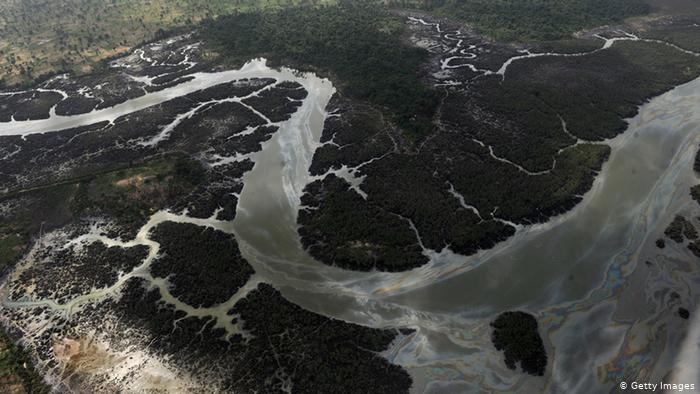
All of these practices have directly or indirectly driven the growth of greenhouse gas emissions worldwide. The neoliberal machine has subjugated governments of developing nations, sown corruption and debt peonage. It is the modern engine of global inequality, committing economic violence, depriving nations of funds for education, infrastructure, health care and the social safety net, all while displacing peoples, undermining democratic institutions and wreaking ecological destruction. The Niger Delta might be Exhibit A. Hell, the USA, with rising levels of poverty, the unraveling of the social safety net, the degradation of education, healthcare, laws and practices, legal and illegal, excluding non-white people from equal opportunity, falling life expectancy, rising infant mortality and the massive class divide is Exhibit A+.

17211913_401
Niger Delta

Domestically, the creation of sacrifice zones, placing dangerous, toxic and destructive installations in African-American, Latin and immigrant communities where people don’t have the economic and political power to resist is violence. Driving economic externalities into already externalized communities destroys their homes, their health and their safety. In a context of already denying livelihoods, wages, health benefits and decent education, communities of color also have to contend with these installations and their deadly products. Now we are gaming out the consequences of global climate change, the increasing impact of extreme climate events, the economic damage and the displacement they portend. We already know who will be most impacted.

America’s journey on the issue of race is entering a death-spiral phase, collapsing into fascism. As a nation of immigrants, having left (or been ripped from) the places where our ancestor’s bones are buried, there is an aspect to the American character that remains homeless. The economic regime’s casual destruction of Home arises from this deep spiritual emptiness. It extends to indigenous communities, such as in North Dakota or here in North Carolina with the placement of fossil fuel pipelines through sacred homelands. America is primarily a home to the few whose dominance depends on successfully selling the idea of America as white people’s exclusive home. This is the subliminal false narrative Trump sells in his deliberate and increasingly extreme efforts to retain control.

But all the colonial policies and practices here in the US, coupled with the occupying force of policing in indigenous and communities of color send a single message: this is not your home. The destructive and ultimately violent economy doesn’t respect our Home. The message of police violence in communities of color is that the social contact doesn’t matter when it comes to their lives, that they are merely temporary residents. Their right to Home and safety never existed and still doesn’t exist. Their adherence to the social contract doesn’t matter. It can be violated at will and mostly without consequence.  They can be attacked, marginalized, incarcerated, exploited, oppressed, exported, discarded and finally, if necessary, killed—mostly with impunity. And also, you can even be deprived of your vote on all of that.

gotjustice-1

Ironically, COVID-19 has put a temporary stop to the engine of violence. Even while it was devastating the elderly and communities of color in this nation, the Index of Violence crashed. Ten years of gains in global GHG emissions have disappeared. The prospect of full recovery is slim. I’m not suggesting all commerce is violence; not at all. But the interruption of global supply chains, the radical reduction in transportation all contributed to this crash. The long-term prescription for economic recovery is identical to what we already know will reduce global emissions: re-localization, economic equity, the recovery of community, the simplification of supply chains, greater resilience to the coming climate impacts, all fueled by renewables. All of it portends a reduction in violence. All of it will reduce emissions.

So when we take to the streets, we are not solely fighting for racial justice. Justice is not only One Thing— it is Everything. It is the disruption, dismantling and removal of the legitimacy of inequality and white supremacy: the establishment of economic justice, ecological justice, cognitive justice, gender and generational justice. We are fighting to unravel the engine of violence. It is one fight. We are fighting for Home, for the only home we have, for the right to safety, for the fruits of our labor, for prosperity for all. It has taken great suffering and centuries of pain to realize this. Now we know and cannot ever un-know. Success will be reflected in lowering the Global Violence Index.

Decolonization

Colonization happened to us and there is no undoing the past. But colonization is also constantly still happening, through the reinforcement of patriarchal white supremacist capitalist culture. So naturally, our resistance needs to acknowledge both–a calling back to tradition and a creative response in the now.

—Marina Osthoff Maghalaes

How deep are the roots? Can they even be measured?
Not too deep for a body to remember, embedded as they are
in rutted crags, carved over generations,
giving birth to subservience… or entitlement.

Where is the original language held?
In the social matrix?
Or is that merely a primal assumption, a substrate
of belief and common practice?

How many incantations does it take for the
ground to burst into flame, to blow open the libraries of
petrified belief, to start a new conversation about
proscribed behaviors, as if by controlling the body, the mind
will follow?

And what of conflicting motivations in layered
opposition, cross-purposed hardening in knots of flesh,
extended to a lifetime of thwarted expression?

Colonization 2
In the holy seat, the sanctuary of the sacred sacrum,
in the bravado of pectoral expanse, the caged knowing,
an offering, secret sounds unearthed by impossible contortions,
foreign shapes suddenly becoming ancestral calls
from the more-than-human realm,

visible through angled fingers, wrists cocked,
looking askance at the audacity of scapular rebellion,
the grimace, the tongue forming words never spoken,
the once-automatic, intrinsic dances known in sleep,
choreographed in dreams.

What story is told here, upside down, disgorging
writhing ghosts, knees chattering to each other,
bent low, locked up, jiggered at odd angles to the ankle,
an old story retold, beaten out with a beat,

on the floor, in the throat, letting go into the mouth agape,
the ears piqued, listening for sleek contractions of
contoured cacophony, falling into micro epiphanies,
shaking off the chains, rocking to rhythms unabashed,
unpredictable and unafraid.

Colonization 4

Colonization clings deeper than the bones, deeper than forgotten
movements, to the original face, the cradle of conversation, its
signature in eruptions thwarted, no longer finding a launching pad.

It resides in residue, beneath the words, hiding in the
rules of sense, of grammar, in the structures of writing,
sentencing the body to an incarceration
of its own making, in the most common of common courtesies.

It lies in the deep pictures, the brain patterning,
neurons that fire and wait for the ones
which have forgotten when to fire.
Asking, “Is you spiritual?” is like asking,
“Are you the earth?” Or is you not?

Colonization
How can something you so completely is,
naturally and totally, that you cannot even name,
something you could not not be,
be taken from you, displayed as “not us,”
examined, dissected, mounted and archived?

The dance of decolonization is elemental,
a journey of finding and losing identity,
a journey from object to subject,
to all becoming subject, traversing pain and promise,
the disease and the cure,

escaping the fixed orbits of the common language,
clearing the colluded arteries of patriarchy, surgically excising
self-denial, weeping the sweat of the oppressor,
recovering lost lineage, recovering the linkages
between rock and heel,

between the soft palate and the soft pelvis,
plumbing to its depth, giving it
up for something new–and old–the shaman’s bones,
the seat of myth, before time, before ideology,
before language, before family,

Colonization 5

dropping beneath the cloaks of tribe, race, culture,
down to the yoga of raw truth where objectification
no longer exists, to what is neither White, Latina,
African or Asian, neither Inuit, Samoan, Yoruba or Maori,

neither “third world” nor secular:
the aboriginal new body, living in new words,
seeing with new eyes; pure reverence,
lengthening through the heart.

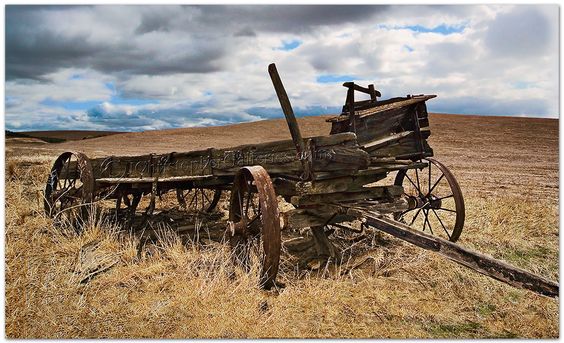
This Creaking Wagon

These bones are now but drying dates
shriveling in the sun. In the morning, they
squabble with each other like ravenous lovers.

Yet they are not strangers in my house, uninvited.
Nor are they pack animals, hard on the scent
of death. They still crave the lamp of midnight

stories sweetened with the truth of young wine.
They are still vessels of honey, pouring slowly
their devotions to the last breath.

I used to wake as a baker ready to feed a
village.  Now I rise at dawn as fallen fruit, ripened in
dreams. This creaking wagon, the blessed bounty

of life, one morning shall rise to see the doors gone,
the windows thrown open and the sun shining
through the hole in this roof.

The Super-Imagery of Wildness

Normal consciousness of form, time, body, the world of interaction, is all cracked. That is, there are cracks in these and every world, where something breaks through the certainty of belief in the self. The crack is there; we don’t always notice. The light is not blaring into one’s mental space like a high-volume commercial on the screen of your life; but more subtly, in the after-images of that world, into which leaks the light beyond the curtain of coming attractions, where the bacteria of non-conceptual reality live, quietly digesting the superstructure of cerebral certainty.

Mortality is the universe remaking itself. The mistakes and corrections we commit daily, the slights we commit, the differences between self-centered decisions and purely selfish decisions are recorded in the tabernacles of the infinite. The wiring constantly undergoing revision is the earth-brain interacting with itself, assessing, revising and instantaneously forming the next iteration, the next imperative, the natural shifting turbulent void where information interacts with action, dancing toward another version of our ongoing attempts to define the indefinable.

Getting underneath the automaticity of describing what’s happening with a partner, another human being, in terms of behavior down into how the ‘other’s’ behavior is a mirror of our own attitudes and behavior is a difficult and revealing process. Taking responsibility. It may seem that my sense of responsibility for events that occur with a partner is thin. It might be impossible to discern how to interact with it. If so, that’s perfectly OK and right. Events work their strange magic in unexpected ways.

Recent messages may contain too much information- or not enough of the sort we can use, i.e. interact with. Dropping all the pictures and expectations and needs and projections of what any relationship is beyond the time of co-habitation is difficult enough. It is, to a degree, because we have already been hooked into thinking in terms of beginnings and endings. Stepping instead into an ever-changing unruly river that is constantly overflowing its banks does finally invite a genuine loving friendship to reveal itself. But owning all of it as a reflection of one’s personal truth is another level of difficult.

It’s a freight train, relationship. Especially with anyone who’s along for more than the ride—who’s looking at the scenery, examining the accommodations, the company, the angle of the sun, every emotional nuance. I have constructed a self-contained life. It’s a defense and a skill and necessary and chosen and a last resort for feeling inadequate, not quite permitting someone else to effect me. Which is to say, I will at times fall out of interaction into solitary. And ultimately, as we age, one never knows what events may arise that will throw the entire façade of independence down hard, into dust.

Yet regardless of how much experience one might have in negotiating the terms of relationship, being able to describe one’s flaws and needs and preferences accurately and still permit the influence, needs and preferences of another to soften you out of your private structure, your personal sanctuary, all this while everything is also constantly changing, that’s the freight train of being.

Sometimes I just want to get off. Either I am weak, exhausted, resigned, depleted or temporarily inadequate, though setting any ultimate limit, deciding when to get off the freight train remains a total crapshoot. That’s because interaction never ceases.

The wildness quality, the unpredictability that destroys the human-centered view, is created not only by ego-driven self-centered reactivity, but by the value-free random nature of change. The antidote, the other truth of reality is the One-ness level, a release into infinite interactivity, in which I can sincerely hold a much larger and inclusive view of our personal circumstances, in which I could see myself as a mere servant prepared to adjust to whatever comes, respond in whatever way might be helpful and let go of a specific view of how this is supposed to unfold.

Along with that One-ness view, I see how embedded I am in ego-driven reactivity so much of the time, how far I am sometimes from an open-hearted, loving perspective that holds us in a positive light with all of our histories, wounds, pain, abilities and commitments; invoking the mercy of the unseen into every moment. In other words, I do at times seek refuge in limited interactivity.

Yes, I am attached to the world of form. At the very least, I am dependable in that way. Yet, alas, not quite so dependable in terms of being able to make deliberate unequivocal commitments. I feel incomplete in this way, as if I am supposed to be able to do that. Yet I am also ambivalent about accepting the other Truth, balancing my need for independence with the desire to interact in the living truth of aloneness we all share. Seeing myself this way is not merely an escape from love. I’m just being realistic. And compassionate, by the way. I am riddled with paradox–which also limits my capacity for unwavering commitment to the One-ness view. The territory yet to be traveled is revealed.

In the dense and aged stand of bamboo outside my window, there are beginnings and endings happening in every moment. There is decline, death and decay always amidst the new growth, the maturation and fruition of maturity. Other creatures find refuge in the deep safety of its inner reaches; they live and die as well. It provides shade, mulch to the earth, stability to the soil and becomes a soundscape as the breezes blow through it. In its steadfast silence, in its interactive turmoil, it is also a muse of love.


Radical Impermanence

The tragic and glorious reality brought to us by the pandemic has been a daily encounter with impermanence, the poignant fragility of sentience and our exquisitely balanced interdependence with the natural world. The other dimension breaking into mass consciousness has been the fragility of conventional ‘modern’ life, from health care to food to energy and transportation. The stability of the economic system is deeply shaken, spurring an increasingly desperate autocratic ideology to prop it all up. Not only is life itself impermanent, but the way we live is also part of the illusion. As painful as it all may be, this is a healing moment.

The underlying violence of the financial system is starkly displayed. The matrix of global supply chains bringing us food, clothing, technology, information, energy, health and transportation is a house of cards, reminding us the way we understand the world requires overhaul. As if impending climate collapse isn’t sufficiently grave, COVID-19 has presented a similar diagnosis in an even more personal and immediate form: failure to act risks death. What could be more clear?

Over the past months, we’ve emerged from a dream and come crashing back to earth. ‘Progress’ has rarely mirrored our own frailty so clearly. No amount of Othering can disguise the fact that we are not other than the world itself. We are not exceptional. Life is an ongoing dynamic confluence of subjectivities between the human and the non-human. We live and die by its turning. Climate change has at least taught us that. We may have agency, but are not and have never been in control.

From our isolated redoubts, we witness the ongoing trauma of Business As Usual. The virus did not magically appear from nowhere; whatever its origin, it is Business as Usual. Yet it is also a liberating force, tearing the blinders from our eyes. Everything about our existence, individually and collectively, is about constructing temples of permanence. To paraphrase Bayo Akomolafe, by imposing the past upon the present, reassuring ourselves of what we already know, despite ever-increasing cost, we create Progress.

Strangely, in this light, progress is a conservative ideology and nearly all of us are caught in it. But conflating survival with permanence is deeply confused. By this definition, racism and sexism are progress; injustice is progress; inequality is progress; climate change, pollution, national boundaries and even war all sanctify permanence. All bow before the altar of progress. Our cities are monuments to atomized ritual devotion to money; our logistical frameworks & financial systems are all ordered and maintained on the presumption of permanence. The fossils fueling Progress come at increasing cost and decreasing benefit. The apparatus guaranteeing permanence requires increasing complexity… bringing increasing vulnerability. This what we are calling ‘normal.’

The increasingly deterministic ‘rules’ of modernity are etched deeply in our consciousness: who belongs, what roles are assigned, defining our relationship to the world. The exploitation, violence, expropriation, befouling of natural resources and the disenfranchisement at their heart are simply denied. The virus has undone those rules, cracking through the veneer of separation while revealing the true nature and depth of ongoing social and political dysfunction. The foundations of modern culture are shaken. Normal persists at a high spiritual cost, extracting meaning while channeling exclusionary ideologies, presuming superiority and mastery, even rationalizing mass death. Everything depends on our somnolent compliance.

We find ourselves squarely in the paradox of compassionate and generous impulses while remaining in anxiety about safety and scarcity. As the sword of impermanence comes slashing downward, slicing through our illusions, we see clearly the necessity and potency of standing for a planetary dialogue on the once cool, now overheated trauma from which we are awakening. In the face of mass de-compensation, we see the possibility of a new consensus arising.

Progress believes we can think our way out of this, as if we are here because of something we did. But, no. We are here because of what we are. The very fact that we think about problems is part of the problem. Our predicament is that we don’t know how to do otherwise. Thinking we are separate is how we got here. Do we now think we can think ourselves out of separation? Even ‘understanding’ is objectifying. There’s a time and place for all of that, but it hardly occurs to us that we can’t think outside the box. We are the box.

Engaging with impermanence, living it, is as close to thinking outside the box as we can get; seeing life as it truly is. A new freedom is immanent; in uncertainty and instability there is an enlivening of creativity, curiosity, spontaneity and new relations. In a field of continuously refreshing engagement, we aren’t compelled to impose the past upon the present; we are less inclined to sink into the quicksand of permanence. Imagining we can return to ‘normal’ is a profoundly false, desperate and ultimately doomed proposition—as if we should look away from what’s being exposed and reconstitute a façade without the substance required to ensure viability. Instead, everything is up for renegotiation now.

The lives we’ve lost become the fuel of our engagement. What the deceased have given us is immeasurable. They have cleared space for us to mourn, to explore fully our own discomfort, our deep unrest, the knowledge of work undone and the opportunity to see that work and to perform the tasks necessary to heal this world, our selves.

Borrowing from Vanessa Andreotti and Dani d’Emilia, we can reactivate our vital compass and return to genuine earth-centered experience; we can restore our capacity to feel ourselves as the metabolism of the earth while accepting vulnerability and discomfort as the desperation of our fragile egos. We can serve as guides, comforting each other as we navigate the agonies of throwing off our addictions and restoring our exiled capacities. Our strength comes from resting in the eye of the storm. Our grief becomes the fertilizer of creative imagination, inspiring and moving us to what is next.

With commitment and compassion, our actions will naturally arise and be naturally accomplished–though not without risk. We may imagine refuge in conceptual deliberation and meticulous formation of intent, but let us cultivate intimacy and seek guidance from non-conceptual sources, arising from the matrix of unmediated experience and universal relationship. May such actions awaken us from the prevailing architecture of causation.

The increasing velocity of change, radical impermanence, frees us from dependency on the archetypes of the dying paradigm. The coronavirus is a portal for healing. Let us move through it with enlightened action, spontaneously and freely arising according to generous and creative impulses. The more forcefully and deliberately we apply ourselves to preparing for the apocalypse, the more we release the weight of hope upon our labors, the more likely we are to delay that apocalypse. In denying hope lies the possibility of a future: the end of deifying progress, the false hope of returning to a world that is ending. Healing potential lies in expressing who we are without calculation, wholly and inclusively, entering a deeper field of impermanence, ever-renewing connection, expression, presence and engagement, with humor, humility and reverence.