The Global Violence Index

The relationship between the environmental movement and racism is clear. We’ve known this for a long time and it’s become even more important to articulate this view right now. The link between dehumanization, white supremacy, class war, religious bigotry, ethnic hatred, misogyny and climate change is straight. What’s been working in me for the last week or so is a further elaboration on this theme.

The fallacy of economic development fueled by cheap energy has always been that ecological damage is the externality not priced into the cost of that energy. It’s taken 150 years, but failing to account for that externality is what’s bringing us to the brink of extinction. Racism and slavery were (and are) the ignored human cost, the economic externality on which all of that national (and global) economic development depends. Continuing ecological externalities as well as the ongoing human costs of racism are each forms of violence. They lie at the center of the founding and building of this nation and at the center of the global phenomenon of colonialism and economic imperialism.

Colonialism and its neocolonial forms are racist and genocidal violence happening on a mass scale since the 17th century. Fortunately, the violence of slavery was overcome, but the violence of racism, ethnic hatred and continuing forms of economic slavery have held on, all of them fueling the capitalist ideology of Progress. All of them are founded on white supremacy. We may also categorize the industrial engine of capitalism as a violent machine wreaking havoc on social ecologies, biodiversity, polluting and destroying the oceans and the atmosphere.

It took us a long time to recognize and begin to throw off the violence of colonialism and racism, and even longer for us to fully grasp the economic and ecological violence of extraction, consumption and pollution. But it’s time to recognize the true and full consequences not only of continuing racial and ecological violence, but that these two, along with religious bigotry, misogyny and climate denial, driven by white supremacy and neoliberalism, are the singularity of global violence. They comprise what I am calling the Global Violence Index, measured as GHG emissions. This is the legacy of colonial and neocolonial racism.

ccelebritiesgeorgefloydprotests-900x480-2

A deeply rooted vestigial tolerance of economic and human externalities is what begets sweatshops in Bangladesh, Indonesia, China, India and Thailand, a minimum wage stuck for 12 years at the same level, ten percent of the American workforce laboring for less than that, an offshore oil rig exploding in the Gulf of Mexico. They are all violence. Tar sands extraction and mountain top coal mining commit violence on the land and the waters. And let’s face it, rare earth mining for the lithium in our phones, EV batteries, military hardware and for an increasing number of appliances is also violence.

Displacement of indigenous peoples is violence, whether it’s the XL pipeline or the mega-hydropower projects of Asia, Africa or South America. Dams on the upper Mekong in China destroying downstream economies and ecologies are violence. Intellectual property laws, with complicit politicians, lawyers and trade organizations are legalized violence. Monsanto, forcing farmers worldwide to buy new seed annually, destroying native seed diversity and driving thousands of small farmers in India to suicide, is violence. Monoculture is violence. Multinationals conspiring to deprive workers of living wages, benefits and to further destroy environmental protections. All of this is violence. The gig economy is violence. Wage theft is violence. Food insecurity is violence. You get my point.

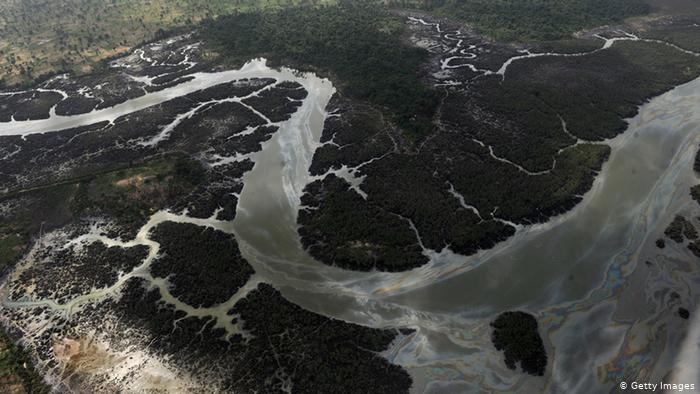
All of these practices have directly or indirectly driven the growth of greenhouse gas emissions worldwide. The neoliberal machine has subjugated governments of developing nations, sown corruption and debt peonage. It is the modern engine of global inequality, committing economic violence, depriving nations of funds for education, infrastructure, health care and the social safety net, all while displacing peoples, undermining democratic institutions and wreaking ecological destruction. The Niger Delta might be Exhibit A. Hell, the USA, with rising levels of poverty, the unraveling of the social safety net, the degradation of education, healthcare, laws and practices, legal and illegal, excluding non-white people from equal opportunity, falling life expectancy, rising infant mortality and the massive class divide is Exhibit A+.
17211913_401
Niger Delta

Domestically, the creation of sacrifice zones, placing dangerous, toxic and destructive installations in African-American, Latin and immigrant communities where people don’t have the economic and political power to resist is violence. Driving economic externalities into already externalized communities destroys their homes, their health and their safety. In a context of already denying livelihoods, wages, health benefits and decent education, communities of color also have to contend with these installations and their deadly products. Now we are gaming out the consequences of global climate change, the increasing impact of extreme climate events, the economic damage and the displacement they portend. We already know who will be most impacted.

America’s journey on the issue of race is entering a death-spiral phase, collapsing into fascism. As a nation of immigrants, having left (or been ripped from) the places where our ancestor’s bones are buried, there is an aspect to the American character that remains homeless. The economic regime’s casual destruction of Home arises from this deep spiritual emptiness. It extends to indigenous communities, such as in North Dakota or here in North Carolina with the placement of fossil fuel pipelines through sacred homelands. America is primarily a home to the few whose dominance depends on successfully selling the idea of America as white people’s exclusive home. This is the subliminal false narrative Trump sells in his deliberate and increasingly extreme efforts to retain control.

But all the colonial policies and practices here in the US, coupled with the occupying force of policing in indigenous and communities of color send a single message: this is not your home. The destructive and ultimately violent economy doesn’t respect our Home. The message of police violence in communities of color is that the social contact doesn’t matter when it comes to their lives, that they are merely temporary residents. Their right to Home and safety never existed and still doesn’t exist. Their adherence to the social contract doesn’t matter. It can be violated at will and mostly without consequence.  They can be attacked, marginalized, incarcerated, exploited, oppressed, exported, discarded and finally, if necessary, killed—mostly with impunity. And also, you can even be deprived of your vote on all of that.

gotjustice-1

Ironically, COVID-19 has put a temporary stop to the engine of violence. Even while it was devastating the elderly and communities of color in this nation, the Index of Violence crashed. Ten years of gains in global GHG emissions have disappeared. The prospect of full recovery is slim. I’m not suggesting all commerce is violence; not at all. But the interruption of global supply chains, the radical reduction in transportation all contributed to this crash. The long-term prescription for economic recovery is identical to what we already know will reduce global emissions: re-localization, economic equity, the recovery of community, the simplification of supply chains, greater resilience to the coming climate impacts, all fueled by renewables. All of it portends a reduction in violence. All of it will reduce emissions.

So when we take to the streets, we are not solely fighting for racial justice. Justice is not only One Thing— it is Everything. It is the disruption, dismantling and removal of the legitimacy of inequality and white supremacy: the establishment of economic justice, ecological justice, cognitive justice, gender and generational justice. We are fighting to unravel the engine of violence. It is one fight. We are fighting for Home, for the only home we have, for the right to safety, for the fruits of our labor, for prosperity for all. It has taken great suffering and centuries of pain to realize this. Now we know and cannot ever un-know. Success will be reflected in lowering the Global Violence Index.

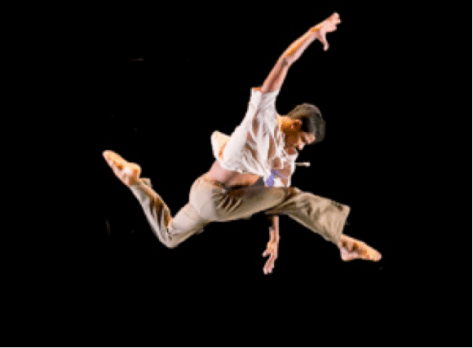
Decolonization

Colonization happened to us and there is no undoing the past. But colonization is also constantly still happening, through the reinforcement of patriarchal white supremacist capitalist culture. So naturally, our resistance needs to acknowledge both–a calling back to tradition and a creative response in the now.

—Marina Osthoff Maghalaes

How deep are the roots? Can they even be measured?
Not too deep for a body to remember, embedded as they are
in rutted crags, carved over generations,
giving birth to subservience… or entitlement.

Where is the original language held?
In the social matrix?
Or is that merely a primal assumption, a substrate
of belief and common practice?

How many incantations does it take for the
ground to burst into flame, to blow open the libraries of
petrified belief, to start a new conversation about
proscribed behaviors, as if by controlling the body, the mind
will follow?

And what of conflicting motivations in layered
opposition, cross-purposed hardening in knots of flesh,
extended to a lifetime of thwarted expression?

Colonization 2
In the holy seat, the sanctuary of the sacred sacrum,
in the bravado of pectoral expanse, the caged knowing,
an offering, secret sounds unearthed by impossible contortions,
foreign shapes suddenly becoming ancestral calls
from the more-than-human realm,

visible through angled fingers, wrists cocked,
looking askance at the audacity of scapular rebellion,
the grimace, the tongue forming words never spoken,
the once-automatic, intrinsic dances known in sleep,
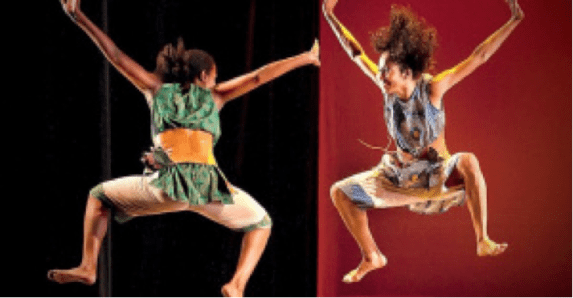
choreographed in dreams.

What story is told here, upside down, disgorging
writhing ghosts, knees chattering to each other,
bent low, locked up, jiggered at odd angles to the ankle,
an old story retold, beaten out with a beat,

on the floor, in the throat, letting go into the mouth agape,
the ears piqued, listening for sleek contractions of
contoured cacophony, falling into micro epiphanies,
shaking off the chains, rocking to rhythms unabashed,
unpredictable and unafraid.

Colonization 4

Colonization clings deeper than the bones, deeper than forgotten
movements, to the original face, the cradle of conversation, its
signature in eruptions thwarted, no longer finding a launching pad.

It resides in residue, beneath the words, hiding in the
rules of sense, of grammar, in the structures of writing,
sentencing the body to an incarceration
of its own making, in the most common of common courtesies.

It lies in the deep pictures, the brain patterning,
neurons that fire and wait for the ones
which have forgotten when to fire.
Asking, “Is you spiritual?” is like asking,
“Are you the earth?” Or is you not?

Colonization
How can something you so completely is,
naturally and totally, that you cannot even name,
something you could not not be,
be taken from you, displayed as “not us,”
examined, dissected, mounted and archived?

The dance of decolonization is elemental,
a journey of finding and losing identity,
a journey from object to subject,
to all becoming subject, traversing pain and promise,
the disease and the cure,

escaping the fixed orbits of the common language,
clearing the colluded arteries of patriarchy, surgically excising
self-denial, weeping the sweat of the oppressor,
recovering lost lineage, recovering the linkages
between rock and heel,

between the soft palate and the soft pelvis,
plumbing to its depth, giving it
up for something new–and old–the shaman’s bones,
the seat of myth, before time, before ideology,
before language, before family,

Colonization 5

dropping beneath the cloaks of tribe, race, culture,
down to the yoga of raw truth where objectification
no longer exists, to what is neither White, Latina,
African or Asian, neither Inuit, Samoan, Yoruba or Maori,

neither “third world” nor secular:
the aboriginal new body, living in new words,
seeing with new eyes; pure reverence,
lengthening through the heart.

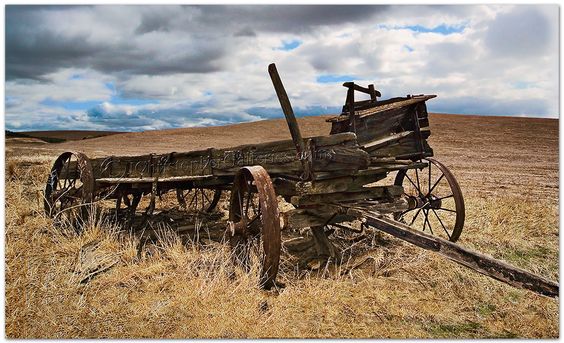
This Creaking Wagon

These bones are now but drying dates
shriveling in the sun. In the morning, they
squabble with each other like ravenous lovers.

Yet they are not strangers in my house, uninvited.
Nor are they pack animals, hard on the scent
of death. They still crave the lamp of midnight

stories sweetened with the truth of young wine.
They are still vessels of honey, pouring slowly
their devotions to the last breath.

I used to wake as a baker ready to feed a
village.  Now I rise at dawn as fallen fruit, ripened in
dreams. This creaking wagon, the blessed bounty

of life, one morning shall rise to see the doors gone,
the windows thrown open and the sun shining
through the hole in this roof.

The Super-Imagery of Wildness

Normal consciousness of form, time, body, the world of interaction, is all cracked. That is, there are cracks in these and every world, where something breaks through the certainty of belief in the self. The crack is there; we don’t always notice. The light is not blaring into one’s mental space like a high-volume commercial on the screen of your life; but more subtly, in the after-images of that world, into which leaks the light beyond the curtain of coming attractions, where the bacteria of non-conceptual reality live, quietly digesting the superstructure of cerebral certainty.

Mortality is the universe remaking itself. The mistakes and corrections we commit daily, the slights we commit, the differences between self-centered decisions and purely selfish decisions are recorded in the tabernacles of the infinite. The wiring constantly undergoing revision is the earth-brain interacting with itself, assessing, revising and instantaneously forming the next iteration, the next imperative, the natural shifting turbulent void where information interacts with action, dancing toward another version of our ongoing attempts to define the indefinable.

Getting underneath the automaticity of describing what’s happening with a partner, another human being, in terms of behavior down into how the ‘other’s’ behavior is a mirror of our own attitudes and behavior is a difficult and revealing process. Taking responsibility. It may seem that my sense of responsibility for events that occur with a partner is thin. It might be impossible to discern how to interact with it. If so, that’s perfectly OK and right. Events work their strange magic in unexpected ways.

Recent messages may contain too much information- or not enough of the sort we can use, i.e. interact with. Dropping all the pictures and expectations and needs and projections of what any relationship is beyond the time of co-habitation is difficult enough. It is, to a degree, because we have already been hooked into thinking in terms of beginnings and endings. Stepping instead into an ever-changing unruly river that is constantly overflowing its banks does finally invite a genuine loving friendship to reveal itself. But owning all of it as a reflection of one’s personal truth is another level of difficult.

It’s a freight train, relationship. Especially with anyone who’s along for more than the ride—who’s looking at the scenery, examining the accommodations, the company, the angle of the sun, every emotional nuance. I have constructed a self-contained life. It’s a defense and a skill and necessary and chosen and a last resort for feeling inadequate, not quite permitting someone else to effect me. Which is to say, I will at times fall out of interaction into solitary. And ultimately, as we age, one never knows what events may arise that will throw the entire façade of independence down hard, into dust.

Yet regardless of how much experience one might have in negotiating the terms of relationship, being able to describe one’s flaws and needs and preferences accurately and still permit the influence, needs and preferences of another to soften you out of your private structure, your personal sanctuary, all this while everything is also constantly changing, that’s the freight train of being.

Sometimes I just want to get off. Either I am weak, exhausted, resigned, depleted or temporarily inadequate, though setting any ultimate limit, deciding when to get off the freight train remains a total crapshoot. That’s because interaction never ceases.

The wildness quality, the unpredictability that destroys the human-centered view, is created not only by ego-driven self-centered reactivity, but by the value-free random nature of change. The antidote, the other truth of reality is the One-ness level, a release into infinite interactivity, in which I can sincerely hold a much larger and inclusive view of our personal circumstances, in which I could see myself as a mere servant prepared to adjust to whatever comes, respond in whatever way might be helpful and let go of a specific view of how this is supposed to unfold.

Along with that One-ness view, I see how embedded I am in ego-driven reactivity so much of the time, how far I am sometimes from an open-hearted, loving perspective that holds us in a positive light with all of our histories, wounds, pain, abilities and commitments; invoking the mercy of the unseen into every moment. In other words, I do at times seek refuge in limited interactivity.

Yes, I am attached to the world of form. At the very least, I am dependable in that way. Yet, alas, not quite so dependable in terms of being able to make deliberate unequivocal commitments. I feel incomplete in this way, as if I am supposed to be able to do that. Yet I am also ambivalent about accepting the other Truth, balancing my need for independence with the desire to interact in the living truth of aloneness we all share. Seeing myself this way is not merely an escape from love. I’m just being realistic. And compassionate, by the way. I am riddled with paradox–which also limits my capacity for unwavering commitment to the One-ness view. The territory yet to be traveled is revealed.

In the dense and aged stand of bamboo outside my window, there are beginnings and endings happening in every moment. There is decline, death and decay always amidst the new growth, the maturation and fruition of maturity. Other creatures find refuge in the deep safety of its inner reaches; they live and die as well. It provides shade, mulch to the earth, stability to the soil and becomes a soundscape as the breezes blow through it. In its steadfast silence, in its interactive turmoil, it is also a muse of love.


Radical Impermanence

The tragic and glorious reality brought to us by the pandemic has been a daily encounter with impermanence, the poignant fragility of sentience and our exquisitely balanced interdependence with the natural world. The other dimension breaking into mass consciousness has been the fragility of conventional ‘modern’ life, from health care to food to energy and transportation. The stability of the economic system is deeply shaken, spurring an increasingly desperate autocratic ideology to prop it all up. Not only is life itself impermanent, but the way we live is also part of the illusion. As painful as it all may be, this is a healing moment.

The underlying violence of the financial system is starkly displayed. The matrix of global supply chains bringing us food, clothing, technology, information, energy, health and transportation is a house of cards, reminding us the way we understand the world requires overhaul. As if impending climate collapse isn’t sufficiently grave, COVID-19 has presented a similar diagnosis in an even more personal and immediate form: failure to act risks death. What could be more clear?

Over the past months, we’ve emerged from a dream and come crashing back to earth. ‘Progress’ has rarely mirrored our own frailty so clearly. No amount of Othering can disguise the fact that we are not other than the world itself. We are not exceptional. Life is an ongoing dynamic confluence of subjectivities between the human and the non-human. We live and die by its turning. Climate change has at least taught us that. We may have agency, but are not and have never been in control.

From our isolated redoubts, we witness the ongoing trauma of Business As Usual. The virus did not magically appear from nowhere; whatever its origin, it is Business as Usual. Yet it is also a liberating force, tearing the blinders from our eyes. Everything about our existence, individually and collectively, is about constructing temples of permanence. To paraphrase Bayo Akomolafe, by imposing the past upon the present, reassuring ourselves of what we already know, despite ever-increasing cost, we create Progress.

Strangely, in this light, progress is a conservative ideology and nearly all of us are caught in it. But conflating survival with permanence is deeply confused. By this definition, racism and sexism are progress; injustice is progress; inequality is progress; climate change, pollution, national boundaries and even war all sanctify permanence. All bow before the altar of progress. Our cities are monuments to atomized ritual devotion to money; our logistical frameworks & financial systems are all ordered and maintained on the presumption of permanence. The fossils fueling Progress come at increasing cost and decreasing benefit. The apparatus guaranteeing permanence requires increasing complexity… bringing increasing vulnerability. This what we are calling ‘normal.’

The increasingly deterministic ‘rules’ of modernity are etched deeply in our consciousness: who belongs, what roles are assigned, defining our relationship to the world. The exploitation, violence, expropriation, befouling of natural resources and the disenfranchisement at their heart are simply denied. The virus has undone those rules, cracking through the veneer of separation while revealing the true nature and depth of ongoing social and political dysfunction. The foundations of modern culture are shaken. Normal persists at a high spiritual cost, extracting meaning while channeling exclusionary ideologies, presuming superiority and mastery, even rationalizing mass death. Everything depends on our somnolent compliance.

We find ourselves squarely in the paradox of compassionate and generous impulses while remaining in anxiety about safety and scarcity. As the sword of impermanence comes slashing downward, slicing through our illusions, we see clearly the necessity and potency of standing for a planetary dialogue on the once cool, now overheated trauma from which we are awakening. In the face of mass de-compensation, we see the possibility of a new consensus arising.

Progress believes we can think our way out of this, as if we are here because of something we did. But, no. We are here because of what we are. The very fact that we think about problems is part of the problem. Our predicament is that we don’t know how to do otherwise. Thinking we are separate is how we got here. Do we now think we can think ourselves out of separation? Even ‘understanding’ is objectifying. There’s a time and place for all of that, but it hardly occurs to us that we can’t think outside the box. We are the box.

Engaging with impermanence, living it, is as close to thinking outside the box as we can get; seeing life as it truly is. A new freedom is immanent; in uncertainty and instability there is an enlivening of creativity, curiosity, spontaneity and new relations. In a field of continuously refreshing engagement, we aren’t compelled to impose the past upon the present; we are less inclined to sink into the quicksand of permanence. Imagining we can return to ‘normal’ is a profoundly false, desperate and ultimately doomed proposition—as if we should look away from what’s being exposed and reconstitute a façade without the substance required to ensure viability. Instead, everything is up for renegotiation now.

The lives we’ve lost become the fuel of our engagement. What the deceased have given us is immeasurable. They have cleared space for us to mourn, to explore fully our own discomfort, our deep unrest, the knowledge of work undone and the opportunity to see that work and to perform the tasks necessary to heal this world, our selves.

Borrowing from Vanessa Andreotti and Dani d’Emilia, we can reactivate our vital compass and return to genuine earth-centered experience; we can restore our capacity to feel ourselves as the metabolism of the earth while accepting vulnerability and discomfort as the desperation of our fragile egos. We can serve as guides, comforting each other as we navigate the agonies of throwing off our addictions and restoring our exiled capacities. Our strength comes from resting in the eye of the storm. Our grief becomes the fertilizer of creative imagination, inspiring and moving us to what is next.

With commitment and compassion, our actions will naturally arise and be naturally accomplished–though not without risk. We may imagine refuge in conceptual deliberation and meticulous formation of intent, but let us cultivate intimacy and seek guidance from non-conceptual sources, arising from the matrix of unmediated experience and universal relationship. May such actions awaken us from the prevailing architecture of causation.

The increasing velocity of change, radical impermanence, frees us from dependency on the archetypes of the dying paradigm. The coronavirus is a portal for healing. Let us move through it with enlightened action, spontaneously and freely arising according to generous and creative impulses. The more forcefully and deliberately we apply ourselves to preparing for the apocalypse, the more we release the weight of hope upon our labors, the more likely we are to delay that apocalypse. In denying hope lies the possibility of a future: the end of deifying progress, the false hope of returning to a world that is ending. Healing potential lies in expressing who we are without calculation, wholly and inclusively, entering a deeper field of impermanence, ever-renewing connection, expression, presence and engagement, with humor, humility and reverence.

Reconciliation II: Justice

Each of the 4Rs of Deep Adaptation, Resilience, Restoration, Relinquishing and Reconciliation is a searching journey from the world we have to the world we want. The more we explore, the more we find to explore. Just looking at all the associations we have with the word Reconciliation opens many doors. Whether we talk about intra-personal, inter-personal or our relations with the living metabolism of the earth, it means a return to friendly relations. It can mean establishing compatibility of beliefs and practices. In accounting, it refers to a balancing of accounts, rendering what comes in with what goes out, reestablishing harmony at every possible scale.

Not everything that counts can be counted; and not everything that can be counted, counts. — Albert Einstein

We have only to look at our accounts with Earth itself to grasp how out of balance we are. Even the terms we use for accounting are evidence of cognitive colonization. They only reflect the mindset of separation. For humanity to meet and survive what is taking shape, even at this moment, reconciliation implies redefining those terms, an enormous commitment on every level, the expenditure of massive personal and collective resources, a profound re-ordering at the soul level, in the human energy body.

Defining a different path forward, one reflecting the true nature of our entanglements, we imagine how fraught with obstacles such an effort might be as we scan the spiritual, social, political, environmental and financial landscape in this time of increasing risk, uncertainty and unfolding collapse. Even a limited unpacking of what we mean by justice leads to considerations of decolonization as it is tied to the preservation of  nation states, the preservation of capital, risk and financial systems driven by commodification, shareholder interests and debt-driven speculation.

In this consideration, we must  include 1) racial justice: establishing racial equity by confronting the history of racial injustice and addressing systemic issues perpetuating racial stereotyping, racial privileges and locking racial groups out of educational, economic, housing and employment opportunities; 2)cognitive justice: the breaking of exclusionary ideologies to include recognition and establishment of the right of different knowledge systems to co-exist; the return of meaning to being. There are no outdated, irrelevant or second-class ways of knowing the world; 3) relational justice, also called restorative justice: the repairing of relations damaged by criminal violence and the reformation of responsibility based on generosity, compassion and humility, 4) intergenerational justice: the considerations of generational equity in  tax and spending policy, allocating funding for the future security of generations yet unborn, the way we live now and how we address climate change, 5) ecological or environmental justice: establishing equity in consideration of environmental impacts on community infrastructure, habits, livelihoods and public health, 6) economic justice: establishing fairness in policies effecting economic stability, opportunity, mobility, security and benefits to all members of the economic system. The players in this conversation include all beings, all life, all sentience from the macro to the micro-biome.

Where do ‘we’ stand in all this and what is the prerequisite for any of this investigation? It’s one thing to find a separate peace, yet our internal state has never been separate from the larger matrix. For us to find congruence in all our relations, we have to renounce the exhausted story of ‘progress’ and find relief from the inadequate ideology of ‘reform,’ which now only serves the entrenched, never really challenging or even touching the comfortable. Reform is a euphemism for cooptation and defeat. At this very moment in America, the comfortable receive rapid, virtually unlimited and unconditional transfusions of taxpayer money created out of thin air while the proletariat will ultimately bear the burden of these expenditures while hacking away at impenetrable forests of shifting bureaucratic obstacles to receive a few crumbs.

Coming to any semblance of reconciliation of all these accounts strikes to the core of who we imagine we are, the limits of language, the pandemics of depression, addiction, hopelessness, auto-immune disorders, meaninglessness, the loss of economic mobility, the obscene concentration of wealth, the loss of personal agency, the destruction of the biosphere and biodiversity,  the decline of life expectancy and the cloistering of the future in a shrinking box of falsehoods.

These conditions are signals of exiled human capacities, the disappearing knowledge systems defining the diversity of relationships we have with ourselves, our surroundings and the planetary matrix. Our institutions have become intense battlegrounds where values are shredded, where we diverge from community and settle for ever narrowing definitions of opportunity, social mobility, abundance and our sacred responsibilities.

It’s only even possible to consider reconciling the most inclusive list of stakeholders and relational issues, balancing accounts, as it were, if the primary premise is accepted: the archetypes of separation, human superiority and mastery over nature, rooted in the Enlightenment and capitalism, are spelling our doom. The entire system has come to represent only domination, extraction, exploitation and violence.

That violence is expressed as colonial expansion, the creation of empire, increasingly extreme exploitation of life, natural and personal resources, the institution of extractive economies including he corrosion of personal well-being, the surveillance state, the growth of mechanisms of control, the corruption of thought, truth and the persistent reinforcement of a paradigm of exclusion.

Every one of these features, every level and domain of operation of the Vehicle of Extinction can be represented as the management and offloading of risk. All risk is deflected by the few to the many.  Living with risk infuses the majority of lives with increasing uncertainty, instability and vulnerability.   The pandemic is highlighting these inequities because service workers in many fields (manufacturing, agriculture, transportation, law enforcement) and even many health care workers now deemed essential during COVID shut-downs are the very ones with no choice but to expose themselves to the increasing risk of infection. While we celebrate the genius, the heroic commitment and the compassion of these frontline workers, their most admirable virtues are also being exploited along the way.

True justice  as the equitable redistribution of risk, the restoration of a tangible level of social and systemic financial support to more broadly manage uncertainty.  Sharing risk equitably is a benefit to all, not only the privileged few. If risk levels were the central motivating factor in repairing our relationships,  in only one of many possible ways, we would be addressing climate change on a massive scale. We would be opening economic opportunity, social mobility, repairing mental and spiritual health, increasing public safety and unleashing untold reservoirs of creativity and generous contribution to the well-being of the whole. None of this is about eliminating risk. That would be impossible. But imagine a future driven by an abiding clarity on the meaning of justice in all its forms. In that world, counting all that counts including all that cannot be counted, our accounts would be moving toward reconciliation.

The Sanctuary of Not Knowing

Suggesting spiritual refuge is to be found in ‘not knowing’ rings a familiar bell, though ironically, striking it yields no sound. It has no tone; yet all vibration is missing. I am intrigued. The clapper isn’t striking anything solid, as if that would be too much like ‘knowing.’ As if knowing is the materialization of thought, as if anthropocentric knowing is the only way, as if what we ‘know’ is all that can be known. One cannot un-ring the bell.

Not knowing feels like an undiscovered land, an abundant refuge in which I am not the center. Perhaps there is no center, only a kind of getaway we all seek but rarely find. It’s freeing to not know, to imagine oneself a rich and compelling un-network connecting everything without having to be anything at all. It’s seductive, to be sure. We are invited to imagine the Unseen, to enter a limitless ubiquity. Being shaken from whatever we thought we were doingand being drawn into this provocative, gestating, undefined space of is not unlike being a fish suddenly realizing there’s such a thing as water. Aha!

It seems there once were some fish who spent their days swimming around in search of water. Anxiously looking for their destination, they shared their worries and confusion with each other as they swam. One day they met a wise fish and asked him the question which had preoccupied them for so long: “Where is the sea?” they asked. The wise fish answered: “If you stop swimming so busily and struggling so anxiously, you will discover that you are already in the sea. You need look no further than where you already are.”  —Carolyn Gratton, The Age of Spiritual Guidance

So it is. If we can allow our vision to soften and detach from whatever is capturing our attention, whether sensation, feeling or thought, even for short moments, we might discover a new quality of animation, not to mention connection, among all things.

When was the last time you encountered someone determined to ‘not know,’–if that isn‘t a contradiction? When was the last time you – a fellow explorer of not knowing — locked eyes with a fellow not knower? I can only imagine such a moment as spontaneous combustion — of possibility, the sharing of a unique view in which we remain uncommitted, an intermingling of presence and absence, witnessing yet not adopting every impulse to hold anything, noticing without retaining. Holding all that is real without declaring any of it to be true…or not true. This is an island in the middle of a vast ocean, stillness surrounded by motion.

We’re used to connecting over what we know. We’re used to establishing agreements about what we know, forming alliances, partnerships, romantic, economic, political and spiritual relationships defined by all we agree is true. And not true. Everything hinges on sustaining those agreements: all progress, growth, everything, every framework of discernment, even love itself is restricted to the parameters of agreement. And we habitually behave as if shared knowing defines the entire context in which we swim.

Could it be otherwise? What becomes of love in a field of not knowing? What if we weren’t so quick to define water, instead allowing ourselves to marinate in a realm of dissolving assumptions? What if we weren’t so quick to believe knowing and believing are the only currency of being with. I mean, look around. How are we doing with that? Certainty about what we know is the root of all conflict. We, humanity, are being driven over the precipice by those who know and who never take the time to not know. I’m not suggesting we deny physics or science in general, but just consider, even science is also invariably, inescapably, inadvertently conducted according to discernible biases about what is true.

Not knowing dissolves presumed boundaries. It becomes an entree to trans-corporeality, an intermingling of bodies, minds and natural phenomena. We become each other for a moment–at least until the knowing mind interrupts. We enter an uncommon relationship that doesn’t make sense. And at this historical moment, attempting to make sense in the usual ways makes no sense at all. We should likely infer the parameters of this unknown territory have always been accessible beneath the awareness of the One Who Knows. We can become the one who doesn’t know – adopting wholly different terms of relationship that have always been available were we to ever simply let go of knowing.

Not knowing is Rumi’s field beyond right and wrong.  It lies beyond Yeats’ widening gyre. It might as well be the field beyond truth and falsehood. It’s the undiscovered and unappreciated spaciousness of mind, released from restrictions imposed by being So Damn Sure, which is what makes living with uncertainty So Damn Hard.

Truly realizing not knowing becomes a meditation on Belief. Every voice tugging at the mind to give up this quixotic adventure arising from belief becomes a restraint against discovering and exploring the freedom of not knowing. Not knowing implies a certain trust and fearlessness to remain present in a state of greater uncertainty than we have ever known. It also offers perspective on the routine uncertainties of our current predicament, making them more palatable, even mundane by comparison.

None of this implies the disappearing polar ice caps aren’t real. They are indeed. It is the reflexive struggle againstuncertainty generating the pandemic rise of fear and anxiety just now. Not knowing allows us to befriend uncertainty.

We are not in control. We never have been, no matter how we cling to that myth or struggle to recover. Anxiety and fear are functions of belief. Knowing and doing are intimately related. Not knowing is a sanctuary in which we may release ourselves from impulsive doing to allay anxiety and fear. The sanctuary is where we can exercise non-doing, waiting for doing to arrive.

Can doing arise from non-doing? How will we know? Can doing exist in a field of not knowing? I will say yes. I’m going to say enthusiastically that doing arising from not knowing is not like any doing we’ve done before because it emerges in a pervasive field of uncertainty.

If we choose to remain in not knowing, will we do what needs to be done? Will we even know what needs to be done? I don’t have the basic practical measures in mind, but rather the deeper personal existential and spiritual choices. We will know what must be done because whatever doing arises from not knowing will be enacted in a context of Presence. Presence being the absence of past and future.

All belief, all knowing arises with memory of a past and a vision of a future. Presence rarely exists in a field of doing, at least not in the fullest sense. Presence dawns in the act of fully relaxing into not knowing, allowing the past and future to fall away. We are here. We don’t need to believe in anything. We are available for not doing. There is no place for anxiety and fear to hide here. This is sanctuary.


The Pornography of Everyday Life

In 1964, Supreme Court Justice Potter Stewart famously noted that pornography is “hard to define, but I know it when I see it.” Therein, Stewart uttered and characterized for the rest of us, in perpetuity, the intuitive and pragmatic nature of perceiving and assessing the amorality and distorted values inherent in extreme and damaging relationships.

On the other hand, the implication of his statement is that authentic relationships represent the antithesis of the abuse that Stewart and what most of the rest of us “know” when we see it.

Today, there is much to see all around us as behaviors, attitudes, actions and inactions share the core of these common characteristics which, when examined in depth and taken together as they function in the larger social system, sure look and feel like pornography.

We understand the typical depictions of pornography as the degradation and humiliation of another, turning them into objects, images that conform to a distorted (even psychopathic) view of reality; the denial of and dissociation from another’s humanity and especially from one’s own entirely natural, creative and erotic impulses.

Pornography is the predatory exploitation of vulnerability, an indifference to suffering and/or deliberate infliction of emotional and physical violence. These are the features of the genre. In the current world, the intensity of the dialectic demanding resolution increases almost daily.

We also recognize that damage to the victim directly reflects the depravity and the denial of the perpetrator’s own humanity. Most important, we commonly understand the objects of all these twisted expressions are women. The female is the one who is almost universally degraded, exploited and turned into an object. She is the one onto whom the pornographer projects his pain, his own humiliation and denial. She is the one who is torn apart, chained, turned into a resource and a receptacle, reduced to a purely functional part. She is silenced. Her identity or nature is not of interest. She is reduced to an actress playing the part of a living person.

It’s commonly noted, whether true or not, that rape is not so much about sex as it is about power. It’s an extreme denial of another’s reality, personal safety, needs and very existence. The pornography industry has always included in its routine product the depiction of domination, humiliation and simulations of rape. In its most extreme forms, these include imprisonment, torture and even murder.

The killing of nature is also a metaphor pervading modern American culture; the killing of the natural world, our intrinsic nature; the transformation of the natural within each of us to conform to cultural imagery establishing the patriarchal authority structure, prescribes thought, behavior, preferences and which proscribes the instinctual, the relational, the authority of our individual and unique lived experience–and the erotic.

The killing of the natural world takes place daily in myriad ways and venues, all of which take their toll on the tender hearted, the naturally vulnerable aspects of our nature. Instead, we are subjected to an onslaught of messaging to hate dependence (poverty, disability) and the interdependence it implies. The deliberate cruelty on exhibit every day during the Trump presidency and particularly now in the midst of the pandemic is a further denial of interdependency and vulnerability.

Look around you. Are we not seeing the spilling of rhetorical abuse upon us every day? Are we not witnessing Trump gaslighting, defending, extolling the aggressive and predatory economy, the turning of public goods into private gain, selectively rewarding his friends with vital resources while exploiting vulnerability for political gain? Are we not seeing a vaudeville review of sadistic amorality, defensive self-orientation and denial of responsibility coming daily from the Pornographer-in-Chief in the White House briefing room?

While the most immediate effects will fall upon unnamed and yet uncounted numbers of deaths as a result of his self-serving view, the most pervasive and destructive form of this violence is to our primary (and primal) love affair with the natural world. In the current case, the reflexively embraced metaphor of war is adopted to reinforce allegiance to an authoritarian ideal by framing our relationship with the virus as a manifestation of the natural world. This is 9/11 redux. This is the extremity of the Anthropocene. No further consideration is required, or even necessary.

The objectification of nature, the ideology of dominance and control, the increasingly coercive practices adopted by those whose routine intent is invasion, colonization, extraction and profit is ultimately dehumanizing to us all. Surely you’ve noticed–or perhaps even experienced–how the Trump mafia is facilitating PPE and medical equipment manufacturers to treat their customers as resources, slipping the ‘market economy’ shiv between our ribs during a state of  emergency. This is pure exploitation of vulnerability. No wonder we so often see these acts described as rape. And if someone dies as a result, too bad for them.

The relentless expansion of such exploitive practices with minimal or no regard for the violence that occurs in their wake is of a piece with the pornographic denial of the Other. Neither love, passion nor compassion ever enters into this equation. There is nothing remotely relational, erotic, sacred or even very creative about the single-minded trading of human capital to sustain a lifestyle that systematically murders the goddess of nature within and without. We have been warned many times already. Yet even now, our panic and narrow war-like response to this virus is of a piece with continuing practices now threatening our existence.

The monetization of relationships in a world of constant and highly sophisticated media messaging manipulates, guides and entrains our appetites and emotional responses, interrupting and incrementally substituting for authentic instinctual guidance. We are increasingly remote from the knowledge of our own bodies. Meaning is strip-mined from our lives, divorcing us from the plain and simple meaning lying within the material experience of being alive. It is no wonder that so many see evidence of a pandemic spiritual crisis. The eruption of compassionate humanity we see all around us now serves as a stark contrast to the prevailing condition.

The response to COVID-19 by the pornographic White House is also of a piece with the wishful thinking of certain media propaganda outlets, who for decades now reflexively substitute facsimile for authenticity. That will take its toll. Perhaps this virus will, when it’s finished killing a few (100,000?) of us, also wake us up to the magnitude of our hubris about nature and remind us of our subservience. But even if such a message gains footing in the culture at large, it will be ignored or resisted by the pornographic GOP cult of cruelty and death.

The crisis of authenticity is most evident in the young, who for their entire lives have been subjected to simplistic and demeaning stereotypes about they way things are. Seeking false refuge in the material and the rational, certain of our superiority and goodness, kneeling to the commands of narcissism while denying the shadow parts of our selves, we day by day are losing control over our own lives: these are the dimensions of a dissociative process also capturing the young.

They are maturing into a world that deprives them of security, optimism and spirit. In a world of increasing economic coercion, especially now, the chickens of debt slavery, the transformation of America into a low-wage nation, the unraveling of the health (s)care system, the social safety net, the constant assault on the compact of community, the privatization of the commons are all coming home to roost. The message is all too clear: you are only matter; your being, your spirit does not matter; you are a resource to be exploited like a forest or a petroleum deposit. If you resist, you can be cast aside; there will be someone else to take your place, for less. Only ownership matters. That, and inherited wealth.

The arbiters of this imagery, those who craft and trade in and sculpt it in its various forms and manifestations are white men. The denial of nature, the assault on the feminine, the domination and exploitation of the earth is planned and executed by white men. In doing so, they not only deny their own nature, the risk their own future.

When we contemplate a mass killing (another form of pornography), we are grateful the  killer is not us, that we have not been subjected to a seemingly random violent act. The killer was the one disturbed. What could have gone wrong with him, we ask? Even if we have no intent to fully analyze him, the raw facts of the case are often evidence enough that he was caught in a matrix of obsession, denial, hatred, pain and rejection.

The murderer kills a rejecting parent, their own desperation, their own intense pain. They murder impotence, the loss of control they never had. They murder innocence, their own nature, their own lost inner child. They lash out at everything “out there” because they cannot live in a landscape of uncontrollable emotion, dependency and fear. We’ve known for a long time he is a symptom. What of the treatment?

We live every day now with the pornography of extreme wealth, the narcissistic entitlement of the economic elite and their secretive machinations. We live with the pornography of massive tax avoidance combined with the infection of the political process by money, the backlash of patriarchy in the form of ever more aggressive forms of misogyny. And, day by day, as if its various forms are separate from each other, the appetite for (and escape into) online pornography reaches new heights. Surely we know all of this when we see it every day.

Laughing At The Sky

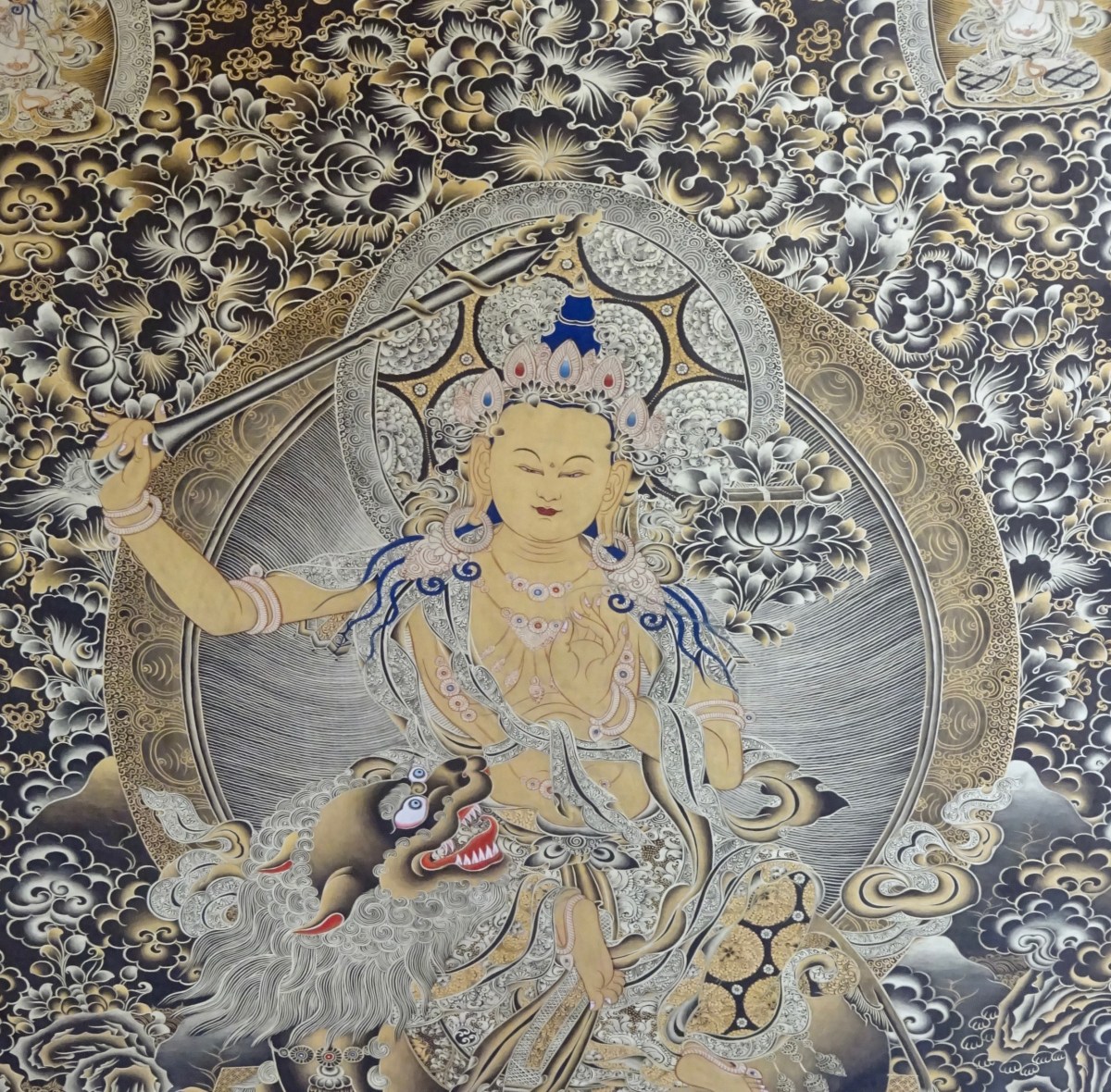
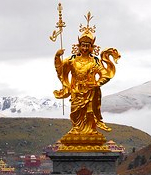
On the home page of this site is a photo of a painting. The subject is Longchenpa, the Buddhist sage of 14th century central Tibet. He was certainly not the first to discover “everything is perfect,” nor, by far, was he the last. The tradition he inhabited and to which he contributed in incomparable ways was founded upon the vision of non-dual reality characterized by emptiness, openness, inclusion and unity. In 1200 years there has been great elaboration, but no substantial revision of the essential knowledge base.

Its earliest proponents (Padmasambhava) filtered north in the 9th. C. from the Swat Valley at the border regions of Afghanistan and Pakistan, a key territory in the American war (now occupied by the Taliban), through the Hindu kush to western Tibet, surviving and/or integrating the influence of indigenous Bon practice already known as Dzogchen and spreading east from Mt. Kailash to China and Mongolia.

Tibetan Buddhism has a number of schools, each with a slightly different version of the essential teachings. The oldest school, Nyingma, structures a gradual path, a course of nine levels (yanas) of achievement in education, purification and transformation. The highest level, ati yoga, or maha ati, originally articulated by Longchenpa, represents a leap into the pinnacle teachings of Dzogchen. The lower yanas (concerned with sutras) are accepted by all the other schools. The highest yanas, tantric Dzogchen, remain the deepest heart of Nyingma practice.

In the case of all major religious traditions, a historical thread of mysticism with non-dualism at its core can be found. In the case of Christianity, it was the Gnostics. In Islam, it was/is the sufis. In Judaism, the kabbalists; in Buddhism, it is Dzogchen. In each case, these sects diverged from mainstream teaching, favoring direct transmission and cultivating direct apprehension of non-dual realization. Persecution, denial and marginalizing the mystics started early and to some degree has continued to this day.

The ‘path’ to realization in traditional theology was, and largely remains, under the direction and control of mainstream hierarchies defining the structure and extended nature of finely articulated relativist dogma in the form of spoon-fed courses of  study and ritual. Realization depends on deference, scholarship, patience and, most of all, an orientation to the future prospect of liberation.

Language, in subtle ways, corrupts our comprehension of the non-dual view. Tibetan Buddhism offers our ‘essence nature’ or ‘Buddha nature’  as a fundamental principle, that we are not here to become something we are not, but to uncover what we already are–or, to be more precise, what already is. We are not stained by original sin. Our essence is already pure, intrinsic, indestructible and it is only our confusion that stands in the way of realizing our true nature.

All well and good. However, in the Dzogchen view, which is actually no view at all, ours or mine do not exist. There is no one to recover from confusion. There never was confusion, nor was there ever clarity. A relative path does peel away confusion–up to a point. Dzogchen departs from this approach, hence is called the pathless path. Realizing all of this is the reason Longchenpa could ‘laugh at the sky’ in the first place.

samantabhadra-thangka_1000x
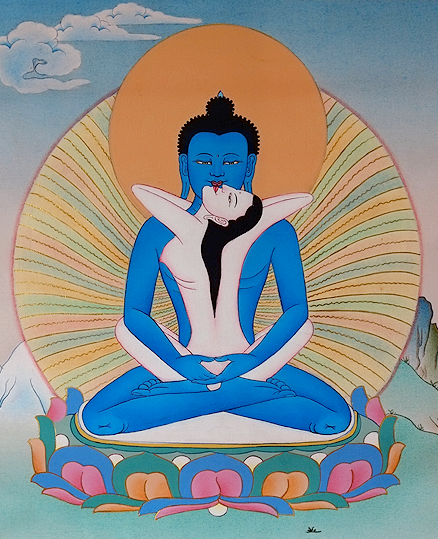
                     Samantabhadra

In cutting through confusion, we do not realize luminosity separate from someone else’s. In the shimmer of timeless awareness, there are no others. We see only one thing which is not even a thing at all. We do not see our nature, separate from Nature. We are not even beings experiencing Being. We become Being itself, not separate from Self–which has no attributes, is unconditional, cannot be adequately described in academic or any conversational language since language–at least English–resides in a dualistic fame.

Poetry comes close. As Longchenpa describes with inspiring poetic versatility (reflected in the immensely skillful translation of Richard Barron) in The Treasury of Dharmadhatu, Reality only knows one thing, beyond all description, beyond positive or negative, beyond all causation or attributes: the essence of all things is equal.

Samantabhadra is regarded as the primordial Buddha, the anthropomorphic form of all Buddhas. He is depicted metaphorically as the realization of Dzogchen, an expression of the most extreme impermanence possible–a state in which there are no discrete moments to be identified or grasped. The concept of now does not exist here. Any attempt to contemplate, arrest, understand, attach goals, to accomplish anything or to contrive causality instantly creates duality and thus inequality.

He is not regarded as the messenger of primordial purity, but the message itself. He is not a teacher. He is the teaching. He is the embodiment of non-action, of Being without source or cause. Goal-orientation is not only not required, but an impediment to the truth Samantabhadra displays. No liberation can be forthcoming until the drive for attainment is relinquished.

All things being equal, there is no good or evil, no right or wrong. This is the Great Perfection. In this domain, one might wonder if meditation is even required, or if it’s any use whatsoever. And indeed, is there really any  difference between conventional meditation and post-meditation? Whether one is meditating or not, if all practice and behavior exist in a context of insufficiency and there is nothing save an endless treadmill spanning numberless incarnations inching toward a virtually unattainable perfection, then one might well choose indifference…or amoral indulgence. Unfortunately, some of the best known and most influential teachers have succumbed to the temptations of copulation and inebriation.

Does the equality of unchanging ineffability implicate a value-free state? What about morality? What about karma? What about this world awash in conflict, deprivation, exploitation and suffering in all its forms? No. Dzogchen may be regarded as non-meditation, the removal of every impulse or vestige of ‘doing’–and especially to the extinction of the witness.

Extinction of the witness, the awareness constantly observing and evaluating our every thought and action, is the attainment attributed to the historical Buddha. It is intrinsic to the ultimate knowing. It is another aspect of extreme impermanence known as Presence. There can be no true Presence if an object of consciousness exists. Because the Great Perfection arises with an inseparable and enveloping compassion, the adept is suffused with action just as surely as the practitioner of conventional incremental spiritual practice.

Attempting to contrive this condition is a sure way to forego any possibility of its dawning. Certain things are sure: the bliss of Being is not a state of isolation. It is a state of union. Its limitless view is elevated by equally limitless compassion in which moral choices in the midst of perfection remain as natural as breathing. The doors and windows are all open. The roof is blown away. All beings, who in essence are none other than light, stand naked in their endlessly inventive, unceasing and often desperately comical attempts to adorn their existence with permanence.

Yes, we are all doing it. And we are all–save an infinitely small cadre of seekers– ultimately doomed to fail. Ironically, the one who crosses the bridge to that extreme impermanence is most fully in this world beyond all imagination, retaining and expressing the freedom–the imperative–to act on behalf of all beings in accord with a union of relative and absolute guidance. The distinction between the two no longer exists.

Fortunately, since this pinnacle of perfect equality is so rarely attained, let alone stabilized, the imperative for moral action remains present for the rest of us at every moment. All decisions and actions still exist within that perfect field of equality, even as every perception, decision and action remain expressions of our confused view. Here, the survival instinct, the human drive for sensory pleasures, all compulsion and resolution, aspiration and failure, awakening and falling back to sleep, every breath arising at the nexus of samsara and nirvana, resides on the cusp of an exquisite poignancy, humor and bewildering inevitability. Arriving at this clarity, experiencing the perfect equality of everything, yet never forgetting every act matters in this troubled world, is the moment when you can, as Longchenpa did 650 years ago, only tilt your head back and laugh at the sky.

Evangelicals and Trump: A marriage made in….USA.

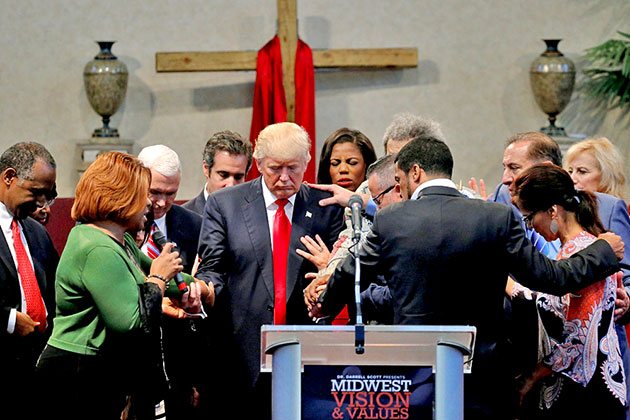
What is it with evangelicals and Trump? He can do no wrong. In fact, the wrong-er he gets, the more they genuflect. Even now, as he turns every press briefing in the midst of a surging pandemic into a campaign rally. Even as he stands by while people die by the hundreds, especially in New York. Why?

Because, of course, he’s a messenger of God.

Let’s take a very cursory tour through religious history, brought to you by someone who is not at all a religious scholar. But bear with me.

Through the earliest period of Christianity, there was a debate. Did Jesus believe everyone and everything is the Light of God? Or did he believe only He is the light of God? The Gnostics believed everyone—everyone—is the Light of God, that divinity dwells within and that the Light can be directly experienced. It cannot be given nor taken away. You’re It already.

If that’s all true, then who needs a church, right?

The Patriarchal clergy, the Church, came to believe, conveniently, that only Jesus was the Light of God and the only Way to God was Through Jesus and the only Way to Jesus was Through the Church. God was objectified and the religious monopoly was born. You are a sinner and the divine Light does not live in you and only the Church can tell you how to get some.

Constantine became the first Christian Emperor, promoting the faith and merging the Roman Empire with The Church in 325 AD. The State became the Holy Roman Empire and the Church became its spiritual ally and instrument. The first fascist state: the union of corporate spirituality with the institutional power of the state. So began the Holy Reign of Terror of the Church–ruling by fear, torture, extortion, intimidation, disempowerment (and disembowelment), theft and other forms of abuse. There was, in effect, no difference between economic and spiritual subjugation.

The Evangelicals of today want a return to that world: USA = Holy Roman Empire redux.

The first thing the Church did was identify and attack heretics. Calling someone a heretic was the way to consolidate and maintain power by demonizing all opposition and recruiting the flock –energizing the base– to assist in meting out retribution for ideological impurity. Sound familiar?

The original heretics were the Gnostics–the ones who believed that everyone is the Light. They were attacked and erased because they believed the Light of God was in everyone….. or, what might be a modern equivalent, that immigrants are people.

America has always believed itself to be the holiest among nations. But now, the authoritarian structure of Evangelical Christianity has merged perfectly with the pursuit of ideological purity by the Republican Party. Amerikkka on steroids.

Together they root out and demonize heresy wherever it lies. The primary heretics today, just as in ancient times, are the ones who believe the Light of God is in everyone and everything and everyone has equal access to the divinity within.

Today’s heretics, like the Gnostics, are the absolute Devil. Egalitarianism is heresy. Multiculturalism is heresy. International cooperation is heresy. Racial equality is heresy. The USA is now a lawless nation not subject to any restriction other than its own spiritual law—a cloak  gathered upon the opportunistic shoulders of….yeah, you guessed it: Donald Trump.

And for the Evangelicals of today, just like the Holy Roman Empire and the Catholic Church of the First Millennium, money and power are the measure of your spiritual worth. For them, the nation is the body of the Church and thus only the pure, the true believers, may enter (or vote). The President is the Holy Father who is burdened by the Cross of Persecution placed on his shoulders by the devils (Deep State, media) seeking to take down the Church. The ideas of the heretics are everywhere, posing as reason, logic, evidence and the rule of law. Or democracy. Especially democracy.

The work of the Devil is everywhere, making deceit, surveillance, secrecy , cruelty, usury, conspiracy, extra-legal acts and violence legitimate tools of the Church/State. Because those are effective tools against the Devil.

In the eyes of evangelicals, Trump is the Pope of the New Church, seeking Imperial Legitimacy as the voice of God Herself. Oops. That’s another work of the Devil, imagining God as female. Trump’s (unconscious but convenient) design is to disrupt and expose heresy, i.e. the aforementioned belief in law, reason, logic and evidence. Only He, like the Pope, defines what is right for the nation. Only He stands between the nation and Chaos, even as he becomes the primary source of chaos. Only He can protect the body of the Church. Create a crisis, use it to grab more power, wash, rinse, repeat.

Purity is to be defined and established by policy, outlawing heresy in all its many forms. Heretics are hiding in plain sight. They are brown, black and yellow, foreign, non-European, poor, disempowered–and especially uppity females. They are storming the Church. They are ecumenical. They are sad and dangerous fools who think love is love. They worship false gods such as equality, self-determination, intrinsic divinity and the social good. They also believe actual humans lives are worth saving. They are to be rooted out by any means necessary.

The flock is preparing for that day.