Is Deep Adaptation Mere Doomsaying?

Is Deep Adaptation simply scary talk? Unscientific hyperbole? Depressing fatalism?

The irony of climate hyperbole is that while many people disappear emotionally and become immobilized, there are also many who believe catastrophe is inevitable. They may believe the science and they may largely understand that scientific modeling has consistently underestimated reality, but they may not grasp the breadth of action required.

Yet, while we ruminate, the predictions for the future are coming true sooner and with greater impact than anticipated.

On the other hand, another form of gloom is to believe Business As Usual cannot be interrupted, no matter how dire the predictions become, because if the last 30 years is any indication, the system is rigged in the interest of the polluters. Greed and corruption trump science.

The more dire those predictions do become, the more dismissive the pushback from the CEO class and those who resist their own straw man of a top-down master plan for civilization and cling to their “liberty” until their last choking and overheated breath. For them, participating in collective action is about as likely as giving up their guns…or tax breaks.

What’s different about Deep Adaptation is that future scenarios are unpacked, differentiated and labeled: social collapse, climate catastrophe, species extinction and everything in between. Each of these terms can be further broken down into real factors and evaluated by bioregion. What is going to break down… and where…and when? And what is required of us? What resources are required to build resilience?

There is a speculative aspect to such predictions, of course, but we already know who is likely to be most impacted and soonest by advancing disaster — because it’s already happening. These domains are all thrown together in the rhetorical reactions to extreme climate futures, rendering them all more abstract and the likelihood of personal impact becoming unrealistically remote.

We also can’t reliably predict where and when the next catastrophe is going to occur, or its nature. We only know the ingredients for such events are in ample supply. This is less predictable than determining where the next avalanche is going to occur on a snow-packed mountain. Yet none of the existing efforts to shift policy, build out renewable networks, upgrade and decentralize energy systems, use resources more efficiently, develop new technologies, educate the public or retrofit infrastructures should be abandoned.

The most appealing aspect to Deep Adaptation is its implication for transforming our relationships. The demand is to determine our values and stop procrastinating. Let’s make the world we want Right Now. If the world is indeed on a path toward social collapse or eventual catastrophe, the human impacts are incalculable in terms of economics, social upheaval, displacement, potential resource conflict, food and water insecurity….the list goes on.

Equal to all these issues will be the impact on mental health, social cohesion, our outlook on the future, finding meaning in existence. We are called upon to define our core values — and value to each other — if we are to survive the magnitude of upheaval on its way.

Refocusing and empowering individuals to develop local emergency resilience strategies, i.e. preparing for social collapse, is something else.

First they have to recognize and break through existing denial. They have to shift out of habitual “me” culture to “we” culture. We have to examine the integrated systems on which we all depend so heavily. Climate impacts are not something that only happens to others. The more local strategies are articulated, the more tools exist to identify and address personal and community resilience, the more people are drawn from their bleacher seats to a place on the field to fully play the game. That also requires empowerment. There’s nothing empowering about doom saying.

Anyone claiming Deep Adaptation is doom saying must believe we can’t walk and chew gum. Even scientists who claim doom saying is not scientifically supported are, in effect, taking the denial position relative to what we already know and have seen with our own eyes.

Doomsayers do not generally have practical agendas nor are they even likely to develop one. Doomsayers have given up.

The cartoon characters standing on the corners holding signs saying, ”The End is Near” are only holding signs. It’s easy to call them crazy because they aren’t offering any practical remedies, no path to resilience, no restorative strategies. Deep Adaptation is doing that, not merely for the sake of giving people something hopeful to cling to, but to save real lives in a real future.

No one is suggesting we all build bomb shelters and stock up on canned goods. But when we start asking the right questions, it turns out there are many practical ways to redefine infrastructure for the sake of local resilience.

The critics of Deep Adaptation appear to believe our greatest hope lies in continuing to deny the magnitude of the problem, to continue believing the myth of perpetual growth and closing our eyes to the degree of our entanglement with each other and the natural world.

We have to examine the steps we’ve trod for 30 years and stop acting as if a different outcome will happen if we simply persist.

Anyone who takes an unfiltered look at the science and the record of popular responses and even long-term organized initiatives on many fronts, would have to conclude the record of success is slim — too little and too late. Which only leaves room for a different approach, a shift toward compensatory measures, getting our hands dirty with the realities of multiple interdependent infrastructures, local resilience, a long-term view, redefining the resource inventory and planning for either an immediate or a phased response.

To those who would claim Deep Adaptation is unsupportable doom saying, I would say many of us are already suffering in deep and mostly unconscious or unaddressed ways. The prime directive of all climate action (even every life) is to relieve suffering.

However we might be suffering as we contemplate a very uncertain future for ourselves and for younger generations cannot be allowed to prevent us from building a thriving, humane, brilliant and creative, life-affirming and resilient world in the midst of advancing disaster. What could be more urgent?
Walking on Lava II

(excerpted from Dark Mountain Manifesto)

It is, it seems, our civilization’s turn to experience the inrush of the savage and the unseen; our turn to be brought up short by contact with untamed reality. There is a fall coming. We live in an age in which familiar restraints are being kicked away, and foundations snatched from under us. After a quarter century of complacency, in which we were invited to believe in bubbles that would never burst, prices that would never fall, the end of history, the crude repackaging of the triumphalism of Conrad’s Victorian twilight – Hubris has been introduced to Nemesis. Now a familiar human story is being played out. It is the story of an empire corroding from within. It is the story of a people who believed, for a long time, that their actions did not have consequences. It is the story of how that people will cope with the crumbling of their own myth. It is our story.

This time, the crumbling empire is the unassailable global economy, and the brave new world of consumer democracy being forged worldwide in its name. Upon the indestructibility of this edifice we have pinned the hopes of this latest phase of our civilization. Now, its failure and fallibility exposed, the world’s elites are scrabbling frantically to buoy up an economic machine which, for decades, they told us needed little restraint, for restraint would be its undoing. Uncountable sums of money are being funneled upwards in order to prevent an uncontrolled explosion. The machine is stuttering and the engineers are in panic. They are wondering if perhaps they do not understand it as well as they imagined. They are wondering whether they are controlling it at all or whether, perhaps, it is controlling them.

Increasingly, people are restless. The engineers group themselves into competing teams, but neither side seems to know what to do, and neither seems much different from the other. Around the world, discontent can be heard. The extremists are grinding their knives and moving in as the machine’s coughing and stuttering exposes the inadequacies of the political oligarchies who claimed to have everything in hand. Old gods are rearing their heads, and old answers: revolution, war, ethnic strife. Politics as we have known it totters, like the machine it was built to sustain. In its place could easily arise something more elemental, with a dark heart.

As the financial wizards lose their powers of levitation, as the politicians and economists struggle to conjure new explanations, it starts to dawn on us that behind the curtain, at the heart of the Emerald City, sits not the benign and omnipotent invisible hand we had been promised, but something else entirely. Something responsible for what Marx, writing not so long before Conrad, cast as the ‘everlasting uncertainty and anguish’ of the ‘bourgeois epoch’; a time in which ‘all that is solid melts into air, all that is holy is profaned.’ Draw back the curtain, follow the tireless motion of cogs and wheels back to its source, and you will find the engine driving our civilization: the myth of progress.

The myth of progress is to us what the myth of god-given warrior prowess was to the Romans, or the myth of eternal salvation was to the conquistadors: without it, our efforts cannot be sustained. Onto the root stock of Western Christianity, the Enlightenment at its most optimistic grafted a vision of an Earthly paradise, towards which human effort guided by calculative reason could take us. Following this guidance, each generation will live a better life than the life of those that went before it. History becomes an escalator, and the only way is up. On the top floor is human perfection. It is important that this should remain just out of reach in order to sustain the sensation of motion.

Recent history, however, has given this mechanism something of a battering. The past century too often threatened a descent into hell, rather than the promised heaven on Earth. Even within the prosperous and liberal societies of the West progress has, in many ways, failed to deliver the goods. Today’s generation are demonstrably less content, and consequently less optimistic, than those that went before. They work longer hours, with less security, and less chance of leaving behind the social background into which they were born. They fear crime, social breakdown, overdevelopment, environmental collapse. They do not believe that the future will be better than the past. Individually, they are less constrained by class and convention than their parents or grandparents, but more constrained by law, surveillance, state proscription and personal debt. Their physical health is better, their mental health more fragile. Nobody knows what is coming. Nobody wants to look.

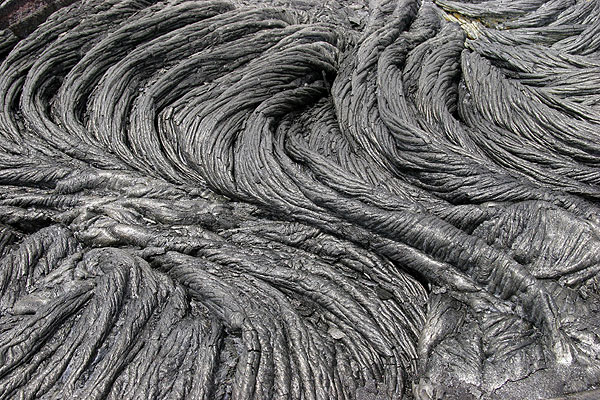
Most significantly of all, there is an underlying darkness at the root of everything we have built. Outside the cities, beyond the blurring edges of our civilization, at the mercy of the machine but not under its control, lies something that neither Marx nor Conrad, Caesar nor Hume, Thatcher nor Lenin ever really understood. Something that Western civilization – which has set the terms for global civilization—was never capable of understanding, because to understand it would be to undermine, fatally, the myth of that civilization. Something upon which that thin crust of lava is balanced; which feeds the machine and all the people who run it, and which they have all trained themselves not to see.

Teens talk of Climate Collapse

This is a fresh and unique 34 minute video, produced by Jem Bendell, about a 13 year-old’s exploration of climate collapse. It’s authentic, revealing and very touching.

the collapse of vertical imagination

the natural longing of the human soul
knows no boundaries
no nations or culture
no blood no skin color
it knows nothing of Others
or the Other within who wants to be seen

it only knows of Self in relation to All
is fueled by dreams and pathways to its heart
igniting its expression

as longing is diminished
Otherness rises

being in the modern world means
having longing obscured
to have dreams trampled is to extinguish longing
to extinguish longing is to bury the soul
to bury the soul is murder
a slow quiet bloodless murder every day

longing and Otherness go together
it’s usually Others that awaken us
as unexpected encounters connect us to
inner Others we did not recognize
as messengers of wealth
pointing to what we have not figured out
on our own

when I die
may I be The One left standing

©gary horvitz, 2017

Walking on Lava I

The end of the human race will be that it will eventually die of civilization.

                                                                                    — Ralph Waldo Emerson

(excerpted from Dark Mountain Manifesto)

Those who witness extreme social collapse at first hand seldom describe any deep revelation about the truths of human existence. What they do mention, if asked, is their surprise at how easy it is to die.

The pattern of ordinary life, in which so much stays the same from one day to the next, disguises the fragility of its fabric. How many of our activities are made possible by the impression of stability that pattern gives? So long as it repeats, or varies steadily enough, we are able to plan for tomorrow as if all the things we rely on and don’t think about too carefully will still be there. When the pattern is broken, by civil war or natural disaster or the smaller-scale tragedies that tear at its fabric, many of those activities become impossible or meaningless, while simply meeting needs we once took for granted may occupy much of our lives.

What war correspondents and relief workers report is not only the fragility of the fabric, but the speed with which it can unravel. As we write this, no one can say with certainty where the unravelling of the financial and commercial fabric of our economies will end. Meanwhile, beyond the cities, unchecked industrial exploitation frays the material basis of life in many parts of the world, and pulls at the ecological systems which sustain it.

Precarious as this moment may be, however, an awareness of the fragility of what we call civilization is nothing new.

‘Few men realize,’ wrote Joseph Conrad in 1896, ‘that their life, the very essence of their character, their capabilities and their audacities, are only the expression of their belief in the safety of their surroundings.’ Conrad’s writings exposed the civilization exported by European imperialists to be little more than a comforting illusion, not only in the dark, unconquerable heart of Africa, but in the whited sepulchres of their capital cities. The inhabitants of that civilization believed ‘blindly in the irresistible force of its institutions and its morals, in the power of its police and of its opinion,’ but their confidence could be maintained only by the seeming solidity of the crowd of like-minded believers surrounding them. Outside the walls, the wild remained as close to the surface as blood under skin, though the city-dweller was no longer equipped to face it directly.

Bertrand Russell caught this vein in Conrad’s worldview, suggesting that the novelist ‘thought of civilized and morally tolerable human life as a dangerous walk on a thin crust of barely cooled lava which at any moment might break and let the unwary sink into fiery depths.’ What both Russell and Conrad were getting at was a simple fact which any historian could confirm: human civilization is an intensely fragile construction. It is built on little more than belief: belief in the rightness of its values; belief in the strength of its system of law and order; belief in its currency; above all, perhaps, belief in its future.

Once that belief begins to crumble, the collapse of a civilization may become unstoppable. That civilizations fall, sooner or later, is as much a law of history as gravity is a law of physics. What remains after the fall is a wild mixture of cultural debris, confused and angry people whose certainties have betrayed them, and those forces which were always there, deeper than the foundations of the city walls: the desire to survive and the desire for meaning.

Climate Grief

Since 2007, Elizabeth Kubler-Ross’s five stages of grief has been applied to climate change by both those who accept the science and by those who do not. Looking at climate change through the Kubler-Ross lens isn’t quite as straightforward as if you were the one receiving the terminal diagnosis or if your spouse had just passed away. She later regretted creating the impression that grief progresses in a linear way through a defined set of stages. It does not, and no more so in the case of climate grief. The stages are signposts on a circuitous journey back to wholeness, through the gradual emergence of climate data and the shifting terrain of social responses to that data.

Facing one’s own mortality or the loss of a loved one occurs against a backdrop of relative stability. It’s socially sanctioned. There are many social structures acknowledging, empathizing with and supporting a passage through such grief. All the other aspects of one’s life may remain relatively certain as one addresses and metabolizes a radically disruptive transition. But generally speaking, the infrastructure of one’s life is not threatened.

Climate change, on the other hand, threatens the foundations of civilization, the biosphere, the underpinnings of everything we know, what we in the ‘developed’ world might call modernity. There’s no such universal social support for this type of grief because, unlike guaranteed mortality, climate grief is not universally shared. It also represents an unprecedented disruptive condition, one that doesn’t arrive all at once, but one that unfolds in multiple unpredictable ways over a long period of time.

The widespread denial of climate change losses prevents our emotional pain from being socially acknowledged and validated. Those touched by this grief may be viewed as overly sensitive, as exaggerating the issue, or even as emotionally unbalanced. These responses can encourage individuals to isolate, remain silent, and become disenfranchised from their own grief process, rather than move through it with support.                                               Leslie Davenport, 2017

The diagnosis has not been terminal from the very beginning. When James Hansen testified before the US Congress in 1988 and warned of global warming, no one took that warning to be a terminal diagnosis for humanity. Its nature has unfolded slowly to the point at which it’s only now becoming clear to the majority of those paying attention: An uninhabitable earth. An entire planet not accommodating to any image of human culture as we’ve known or imagined it. Instability. Profound uncertainty and extremely daunting logistical and environmental obstacles to continued viability of civilization.

Overlaying the common 5-stage model (Denial, Anger, Bargaining, Depression, Acceptance) on these conditions is not so simple, but it does provide a way of understanding and naming key dynamics of the responses to the ever-advancing conditions we face. What a personal terminal diagnosis and climate change share in common is that resilience is possible. Even if the diagnosis is terminal, it’s still possible to recover and maintain wholeness.

The words ecology, ecocide and economics derive from the same root, the Greek word for home: oikos. This common root implies equilibrium in the biosphere and in all our relations with each other, not only through mere commerce. What we see today is a common radical disturbance of increasing severity in ecology and in economics. We have strayed far from home in both domains. We are killing ourselves and now live under a common threat of death. Whether it is understood in these terms or not, this is the root of our grief, an existential estrangement from home. To restore that equilibrium requires that we turn our efforts toward the biosphere, toward others and toward our selves to heal the economy of the whole.

The womb of grief is the seat of love, of caring. To turn away from eco-grief is to turn away from home. The feelings related to grief can be very difficult to bear. But if we remember to think of grief as a natural expression of caring, even love, we can begin to see grief as a form of compassion and strength. We can even begin to see our grief as a tool for action.                                                             Leslie Davenport

Those of us who accept the diagnosis, anthropogenic global warming, are all too familiar with the forms of denial practiced by those who do not accept it–or play with words to appear to be agnostic about it. Some deny there’s a problem altogether. They deny humans are causing the problem; they deny the magnitude of the problem; they claim mitigation measures will be too costly now and that they will be cheaper later when the impacts are more obvious. They deny the scientific consensus, attack the reliability of the data and finally, they attack the messengers, the scientists themselves, as greedy liars. And besides, what hubris it is for humans to claim God’s Plan may be flawed. The audacity!

Less obvious are the forms of denial practiced by climate advocates: We have to push harder for emission reduction. Admitting failure will only lead us to hopelessness. We can still change course (after 30 years of insufficient action). Technology will save us. We have to shield ‘others’ from hearing the truth. We practice functional denial, being well aware of our compromises, inadequacies and limited agency, but still trudge through our days as if species are not disappearing all around us. Truly, sometimes we have to give ourselves a break from the onslaught of bad news. Otherwise, we fear, we could not function. Every day is a conversation with urgency against the backdrop of our grief and periodic despair. Who could resist denying all of it from time to time?

The few, the gifted, the fearless, the ones who fully experience the deep well, the womb of grief as the seat of care are the ones who demonstrate what in our deepest heart we know is true. Those who can fully dismantle their own denial are the ones who demonstrate—even without words—the fundamental and natural connection within all of us to the full magnitude of the issue and the horror of all that is being destroyed around us. And not only by Others, but by we ourselves. Our complicity is much easier to deny than to fully accept.

The anger we feel about the denial all around us, the cynical disregard for the advancing consequences of climate displayed by politicians, the disinterest, the half-measures, the delay, the obfuscation, the lies, the aggressive ignorance, the outright hostility to the truth (as we see it) is like an unwelcome intruder, draining us of energy and focus. Anger may rise at any time, triggered by a casual remark, a headline, a social media post. It’s usually directed elsewhere, but not always. We can surely be as angry with ourselves as with someone else. But either way, it does undermine our capacity for action.

We also have our own versions of bargaining and will quickly adopt internal measures appealing to our inner panel of judges, justifying our exhaustion, assuaging guilt, promising improvement. This is the terrain of personal and collective lobbying. Pushing for someone else to do something. Ultimately, bargaining is too often an attempt to squeeze wine from a raisin. We are not getting where we need to go and finally realize we are only delaying the inevitable. This is the moment Deep Adaptation dawns upon us. We finally know we are alone and what is required. That space, a no man’s land where our agency is hopelessly lost between knowledge and action, is the crossroads of depression and acceptance.

Accompanying depression is what Kubler-Ross might have called extreme helplessness, a near-fatal despair. There is nothing to do but stare into the darkness, searching for any sign of form, of possibility, of faith. As long as any denial remains, despair will not abate. We have to acknowledge that there are others not ready to hear the truth. Perhaps we ourselves are not ready to hear the truth that we are (on our way to) losing our home, our family, our life as we knew it.

But despair is a state, not a station. It’s a passing condition. That it will change may be the only thing we can be sure of. It is telling us to change our strategies, to change the parameters of our activities, the definition of our community, the issues we tend to. It is telling us to discard what has not been working, to accept our mortality, that wholeness is not only possible for ourselves, but a gift we can offer to others.

Acceptance opens space, restoring agency and creative possibility. It opens the floodgates of feeling, connection and resilience, putting us back in the middle, holding the ambiguity of life and death, of journeying but never fully arriving. Acceptance restores meaning. This is the ethos of Deep Adaptation, remembering home from the ground up, embodying a new economy, taking care of what is within our reach and accepting limits on our capacities.


The Anthropocene: Humans Behaving Badly

Do humans have a purpose on earth? This is slightly different from asking a more open-ended, “What is the purpose of life?” or “Why are we here?” (in this universe). The question I’m asking, and hearing others ask, is more local, more pointed: “What is the human purpose on this earth…in this epoch of time?….in the matrix of life on this planet?” This is the question of the Anthropocene, because it’s clear we’ve (the white European cohort) become especially confused lately (since the Enlightenment?) and haven’t been doing it much good.

The answer to this question will of course be different depending on whom you talk to. But it’s clear, at least from the beginning of Genesis to the end of Revelations, our destiny has been to become stewards of life on earth. And since we’re talking about who defines the parameters of the dominant narrative, the Enlightenment confirmed that, pretty much, by declaring reality (Gaia) to be dead. Now, having crossed into the unfamiliar space of being the primary drivers of an unhealthy biosphere, why is our destiny not immediately clear?

We fancy ourselves exceptional. At what point in our intellectual or technical development did the formulation of “destiny” or “purpose” even become possible and if the question is sufficiently massaged to address the local inference, why did we not recognize this capacity long ago, elevated above all other personal or collective imperatives? It seems we are only beginning to address this question as our continuing existence is increasingly threatened.

A popular theme of science fiction—and Hollywood blockbusters–is ominous speculation about robots becoming conscious—that man-made machines will become self-aware and exceed the limits of human control—not knowing their place, so to speak. The theme of humans being capable of creating monsters is not new. But now we talk of AI growing beyond our control, its human designers squirming beyond all ethical boundaries and precipitating all manner of damage upon its collective creators. Yet, as most people have noticed, humanity has already brought the rising (acidifying) waters and become the dancing brooms in Disney’s Sorcerer’s Apprentice. The Master’s messenger on earth has become the uncontrollable diabolical force of creation gone wrong with only one driving imperative—the preservation of a self-serving paradigm.

In other words, who is controlling what? Cloning vaguely falls into this category as well, creation itself falling victim to the law of unintended consequences. But we seem to have less moral ambiguity about cloning than AI. We already have the capacity to knowingly introduce bias into AI algorithms. The designation “ethical AI” itself infers the existence of “unethical” AI—which we would presumably and unequivocally reject….except “ethics” has now become a squishy concept because there’s so much money to be made. The creation of “ethical” AI now guarantees the future of the unethical variety.

I wonder if it occurs to the scientists that the train of civilization has already gone wildly off the rails?

So here’s the question that now haunts me. The sci-fi dystopian fantasies are all future oriented—as if, if we’re not careful, it can happen here. But we humans are already victims of our own development–driven by a relatively tiny cadre—a cult, if you will. We ourselves are already making the AI horror movie (and have been for a long time already), a world ruled by technology loosed upon the biosphere, wreaking havoc beyond the oversight of any cool-headed super-authority, not only being at war with the biosphere and with each other, while some of us also see what we’re doing, trying desperately to come to our senses to reverse the damage.

Not only does this view clarify the Anthropocene, humans ‘gone wrong,’ but begs the question of whether humanity—under control of the cult of growth—could ever be a neutral force. The naïve view is that somehow we have backed into a position of unprecedented influence on earth. In reality, the cult has been on a self-conscious accelerating destructive evolutionary tangent for some time; a product of natural evolution by some stretch of the imagination, perhaps, but one that now spells our own doom. Do they know what they are doing? Yes. And, as the definition of insanity so convincingly tells us, even in the face of rising danger the cult continues to believe doing more of the same will result in a different outcome. They are doubling down on the primacy of technology to manage our living relationship with nature—because money.

At what point did we stray off course? When did the progenitors of a culture of death become dominant? When did a tiny subset of humans turn to radical evil as a prime directive? When did we (they) become the proverbial robots gone rogue, incapable of thinking outside their own box? I’d say quite recently—maybe 100 years ago, accelerating in the aftermath of WWII, and the age of The Bomb.

But deeper conditions had to be present for this to be possible. As in the movies, a series of dysfunctional lines of code reinforce each other until an unpredictable tipping point is crossed and suddenly a new organism takes shape. In our case, it was a series of events over a long period. Mass production, the birth of capital finance, using money to make money (1300-1600), the creation of Limited Liability Corporations and colonialism all figure into the picture.

The Judeo-Christian fiction that humans were put here to dominate nature hasn’t helped,…and then there was that guy who said, “I think, therefore I am,” (17thC.) which segued into the ever popular, but so much more damaging, “I own, therefore I rule.” The inflection point occurring 70 years ago was an acceleration of the machinery of destruction to its current runaway status.

Along the way, while the rest of us were de-indigenizing, uprooting ourselves, enjoying newfound mobility, shifting our primary relationships away from tribe and earth to self and money, we lost contact with Home. Now, a small sliver of (distinctly white western) humanity has gained sufficient power and influence to write the rules of money and property to their own specifications, a radical evil self-interest, to rig the game in their favor. Mass psychosis has ensued. Now we have many gradations of psychosis gripping the general population, clinging to the illusions of equality of opportunity and upward mobility. Few make it, of course. The self-appointed engineers are an increasingly exclusive club.

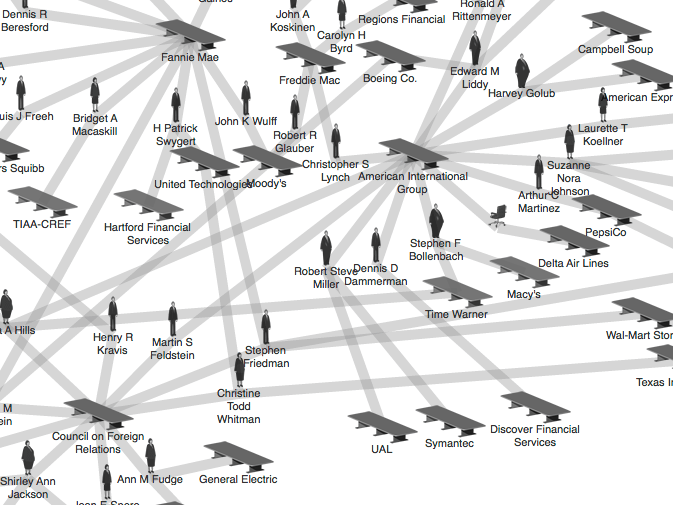
Who is this cult? It’s the Barons of Wall Street, the CEOs of the biggest mutual, hedge and pension funds, the plutocrats, Washington politicians, the intelligence community (the National Security Apparatus), the core law enforcement agencies of government, the fossil fuel sector, the military-industrial complex and certain media entities. This is an insulated, exclusive, self-perpetuating, community of moneyed and political interests who determine the rules for everyone else. Their immunity to resistance is legendary, complete and becoming ever stronger. Whether any single individual member of the cult is insane may be debatable, but the ideology is seamless, ingrained, doesn’t require specific articulation or enforcement. It has become second nature to all its members. They make the kool-aid. We’re supposed to drink it!

The next (and worst) wrinkle of ‘bots gone wrong,’ is when they decide the rest of humanity is expendable (or even must be eliminated) because they are obviously of inferior intelligence and are screwing up everything for the radically evil select few who seek perpetual control and immortality from their secure and remote compounds in the mountains of New Zealand. In other words, every wave of resistance, every opposing dialectic generated from the masses who are waking up to how far we have strayed from the original mutually beneficial relationship to all life, who wish to restore the homeostatic mechanisms (emphasis on home) conducive to life, must be crushed—or at least delayed.

Surely there’s a name for the condition of this self-selected, connected tiny sliver of humanity dragging the rest of us off the cliff, an expression worthy of this mutation of the prime directives. Some prefer the term Deep State. I like the sound of Tyrannysaurus: the tyranny of a hell-bent cult whose days are numbered. Unfortunately, I don’t think we’ll survive them. Like most mutations, the difference between the common and the rare and deranged is not radical. A few mangled lines of code are enough to set the result on a course of unchecked damage, tearing its way through the rest of the species leaving a trail of victims who will never fully recover. You know whom I mean, the uneducated, the poor, the dispossessed, the bankrupt, the disenfranchised.

The mentality of the Tyrannysaurus is separated from the rest of us only by a matter of degree. Not merely thinking for themselves, they think only of themselves. Not merely compartmentalizing the suffering of others, they are willing to directly cause that suffering by promoting a system of violence to extract every possible form of wealth from the commons. They do not merely avoid inconvenient facts, they construct alternate realities, attacking truth itself and fomenting mass delusion to support their fantasy about where responsibility lies for the ongoing wreckage. They do not merely believe humans are superior beings, but that they themselves are super-human. These aberrations of the Holocene, leading the way into the Anthropocene, believe they—and only they–are the pinnacle of evolution.

Most of all, and most damaging, they have managed to deny planetary limits to growth and the extent of our entanglement with other forms of life. Worse, they deny everyone else’s entanglement as well (because of course!), limiting our capacity to repair the damage their violence has wrought.

Long into the future, perhaps even millions of years, when the ice-bound or ashen chronicles of this age of humans is revealed and explored, the extinction story of humanity will be pieced together as an internally generated event. Unlike the first extinction of the great dinosaurs, human extinction will be a story pinned to the faulty code and resulting hubris, narcissism and unapologetic destructive force of the Tyrannysaurus forever, including the way they managed to convince so many of their contemporaries that only they had the answers to the rising danger of our uncontrolled self-destructive mass behavior and how they retreated to their secret guarded redoubts and watched billions of their cohorts, unprepared, succumb to starvation, conflict, disease and an uninhabitable climate.

The Path To Thriving II: Possess Nothing, Own Everything

The more deeply we dive into the philosophical core of sustainability, the more we realize a critical principle determining our human aliveness is whether we can realize the trans-corporeal matrix currently being impinged by every increment of our expanding economic structure. How do we live as fully connected beings? What are we connected to and what is the currency of that connection? And, starting again at the bottom, what kind of economy grows out of embodying the true nature of our connection to each other and the earth?

Many are addressing these questions and have articulated behaviors that together unleash a living transformational process. We are on the cusp of creating an evolutionary culture in which we arrive at a new clarity about how ego—in the form of the money (and time)–based economy–feeds intra-personal dysfunction (our bottomless desire for “more”), inter-personal dysfunction (“more for you means less for me”) and social and economic dysfunction (acting out of greed, fear and scarcity to destroy the Commons).

Yet also, the term sustainable has been appropriated, co-opted, modified, turned inside-out, contorted to death by the very forces in the culture that have brought us to this precipice. At one time, Shell Oil promoted itself as a “leader in green technologies.” Need I say more?

In the midst of all this blurring of meaning, does the term thriving mean anything? Or is it a merely another artificial designation? I repeat, as Peter Block has said, “All transformation is linguistic.” What does the word thrive convey that the word sustainable does not?

I would suggest Four Principles of Thriving:

  • Thriving is the spiritual dimension of sustainability. What sustainability is—or was–to a material economy, thriving is to the spiritual economy. We intuitively know it is not enough to birth a new world that provides the necessities of life without acknowledging and attending to the spiritual implications for each person in their own lives. To the extent that sustainability is about economics, then thriving is about each of us embodying (living our true nature) that new economy: becoming that new economy expresses not only our love of each other but manifests Love as the primary principle of being alive.
  • Thriving is the fire of spirit and the air of open heart-space. Sustainability evokes the esthetics of earth and water. Thriving is about the inception and integration of a divine fire that infuses all our actions with openhearted possibility. 
  • Thriving is the precarious edge of balance. If sustainability invokes balance, thriving challenges us as chaos and complexity challenge predictability, birthing an order in which emergent complexity demands continuous innovation. Here, at an evolutionary edge, consciousness speaks nature into being, becoming the locus of adaptation and experimentation, the trial and error of organic vitality.
  • Thriving is the mythic dimension of sustainability, the meta-narrative of possibility. It is a reference to the continuous, spontaneous process of creating, modifying and re-forming the open architecture of diversity; where distributed networks of freely accessible information and self-organizing governance activate the free-flow of resources to meet real needs.

The full implication of a healthy earth is healthy beings. Maybe that includes humans, maybe not. The separate (small-s) self is bringing us to the precipice of annihilation. At the root of the consuming fire enveloping all systems of earth is this myth of separation and the acquisitive drive springing from it. The drive to accumulate and “possess” the illusory objects of imagined wealth, drawing unto ourselves all the things that reinforce our personal conception of a unique “self,” is leaving us bereft of humanity and community. Despite the ubiquity of messages reinforcing Separation, its rationale is fracturing and its flaws are becoming ever more apparent.

To the degree that we are able to relinquish the trappings of the acquisitive self and listen to a deeper voice emerging from the inmost fire, guiding us to connected action in the world, we may each discover our personal gift and appropriate occupation. And to the degree we are able to manifest that occupation in service to family, community or bioregion, the Gift of that service is rendered to the Giver, the web of life itself. All the “things” we now “own,” the “possessions” we create and temporarily hold to ourselves, have come from and will return to that web of life, including our “selves.”

The Connected Self is an individual, yet one who no longer has a need to possess an identity based on separation, competition or domination. The Connected Self is awakened to a universal force, becoming an open channel for inspired vocation, beauty and diversity in co-creative action. The Connected Self becomes a unique expression of love and justice, profoundly trusting a rightful place in the world, unflinchingly descending into the reality of and living our common material nature. For the Connected Self, the distinction between Self and Other blurs and dissolves. Every individual who lives this connection enters the heart as an expansive new home and becomes an owner, a steward of a new economy whose currency is compassion.

Our true freedom, finding our place in the connected community of life, derives from comprehending the reality of our temporary ownership of a few objects and, at the same time, our timeless ownership and responsibility to all things. The true nature of all possessions is transitory. Our freedom derives from letting go of separation and simultaneously embracing our Common Wealth with a dynamic sense of ownership and responsibility.

That ownership means we can no longer avoid addressing the depth of our complicity in the way things are, nor can we turn away from the sight of others committing acts of separation and extraction destructive to the common wealth. A new economy derives from our ability to perceive and live the whole, unimpeded by the illusion that any part truly belongs to us. Possess Nothing. Own Everything. Then we may have a chance to thrive.

The Path To Thriving I: Sustainability is Dead

For years the word sustainable held sufficient gravitas to alert us to advance a worthy objective: balance. As the increasingly terrifying news rises to and leaks over the bulwarks of denial and indifference, and despite political orchestrations and establishment media and especially the green washing of Wall Street’s “socially responsible investing”, that word has now become virtually meaningless. It is yet another casualty of the war on truth. It’s an empty slogan. What used to be there is now so muddled as to be unrecognizable.

With all the machinations of the expensive and increasingly sophisticated public relations campaigns bent on greening corporate images (see Black Rock just last week), appearances change while incremental concessions are seduced from the public. The airwaves and social media are infected by super-bugs of disinformation immune to the latest antibiotic push-back of truth. Whatever laurels ‘sustainable’ may have had to rest upon rapidly became linguistic deathbeds. Authentic dialogue must again be rescued from the merely opportunistic.

There is something missing from the conventional use of the term that no longer articulates the full flavor of what we imagine is the coming world. Maybe it’s our imagination that needs an overhaul. The world we want, slipping from our grasp, is something more like sustainability on steroids; not merely providing basic necessities or doing so without degrading life support system, but a world in which all people are living at an enhanced quality that can only emerge when we live in generous relationship and open possibility. Generosity is key. Unfortunately, the rising tide of bad news tends to corrode that option, making it even more urgent.

In the heart of spreading references to thriving is the ratcheting up of urgency that we feel in our bones and brains about the coming transition whose details are beginning to appear and the obstacles to which are emerging just as quickly. We want passion. We want to be touched by passion, moved by it. We want to feel that passion within our lives as a searing fire that will sustain us and burn through the old as we surf–and birth—a transformation into whatever is to come.

But let’s back up for a moment.

A simple operational definition of sustainability is that living systems meet all the needs of its members and don’t borrow (or steal) from the future. Without even checking any “official” definition, sustainability (simplistically) is a condition of using no more resources than can be fully regenerated in the harmonic course of natural process. But we are well past that point. The ecological account is overdrawn and collection is landing heavily at our front door.

This definition would apply regardless of the resource under consideration, from the material to the spiritual. The maintenance of a dynamic equilibrium, a systemic motility embodying a capacity to respond fully to natural forces, is to interpret inputs and modify behaviors appropriately to maintain systemic viability. Lots of attributes of sustainability have been devised and articulated. And surely it means different things to different people, depending on the scale of consideration.

There are the more popular, and also misunderstood, but easily explained practical economic attributes such as zero-growth—which is the primary reality disregarded by Wall Street, global investors, emerging economies and central banks. The dominant human social and economic paradigm of endless growth in a field of limited resources is clearly not sustainable. That’s why it must be disregarded. And, as many have adopted, we humans, having entered the Anthropocene, are on the verge of determining whether we are even capable of interpreting and responding appropriately to clear data that demands we modify our behavior to secure our own future viability. This, while losing a football field-sized chunk of pristine Brazilian Amazon rainforest every minute.

Yet the terms of that “sustainable” future are being redefined as we speak. The planetary system is adjusting according to its own laws, while the homeostasis we’ve depended upon for millennia is degrading. As we notice new and alarming components of the breakdown, such as insect loss, ocean acidification, desertification, the torrential runoff from Greenland being added to the known components such as radical weather, whatever we meant by sustainable a (lost) decade ago now has virtually no meaning at all.

To be bluntly specific, three features of the current paradigm (capitalism, patriarchy and empire) are unsustainable. The extractive industrial growth imperative regarding the earth as a limitless storehouse of resources as well as a waste dump; the dominance of the masculine principle in our social design, economic modeling, learning communities, workplaces and political discourse; and the economic and political class warfare driven by scarcity, fear, morphing into racial and ethnic conflict as we speak, have already conspired to bring many species to extinction and are now conspiring to bring humans themselves to a critical decision point.

Then there are the less widely understood social, political, and spiritual implications of sustainability. Regardless of the domain, however, at its heart, the term sustainable refers to a biological, energetic and social vitality, a structure/process that is perpetually and self-consciously adaptable enough—at sufficient speed–to recognize and address emerging needs, i.e. it is alive! It is dynamic. It changes easily and continuously. If anything is going to save us, it will be our ability to integrate, tolerate and respond to the actual pace of change.

We Are Failing

The Anthropocene is the label of choice for the success and the failure of humanity. Yet now, the signs of Nature withdrawing its endorsement of modernity are multiplying in frequency and diversity. She is fighting back against the totalitarian ideology of objectivity, which, ironically, we could say is something She created in the first place.

Linearity is disrupted. The plantation of Modernity is being liberated. We have not saved humanity from poverty or ignorance or inequality. We cannot Save the Planet from ourselves. We are not saviors at all. We are becoming fugitives, uprooted from our comfortable illusions of growth and permanence. We are now the dispossessed. We are the ones losing our home because we pursued the belief that we could have an objective home, some place that is “ours.” But no, our home is not a place. It is a state of mind. Culture is our home. Communion is our home.

Peter Block, a renowned consultant in organizational and community development, has said, “All transformation is linguistic.” The very idea that we view our selves and each other as objects, thereby separating our selves from the immediate, the entangled, the subjective, we become distinct from nature and view reality as dead. All of this renders true communion far more remote.

Making a simple linguistic shift from objects to subjects, we reimagine ourselves as perpetually evolving in imaginative and poetic ways, sharing an identical subjectivity with all others, human and non-human elements of the biosphere, which is itself a continuously emergent generative process without beginning or end. As subjects, we access an ego-less dimension of participating in the shared experience of co-creation, of the emerging meaning of our nature, bringing forth the aliveness in every moment.

“Nature” is not coming apart. We are coming apart. We are colonized by a totalitarian system of our own making, an inverted ideology in which we are conditioned to believe we are objective actors who have exercised our freedom, as it were, to act in our own interest, while our primary interest is obliterated by the colonizer. And, make no mistake, there is a colonizer. By believing in our objective status, we act against our own interest.

We are seeing the unraveling progress everywhere. The Enlightenment tells us—and we imagine—we are doing something ‘to’ nature. As is clear even to the most casual lay observer, by failing to acknowledge we are part of the very metabolism of the biosphere, in distorting and undermining our own sanctity, we are injuring our selves and the homeostasis of the whole. Thus, by failing, we arrive at a new ethic. But there is no arrival. Our failures will become seeds of something new. But we can never fully leave the failures behind and we will never fully arrive at success. We will always be in the middle.