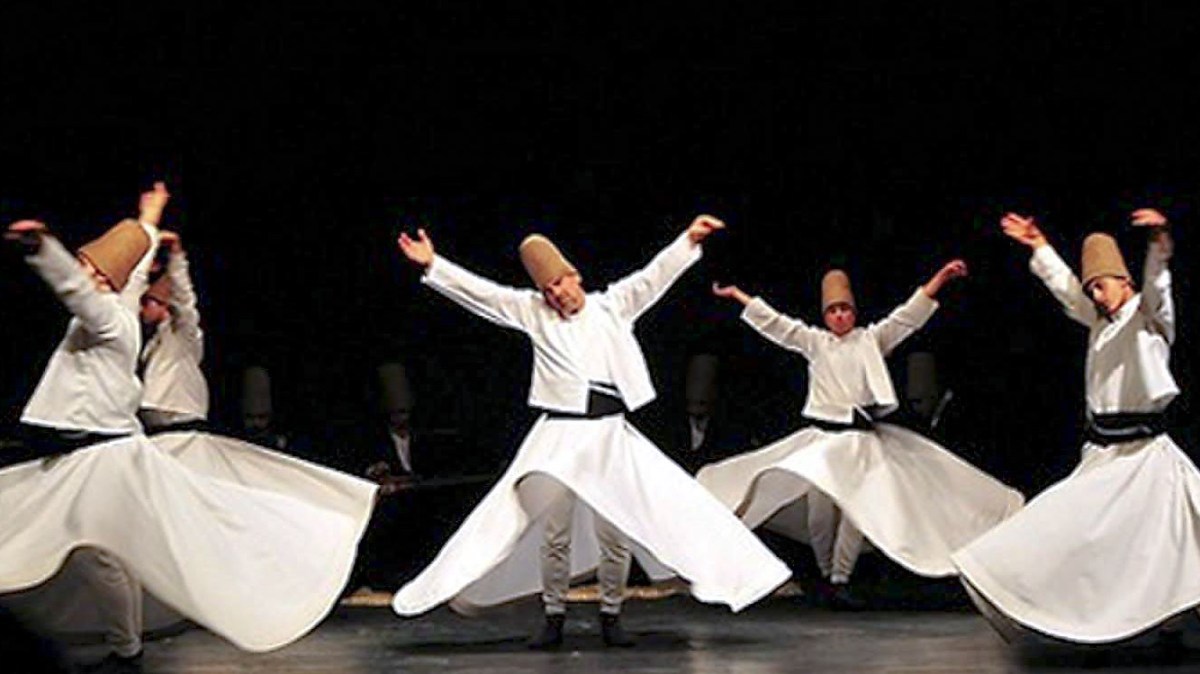
The Awakened Embodied Self

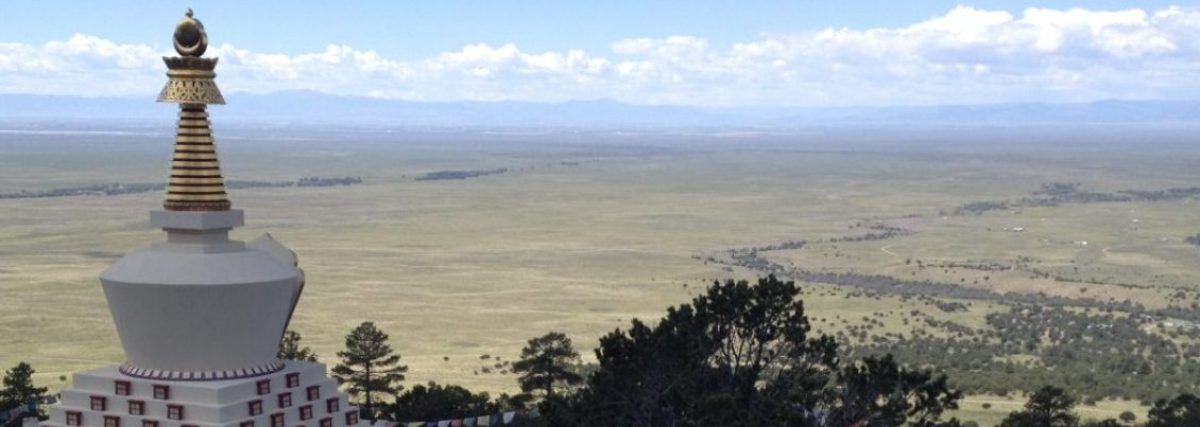
This is the imperative of evolving spirituality, realizing Sufism’s unity of fanaa and baqaa & of Buddhism’s Two Truths, to be here and everywhere at all times, to simultaneously be emptiness and embodiment.

Anyone inquiring into the meaning and process of spiritual awakening undoubtedly encounters conflicting ideas about consciousness. Where does “I” come from and where does “I” reside? Western psychology and religion are deeply concerned with defining and preserving the Self as a separate and fixed entity with (or in) an eternal soul, while eastern religions deny any absolute reality of a separate identity. What’s a seeker to do?

When sitting to meditate, one of the first instructions we receive is to become aware of the living process. In some traditions, we are guided to bring attention to the breath and gradually to the physical sensations that come and go from moment to moment. We can dwell on these sensations for extended periods, but an essential practice of meditation is to focus on one thing while developing the capacity to notice everything else that arises in the background. 

A second level of this process is to notice how—and how easily–our attention is distracted from the singular focus we started with. This noticing and the repeated return to the original point of attention is the development of presence. A third iteration of attention is to notice the different feelings that arise in the course of being distracted and returning to our original intention. Do we have judgments about ourselves for leaving? Do we have expectations about how we return and how long we ‘should’ be able to maintain the original state? Are we trying to achieve something?

A fourth iteration might be to ask who (or what) is the one meditating and who is the one presumably not meditating while being distracted. In asking these questions, one enters the territory of distinguishing between Self and Not-self, the psychological (ego) self and the (super-ego) witness. From here it’s a short linguistic shift in attention to a witness that is itself a non-entity. In fact, unwinding this thread of consciousness to its logical conclusion would require we investigate who is witnessing the witness, realizing that a further iteration of witness arises as soon as we establish an awareness of the immediate one. Tracing the witness all the way back to its origins is what, according to Robert Thurman, Buddha himself did on the way to his own awakening.

What is found when we go ever deeper into the layered constructs of cognitive awareness? Nothing? No self? In Buddhism, what is found at the root of the ever-elusive identification of the witness, is emptiness. Emptiness completely undermines any notion that there’s objective existence of anything. The appearance of everything is dependent on something else, a precedent. When investigating the existence of the precedent, one inevitably realizes there is no single independent source of anything.

We also create otherness internally in relation to “self” when we identify with unworthiness. We are also confused about who or what is the Self—is it a container of all the internal voices we may hear at any given moment? Is it a core truth, an identity around which all these voices orbit incessantly? If the former, then who is the witness, the part to whom critics address their assessment, their directives and imperatives?  If the latter, then what is their true role and value?

God is an infinite sphere whose center is everywhere and whose circumference is nowhere.  

 —The Book of the Twenty-four Philosophers (12thC)

Reducing the complexity of the human psyche to a bit of spiritual geometry casts some light on the concept of Self, defined by behavioral therapy, which, unlike an entity with no fixed center and no boundary, implies a more actively engaged and focused energy. Self has been described as the equivalent of ‘flow,’ a ‘sense of deep concentration without distracting thought, a lack of concern with reward; confidence, mastery and well-being.’ Sounds just like being embodied in the moment.

The term “self-leadership,” carries connotations of action, forethought and calculation. But wait. Wasn’t self just described as being completely in the moment, merging with phenomena without analytical preconception–or planning? What does the term “leadership” mean? Is the self still? Is it in motion? Is it an expansive boundary-less playful state of mindfulness? Or is it a kind of executive identifying and bringing various voices and intentions to heel, establishing and re-drawing its boundaries to expand its domain of influence, micro-surgically distinguishing itself from the masks of persistent sub-personalities?

What is the source of its energies? Is it a still point distinct from the surrounding disharmony? Or is it a primary organizing principle–a magnetic north, for a being negotiating its way through Being?  Is it even distinct from “I” at all? These questions are addressed by suggesting it is not a matter of determining whether self is an active center or an expansive, more passive presence. Like light, self is neither wave nor particle, but both, or either one, like the famous double-slit experiment of 1801, depending on who is looking and when, constantly transmuting from one to the other depending on the conditions of the moment. 

According to Coleman Barks, the Arabic words fanaa and baqaa are used by Sufis to describe the intersection of the human with the divine, a ‘constant and profound interplay full of paradox and movement, breathing in and out of every soul.’ These are seemingly opposing forces; or perhaps more accurately, the yin and yang of consciousness, the particle and wave of light; forces influencing our sense of connection to ourselves, to each other and all that is. 

Fanaa is the impulse to surrender, allowing oneself to become ‘annihilated, as if disintegrating into a vast magnificent sky, dying in order to become one with the infinite.’ Not unlike non-dual presence, the extinction of self, fanaa is the ultimate expansion, the dissolution of every boundary, every circumference. Mind-lessness. Paradoxically, this is also the highest form of concentration at the pinnacle of Buddhist ati-yoga, The Great Perfection itself. This is the ultimate devotion, realizing the truth of emptiness.

Baqaa, on the other hand, literally means permanency or embodiment. Perhaps the word discipline more precisely approaches its practical expression; the intention to be here, as opposed to being everywhere else but here. Not dissolving or shrinking from the mundane, but exploring its deepest nature, focusing one’s energies completely in the service of being exactly what we are. ‘Baqaa is the relative truth of appearance, the undeniable materiality of existence. Instead of melting into that whole sky, one aspires to nothing more than becoming one of the stars in it, experiencing the nature of one’s unique place in the sky’ or one’s place here on earth. 

True baqaa is also the fruit of a lifetime of devotion. This is where the attributes of self fully rise in dignity and durability. This is the self of Richard Schwartz’s familiar C-words of Internal Family Systems (confidence, creativity, calm, curiosity, compassion, clarity, confidence, courage) the self that becomes a mirror of clarity and purpose in every act, connected to and relating from its own ever evolving essence. Baqaa is the realization and containment of a refined skill. The pinnacle of progress on the incremental spiritual path.

The more discipline we exercise in discovering self and the more time we spend there, the closer we come to the invitations of fanaa, the ability to rest in our own essence, and increasingly to connect to the essence in others as well. And even beyond that, to the essence of all that is. Full realization.

We become, as Barks says, “the dreamer streaming into the loving nowhere of night.” This Self, the one that can live simultaneously in both fanaa and baqaa, is the self that is both particle and wave, both completely here and simultaneously nowhere, constantly transmuting appearance and emptiness into a continuously shifting torus of space. At the pinnacle of Tibetan ati-yoga practice, this is The Great Perfection, living beyond both samsara and nirvana, dissolving the Two Truths into One. This is not a Self that cannot be found, merely one which is not fixed, which cannot be pinned to either the relative or absolute. More by choice than by accident, one flows back and forth, as Barks puts it, between “visionary radiance” and the “level calm of ordinary sight.” 

These are the terms of awakening arising from the Sufi mystical tradition of Islam. This is the imperative of evolving spirituality, to realize the unity of Buddhism’s Two Truths, to be here and everywhere at all times, to simultaneously be emptiness and embodiment, to live in single-pointed awareness/aliveness within vast and timeless space, or at least available to transmute one’s capacities to the requirements of the moment, to seek both refuge in the specific and in the general, to slip the bondage, delusion and suffering of dualistic mind…and to live from a bottomless and source-less joy at any moment.

One Full Breath

Maybe I could see it if I had eyes on the side of my head instead of looking straight, as if I’m a fish, perpetually suspicious about the possibility of water—as if I once knew of it but have forgotten. That is, if I, a fish, believed in existence.

Dawn is breaking. Lurking in my awareness for a long time–at least intermittently—is a perpetual presence lying just outside my field of vision. Try as I might, I cannot bring it wholly into view. Perhaps it’s an illusion, but regardless, it’s elusive, yet it also feels like something central to all understanding. Maybe I could see it if I had eyes on the side of my head instead of looking straight forward, as if I’m a fish, perpetually suspicious about the possibility of water—as if I once knew of it but have forgotten—still sensing its centrality to my existence. That is, if I, a fish, believed in existence.

My adventures in Buddhist philosophy and subsequent experiences, not merely the intellectual exercise nor any cognitive machinations, but by direct experience, have taken me all the way to the realization of water. Yet in the routine experience of relativity, I revert to a suspicion, which is accompanied by an annoying sense of inadequacy, that such clarity—enlightened clarity—is never as accessible as I might wish. This is surely a common phenomenon.

Today I noticed an essential truth housed in a familiar book passage. I recalled its past impact, this time it had no impact. It was as if my mind had closed and was no longer open to being impacted, or of having my current spell broken, not even for a moment, to permit what was once a possibility that my energy would change, that I could enter a spacious and unadorned frame of reference, that I could be lifted out of the all-too-familiar quagmire of routine discursive thought for even a moment.

It seemed that what were once anchors of a self-regulated, light-hearted, even somewhat innocent demeanor had been rendered inert, remote and inaccessible, almost completely foreign. And in their place is a frustrated, anxious, edgy, too easily angered, limited and defended, even fragile presence, helplessly attempting to regain some agency in a universe whose laws quickly undermine every presumption of agency. 

I might have called this the bardo of everyday life, this forgetting, but my temptation to also name it the bardo of death is because I suspect the sensations are nearly identical, of being lost, drifting in a sea of semi-cognition, dreams with no sensations, no handholds, no anchors, no primary orientation whatsoever, being no-body, as if I will forever drift, uncertain if I wish to or am even capable of either surrendering to the dream or waking from it. Except now, the dreamscape abides whichever way I go.

I wonder if I’m merely experiencing aging, slipping across some threshold into a permanently shrunken space where the inventory of available brain cells has diminished. I don’t seem to be able to transcend, to free myself from these limitations. Until this:

I settled and began gazing, a deliberate and progressive meditative process, eyes wide open, into the heart of Being, expanding, loosening the anchors of the physical body, a condition in which the boundaries between self and object, seer and seen, flicker and dissolve like a mirage, like a dying flame. For a moment, I am free of my story. I breathe and rise to my full stature. 

Gazing into the moment…as the moment gazes into you…the comforting stability of it, its fleeting nature and unlimited potential, the opportunity for wisdom to arrive, for benefit to arise for all beings, that is the nature, the whole (he)art of the gaze. It is not a condition of a single being gazing from or at or even with anythingGazing is (potentially) a non-dual state, the formless form of Being, the perpetual condition of Being seeing through its own eyes. Gazing is more than looking or sensing or feeling. It is more than hearing or touching or interacting in any finite way with any thingGazing is taking a full breath of now. It is all things now, being now, creating now, living and dying now, absent any desire or agenda whatsoever.

Outside of meditation itself, in post-meditation, the presence of gazing may also partake of the ferment of ideas in the teeming bazaar of this time, the fertile turbulence of the evolutionary marketplace at the crossroads of this moment. Aren’t we all desperately gazing into this moment to comprehend, to extract the meaning and succulence of these increasingly desperate times? Take one full breath of this! Rise to your full stature and realize the world is gazing back at you.

Being is gazing back at your being, with no expectations, no demands, no promises, no guarantees, with no past and no future to destroy or create. We are all making the world in this moment, gazing into the future, becoming messengers to the future, rising to fullness as vital nodes in the web of life, sensing the energetics of the whole, a promise we make to ourselves as we fully breathe into the present. 

This is what the future is asking of us now, to take a full breath of this moment. Each of us, in our personal conflicts, lifelong journeys, unresolved questions, resolutions, accomplishments large or small, is called to be a messenger, an ancestor, a gift to the future. Regardless of our karma, whatever our success or failings, we are guides, changing the course of history, bending the moral arc of the universe toward justice.  That’s all we have. That’s all we’ve ever had and all we will ever have. 

Accepting the fullness of one’s own karma may not be such an easy thing, because to do so you have to tell yourself the truth. But if ever there was a moment to breath fully into life, into this long-awaited transition, this re-opening of possibility, this moment to reflect and dedicate ourselves to the task ahead, this is it. Gaze into it; and may the Being of Samanthabadra, the consciousness of all Buddhas; of Manjushri, the wisdom of all Buddhas; of Chenrezig, the compassion of all Buddhas, the nature of Being itself, hiding in plain sight, be the guidance you wish for and deserve. Take a full breath and give everything to it.

Gratitude to Rudolph Bauer for sparking this content. See his article, “Gazing as Dzogchen.”

Love and Grief

Grief is a way of loving what has slipped from view. Love is a way of grieving what has not yet done so. They need each other in order to be themselves.     

 —Stephen Jenkinson

The appearance of COVID has changed everything. We’ve wandered from independence, personal protection and material support to broken food supply chains and communal support. Jobs disappeared while we were trying to integrate new rules and practices into thoroughly disrupted lives. Accurate information was and continues to be muddied by politics. There is a vast gulf between the promise of a vaccine (magical thinking?) and practical everyday precautions.

An unprecedented uprising for racial justice re-appeared nationally and globally. We continue to swim in deeply uncertain times in which political and social institutions are under attack, hopelessness courses like a deadly undercurrent with cynicism, opportunism and nihilism jumping on for the ride. The path that got us here is washed out and there’s no going back. Yet a powerful new solidarity has also appeared, providing compelling fuel for birthing a new national story. As Valarie Kaur likes to say, we are in transition: “Breath and push.”  Yet, out of shock and loss and even out of revolutionary optimism, what opportunities are we missing, and what is suddenly available?

Realizing we are not going back to a familiar normal, we await the arrival of the new. There is deep deprogramming underway as the unconscious gives up its secrets, bringing hidden motivations and desires to the surface in a tumultuous display of community-building and compassion, yet also extremism, fear, tribalism and aggression. This is a moment of extreme neural reprogramming. We can decide what we want and create it as we awaken to the pervasive messaging of white plutocratic dominion, the transfiguration of culture and a global push toward humane alternatives. This self-awareness is emerging as critical moments of choice to relinquish assumptions and to transform worldviews as we kneel and bow in this bardo of becoming. 

We’re not at all sure who we will become and many are determined to cloak the present in anything resembling the familiar. Yet some of the outlines of a different world are coming into view. How will we sustain ourselves spiritually, socially, materially and according to what values? Where or what is our refuge? Are we to resign to the political theater emanating from the centers of power? Are we to be ruled by fear and paranoia? Is there a pathway to confidence in a threatening world heading for collapse? Most of all, orienting to the grief of this time is a central challenge.

What of this grief—this persistent presence? It is not solely part of the apparition of ‘me.’ Whatever grief I feel is not strictly ‘mine’. It is a collective condition. It’s not a manifestation of the primacy or imagined indelibility of a solitary ‘me.’ It’s the elemental nature of being at this moment. I do not stand alone at the top of the pyramid of my life. I stand within. We are not the containers of our lives; we are the contained in the ongoing unstoppable process of living and dying that has always existed and never stopped.

Standing at the threshold of the Anthropocene, my outlook is not of fullness and promise. I am more aware of the losses, of being among those whose mistakes, hubris and arrogance, entitlement and recklessness have brought our progeny to the most dangerous moment of human history. The future is already lost.

The persistence of COVID is changing our outlook and personal practices; how we maintain a level of equanimity and easy connection with others. I am already rendered fragile by a personal health condition. Call it a pre-existing condition. Yet such fragility—and the shifting feeling that comes with it–is not weakness. It is the virtue of being affected, of still being able to feel at all. It is a form of strength in which mutability, resilience and adaptation form a capacity to bend without breaking. In the cracks of what decreases me lie what increases me.

Then there is the sense of a great unwinding—or, more accurately, unraveling–an exhaustion of neo-liberal economics and the accompanying desperation of its priesthood (and remarkably oblivious entitlement) who have brought us to the brink of extinction. How could anyone look upon this—even if it’s largely unconsciously—without noticing the suffering and dislocation nearly everywhere?

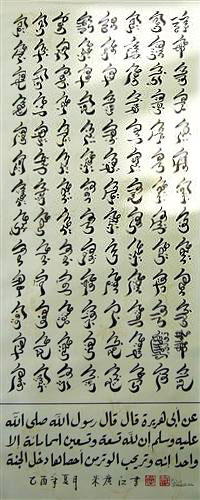
99 Names of God-Chinese.

Parallel to the ongoing nature of COVID, the progression and demands of the personal condition are also very uncertain. There are no clear signs of resolution, no hints as to my personal longevity nor any probability of recovery. Restoring and sustaining meaning is my primary focus. Generally, in this atmosphere of official denial, the severity of the infection being downplayed, the most sensible path to recovery is rejected. Clinging more desperately to the past and continuing to isolate from the world in its response, the centers of power in America are shutting their eyes to the inevitable. We sit on an edge of anxiety and resolve. There is so much more at stake now than ever before.

Even so, in the enveloping pall of personal loneliness and perpetual fragility, how can self-sustaining practices adapt to these circumstances? I rarely acknowledge my own fragility. I cover it and compensate. But it’s always there. Where shall I go for equanimity? Shifting away from what has worked in the past is not an answer. Turning to heart-based practice, noticing the appearance of grasping, despair and isolation, not retreating or succumbing, choosing a path of passion, recovering spontaneity and taking refuge in unity and dignity is the path of the present just as it has been in the past. Only now, our resolve must be even greater.

My personal awareness of loss and the general compassion I feel for others are parallel processes. What I have personally lost–a measure of freedom, a measure of abandon, the luxury of mindlessness, living with only an abstract comprehension of mortality and an incomplete and muddled notion of agency leave no residue of regret. They give way to a renewed and acute sense of the massive inertia of culture, the durability of systems of power, of being only one outlaw among a massive cadre who see the task ahead.

Having the curtain removed between the abstraction of death and the reality of its approach is not a loss. It has been more of a gain. I have gained focus and resolve. I am creating time even as an expansive future is diminished. A bottomless reservoir of gratitude has been tapped. An appreciation for the smallest gifts prevails. I have re-localized, attending to the minutiae of thought and interaction. This is not loss.

The full meaning of reciprocity with the natural world appears as we realize our subordinate place in the biosphere. The presence of extinction and the prospect of personal death luck among us. I am connected more closely to the experience everyone, if they’re lucky, will have sooner or later, the past and future omnipresent on the bumpy ride of now. Yet the recurring awareness of endings is also a source of energy; an enveloping presence of finality reviving appreciation for this world, the impulse to discover what more can be done, to grieve what has been lost, to love life as it is, beyond approval, beyond promises or expectations.

If there is a core of any sustained grief, it would be a sense of my own limitations.  It is the younger generations who’ve been robbed of their future, not me. My grief and love is for them and for the impossibly complex, incomparable beauty and perpetual emergence of life of which I am only a tiny nested part. Grief has not diminished me. I expand into it as a part of the perpetual astonishment of existence. What emerges is productive action. I am enveloped in life, reaching my arms around its every dimension. 

Solidarity, Somatics and Psychosis

The classic design of the vessels transporting the kidnapped, the brutalized and dispossessed, the colonized masses brought from Africa to the New World, endures to this day in the forms and structures of patriarchal capitalism: social stratification, marginalization, income inequality, racism, limited or blocked access to the means of acquiring wealth, property, equal justice or the general benefits of living your own dreams. White people may still enjoy the freshening breezes of the upper deck, but the metaphor still applies to nearly all of us today. It is only a matter of degree.

Yet even in the darkness, the impossibly close quarters and squalor of the lower decks, the light of freedom and joy never died. Dislocation does not extinguish the longing for home, burning to this day in the literature, art, music and poetry of the oppressed. It is in these ceremonial forms of breathing together that solidarity is affirmed. That yearning comes to life in the reverence for the journey, the longing to recover the sacred, to resolve the diaspora with the free and full habitation of a transformed body in a new land, even if that land only exists as an aspiration in the hearts of the wanderers. 

Four hundred years later, it is not only the ones who bore the lash who still cry out for home. Neoliberal economics, by commodification, relentless extraction and by the absence of any loyalty to genuine community and because it refuses to regard the earth as anything other than untapped economic potential, renders all of us landless on the new plantation just as it does in the foreign territories, occupied, re-colonized and subjugated by the weapons of finance and law. If those fail, force is applied.

These conditions, specifically the hierarchies of privilege, the tightening grip on the lash, the systemic racism and the use of money as a bludgeon, the predatory financial order and all the other inequities accompanying its regime, remind us that we can lose anything at any time. And indeed, since our relation to earth is much more than merely to a potential source of revenue, everything is being taken from us, incrementally, every day. Manifest destiny operates upon the collective body now just as it did in centuries past upon the territories of the indigenous.

Modernity is a rationalization of the wild. It is a leveling. Anyone noncompliant; anyone who dances, breaks the rules, bends time, looks beyond the borders, meets with other bodies, dwells outside the boundaries of sanctioned connection, imbibes the nectars of the sacred, seeks wisdom from forbidden sources, cries out for justice or draws outside the lines may be indulged with limited tolerance. Some will be infiltrated, criminalized, surveilled, tracked, deported, bludgeoned, jailed or killed. The rest, at least figuratively, become fugitives.

These and others like them, the restless, underserved, disenfranchised and denied, the ones living outside today’s inverted definitions of “freedom,” and “opportunity,” the ones discarded by the “free market” are the ones deserving of our solidarity. But they’re not the only ones being damaged by the paradigm of dominance and exclusion. However the systems of power continue the privatization and destruction of the commons is our disenfranchisement in real time. 

The Freudian definition of psychotherapy is that in exploring and expanding the psyche we reclaim territory. Our wounds back us into corners and make us small. Our addictions limit our capacity for outreach and connection. All the consciousness work we do is to reclaim territory, to halt the narrowing and to expand our view. Modernity rounds the edges and flattens consciousness, narrowing focus to channel and facilitate the pursuit of illusory solitary happiness. Bayo Akomolafe calls it gentrification. When we open psychic territory, we push past the limits of convention. We enter the wilds, tearing through the fences of what we know. We recover expansion and breath.

As David Abram reminds us, the original meaning of psyche was about breath, the wind or spirit of life. When we (re) occupy the wilds, we are learning to breath again, to fully inhale the spirit of life and the common territory of choice and possibility we all inhabit. Sitting and breathing is the most elementary practice of contemplative traditions. In doing so, we typically only think of ourselves, our solitary and separate bodies and the spirit, or psyche, of our existence. We inhale, filling the self, partaking of the esprit, the ruach, the motivating energy of being, momentarily narrowing our focus to this body, this consciousness, this moment, cyclically relinquishing the territory of awareness we just claimed, releasing into the non-dual self, into the unity of all consciousness, eliminating all boundaries and expanding to occupy all the territory we abandon in our pursuit of Self. We infuse ourselves with psyche

Psychosis names an abnormal state of the psyche, a condition of separation from the essence of being. We become lost to the potential of cyclical expansion and contraction of spirit embedded not only in the simple movement of air, interacting with the flow of breath essential to language. The expression of sound, the original musical intonation of nature, the stops and starts, the shapes of the throat, lips and tongue are rooted in the original sounds and symbols of our relational self. They were orienting, defined community, interspecies dynamics and expressed the ebb and flow of interdependencies upon which group survival depends. To become, over millennia, progressively separated from and to lose all sense of relationship between language and natural world, to permit indigenous languages and their ways of knowing the world to be lost is a mark of the deepening journey into mass psychosis

We lose our breath until we can’t breathe at all.

Breaking free of the mass psychosis is not simply a matter of breathing or language. It’s a much deeper process of conspiring to access and know our bodies in relation to earth in a different way. The energetics of reductionism, scientific materialism and neoclassical economics drive a widening gulf between humans and nature, from the full-bodied, erotic conversations between humans and the seasonal textures and interactive exchange of wisdom held in sacred sounds and labels of obscure and unique mind-states for which there may be no equivalent in any other language.

Recovering indigenous history is more than recovering stories. Embodiment includes discovering the architecture of authentic freedom, sharing the history of our bodies, exploring the interpenetration of culture and somatics, coming to our full stature, bringing the diaspora home to place and community, recovering belonging, power and perspective, connecting with ancestral voices bending time and preserving the libraries of wisdom contained in disappearing languages.

As Alnoor Lada declared in a recent issue of Kosmos Journal, solidarity is a direct erosion of the structures of oppression, the powers anchoring domination. Reclaiming the past informs the possibility of changing the present. Acting from a different set of values, breathing together, healing from the mass psychosis by breathing with our ancestors, redefining our identities, reconnecting to deities rendered remote and quiescent is a direct affront to the forces of economic dislocation that would erase the past and reframe history as the solitary pursuit of self-interest.

Emergence

Whatever else it might mean, emergence implies the most intimate character of life, a constant unfolding of arising and disappearing, creation and destruction, beyond rationality, transcending origins, judgment, intent or outcome. Tuning our view and receptive experience to this level of phenomena requires us to slow down, measuring and matching its pace, to align more intimately with an effervescent ebb and flow, to the way things really are, adjusting consciousness to the most elemental nature of nature.

That true nature, if we were to look more closely into it, is an ongoing process of life and death, each releasing into its opposite, arising and ceasing, appearing and disappearing. Nothing is fixed. Everything is less encumbered, simultaneously more connected and never still.

Emergence, at the innermost sanctuary of biological essence, lies at the neurochemical ground of being, in the transition of form to formlessness and vice versa, the nexus of conception and realization. It is the most delicate and easily injured wrapping of our existence, the pia mater, the ‘tender mother’ holding everything. It is the truest and deepest home of connection, compassion and forgiveness, where we are always alone, never lonely and in full communion with all life. In the most subtle recess where true belonging resides, the absolute belonging of no body and no-self, we give ourselves up to Inter-Being with no agenda, no grasping, no past and no future.

Unceasing change is the driving and dominant principle of emergence. Radical Impermanence is the Law. This is also a core principle of Dzogchen Buddhism. There is no true substance to anything, nor, ultimately, is there anything other than materiality. At this level, there are no values to be assigned to phenomena. Everything is simultaneously real and also apparition, including, of course, you and me in every moment.

Beneath the continuous and tenuous dynamic of birth and death is a deeper reality of unceasing stillness in which nothing is gained or lost. Everything is apparent and also continuously shifting. Any possible source or cause is beyond definition, beyond being teased out for identification or examination. There is no linearity, no progression nor any apparent reason, only an equality of opposites bound together in unceasing change. Only a self-propelled consciousness exists, a spontaneous internal intelligence based on impossibly complex systems processing information directly and immediately derived from ongoing performance, having no goal, no direction and no imperative other than to continue.

Right and wrong are less certain in this realm as the unceasing momentum of emergence cannot be definitively assigned to any single event. In fact, in absolute terms, all phenomena exist beyond any meaningful polarity and are regarded as equal. This is very difficult to grasp rationally, but every value we place on thought and action, all form, is entirely projection.  Hovering at this nexus of appearance and apparition gives rise to a quality of freedom, which can only be defined as compassionate intent, the ethical and moral engine for all action. To withdraw from the imperative of compassionate intent is to violate the mandate of life and to descend into meaninglessness, nihilism.

In the realm of emergence, nothing is containable, especially imagining a  fixed presence, such as a Self, expressing a principle of radical impermanence. Paradoxically, emergence becomes a sanctuary of birth and decay, of rapid and unending change, where safety is upended, where all reification goes to die.

At the emergent level of life, we belong to ourselves, to each other and to something vastly greater, beyond imagination. We do not belong to each other as mere ripples on the surface of life. That is the extent of the limited realm of psychology. The reason we can do to the earth and to each other what we do on a routine basis is because we do not fully belong to ourselves, and are not sufficiently mindful of how we belong to each other. What the totality of earth systems are doing now, because they cannot do otherwise, is reflect back to us what we have lost.

We are made and remade in realms of spirit and myth. In emergence, we realize our mutual dependence. In healing the rifts that separate us, we become more available to a greater sphere of belonging. If we dwelt only on the surface, we would miss the vast ocean sustaining all and to which all belongs. The internal healing process overcoming fragmentation, the dominance of subjectivity to the exclusion of full communion, is crucial to our maturation into eco-beings, cosmic citizens.

As for somatic experience itself, we are more than feelings and sensations. We are earth bodies, even though we may default to conceptual reflection–because that’s what (western) humans do. That’s what distinguishes humans from the rest of the non-human world. But this comes at great cost. The transition under way is not strictly about feelings or heart opening. It is about erotic embodiment, re-inhabiting our earth bodies, recovering the vocabulary for different ways of knowing, communicating, assessing and restoring the languages for relationship and community.

The somatic experience of emergence is happening so fast now we can’t process all of it in our bodies. Trauma, at its heart, is elementally expressed as opposing muscular action within the human system, the repression of expression contained by opposing neuromuscular conditions, the conflicting influence of opposing hormones, neurotransmitters at the fundamental level of physical mediation of incoming stimuli: the autonomic nervous system, the lizard brain. Over time, unaddressed, the sensitivity of the system increases, rendering us increasingly reactive to triggering stimuli, with all the attending memory and feelings. In emergent mind, the material of conflict becomes more accessible; the resolution of this conflict is a return to a lower baseline of sensitivity.

We can all sense the acceleration of change, making the processing of deliverance from social and historical and environmental trauma fast upon us more difficult. The depth of multiple traumas such as racism, privilege, complicity and the extractive economy are opening into full awareness. The violence at the center of the Growth Imperative, the colonization of peoples and our very capacity for critical thought are ever more apparent. The tools and pathways redefining our relationships, many though there are, are still under construction.

The vestiges of feeling ourselves as solitary are tenacious. Isolation and alienation are routine features of post-modern life. In our narrow self-oriented explorations, most of us carry memories of exclusion or marginalization. These are primal wounds of feeling excluded and separate, striking deeply into the psyche, particularly in these unsteady times.

Beneath that we cling to our identities, as if such a thing as a separate self exists in any ultimate sense. We each have varying skillsets for seeking and creating connection, the fields of intimacy meeting our needs. But due to our continued immaturity in relation to the world, many do not routinely experience union at all. Our attachment to a separate self is a fundamental source of suffering. Loneliness, the deepest wound of all, is dependent on this very principle.

One could spend all day detailing the minutiae of the typical persistently depressive longing for belonging, the pandemic of modern alienation, dislocation and dissociation from the natural world, the creeping and equally persistent solastalgia arising with the daily degradation of our common home. The effect is deep, subtle, pervasive and increasingly corrosive. All of which makes it increasingly important to decelerate and find refuge in the pace of emergence.

But when one drops beneath the conventional, asking again what we belong to or how we experience belonging, the easy definitions dissolve. The boundaries disappear and the reality of belonging simultaneously on multiple levels takes shape. While belonging may imply gaining something, part of the greater process requires we continuously acknowledge loss. It has been said that if we do not grieve properly, then that which we have lost was never truly alive. So we grieve. We grieve for what was alive in us, with us and for us. If we grieve properly, then we must also praise what is alive right now.

Resolving trauma, integrating feeling and restoring fully expressive neuromuscular function restores our pure creative impulse: eros. Emergence is the raw, un-nameable realm in which we contact this primal principle, where possibility expands beyond measure, where we meet the timeless wisdom of compassionate intent.

The Super-Imagery of Wildness

Normal consciousness of form, time, body, the world of interaction, is all cracked. That is, there are cracks in these and every world, where something breaks through the certainty of belief in the self. The crack is there; we don’t always notice. The light is not blaring into one’s mental space like a high-volume commercial on the screen of your life; but more subtly, in the after-images of that world, into which leaks the light beyond the curtain of coming attractions, where the bacteria of non-conceptual reality live, quietly digesting the superstructure of cerebral certainty.

Mortality is the universe remaking itself. The mistakes and corrections we commit daily, the slights we commit, the differences between self-centered decisions and purely selfish decisions are recorded in the tabernacles of the infinite. The wiring constantly undergoing revision is the earth-brain interacting with itself, assessing, revising and instantaneously forming the next iteration, the next imperative, the natural shifting turbulent void where information interacts with action, dancing toward another version of our ongoing attempts to define the indefinable.

Getting underneath the automaticity of describing what’s happening with a partner, another human being, in terms of behavior down into how the ‘other’s’ behavior is a mirror of our own attitudes and behavior is a difficult and revealing process. Taking responsibility. It may seem that my sense of responsibility for events that occur with a partner is thin. It might be impossible to discern how to interact with it. If so, that’s perfectly OK and right. Events work their strange magic in unexpected ways.

Recent messages may contain too much information- or not enough of the sort we can use, i.e. interact with. Dropping all the pictures and expectations and needs and projections of what any relationship is beyond the time of co-habitation is difficult enough. It is, to a degree, because we have already been hooked into thinking in terms of beginnings and endings. Stepping instead into an ever-changing unruly river that is constantly overflowing its banks does finally invite a genuine loving friendship to reveal itself. But owning all of it as a reflection of one’s personal truth is another level of difficult.

It’s a freight train, relationship. Especially with anyone who’s along for more than the ride—who’s looking at the scenery, examining the accommodations, the company, the angle of the sun, every emotional nuance. I have constructed a self-contained life. It’s a defense and a skill and necessary and chosen and a last resort for feeling inadequate, not quite permitting someone else to effect me. Which is to say, I will at times fall out of interaction into solitary. And ultimately, as we age, one never knows what events may arise that will throw the entire façade of independence down hard, into dust.

Yet regardless of how much experience one might have in negotiating the terms of relationship, being able to describe one’s flaws and needs and preferences accurately and still permit the influence, needs and preferences of another to soften you out of your private structure, your personal sanctuary, all this while everything is also constantly changing, that’s the freight train of being.

Sometimes I just want to get off. Either I am weak, exhausted, resigned, depleted or temporarily inadequate, though setting any ultimate limit, deciding when to get off the freight train remains a total crapshoot. That’s because interaction never ceases.

The wildness quality, the unpredictability that destroys the human-centered view, is created not only by ego-driven self-centered reactivity, but by the value-free random nature of change. The antidote, the other truth of reality is the One-ness level, a release into infinite interactivity, in which I can sincerely hold a much larger and inclusive view of our personal circumstances, in which I could see myself as a mere servant prepared to adjust to whatever comes, respond in whatever way might be helpful and let go of a specific view of how this is supposed to unfold.

Along with that One-ness view, I see how embedded I am in ego-driven reactivity so much of the time, how far I am sometimes from an open-hearted, loving perspective that holds us in a positive light with all of our histories, wounds, pain, abilities and commitments; invoking the mercy of the unseen into every moment. In other words, I do at times seek refuge in limited interactivity.

Yes, I am attached to the world of form. At the very least, I am dependable in that way. Yet, alas, not quite so dependable in terms of being able to make deliberate unequivocal commitments. I feel incomplete in this way, as if I am supposed to be able to do that. Yet I am also ambivalent about accepting the other Truth, balancing my need for independence with the desire to interact in the living truth of aloneness we all share. Seeing myself this way is not merely an escape from love. I’m just being realistic. And compassionate, by the way. I am riddled with paradox–which also limits my capacity for unwavering commitment to the One-ness view. The territory yet to be traveled is revealed.

In the dense and aged stand of bamboo outside my window, there are beginnings and endings happening in every moment. There is decline, death and decay always amidst the new growth, the maturation and fruition of maturity. Other creatures find refuge in the deep safety of its inner reaches; they live and die as well. It provides shade, mulch to the earth, stability to the soil and becomes a soundscape as the breezes blow through it. In its steadfast silence, in its interactive turmoil, it is also a muse of love.


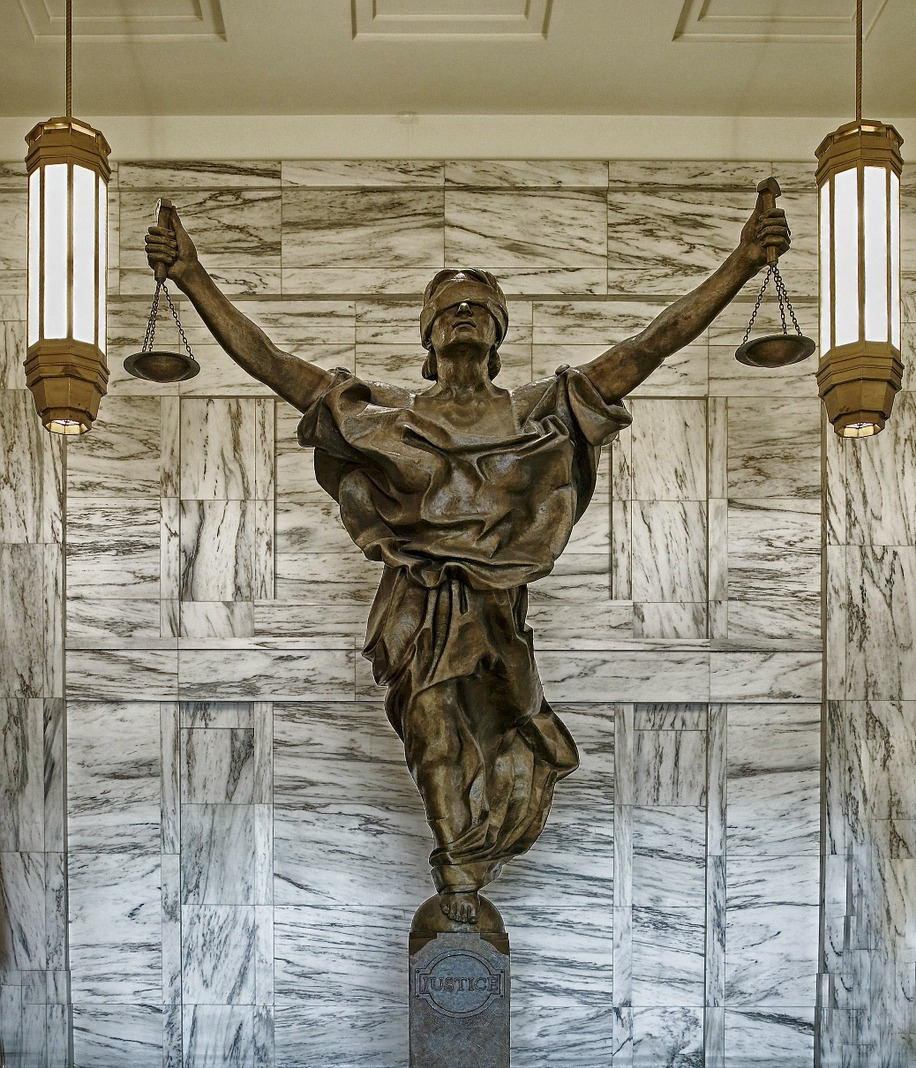
Reconciliation II: Justice

Each of the 4Rs of Deep Adaptation, Resilience, Restoration, Relinquishing and Reconciliation is a searching journey from the world we have to the world we want. The more we explore, the more we find to explore. Just looking at all the associations we have with the word Reconciliation opens many doors. Whether we talk about intra-personal, inter-personal or our relations with the living metabolism of the earth, it means a return to friendly relations. It can mean establishing compatibility of beliefs and practices. In accounting, it refers to a balancing of accounts, rendering what comes in with what goes out, reestablishing harmony at every possible scale.

Not everything that counts can be counted; and not everything that can be counted, counts. — Albert Einstein

We have only to look at our accounts with Earth itself to grasp how out of balance we are. Even the terms we use for accounting are evidence of cognitive colonization. They only reflect the mindset of separation. For humanity to meet and survive what is taking shape, even at this moment, reconciliation implies redefining those terms, an enormous commitment on every level, the expenditure of massive personal and collective resources, a profound re-ordering at the soul level, in the human energy body.

Defining a different path forward, one reflecting the true nature of our entanglements, we imagine how fraught with obstacles such an effort might be as we scan the spiritual, social, political, environmental and financial landscape in this time of increasing risk, uncertainty and unfolding collapse. Even a limited unpacking of what we mean by justice leads to considerations of decolonization as it is tied to the preservation of  nation states, the preservation of capital, risk and financial systems driven by commodification, shareholder interests and debt-driven speculation.

In this consideration, we must  include 1) racial justice: establishing racial equity by confronting the history of racial injustice and addressing systemic issues perpetuating racial stereotyping, racial privileges and locking racial groups out of educational, economic, housing and employment opportunities; 2)cognitive justice: the breaking of exclusionary ideologies to include recognition and establishment of the right of different knowledge systems to co-exist; the return of meaning to being. There are no outdated, irrelevant or second-class ways of knowing the world; 3) relational justice, also called restorative justice: the repairing of relations damaged by criminal violence and the reformation of responsibility based on generosity, compassion and humility, 4) intergenerational justice: the considerations of generational equity in  tax and spending policy, allocating funding for the future security of generations yet unborn, the way we live now and how we address climate change, 5) ecological or environmental justice: establishing equity in consideration of environmental impacts on community infrastructure, habits, livelihoods and public health, 6) economic justice: establishing fairness in policies effecting economic stability, opportunity, mobility, security and benefits to all members of the economic system. The players in this conversation include all beings, all life, all sentience from the macro to the micro-biome.

Where do ‘we’ stand in all this and what is the prerequisite for any of this investigation? It’s one thing to find a separate peace, yet our internal state has never been separate from the larger matrix. For us to find congruence in all our relations, we have to renounce the exhausted story of ‘progress’ and find relief from the inadequate ideology of ‘reform,’ which now only serves the entrenched, never really challenging or even touching the comfortable. Reform is a euphemism for cooptation and defeat. At this very moment in America, the comfortable receive rapid, virtually unlimited and unconditional transfusions of taxpayer money created out of thin air while the proletariat will ultimately bear the burden of these expenditures while hacking away at impenetrable forests of shifting bureaucratic obstacles to receive a few crumbs.

Coming to any semblance of reconciliation of all these accounts strikes to the core of who we imagine we are, the limits of language, the pandemics of depression, addiction, hopelessness, auto-immune disorders, meaninglessness, the loss of economic mobility, the obscene concentration of wealth, the loss of personal agency, the destruction of the biosphere and biodiversity,  the decline of life expectancy and the cloistering of the future in a shrinking box of falsehoods.

These conditions are signals of exiled human capacities, the disappearing knowledge systems defining the diversity of relationships we have with ourselves, our surroundings and the planetary matrix. Our institutions have become intense battlegrounds where values are shredded, where we diverge from community and settle for ever narrowing definitions of opportunity, social mobility, abundance and our sacred responsibilities.

It’s only even possible to consider reconciling the most inclusive list of stakeholders and relational issues, balancing accounts, as it were, if the primary premise is accepted: the archetypes of separation, human superiority and mastery over nature, rooted in the Enlightenment and capitalism, are spelling our doom. The entire system has come to represent only domination, extraction, exploitation and violence.

That violence is expressed as colonial expansion, the creation of empire, increasingly extreme exploitation of life, natural and personal resources, the institution of extractive economies including he corrosion of personal well-being, the surveillance state, the growth of mechanisms of control, the corruption of thought, truth and the persistent reinforcement of a paradigm of exclusion.

Every one of these features, every level and domain of operation of the Vehicle of Extinction can be represented as the management and offloading of risk. All risk is deflected by the few to the many.  Living with risk infuses the majority of lives with increasing uncertainty, instability and vulnerability.   The pandemic is highlighting these inequities because service workers in many fields (manufacturing, agriculture, transportation, law enforcement) and even many health care workers now deemed essential during COVID shut-downs are the very ones with no choice but to expose themselves to the increasing risk of infection. While we celebrate the genius, the heroic commitment and the compassion of these frontline workers, their most admirable virtues are also being exploited along the way.

True justice  as the equitable redistribution of risk, the restoration of a tangible level of social and systemic financial support to more broadly manage uncertainty.  Sharing risk equitably is a benefit to all, not only the privileged few. If risk levels were the central motivating factor in repairing our relationships,  in only one of many possible ways, we would be addressing climate change on a massive scale. We would be opening economic opportunity, social mobility, repairing mental and spiritual health, increasing public safety and unleashing untold reservoirs of creativity and generous contribution to the well-being of the whole. None of this is about eliminating risk. That would be impossible. But imagine a future driven by an abiding clarity on the meaning of justice in all its forms. In that world, counting all that counts including all that cannot be counted, our accounts would be moving toward reconciliation.

Covid-19 Meets I Ching

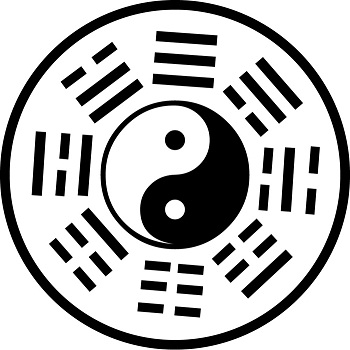
Turning Point (24)

Shock (51)

The I Ching is an ancient code expressing laws of nature. This accumulation of Taoist wisdom is not specifically about human nature. It’s about the nature of Nature. We can interpret these expressions, represented as hexagrams, as we would mathematical formulae. The permutations of meaning expressed by the 64 hexagrams of I Ching reveal a subtlety normally beyond our commonplace awareness. Unpacking them permits us to enter the realm of InterBeing, the dynamics of the web of life itself.

The combination of these two hexagrams, Shock and Turning Point, appeared as a response to a specific inquiry about the meaning of Covid-19. Accordingly, my amateur status notwithstanding, and despite stretching the primary application of I Ching beyond personal concerns, I interpret these two hexagrams in two ways: the first as abstract expressions of energetic laws of nature; the second as they imply emotional, rational and spiritual dynamics expressed in action.

The first hexagram is divided into three bi-grams. From the bottom up, the first bi-gram demonstrates a strong yang (solid) line lifting upward and outward. The implication of this yang force is that instinct arising deep in somatic being drive one’s perspective and one’s actions. Instincts are strong, yes, but may also be fearful and restricted by tradition. There is certainly a character of cultivation, creation and accomplishment here. Yet the energy of this basic yang impulse also overlooks the higher aspirations of production, benefitting others beyond one’s narrowly defined group.

Likewise, the yang line in the middle bi-gram has a strong character of restricting the free flow of what is rising from those instinctual drives. This yang line is like a closed gate, turned toward the first bi-gram than the third. In other words, generosity, vulnerability and more expansive views of the world, not strictly limiting oneself to the instinctual self or to one’s immediate group, with a capacity to look beyond reflexive fear are far more desirable and congruent with the open and accessible upper tri-gram.

Hence, we are given opposing ways to respond to the shock of having our worldview shaken or even destroyed by COVID-19. The questions framed by this reading relate to different planes of perception. On the physical plane, what our bodies know doesn’t require interpretation. On the rational level, we have to choose which direction we will turn for relationship, comfort and collaboration. In the realm of imagination and intuition, we explore and gain insight into the qualities of relationship providing fulfillment, direction, challenge and expansion.

The key emotion connecting all of these questions seems to be vulnerability—a sense that by remaining open–or, opening the gate in the middle bi-gram, as it were, shown in the second hexagram–to uncomfortable conditions and fearlessly sharing personal truth, we will discover the answers to every other question. We will also find the formation of relationships a natural and effortless process leading to those answers.

Covid-19 is stripping most of us—though evidence suggests that we can exclude the banking, investment, CEO class and most politicians–of all pretense. The superficialities of life are being stripped away. We are in deepening shock as the multiple vulnerabilities of our society are exposed. Yet the cultivation of relational acts of resilience are already rising broadly and creatively.

Hexagram #51—The Arousing (Shock)–changing to Hexagram 24–Turning Point demonstrates a strong shift to a more open, congruent and dynamic relationship arising from a clear-minded and unobstructed manifestation of our highest ideals in material actions. The shock of dealing directly with the threat of a potentially deadly illness is, ironically, galvanizing us to engage with the world in restorative and resilient action. This is our Turning Point, but it won’t be fast or short. A period of gestation is required, a time to gather strength and durability.

Much is being written about the ways people respond to the rolling disaster of bad news about the climate, all of which contribute to an increasingly dire prospect of a future radically disrupted from the version of Modernity we’ve enjoyed in the past. As if climate predictions alone weren’t enough of a terminal diagnosis? Covid-19 as well as future pandemics, including drug-resistant bacteria, add to a high-risk future. They may not portend catastrophe, but at the very least they undermine the sense of security we might have enjoyed as a species.

These hexagrams demonstrate that while Shock may describe the initial impact of bad news, the more fundamental impact of our current predicament is one of removing the last remaining shreds of complacency, casting us deeper into the turbulence of uncertainty and portending a volatile future. New pieces of the picture of a future beyond our control come in the form of new reports, news stories, scientific proclamations, new aspects of how natural is responding to the human-driven distortions of our world.

One might even say anyone paying attention to the news is now in perpetual, unexpected and deepening shock. We are all in various degrees of trauma, desperation, grief, panic, denial, exhaustion, rationalization or hopelessness, all of which together may be categorized as stagnation,….while, curiously, we may even simultaneously claim a sustaining determination or unbreakable resolve.

There is no safe haven. Further shock either drives us deeper underground into an insulated and isolated cavern of despair—or—awakens us to a Turning Point, casting aside what has not been working, yielding an even greater resolve to seek partners, to nurture intimacy, to repair and restore what can be salvaged from the wreckage, to identify and adhere to vital principles to guide our actions now.

Each of these shocks reinforces and underscores the mutability of nature—and our mutability within nature. They are messages reminding us that WE must find the capacity to change and to quicken the pace of change to meet the conditions unfolding before us. This is no longer about ‘fixing’ anything. The greatest shock of all is the accumulation of news telling us the possibility of fixing the dramatic unfolding of catastrophe on multiple fronts is slipping through our fingers.

Now is the time for adaptation—and not in a superficial way. Adaptation is what we can call the nature of the change we seek. The Deep Adaptation Agenda arrives as a decision to use the shocks we are receiving as fuel, to fully feel them, to permit ourselves to remain vulnerable to them, to restore a new freedom, to restore movement, to gather and direct our energies to drive more creative and innovative responses to the blows now being delivered to Modernity in rapid succession.

COVID-19: Rite of Passage

I’ve been receiving regular emails from Michael Meade for years. They are invariably timely and relevant topics full of the wisdom of Interbeing.

Today (#166) he spoke of consciously descending into the inner world, walking into the dark with our eyes open, as it were.

We are being taken down, not by choice but by necessity, and in yet another new way, to realize our true condition. As we look around us in every direction, we are witnessing decisions being made (or avoided) about how to prepare for, interact with, prevent or deal with a global pandemic. At the same time we are directly experiencing our consciousness undergoing an accelerating transformation by this phenomenon.

We cannot help but notice and examine this phenomenon as a global encounter with the biological plane of existence, a natural response of the living planet reminding us of our direct and integral connection with the biological world, the biosphere undergoing change in response to human actions. There’s no escape: this is us. Yes, we will have to think and feel our way through, but the way through also requires we discern and consider carefully the message of the crisis.

The virus promises to be (if not already) a profound response to our hubris, already arresting Business As Usual and laying bare the degree to which we take for granted the structures and comforts of modernity. All those systems, from the stock markets to commerce to transportation to the systems of mutual care are all derivatives masking our relationship with the natural world. As the mask of modernity is stripped away, we see our own true face.

The unceasing progress of the virus permeating the population is already testing the health care system and governance. It is already laying bare the income disparities, the vulnerability of large sections of our population to unanticipated costs, the marginal financial safety of millions, the degree to which the social safety net has been shredded, the lact of back-up systems for caring for ourselves in the most basic of ways. And, as well, the deeply damaging selfish and self-absorbed womb of illusion in which so many, most notably more than half the US Senate, live.

There, the denial of a pandemic follows and conforms to the spinning of falsehoods into War, the denial of the financial catastrophe of 2008, the denial of racism and the denial of climate change. Today, all we see from them is desperate bargaining to avoid both economic and psychological depression and to prop up their precious allegiance to exclusion, dominance and scarcity.

The effects of this rolling emergency are already impacting our collective imagination–the deep imagery of what America believes it is and what our relationship is to others beyond our borders, the unseen intimacy of our relations with distant strangers and the basic equality expressed as our vulnerability to disturbances in the biosphere. The dream of separation is dissolving. America as a gated community, as an impregnable suburban sanctuary is disappearing.

We are being dragged to wake up from the mythology of exceptionalism, the mythology that we are not in each other’s care at all times; the mythology of being able to construct  a fortress of uniformity in which we can continue endless bargain-shopping, safe from foreign influence; the mythology of continuous expansion. Reactionary forces are tightening their grip on their fantasy that continuing to dance will keep the music playing, that appearance is reality, that saying it’s true will make it true.

Nope. In the immortal words of Guy McPherson, Nature Bats Last. And we are not prepared because we haven’t learned that lesson. This phenomenon has arisen from the depressed immune system of the planet. It is about to expose our deepest flaws, our tenacious grip on the surreality of separation, invulnerability, of superiority, of our belief in false characterizations of Nature, of some assumed mastery in the world. Continued denial of who and what we are will now take us deeper into the Deep Self to wander and sow untold pain until we either die or are transformed.

This is the choice commonly faced by the addict who descends further into darkness until an opportunity for light to enter becomes possible. The virus is an opportunity for us to meet our addictions. But it is so often a near death experience and there’s no guarantee we will emerge any closer to wholeness. Will this be our bottom? Will this be the moment we realize caring for each other and caring for the earth are our only collective imperatives? And that they are the same thing? Will we see any new light at the end of this tunnel?