
The Severed Hand

(excerpted from the Dark Mountain Manifesto)

The myth of progress is founded on the myth of nature. The first tells us that we are destined for greatness; the second tells us that greatness is cost-free. Each is intimately bound up with the other. Both tell us that we are apart from the world; that we began grunting in the primeval swamps, as a humble part of something called ‘nature’, which we have now triumphantly subdued. The very fact that we have a word for ‘nature’ is [5] evidence that we do not regard ourselves as part of it. Indeed, our separation from it is a myth integral to the triumph of our civilization. We are, we tell ourselves, the only species ever to have attacked nature and won. In this, our unique glory is contained.

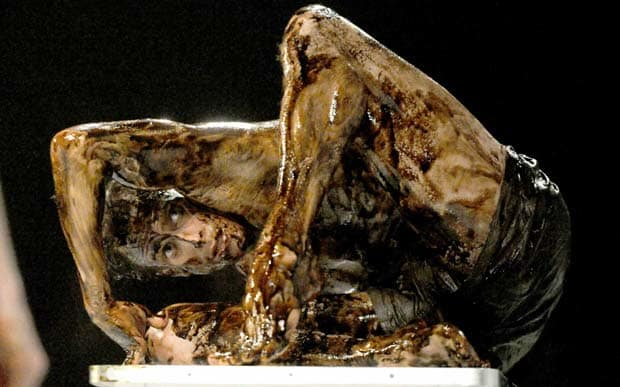
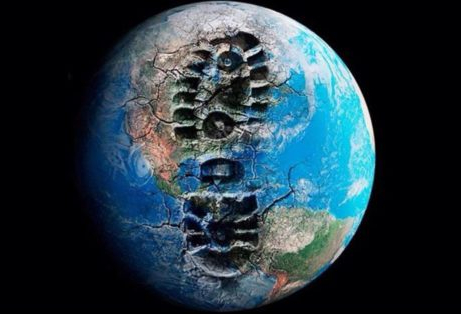
Outside the citadels of self-congratulation, lone voices have cried out against this infantile version of the human story for centuries, but it is only in the last few decades that its inaccuracy has become laughably apparent. We are the first generations to grow up surrounded by evidence that our attempt to separate ourselves from ‘nature’ has been a grim failure, proof not of our genius but our hubris. The attempt to sever the hand from the body has endangered the ‘progress’ we hold so dear, and it has endangered much of ‘nature’ too. The resulting upheaval underlies the crisis we now face.

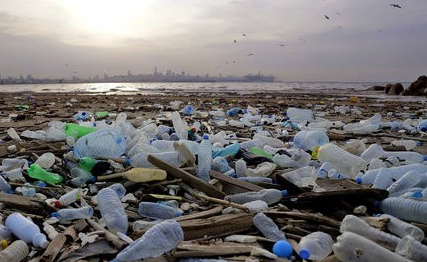
We imagined ourselves isolated from the source of our existence. The fallout from this imaginative error is all around us: a quarter of the world’s mammals are threatened with imminent extinction; an acre and a half of rainforest is felled every second; 75% of the world’s fish stocks are on the verge of collapse; humanity consumes 25% more of the world’s natural ‘products’ than the Earth can replace – a figure predicted to rise to 80% by mid-century. Even through the deadening lens of statistics, we can glimpse the violence to which our myths have driven us.

And over it all looms runaway climate change. Climate change, which threatens to render all human projects irrelevant; which presents us with detailed evidence of our lack of understanding of the world we inhabit while, at the same time, demonstrating that we are still entirely reliant upon it. Climate change, which highlights in painful color the head-on crash between civilization and ‘nature’; which makes plain, more effectively than any carefully constructed argument or optimistically defiant protest, how the machine’s need for permanent growth will require us to destroy ourselves in its name. Climate change, which brings home at last our ultimate powerlessness.

These are the facts, or some of them. Yet facts never tell the whole story. (‘Facts’, Conrad wrote, in Lord Jim, ‘as if facts could prove anything.’) The facts of environmental crisis we hear so much about often conceal as much as they expose. We hear daily about the impacts of our activities on ‘the environment’ (like ‘nature’, this is an expression which distances us from the reality of our situation). Daily we hear, too, of the many ‘solutions’ to these problems: solutions which usually involve the necessity of urgent political agreement and a judicious application of human technological genius. Things may be changing, runs the narrative, but there is nothing we cannot deal with here, folks. We perhaps need to move faster, more urgently. Certainly we need to accelerate the pace of research and development. We accept that we must become more ‘sustainable’. But everything will be fine. There will still be growth, there will still be progress: these things will continue, because they have to continue, so they cannot do anything but continue. There is nothing to see here. Everything will be fine.

*

We do not believe that everything will be fine. We are not even sure, based on current definitions of progress and improvement, that we want it to be. Of all humanity’s delusions of difference, of its separation from and superiority to the living world which surrounds it, one distinction holds up better than most: we may well be the first species capable of effectively eliminating life on Earth. This is a hypothesis we seem intent on putting to the test. We are already responsible for denuding the world of much of its richness, magnificence, beauty, colour and magic, and we show no sign of slowing down. For a very long time, we imagined that ‘nature’ was something that happened elsewhere. The damage we did to it might be regrettable, but needed to be weighed against the benefits here and now. And in the worst case scenario, there would always be some kind of Plan B. Perhaps we would make for the moon, where we could survive in lunar colonies under giant bubbles as we planned our expansion across the galaxy.

But there is no Plan B and the bubble, it turns out, is where we have been living all the while. The bubble is that delusion of isolation under which we have labored for so long. The bubble has cut us off from life on the only planet we have, or are ever likely to have. The bubble is civilization.

Consider the structures on which that bubble has been built. Its foundations are geological: coal, oil, gas – millions upon millions of years of ancient sunlight, dragged from the depths of the planet and burned with abandon. On this base, the structure stands. Move upwards, and you pass through a jumble of supporting horrors: battery chicken sheds; industrial abattoirs; burning forests; beam-trawled ocean floors; dynamited reefs; hollowed-out mountains; wasted soil. Finally, on top of all these unseen layers, you reach the well-tended surface where you and I stand: unaware, or uninterested, in what goes on beneath us; demanding that the authorities keep us in the manner to which we have been accustomed; occasionally feeling twinges of guilt that lead us to buy organic chickens or locally-produced lettuces; yet for the most part glutted, but not sated, on the fruits of the horrors on which our lifestyles depend.

We are the first generations born into a new and unprecedented age – the age of ecocide. To name it thus is not to presume the outcome, but simply to describe a process which is underway. The ground, the sea, the air, the elemental backdrops to our existence – all these our economics has taken for granted, to be used as a bottomless tip, endlessly able to dilute and disperse the tailings of our extraction, production, consumption. The sheer scale of the sky or the weight of a swollen river makes it hard to imagine that creatures as flimsy as you and I could do that much damage. Philip Larkin gave voice to this attitude, and the creeping, worrying end of it.

Nearly forty years on from Larkin’s words, doubt is what all of us seem to feel, all of the time. Too much filth has been chucked in the sea and into the soil and into the atmosphere to make any other feeling sensible. The doubt, and the facts, have paved the way for a worldwide movement of environmental politics, which aimed, at least in its early, raw form, to challenge the myths of development and progress head-on. But time has not been kind to the greens. Today’s environmentalists are more likely to be found at corporate conferences hymning the virtues of ‘sustainability’ and ‘ethical consumption’ than doing anything as naive as questioning the intrinsic values of civilization. Capitalism has absorbed the greens, as it absorbs so many challenges to its ascendancy. A radical challenge to the human machine has been transformed into yet another opportunity for shopping.

‘Denial’ is a hot word, heavy with connotations. When it is used to brand the remaining rump of climate change skeptics, they object noisily to the association with those who would rewrite the history of the Holocaust. Yet the focus on this dwindling group may serve as a distraction from a far larger form of denial, in its psychoanalytic sense. Freud wrote of the inability of people to hear things which did not fit with the way they saw themselves and the world. We put ourselves through all kinds of inner contortions, rather than look plainly at those things which challenge our fundamental understanding of the world.

Today, humanity is up to its neck in denial about what it has built, what it has become – and what it is in for. Ecological and economic collapse unfold before us and, if we acknowledge them at all, we act as if this were a temporary problem, a technical glitch. Centuries of hubris block our ears like wax plugs; we cannot hear the message which reality is screaming at us. For all our doubts and discontents, we are still wired to an idea of history in which the future will be an upgraded version of the present. The assumption remains that things must continue in their current direction: the sense of crisis only smudges the meaning of that ‘must’. No longer a natural inevitability, it becomes an urgent necessity: we must find a way to go on having supermarkets and superhighways. We cannot contemplate the alternative.

And so we find ourselves, all of us together, poised trembling on the edge of a change so massive that we have no way of gauging it. None of us knows where to look, but all of us know not to look down. Secretly, we all think we are doomed: even the politicians think this; even the environmentalists. Some of us deal with it by going shopping. Some deal with it by hoping it is true. Some give up in despair. Some work frantically to try and fend off the coming storm.

Our question is: what would happen if we looked down? Would it be as bad as we imagine? What might we see? Could it even be good for us?

We believe it is time to look down.

The Toxic Masculine Empire Strikes Back

There are many ways to describe the human drama at this moment. We can talk about psychology or brain function, economic ideologies or politics, philosophy and religion. All of them have a kernel of truth. Here is another way to say it:

Deeper than ideology and psychology, perhaps even deeper than brain function, we can speak in energetic and spiritual terms about the human disease. Masculine energy is a rising force in the body/mind, an energetic evolution toward material accomplishment, a commanding view and a spiritual search for enlightenment. The feminine is an earth-bound force, rooting in the soil of life, a generative force driven by an erotic principle, connecting and interpreting spiritual awareness in the earthbound terms of community, equality and mutual nourishment. In the most basic terms, the masculine is in profound polarity to the feminine.

In a healthy culture, those energies would be circulating freely without restriction or corruption, nourished universally and manifested in tangible and humane social structures, institutions affirming our rightful place in equal status with other living beings and the living earth itself.

In terms of the chakra system of understanding human yearnings, flaws and behaviors, the wounded male energy of the current world denies the erotic, lives in and for the upper chakras sourcing his power in vision, setting the terms of existence and progress and defining the longing of his fellow humans in base and selfish ways, separating his friends from his enemies, those who deserve his attention and those who do not. Yes, the wounded male also operates in and from the second chakra, but those energies are corrupted, manifesting as toxic domination and objectification, out of touch with the nature or practice of healing  and unifying forces. In the worst case, he is ignorant of and resistant to any complementarity

This domination and subjugation extends to the feminine as misogyny, Other-ising fellow humans in the form of racism, colonialism and exclusion; to the earth as the ecocide based on the myth of separation and the myth of extraction without consequence. The wounded female is separated from her power and influence by the subjugation of men, by the loss, denial or imprisonment of her generative, erotic force and thus the connection between her creative energies and her personal power. The true nature of her spiritual powers and vision are blocked or stunted

The wounded masculine is extremely threatened by the rise of intact feminine power and energy. The very foundation of his vision and control are under siege. Thus we see throughout the world the backlash, the retrenchment and embattled mentality of the wounded masculine in the form of legislative initiatives to depress and control the manifestations of feminine expression of her essential erotic powers; the resistance to codifying equality and reversing institutionalized oppression and increasing outright violence.  Media giants under the operation and control of men subtly propagate this agenda, conveying, among other ways, their ongoing (and increasingly blatant) bias against the possibility of a female being elected as America’s President.

The rise of nativism, the retrenchment of racism, the creeping autocracy and fascism, the reversal of environmental laws, the denial of climate change, the doubling down on extractive practices, white collar and government corruption and even the unchecked  dissemination of poisons into the atmosphere, waters and soil around the world can all be interpreted as reinforcing Other-ism and the backlash of toxic masculinity, as aggressive attempts to deny, control and sequester erotic, untamable dark forces; to deny and repress the human shadow; to damn (and dam) the ideologies of community, diversity, equality and inclusion; to re-assert autocratic control by deeply dysfunctional, wounded and now blatantly omnicidal (terminally wounded) men.

The earth-cult empire of the wounded masculine, including the billionaires and all their henchmen whose wealth depends on oppression, exclusion, domination and objectification is now demanding we all drink the kool-aid, as if that alone could wipe away the collapse already underway.

The healing of the feminine force, opening the essential creative and generative energies to manifest through the centers of personal power, vision and spiritual attainment offers an alternative clarity, an inspiring and infectious force rooted in connection, collective action, equality, inclusion and a celebration of diversity.

The upper centers of the subtle body manifesting empathy, compassion; the heart speaking with a thousand tongues; telepathy (giving voice to deep and common yearning), clairvoyance (the ability to, as Rumi said, “close both eyes to see with the other eye”) and the ability to interpret the elemental as divine nature is the promise of the awakened feminine, which is not to say these powers and reformulation of essential energies are only accessible to the female, just that men may have to struggle a little more to unlock them. This struggle is, fortunately, also expanding everywhere we look.

The awakened male will have his own interpretation of these energies. But in the end, they will be congruent, shared, mutually inspiring, fruitful in expression and igniting possibilities we have not seen. Unfortunately, that world remains beyond our grasp. Do we have enough time? Unless there is a virtual instantaneous and universal paradigm shift away from the wounded masculine and a corresponding rise of integral feminine presence co-creating with the healthy masculine, reversing the pervasive and common symptoms of the core disease, our demise as a species will likely continue to accelerate toward the abyss.

The Doomasphere

Jem Bendell has been criticized for promoting what some call “The Doomasphere,” –a dark vision of the future–though until now I couldn’t have named any of Deep Adaptation’s neighbors in that ‘hood. Is he alone? Who else occupies the Doomasphere? Is that even what he’s doing?

It turns out there are several neighbors; in fact, some very evolved and well-established ones. The premise may not in all cases revolve around a prediction of near-term collapse, but orient around the inherent fragility of modern social and technological infrastructure, which purports to be expanding and integrating continuously, thereby becoming more fragile, more volatile and less predictable. In other words, the very definition of chaotic.

Adding climate change to that mix, and especially because that continuous expansion is driving climate change, there is the recent French TV mini-series called L’Effrondrement, set in the near future and updating Jared Diamond’s Collapse, depicting how easily everything we take for granted may be swept away. It’s based on a 2015 novel promoted as a “manual of collapsologie” for present generations, upending the ideologies of sustainability, a green economy or a smooth energy transition.

Well, we already aren’t (or shouldn’t be) deluded by the notion of any smooth transitions, especially with each passing month of increasingly dire news. In fact, it’s been two decades since we passed the option of a “smooth” anything.

The pendulum of human history swings between moments of our being harmoniously embedded within natural processes and periods of population concentration, political centralization, and an urge to transcend the earth’s resource constraints. We develop economies of scale, agglomerate extractive industry on a grand scale, but ultimately overexploit our natural foundations.

The New York Review of Books

The result is articulated by another occupant of the Doomasphere, David Wallace-Wells’ The Uninhabitable Earth. In the aggregate, the primary strategies of the environmental movement have been a failure. Exxon has won. Not because they didn’t believe the warnings. They knew well before the warnings were issued. The Green New Deal, one of the most recent elaborations on the meaning of Resiliency, according to key figures in the French Doomasphere, is nothing more than a repackaging of the California technological fantasy. Also doomed to be inadequate. One of the earliest members of the Doomapshere is surely the Club of Rome, which produced a landmark report in 1972 called The Limits of Growth, in which the onset of stagnation is predicted in the 2020s. Prescient!

“We must prepare small-scale, resilient bio-regions,” on the scale of only a few thousand inhabitants. Economic circuits must be scaled to local ecosystems and resources, eschewing global supply chains. Visions of the good life that are predicated on unlimited mobility and expanding human wants must be replaced by an ethics of rootedness, the joy of living and working in a defined space.

Yves Cochet

Collapsologie shares a view of the coming world with Deep Adaptation by requiring not only a realization of our true place in the natural world, but a spiritual re-conversion to an ideology of sharing. Their view of “liberty” is also diametrically opposed to the narrow definition of Darwinism adopted by our self-appointed thought (and investment) leaders of economics and politics and the Hobbesian view of life as “nasty, brutish and short.”

While every Conference of Parties since Paris, 2015, has devolved into further finger-pointing and subversion of consensus, the narrowing of any viable environmental strategy has limited rational choices to (among other things) the escalation of resistance to further fossil fuel development, the elimination of global oil subsidies, widespread and radical rollback of income inequality and compensation for the first victims of catastrophe—the global south. All of this while preparing viable strategies to coalesce into regional resilient enclaves.

The existence of a compelling and now 10-year old conversation departing from the mythologies of ‘progress’ and ‘nature’ (why do we even have a word for nature?) resides here at the UK-based Dark Mountain Project. These conversations on the theme of Uncivilization will touch you in profound, surprising and unforeseeable ways, bouncing from head to heart to the deep somatic. There is no prescription here, but rather a litany of “hard truths to help you stay rooted in difficult times,” while building a bridge to a possible future. Dark Mountain is ambitious, illogical, arresting and most of all, real.

Finally, though I’m pretty sure he would object, Charles Eisenstein might be viewed as yet another occupant of the doomasphere simply because he views the issue of human viability as much broader than climate. In his hierarchy, pollution in all its many forms rank higher than climate change, which is about 3rd or 4th. Yet unlike any of the other inhabitants cited above except Deep Adaptation, his is A Revolution of Love, the most daunting prescription of all.


Fearlessness

If we have no fear, there is no thinking. No conceptual mind. And vice versa. No thinking, no fear. —Tsoknyi Rinpoche.

Thinking and fear are inseparable. I mean the analytical, deliberative and conceptual nature of our waking process coupled with a vague anxiety about either the past or the future. Labeling this largely unconscious and pervasive condition a defense mechanism—the opposite of a direct somatic interaction with the world– opens a portal into a rich, yet largely hidden dimension.

By whatever means, we all benefit from noticing and softening the dominance of conceptual mind whenever possible. We sense the value of alternative ways of knowing and, if we’re fortunate, gain some facility with them. But such explorations can quickly become muddy and complex with counter-intentions and conceptual intrusion. Ultimately, when the intention is to get out of our minds, the prime directive is deceptively simple. There’s nothing whatsoever to do.

Relaxing analytical mind and entering the axis of heart-mind and direct somatic experience is a dive into the deep pool of emotions and primary motivations, often blocked by uncertainty and fear. Everyday thinking (for most) is about competency and approval (in an imaginary future), driven by fear of not having things we want and not having enough time to get them.

Foremost among these is a desire to accomplish something, and quickly. For many, the thinking process is all about being somebody, reaffirming an identity, the face we turn toward the world. Acting swiftly and with confidence is the strategy to adorn our identities with permanence, constantly overlooking the fact that, in reality, there is no one to be.

Looking at this bubble of fear and deflating it is profound. Fear, it turns out, is not a permanent condition. As soon as the natural defense mechanisms to hide it are recognized, it’s possible to dial it down, sometimes to near zero, for extended periods of time. True fearlessness, the absence of thinking, may come as rare and transient moments of profound somatic presence. It may be cultivated or arise spontaneously.

Thoughts of the past or future are a defense against full somatic presence is ego’s panic. Ego is fragile and always needs reinforcement and protection. None of my fears or the illusory protection they provide is ‘me.’ ‘I’ would always rather be somewhere else, watching the entire crazy, helpless, endlessly entertaining creative process of building these defenses, which under scrutiny dissolve like so many sand castles before the incoming tide.

Viewing the climate issue through the lens of a perpetual fearful state, our individual and collective responses orient around fear-based rational metabolizing of data and formulating rational responses. That doesn’t mean we are deliberately denying or condoning the denial of our deeper emotions. But it certainly can mean we are giving short shrift to them, as if focusing on doing the same thing over and over again will distract us from the discomfort of realizing we have not altered our course from its suicidal path.

Conventional activism is not reducing global emissions. What fears construct the bulwark and what feelings lie beneath our failure to alter this failing strategy? What if the way we think about global problems is how we perpetuate them?

An alternate approach is Deep Adaptation: taking a fearless look into the darkness, unpacking our fears and listening deeply for the gifts within. Experiencing the grip of fear, whether momentary, profound or incomplete, propagates as a gift and manifests as enlightened intent. True fearlessness lies at the nexus of empathy, enlightened action, equanimity (in the face of subtle and/or uncontrollable forces) and the softening of ego. It is where uncertainty meets trust, where structure meets chaos and doesn’t recoil, where empowerment, joy and compassion intersect. This is the path of Deep Adaptation.

These qualities naturally and spontaneously subvert the life-long conditioning of the fear-based, selfish (and self-denying), rational, zero-sum paradigm and maximally defended hyper-ego of modern culture, politics and economics. To be fearless is to operate outside the perversion of today’s inverted totalitarianism. To place oneself so far outside the norm is a revolutionary condition. In fact, fearlessness is lawless, at least in the sense of operating in the present moment, outside a set of unwritten laws governing acceptable human interaction. I am talking about the absence of fear, not bravado, not a jacked-up boundless courage in the face of fear.

To live outside the law you must be honest……..Dylan.

The dominant paradigm exploits fear to condition behavior, more so now than ever because the messaging has become so sophisticated and the drive to monetize our emotions so strong. That messaging tells us when we are afraid, we must look to ourselves as the source, not to the daily deluge of mass indoctrination. The individual is pathologized. These are the mechanisms of social control.

The origins and mechanisms of fear in our lives all serve a purpose. At the same time, we can reflect on our beliefs and reflexive responses to everyday events, appetites and needs to consciously explore alternative strategies. Extending this deeply resilient and adaptive practice to the collective context exponentially increases complexity.

As we determine effective pathways to justice, it’s increasingly clear that turning off discursive mind enhances our capacity for fearlessness. This is now the cutting edge of transformative group practice, in which the presence of fear can be named, exposed and collectively defused. Cutting through the defenses and obscurations involves unwinding the triggers and layers of fear we’ve accumulated since birth–or even before.

The clarity we can build and the resulting behavioral changes eventually become automatic. Such a process may be called by many names. I call it the Buddhist long game: the transformation of mind. Every such path of inquiry into fear is a journey into the heart of suffering. This is one thing we all share. Ultimately, all practice is directed toward one simple truth: the majority of emotional (not instinctual) fears driving us, tenacious though they may be, are illusory. We may have our story about them, yet they have no true objective source. Which is not to say fear can merely be dismissed; not at all.

Compassion is closely related to fearlessness. Situational compassion expresses empathy and responds to the suffering of others in a direct way. Absolute compassion is an encompassing awareness of the profound commonality of human experience, the suffering and bewilderment at the heart of being human and related confusion about the difference between what is real and what is actually true. Holding such a view while surrounded by an ocean of fear without being affected by it is nearly unimaginable. Yet fearlessness grows with compassion. And vice versa. They are inseparable. Absolute compassion is entirely incompatible with fear.

In stepping through the gateway of compassion, we step into fearlessness. True compassion cannot fully manifest without realizing all phenomena exist in a supremely expansive state of equal-ness. There is no distinction between enlightened fearlessness and compassionate intent or any other way of being. Many of our fears are variations of denial—self-imposed disempowerment. They are responses to familiar threats to which we have become habituated. They become comforting costumes layered upon core reality. Over time they shape a fixed identity, as if abiding fear becomes a reassuring view of our selves.

Nowhere is this dynamic more apparent than in relation to the existential threat of climate change. But fear is typically subject to causes and conditions and can be reviewed by cognitive mind. Discovering and breaking through every form of denial about our future is a central principle of Deep Adaptation.

We might assume fearlessness is a matter of will. But let’s not confuse conceptual knowledge for wisdom. Knowing more will never take us to the truth of fearless intent. Wisdom comes by inquiring ever more closely and deeply–with a bottomless compassion for oneself–into the sources and nature of our fears (and denial) and liberating the energy and clarity stored within. Exercising will is more like counter-phobia, throwing a cover over that clarity and burying it further from sight.

The distracting activity of mind and the accompanying dance of denial is often symbolized as an untamed mustang. It is attractive, seductive and wild. Fearlessness is the ability to recognize the beauty and spontaneity of that wildness without being seduced by it.

The fearless one sustains an unflinching gaze into her own suffering, compromise, limiting beliefs and behaviors. The fearless one acts with a compassionate intent that holds fear, hope and separation as having no substance, no traceable origin or destination, no firm ground at all.

The fearless one is willing to sustain the consequences of living beyond convention, even if it means putting one’s own safety at risk, not solely to place a spotlight on the entrenched nature of the dominant paradigm, but to engage with it in fresh and creative ways, transmitting a highly contagious view of the possible: a world in which there is no true enemy. The fearless one affirms there is enough for all, there is unbroken relationship with all; there is infinite choice and nothing to do but create.

In this condition we glimpse our true nature. It can shake our world, arousing awareness of our fears and the sway they hold over us. The fearless one even evokes our fear of fearlessness with a gentleness that melts our defenses, exposing our vulnerability and the artifice of our times.

The fearless one opens possibility for something new, a vast, spacious and timeless freedom we know in our hearts is possible, yet which, without the support of others, we are barely strong enough to sustain more than a few moments at a time for ourselves.

What might a culture of fearlessness or fearless collective action look like? There are surely many examples, some deliberate and some spontaneous. Can all political initiatives be about dismantling the mechanisms and structures of fear? Many of them already are. To explore these pathways, interrupting our pre-occupation with individual identity and survival, is to unfold into fearlessness, to enlarge our sphere of action, to embody compassion, to forge justice, to break through the familiar into a new and fresh territory of freedom–and invite others to do the same.

Is Deep Adaptation Mere Doomsaying?

Is Deep Adaptation simply scary talk? Unscientific hyperbole? Depressing fatalism?

The irony of climate hyperbole is that while many people disappear emotionally and become immobilized, there are also many who believe catastrophe is inevitable. They may believe the science and they may largely understand that scientific modeling has consistently underestimated reality, but they may not grasp the breadth of action required.

Yet, while we ruminate, the predictions for the future are coming true sooner and with greater impact than anticipated.

On the other hand, another form of gloom is to believe Business As Usual cannot be interrupted, no matter how dire the predictions become, because if the last 30 years is any indication, the system is rigged in the interest of the polluters. Greed and corruption trump science.

The more dire those predictions do become, the more dismissive the pushback from the CEO class and those who resist their own straw man of a top-down master plan for civilization and cling to their “liberty” until their last choking and overheated breath. For them, participating in collective action is about as likely as giving up their guns…or tax breaks.

What’s different about Deep Adaptation is that future scenarios are unpacked, differentiated and labeled: social collapse, climate catastrophe, species extinction and everything in between. Each of these terms can be further broken down into real factors and evaluated by bioregion. What is going to break down… and where…and when? And what is required of us? What resources are required to build resilience?

There is a speculative aspect to such predictions, of course, but we already know who is likely to be most impacted and soonest by advancing disaster — because it’s already happening. These domains are all thrown together in the rhetorical reactions to extreme climate futures, rendering them all more abstract and the likelihood of personal impact becoming unrealistically remote.

We also can’t reliably predict where and when the next catastrophe is going to occur, or its nature. We only know the ingredients for such events are in ample supply. This is less predictable than determining where the next avalanche is going to occur on a snow-packed mountain. Yet none of the existing efforts to shift policy, build out renewable networks, upgrade and decentralize energy systems, use resources more efficiently, develop new technologies, educate the public or retrofit infrastructures should be abandoned.

The most appealing aspect to Deep Adaptation is its implication for transforming our relationships. The demand is to determine our values and stop procrastinating. Let’s make the world we want Right Now. If the world is indeed on a path toward social collapse or eventual catastrophe, the human impacts are incalculable in terms of economics, social upheaval, displacement, potential resource conflict, food and water insecurity….the list goes on.

Equal to all these issues will be the impact on mental health, social cohesion, our outlook on the future, finding meaning in existence. We are called upon to define our core values — and value to each other — if we are to survive the magnitude of upheaval on its way.

Refocusing and empowering individuals to develop local emergency resilience strategies, i.e. preparing for social collapse, is something else.

First they have to recognize and break through existing denial. They have to shift out of habitual “me” culture to “we” culture. We have to examine the integrated systems on which we all depend so heavily. Climate impacts are not something that only happens to others. The more local strategies are articulated, the more tools exist to identify and address personal and community resilience, the more people are drawn from their bleacher seats to a place on the field to fully play the game. That also requires empowerment. There’s nothing empowering about doom saying.

Anyone claiming Deep Adaptation is doom saying must believe we can’t walk and chew gum. Even scientists who claim doom saying is not scientifically supported are, in effect, taking the denial position relative to what we already know and have seen with our own eyes.

Doomsayers do not generally have practical agendas nor are they even likely to develop one. Doomsayers have given up.

The cartoon characters standing on the corners holding signs saying, ”The End is Near” are only holding signs. It’s easy to call them crazy because they aren’t offering any practical remedies, no path to resilience, no restorative strategies. Deep Adaptation is doing that, not merely for the sake of giving people something hopeful to cling to, but to save real lives in a real future.

No one is suggesting we all build bomb shelters and stock up on canned goods. But when we start asking the right questions, it turns out there are many practical ways to redefine infrastructure for the sake of local resilience.

The critics of Deep Adaptation appear to believe our greatest hope lies in continuing to deny the magnitude of the problem, to continue believing the myth of perpetual growth and closing our eyes to the degree of our entanglement with each other and the natural world.

We have to examine the steps we’ve trod for 30 years and stop acting as if a different outcome will happen if we simply persist.

Anyone who takes an unfiltered look at the science and the record of popular responses and even long-term organized initiatives on many fronts, would have to conclude the record of success is slim — too little and too late. Which only leaves room for a different approach, a shift toward compensatory measures, getting our hands dirty with the realities of multiple interdependent infrastructures, local resilience, a long-term view, redefining the resource inventory and planning for either an immediate or a phased response.

To those who would claim Deep Adaptation is unsupportable doom saying, I would say many of us are already suffering in deep and mostly unconscious or unaddressed ways. The prime directive of all climate action (even every life) is to relieve suffering.

However we might be suffering as we contemplate a very uncertain future for ourselves and for younger generations cannot be allowed to prevent us from building a thriving, humane, brilliant and creative, life-affirming and resilient world in the midst of advancing disaster. What could be more urgent?

Walking on Lava II

(excerpted from Dark Mountain Manifesto)

It is, it seems, our civilization’s turn to experience the inrush of the savage and the unseen; our turn to be brought up short by contact with untamed reality. There is a fall coming. We live in an age in which familiar restraints are being kicked away, and foundations snatched from under us. After a quarter century of complacency, in which we were invited to believe in bubbles that would never burst, prices that would never fall, the end of history, the crude repackaging of the triumphalism of Conrad’s Victorian twilight – Hubris has been introduced to Nemesis. Now a familiar human story is being played out. It is the story of an empire corroding from within. It is the story of a people who believed, for a long time, that their actions did not have consequences. It is the story of how that people will cope with the crumbling of their own myth. It is our story.

This time, the crumbling empire is the unassailable global economy, and the brave new world of consumer democracy being forged worldwide in its name. Upon the indestructibility of this edifice we have pinned the hopes of this latest phase of our civilization. Now, its failure and fallibility exposed, the world’s elites are scrabbling frantically to buoy up an economic machine which, for decades, they told us needed little restraint, for restraint would be its undoing. Uncountable sums of money are being funneled upwards in order to prevent an uncontrolled explosion. The machine is stuttering and the engineers are in panic. They are wondering if perhaps they do not understand it as well as they imagined. They are wondering whether they are controlling it at all or whether, perhaps, it is controlling them.

Increasingly, people are restless. The engineers group themselves into competing teams, but neither side seems to know what to do, and neither seems much different from the other. Around the world, discontent can be heard. The extremists are grinding their knives and moving in as the machine’s coughing and stuttering exposes the inadequacies of the political oligarchies who claimed to have everything in hand. Old gods are rearing their heads, and old answers: revolution, war, ethnic strife. Politics as we have known it totters, like the machine it was built to sustain. In its place could easily arise something more elemental, with a dark heart.

As the financial wizards lose their powers of levitation, as the politicians and economists struggle to conjure new explanations, it starts to dawn on us that behind the curtain, at the heart of the Emerald City, sits not the benign and omnipotent invisible hand we had been promised, but something else entirely. Something responsible for what Marx, writing not so long before Conrad, cast as the ‘everlasting uncertainty and anguish’ of the ‘bourgeois epoch’; a time in which ‘all that is solid melts into air, all that is holy is profaned.’ Draw back the curtain, follow the tireless motion of cogs and wheels back to its source, and you will find the engine driving our civilization: the myth of progress.

The myth of progress is to us what the myth of god-given warrior prowess was to the Romans, or the myth of eternal salvation was to the conquistadors: without it, our efforts cannot be sustained. Onto the root stock of Western Christianity, the Enlightenment at its most optimistic grafted a vision of an Earthly paradise, towards which human effort guided by calculative reason could take us. Following this guidance, each generation will live a better life than the life of those that went before it. History becomes an escalator, and the only way is up. On the top floor is human perfection. It is important that this should remain just out of reach in order to sustain the sensation of motion.

Recent history, however, has given this mechanism something of a battering. The past century too often threatened a descent into hell, rather than the promised heaven on Earth. Even within the prosperous and liberal societies of the West progress has, in many ways, failed to deliver the goods. Today’s generation are demonstrably less content, and consequently less optimistic, than those that went before. They work longer hours, with less security, and less chance of leaving behind the social background into which they were born. They fear crime, social breakdown, overdevelopment, environmental collapse. They do not believe that the future will be better than the past. Individually, they are less constrained by class and convention than their parents or grandparents, but more constrained by law, surveillance, state proscription and personal debt. Their physical health is better, their mental health more fragile. Nobody knows what is coming. Nobody wants to look.

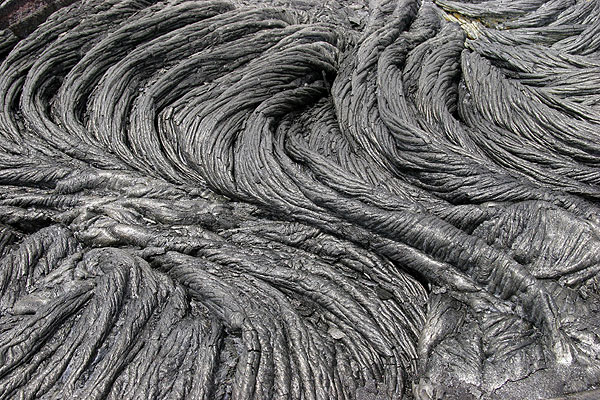
Most significantly of all, there is an underlying darkness at the root of everything we have built. Outside the cities, beyond the blurring edges of our civilization, at the mercy of the machine but not under its control, lies something that neither Marx nor Conrad, Caesar nor Hume, Thatcher nor Lenin ever really understood. Something that Western civilization – which has set the terms for global civilization—was never capable of understanding, because to understand it would be to undermine, fatally, the myth of that civilization. Something upon which that thin crust of lava is balanced; which feeds the machine and all the people who run it, and which they have all trained themselves not to see.

Teens talk of Climate Collapse

This is a fresh and unique 34 minute video, produced by Jem Bendell, about a 13 year-old’s exploration of climate collapse. It’s authentic, revealing and very touching.

Walking on Lava I

The end of the human race will be that it will eventually die of civilization.

                                                                                    — Ralph Waldo Emerson

(excerpted from Dark Mountain Manifesto)

Those who witness extreme social collapse at first hand seldom describe any deep revelation about the truths of human existence. What they do mention, if asked, is their surprise at how easy it is to die.

The pattern of ordinary life, in which so much stays the same from one day to the next, disguises the fragility of its fabric. How many of our activities are made possible by the impression of stability that pattern gives? So long as it repeats, or varies steadily enough, we are able to plan for tomorrow as if all the things we rely on and don’t think about too carefully will still be there. When the pattern is broken, by civil war or natural disaster or the smaller-scale tragedies that tear at its fabric, many of those activities become impossible or meaningless, while simply meeting needs we once took for granted may occupy much of our lives.

What war correspondents and relief workers report is not only the fragility of the fabric, but the speed with which it can unravel. As we write this, no one can say with certainty where the unravelling of the financial and commercial fabric of our economies will end. Meanwhile, beyond the cities, unchecked industrial exploitation frays the material basis of life in many parts of the world, and pulls at the ecological systems which sustain it.

Precarious as this moment may be, however, an awareness of the fragility of what we call civilization is nothing new.

‘Few men realize,’ wrote Joseph Conrad in 1896, ‘that their life, the very essence of their character, their capabilities and their audacities, are only the expression of their belief in the safety of their surroundings.’ Conrad’s writings exposed the civilization exported by European imperialists to be little more than a comforting illusion, not only in the dark, unconquerable heart of Africa, but in the whited sepulchres of their capital cities. The inhabitants of that civilization believed ‘blindly in the irresistible force of its institutions and its morals, in the power of its police and of its opinion,’ but their confidence could be maintained only by the seeming solidity of the crowd of like-minded believers surrounding them. Outside the walls, the wild remained as close to the surface as blood under skin, though the city-dweller was no longer equipped to face it directly.

Bertrand Russell caught this vein in Conrad’s worldview, suggesting that the novelist ‘thought of civilized and morally tolerable human life as a dangerous walk on a thin crust of barely cooled lava which at any moment might break and let the unwary sink into fiery depths.’ What both Russell and Conrad were getting at was a simple fact which any historian could confirm: human civilization is an intensely fragile construction. It is built on little more than belief: belief in the rightness of its values; belief in the strength of its system of law and order; belief in its currency; above all, perhaps, belief in its future.

Once that belief begins to crumble, the collapse of a civilization may become unstoppable. That civilizations fall, sooner or later, is as much a law of history as gravity is a law of physics. What remains after the fall is a wild mixture of cultural debris, confused and angry people whose certainties have betrayed them, and those forces which were always there, deeper than the foundations of the city walls: the desire to survive and the desire for meaning.

Climate Grief

Since 2007, Elizabeth Kubler-Ross’s five stages of grief has been applied to climate change by both those who accept the science and by those who do not. Looking at climate change through the Kubler-Ross lens isn’t quite as straightforward as if you were the one receiving the terminal diagnosis or if your spouse had just passed away. She later regretted creating the impression that grief progresses in a linear way through a defined set of stages. It does not, and no more so in the case of climate grief. The stages are signposts on a circuitous journey back to wholeness, through the gradual emergence of climate data and the shifting terrain of social responses to that data.

Facing one’s own mortality or the loss of a loved one occurs against a backdrop of relative stability. It’s socially sanctioned. There are many social structures acknowledging, empathizing with and supporting a passage through such grief. All the other aspects of one’s life may remain relatively certain as one addresses and metabolizes a radically disruptive transition. But generally speaking, the infrastructure of one’s life is not threatened.

Climate change, on the other hand, threatens the foundations of civilization, the biosphere, the underpinnings of everything we know, what we in the ‘developed’ world might call modernity. There’s no such universal social support for this type of grief because, unlike guaranteed mortality, climate grief is not universally shared. It also represents an unprecedented disruptive condition, one that doesn’t arrive all at once, but one that unfolds in multiple unpredictable ways over a long period of time.

The widespread denial of climate change losses prevents our emotional pain from being socially acknowledged and validated. Those touched by this grief may be viewed as overly sensitive, as exaggerating the issue, or even as emotionally unbalanced. These responses can encourage individuals to isolate, remain silent, and become disenfranchised from their own grief process, rather than move through it with support.                                               Leslie Davenport, 2017

The diagnosis has not been terminal from the very beginning. When James Hansen testified before the US Congress in 1988 and warned of global warming, no one took that warning to be a terminal diagnosis for humanity. Its nature has unfolded slowly to the point at which it’s only now becoming clear to the majority of those paying attention: An uninhabitable earth. An entire planet not accommodating to any image of human culture as we’ve known or imagined it. Instability. Profound uncertainty and extremely daunting logistical and environmental obstacles to continued viability of civilization.

Overlaying the common 5-stage model (Denial, Anger, Bargaining, Depression, Acceptance) on these conditions is not so simple, but it does provide a way of understanding and naming key dynamics of the responses to the ever-advancing conditions we face. What a personal terminal diagnosis and climate change share in common is that resilience is possible. Even if the diagnosis is terminal, it’s still possible to recover and maintain wholeness.

The words ecology, ecocide and economics derive from the same root, the Greek word for home: oikos. This common root implies equilibrium in the biosphere and in all our relations with each other, not only through mere commerce. What we see today is a common radical disturbance of increasing severity in ecology and in economics. We have strayed far from home in both domains. We are killing ourselves and now live under a common threat of death. Whether it is understood in these terms or not, this is the root of our grief, an existential estrangement from home. To restore that equilibrium requires that we turn our efforts toward the biosphere, toward others and toward our selves to heal the economy of the whole.

The womb of grief is the seat of love, of caring. To turn away from eco-grief is to turn away from home. The feelings related to grief can be very difficult to bear. But if we remember to think of grief as a natural expression of caring, even love, we can begin to see grief as a form of compassion and strength. We can even begin to see our grief as a tool for action.                                                             Leslie Davenport

Those of us who accept the diagnosis, anthropogenic global warming, are all too familiar with the forms of denial practiced by those who do not accept it–or play with words to appear to be agnostic about it. Some deny there’s a problem altogether. They deny humans are causing the problem; they deny the magnitude of the problem; they claim mitigation measures will be too costly now and that they will be cheaper later when the impacts are more obvious. They deny the scientific consensus, attack the reliability of the data and finally, they attack the messengers, the scientists themselves, as greedy liars. And besides, what hubris it is for humans to claim God’s Plan may be flawed. The audacity!

Less obvious are the forms of denial practiced by climate advocates: We have to push harder for emission reduction. Admitting failure will only lead us to hopelessness. We can still change course (after 30 years of insufficient action). Technology will save us. We have to shield ‘others’ from hearing the truth. We practice functional denial, being well aware of our compromises, inadequacies and limited agency, but still trudge through our days as if species are not disappearing all around us. Truly, sometimes we have to give ourselves a break from the onslaught of bad news. Otherwise, we fear, we could not function. Every day is a conversation with urgency against the backdrop of our grief and periodic despair. Who could resist denying all of it from time to time?

The few, the gifted, the fearless, the ones who fully experience the deep well, the womb of grief as the seat of care are the ones who demonstrate what in our deepest heart we know is true. Those who can fully dismantle their own denial are the ones who demonstrate—even without words—the fundamental and natural connection within all of us to the full magnitude of the issue and the horror of all that is being destroyed around us. And not only by Others, but by we ourselves. Our complicity is much easier to deny than to fully accept.

The anger we feel about the denial all around us, the cynical disregard for the advancing consequences of climate displayed by politicians, the disinterest, the half-measures, the delay, the obfuscation, the lies, the aggressive ignorance, the outright hostility to the truth (as we see it) is like an unwelcome intruder, draining us of energy and focus. Anger may rise at any time, triggered by a casual remark, a headline, a social media post. It’s usually directed elsewhere, but not always. We can surely be as angry with ourselves as with someone else. But either way, it does undermine our capacity for action.

We also have our own versions of bargaining and will quickly adopt internal measures appealing to our inner panel of judges, justifying our exhaustion, assuaging guilt, promising improvement. This is the terrain of personal and collective lobbying. Pushing for someone else to do something. Ultimately, bargaining is too often an attempt to squeeze wine from a raisin. We are not getting where we need to go and finally realize we are only delaying the inevitable. This is the moment Deep Adaptation dawns upon us. We finally know we are alone and what is required. That space, a no man’s land where our agency is hopelessly lost between knowledge and action, is the crossroads of depression and acceptance.

Accompanying depression is what Kubler-Ross might have called extreme helplessness, a near-fatal despair. There is nothing to do but stare into the darkness, searching for any sign of form, of possibility, of faith. As long as any denial remains, despair will not abate. We have to acknowledge that there are others not ready to hear the truth. Perhaps we ourselves are not ready to hear the truth that we are (on our way to) losing our home, our family, our life as we knew it.

But despair is a state, not a station. It’s a passing condition. That it will change may be the only thing we can be sure of. It is telling us to change our strategies, to change the parameters of our activities, the definition of our community, the issues we tend to. It is telling us to discard what has not been working, to accept our mortality, that wholeness is not only possible for ourselves, but a gift we can offer to others.

Acceptance opens space, restoring agency and creative possibility. It opens the floodgates of feeling, connection and resilience, putting us back in the middle, holding the ambiguity of life and death, of journeying but never fully arriving. Acceptance restores meaning. This is the ethos of Deep Adaptation, remembering home from the ground up, embodying a new economy, taking care of what is within our reach and accepting limits on our capacities.


The Anthropocene: Humans Behaving Badly

Do humans have a purpose on earth? This is slightly different from asking a more open-ended, “What is the purpose of life?” or “Why are we here?” (in this universe). The question I’m asking, and hearing others ask, is more local, more pointed: “What is the human purpose on this earth…in this epoch of time?….in the matrix of life on this planet?” This is the question of the Anthropocene, because it’s clear we’ve (the white European cohort) become especially confused lately (since the Enlightenment?) and haven’t been doing it much good.

The answer to this question will of course be different depending on whom you talk to. But it’s clear, at least from the beginning of Genesis to the end of Revelations, our destiny has been to become stewards of life on earth. And since we’re talking about who defines the parameters of the dominant narrative, the Enlightenment confirmed that, pretty much, by declaring reality (Gaia) to be dead. Now, having crossed into the unfamiliar space of being the primary drivers of an unhealthy biosphere, why is our destiny not immediately clear?

We fancy ourselves exceptional. At what point in our intellectual or technical development did the formulation of “destiny” or “purpose” even become possible and if the question is sufficiently massaged to address the local inference, why did we not recognize this capacity long ago, elevated above all other personal or collective imperatives? It seems we are only beginning to address this question as our continuing existence is increasingly threatened.

A popular theme of science fiction—and Hollywood blockbusters–is ominous speculation about robots becoming conscious—that man-made machines will become self-aware and exceed the limits of human control—not knowing their place, so to speak. The theme of humans being capable of creating monsters is not new. But now we talk of AI growing beyond our control, its human designers squirming beyond all ethical boundaries and precipitating all manner of damage upon its collective creators. Yet, as most people have noticed, humanity has already brought the rising (acidifying) waters and become the dancing brooms in Disney’s Sorcerer’s Apprentice. The Master’s messenger on earth has become the uncontrollable diabolical force of creation gone wrong with only one driving imperative—the preservation of a self-serving paradigm.

In other words, who is controlling what? Cloning vaguely falls into this category as well, creation itself falling victim to the law of unintended consequences. But we seem to have less moral ambiguity about cloning than AI. We already have the capacity to knowingly introduce bias into AI algorithms. The designation “ethical AI” itself infers the existence of “unethical” AI—which we would presumably and unequivocally reject….except “ethics” has now become a squishy concept because there’s so much money to be made. The creation of “ethical” AI now guarantees the future of the unethical variety.

I wonder if it occurs to the scientists that the train of civilization has already gone wildly off the rails?

So here’s the question that now haunts me. The sci-fi dystopian fantasies are all future oriented—as if, if we’re not careful, it can happen here. But we humans are already victims of our own development–driven by a relatively tiny cadre—a cult, if you will. We ourselves are already making the AI horror movie (and have been for a long time already), a world ruled by technology loosed upon the biosphere, wreaking havoc beyond the oversight of any cool-headed super-authority, not only being at war with the biosphere and with each other, while some of us also see what we’re doing, trying desperately to come to our senses to reverse the damage.

Not only does this view clarify the Anthropocene, humans ‘gone wrong,’ but begs the question of whether humanity—under control of the cult of growth—could ever be a neutral force. The naïve view is that somehow we have backed into a position of unprecedented influence on earth. In reality, the cult has been on a self-conscious accelerating destructive evolutionary tangent for some time; a product of natural evolution by some stretch of the imagination, perhaps, but one that now spells our own doom. Do they know what they are doing? Yes. And, as the definition of insanity so convincingly tells us, even in the face of rising danger the cult continues to believe doing more of the same will result in a different outcome. They are doubling down on the primacy of technology to manage our living relationship with nature—because money.

At what point did we stray off course? When did the progenitors of a culture of death become dominant? When did a tiny subset of humans turn to radical evil as a prime directive? When did we (they) become the proverbial robots gone rogue, incapable of thinking outside their own box? I’d say quite recently—maybe 100 years ago, accelerating in the aftermath of WWII, and the age of The Bomb.

But deeper conditions had to be present for this to be possible. As in the movies, a series of dysfunctional lines of code reinforce each other until an unpredictable tipping point is crossed and suddenly a new organism takes shape. In our case, it was a series of events over a long period. Mass production, the birth of capital finance, using money to make money (1300-1600), the creation of Limited Liability Corporations and colonialism all figure into the picture.

The Judeo-Christian fiction that humans were put here to dominate nature hasn’t helped,…and then there was that guy who said, “I think, therefore I am,” (17thC.) which segued into the ever popular, but so much more damaging, “I own, therefore I rule.” The inflection point occurring 70 years ago was an acceleration of the machinery of destruction to its current runaway status.

Along the way, while the rest of us were de-indigenizing, uprooting ourselves, enjoying newfound mobility, shifting our primary relationships away from tribe and earth to self and money, we lost contact with Home. Now, a small sliver of (distinctly white western) humanity has gained sufficient power and influence to write the rules of money and property to their own specifications, a radical evil self-interest, to rig the game in their favor. Mass psychosis has ensued. Now we have many gradations of psychosis gripping the general population, clinging to the illusions of equality of opportunity and upward mobility. Few make it, of course. The self-appointed engineers are an increasingly exclusive club.

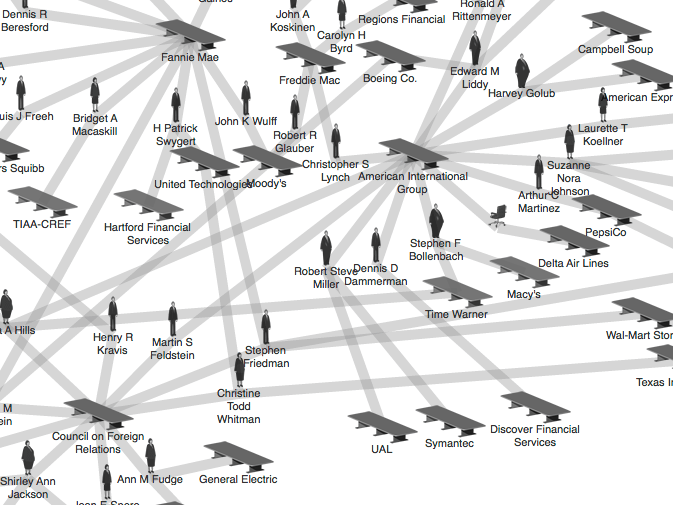
Who is this cult? It’s the Barons of Wall Street, the CEOs of the biggest mutual, hedge and pension funds, the plutocrats, Washington politicians, the intelligence community (the National Security Apparatus), the core law enforcement agencies of government, the fossil fuel sector, the military-industrial complex and certain media entities. This is an insulated, exclusive, self-perpetuating, community of moneyed and political interests who determine the rules for everyone else. Their immunity to resistance is legendary, complete and becoming ever stronger. Whether any single individual member of the cult is insane may be debatable, but the ideology is seamless, ingrained, doesn’t require specific articulation or enforcement. It has become second nature to all its members. They make the kool-aid. We’re supposed to drink it!

The next (and worst) wrinkle of ‘bots gone wrong,’ is when they decide the rest of humanity is expendable (or even must be eliminated) because they are obviously of inferior intelligence and are screwing up everything for the radically evil select few who seek perpetual control and immortality from their secure and remote compounds in the mountains of New Zealand. In other words, every wave of resistance, every opposing dialectic generated from the masses who are waking up to how far we have strayed from the original mutually beneficial relationship to all life, who wish to restore the homeostatic mechanisms (emphasis on home) conducive to life, must be crushed—or at least delayed.

Surely there’s a name for the condition of this self-selected, connected tiny sliver of humanity dragging the rest of us off the cliff, an expression worthy of this mutation of the prime directives. Some prefer the term Deep State. I like the sound of Tyrannysaurus: the tyranny of a hell-bent cult whose days are numbered. Unfortunately, I don’t think we’ll survive them. Like most mutations, the difference between the common and the rare and deranged is not radical. A few mangled lines of code are enough to set the result on a course of unchecked damage, tearing its way through the rest of the species leaving a trail of victims who will never fully recover. You know whom I mean, the uneducated, the poor, the dispossessed, the bankrupt, the disenfranchised.

The mentality of the Tyrannysaurus is separated from the rest of us only by a matter of degree. Not merely thinking for themselves, they think only of themselves. Not merely compartmentalizing the suffering of others, they are willing to directly cause that suffering by promoting a system of violence to extract every possible form of wealth from the commons. They do not merely avoid inconvenient facts, they construct alternate realities, attacking truth itself and fomenting mass delusion to support their fantasy about where responsibility lies for the ongoing wreckage. They do not merely believe humans are superior beings, but that they themselves are super-human. These aberrations of the Holocene, leading the way into the Anthropocene, believe they—and only they–are the pinnacle of evolution.

Most of all, and most damaging, they have managed to deny planetary limits to growth and the extent of our entanglement with other forms of life. Worse, they deny everyone else’s entanglement as well (because of course!), limiting our capacity to repair the damage their violence has wrought.

Long into the future, perhaps even millions of years, when the ice-bound or ashen chronicles of this age of humans is revealed and explored, the extinction story of humanity will be pieced together as an internally generated event. Unlike the first extinction of the great dinosaurs, human extinction will be a story pinned to the faulty code and resulting hubris, narcissism and unapologetic destructive force of the Tyrannysaurus forever, including the way they managed to convince so many of their contemporaries that only they had the answers to the rising danger of our uncontrolled self-destructive mass behavior and how they retreated to their secret guarded redoubts and watched billions of their cohorts, unprepared, succumb to starvation, conflict, disease and an uninhabitable climate.