One Full Breath

Maybe I could see it if I had eyes on the side of my head instead of looking straight, as if I’m a fish, perpetually suspicious about the possibility of water—as if I once knew of it but have forgotten. That is, if I, a fish, believed in existence.

Dawn is breaking. Lurking in my awareness for a long time–at least intermittently—is a perpetual presence lying just outside my field of vision. Try as I might, I cannot bring it wholly into view. Perhaps it’s an illusion, but regardless, it’s elusive, yet it also feels like something central to all understanding. Maybe I could see it if I had eyes on the side of my head instead of looking straight forward, as if I’m a fish, perpetually suspicious about the possibility of water—as if I once knew of it but have forgotten—still sensing its centrality to my existence. That is, if I, a fish, believed in existence.

My adventures in Buddhist philosophy and subsequent experiences, not merely the intellectual exercise nor any cognitive machinations, but by direct experience, have taken me all the way to the realization of water. Yet in the routine experience of relativity, I revert to a suspicion, which is accompanied by an annoying sense of inadequacy, that such clarity—enlightened clarity—is never as accessible as I might wish. This is surely a common phenomenon.

Today I noticed an essential truth housed in a familiar book passage. I recalled its past impact, this time it had no impact. It was as if my mind had closed and was no longer open to being impacted, or of having my current spell broken, not even for a moment, to permit what was once a possibility that my energy would change, that I could enter a spacious and unadorned frame of reference, that I could be lifted out of the all-too-familiar quagmire of routine discursive thought for even a moment.

It seemed that what were once anchors of a self-regulated, light-hearted, even somewhat innocent demeanor had been rendered inert, remote and inaccessible, almost completely foreign. And in their place is a frustrated, anxious, edgy, too easily angered, limited and defended, even fragile presence, helplessly attempting to regain some agency in a universe whose laws quickly undermine every presumption of agency. 

I might have called this the bardo of everyday life, this forgetting, but my temptation to also name it the bardo of death is because I suspect the sensations are nearly identical, of being lost, drifting in a sea of semi-cognition, dreams with no sensations, no handholds, no anchors, no primary orientation whatsoever, being no-body, as if I will forever drift, uncertain if I wish to or am even capable of either surrendering to the dream or waking from it. Except now, the dreamscape abides whichever way I go.

I wonder if I’m merely experiencing aging, slipping across some threshold into a permanently shrunken space where the inventory of available brain cells has diminished. I don’t seem to be able to transcend, to free myself from these limitations. Until this:

I settled and began gazing, a deliberate and progressive meditative process, eyes wide open, into the heart of Being, expanding, loosening the anchors of the physical body, a condition in which the boundaries between self and object, seer and seen, flicker and dissolve like a mirage, like a dying flame. For a moment, I am free of my story. I breathe and rise to my full stature. 

Gazing into the moment…as the moment gazes into you…the comforting stability of it, its fleeting nature and unlimited potential, the opportunity for wisdom to arrive, for benefit to arise for all beings, that is the nature, the whole (he)art of the gaze. It is not a condition of a single being gazing from or at or even with anythingGazing is (potentially) a non-dual state, the formless form of Being, the perpetual condition of Being seeing through its own eyes. Gazing is more than looking or sensing or feeling. It is more than hearing or touching or interacting in any finite way with any thingGazing is taking a full breath of now. It is all things now, being now, creating now, living and dying now, absent any desire or agenda whatsoever.

Outside of meditation itself, in post-meditation, the presence of gazing may also partake of the ferment of ideas in the teeming bazaar of this time, the fertile turbulence of the evolutionary marketplace at the crossroads of this moment. Aren’t we all desperately gazing into this moment to comprehend, to extract the meaning and succulence of these increasingly desperate times? Take one full breath of this! Rise to your full stature and realize the world is gazing back at you.

Being is gazing back at your being, with no expectations, no demands, no promises, no guarantees, with no past and no future to destroy or create. We are all making the world in this moment, gazing into the future, becoming messengers to the future, rising to fullness as vital nodes in the web of life, sensing the energetics of the whole, a promise we make to ourselves as we fully breathe into the present. 

This is what the future is asking of us now, to take a full breath of this moment. Each of us, in our personal conflicts, lifelong journeys, unresolved questions, resolutions, accomplishments large or small, is called to be a messenger, an ancestor, a gift to the future. Regardless of our karma, whatever our success or failings, we are guides, changing the course of history, bending the moral arc of the universe toward justice.  That’s all we have. That’s all we’ve ever had and all we will ever have. 

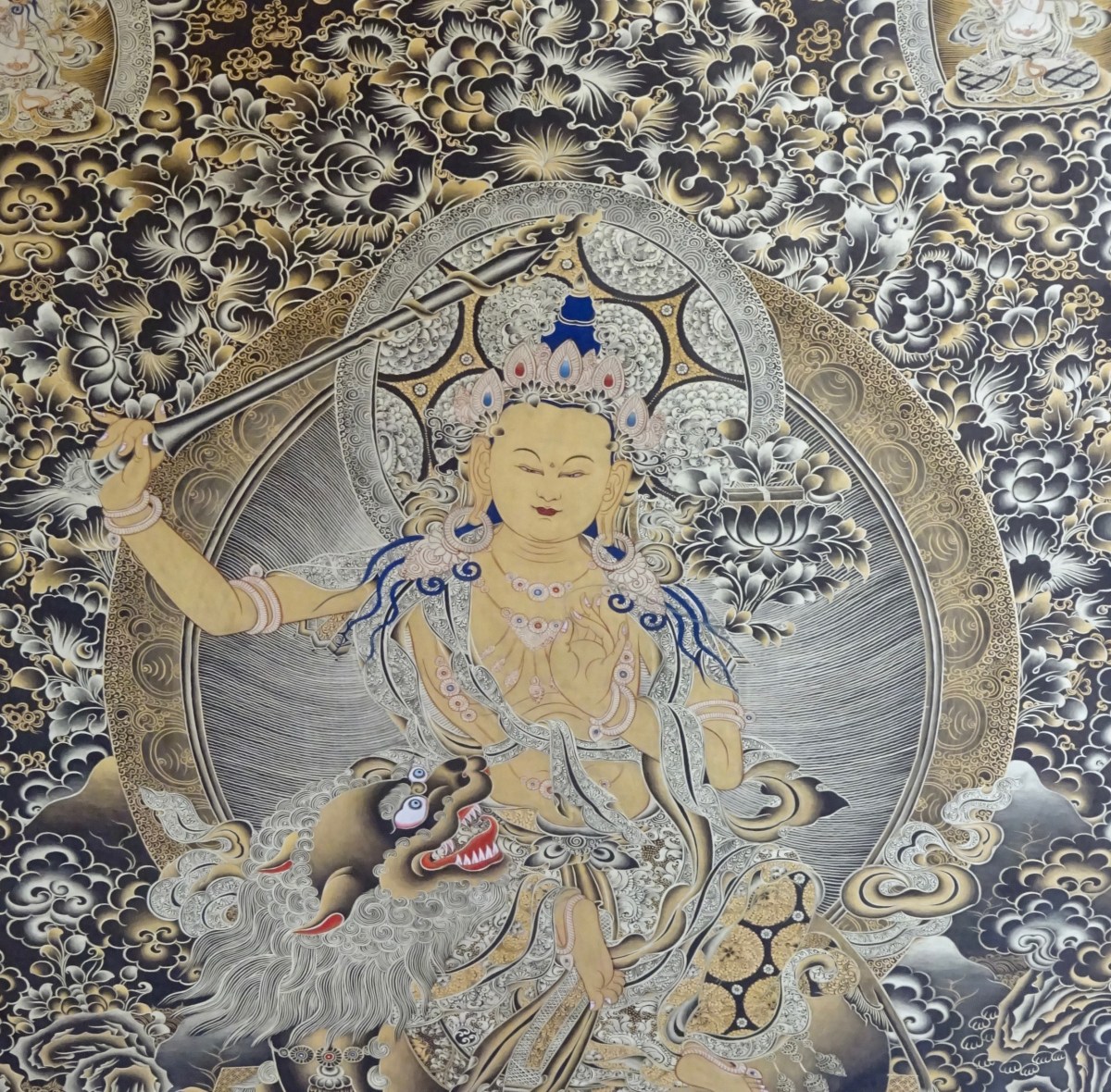
Accepting the fullness of one’s own karma may not be such an easy thing, because to do so you have to tell yourself the truth. But if ever there was a moment to breath fully into life, into this long-awaited transition, this re-opening of possibility, this moment to reflect and dedicate ourselves to the task ahead, this is it. Gaze into it; and may the Being of Samanthabadra, the consciousness of all Buddhas; of Manjushri, the wisdom of all Buddhas; of Chenrezig, the compassion of all Buddhas, the nature of Being itself, hiding in plain sight, be the guidance you wish for and deserve. Take a full breath and give everything to it.

Gratitude to Rudolph Bauer for sparking this content. See his article, “Gazing as Dzogchen.”

No Time To Lose

Reading Andrew Harvey’s 1994 book, The Way of Passion, about Rumi’s relationship with his teacher Shams i-Tabriz is a riveting and enlightening dive into the poetry Rumi produced from that time.

Reading Andrew Harvey’s 1994 book, The Way of Passion, about Rumi’s relationship with his teacher Shams i-Tabriz, is a riveting and enlightening dive into the poetry Rumi produced from that time. Why would I read this? Because devoted to my Buddhist niche as I may be, it’s dry in comparison to the ecstatic and explosively awakened passion of Sufism. Continue reading “No Time To Lose”

Emergence

Whatever else it might mean, emergence implies the most intimate character of life, a constant unfolding of arising and disappearing, creation and destruction, beyond rationality, transcending origins, judgment, intent or outcome. Tuning our view and receptive experience to this level of phenomena requires us to slow down, measuring and matching its pace, to align more intimately with an effervescent ebb and flow, to the way things really are, adjusting consciousness to the most elemental nature of nature.

That true nature, if we were to look more closely into it, is an ongoing process of life and death, each releasing into its opposite, arising and ceasing, appearing and disappearing. Nothing is fixed. Everything is less encumbered, simultaneously more connected and never still.

Emergence, at the innermost sanctuary of biological essence, lies at the neurochemical ground of being, in the transition of form to formlessness and vice versa, the nexus of conception and realization. It is the most delicate and easily injured wrapping of our existence, the pia mater, the ‘tender mother’ holding everything. It is the truest and deepest home of connection, compassion and forgiveness, where we are always alone, never lonely and in full communion with all life. In the most subtle recess where true belonging resides, the absolute belonging of no body and no-self, we give ourselves up to Inter-Being with no agenda, no grasping, no past and no future.

Unceasing change is the driving and dominant principle of emergence. Radical Impermanence is the Law. This is also a core principle of Dzogchen Buddhism. There is no true substance to anything, nor, ultimately, is there anything other than materiality. At this level, there are no values to be assigned to phenomena. Everything is simultaneously real and also apparition, including, of course, you and me in every moment.

Beneath the continuous and tenuous dynamic of birth and death is a deeper reality of unceasing stillness in which nothing is gained or lost. Everything is apparent and also continuously shifting. Any possible source or cause is beyond definition, beyond being teased out for identification or examination. There is no linearity, no progression nor any apparent reason, only an equality of opposites bound together in unceasing change. Only a self-propelled consciousness exists, a spontaneous internal intelligence based on impossibly complex systems processing information directly and immediately derived from ongoing performance, having no goal, no direction and no imperative other than to continue.

Right and wrong are less certain in this realm as the unceasing momentum of emergence cannot be definitively assigned to any single event. In fact, in absolute terms, all phenomena exist beyond any meaningful polarity and are regarded as equal. This is very difficult to grasp rationally, but every value we place on thought and action, all form, is entirely projection.  Hovering at this nexus of appearance and apparition gives rise to a quality of freedom, which can only be defined as compassionate intent, the ethical and moral engine for all action. To withdraw from the imperative of compassionate intent is to violate the mandate of life and to descend into meaninglessness, nihilism.

In the realm of emergence, nothing is containable, especially imagining a  fixed presence, such as a Self, expressing a principle of radical impermanence. Paradoxically, emergence becomes a sanctuary of birth and decay, of rapid and unending change, where safety is upended, where all reification goes to die.

At the emergent level of life, we belong to ourselves, to each other and to something vastly greater, beyond imagination. We do not belong to each other as mere ripples on the surface of life. That is the extent of the limited realm of psychology. The reason we can do to the earth and to each other what we do on a routine basis is because we do not fully belong to ourselves, and are not sufficiently mindful of how we belong to each other. What the totality of earth systems are doing now, because they cannot do otherwise, is reflect back to us what we have lost.

We are made and remade in realms of spirit and myth. In emergence, we realize our mutual dependence. In healing the rifts that separate us, we become more available to a greater sphere of belonging. If we dwelt only on the surface, we would miss the vast ocean sustaining all and to which all belongs. The internal healing process overcoming fragmentation, the dominance of subjectivity to the exclusion of full communion, is crucial to our maturation into eco-beings, cosmic citizens.

As for somatic experience itself, we are more than feelings and sensations. We are earth bodies, even though we may default to conceptual reflection–because that’s what (western) humans do. That’s what distinguishes humans from the rest of the non-human world. But this comes at great cost. The transition under way is not strictly about feelings or heart opening. It is about erotic embodiment, re-inhabiting our earth bodies, recovering the vocabulary for different ways of knowing, communicating, assessing and restoring the languages for relationship and community.

The somatic experience of emergence is happening so fast now we can’t process all of it in our bodies. Trauma, at its heart, is elementally expressed as opposing muscular action within the human system, the repression of expression contained by opposing neuromuscular conditions, the conflicting influence of opposing hormones, neurotransmitters at the fundamental level of physical mediation of incoming stimuli: the autonomic nervous system, the lizard brain. Over time, unaddressed, the sensitivity of the system increases, rendering us increasingly reactive to triggering stimuli, with all the attending memory and feelings. In emergent mind, the material of conflict becomes more accessible; the resolution of this conflict is a return to a lower baseline of sensitivity.

We can all sense the acceleration of change, making the processing of deliverance from social and historical and environmental trauma fast upon us more difficult. The depth of multiple traumas such as racism, privilege, complicity and the extractive economy are opening into full awareness. The violence at the center of the Growth Imperative, the colonization of peoples and our very capacity for critical thought are ever more apparent. The tools and pathways redefining our relationships, many though there are, are still under construction.

The vestiges of feeling ourselves as solitary are tenacious. Isolation and alienation are routine features of post-modern life. In our narrow self-oriented explorations, most of us carry memories of exclusion or marginalization. These are primal wounds of feeling excluded and separate, striking deeply into the psyche, particularly in these unsteady times.

Beneath that we cling to our identities, as if such a thing as a separate self exists in any ultimate sense. We each have varying skillsets for seeking and creating connection, the fields of intimacy meeting our needs. But due to our continued immaturity in relation to the world, many do not routinely experience union at all. Our attachment to a separate self is a fundamental source of suffering. Loneliness, the deepest wound of all, is dependent on this very principle.

One could spend all day detailing the minutiae of the typical persistently depressive longing for belonging, the pandemic of modern alienation, dislocation and dissociation from the natural world, the creeping and equally persistent solastalgia arising with the daily degradation of our common home. The effect is deep, subtle, pervasive and increasingly corrosive. All of which makes it increasingly important to decelerate and find refuge in the pace of emergence.

But when one drops beneath the conventional, asking again what we belong to or how we experience belonging, the easy definitions dissolve. The boundaries disappear and the reality of belonging simultaneously on multiple levels takes shape. While belonging may imply gaining something, part of the greater process requires we continuously acknowledge loss. It has been said that if we do not grieve properly, then that which we have lost was never truly alive. So we grieve. We grieve for what was alive in us, with us and for us. If we grieve properly, then we must also praise what is alive right now.

Resolving trauma, integrating feeling and restoring fully expressive neuromuscular function restores our pure creative impulse: eros. Emergence is the raw, un-nameable realm in which we contact this primal principle, where possibility expands beyond measure, where we meet the timeless wisdom of compassionate intent.

My Lineage

My lineage is the vast space of Longchenpa,
the precision of Jigme Lingpa, the tickster
Patrul Rinpoche and heart of Dilgo Kyentse.

My lineage is the perpetual union of all opposites,
the devotional music wafting through the
thick silence of a Rishikesh dawn.

My lineage is Durga the Invincible,
Kali, the Dancer of Destruction,
Parvati, the messenger of Love and Devotion.

My lineage is the lost language of the Algonquin,
the Mohican and the Miwok. It is the shining eyes
of a Lisu girl, the radiant gaze of a stranger
at the Maha Bodhi temple.

My lineage is the woolen robes collapsed like
ghosts on the benches of Shugsep nunnery,
the mountain peasants standing in line to
enter Samye monastery.

My lineage is tears of surrender on the cheeks
of pilgrims, whirling prayer wheels and wooden floors
worn by the prostrations of the devoted.

My lineage is the half-blind old woman greeting
me at the doorway of Gangri Tokar,
love beyond measure emanating from
a single ancient eye

My lineage is the morning mists of Gangtok,
the sanctuaries of Bagan, the lanterns hung
by the river at Hoi An.

My lineage is the master calligraphers of ancient Islam,
the Wailing Wall, the cathedral at Reims.

My lineage is the whales singing their
song across a thousand miles of ocean,
never singing an oldie, always a new song.

My lineage is slipping into the deep chill of the Yuba River,
diving the blue-green depths of Lake Tahoe,
climbing the trails of Devil’s Postpile
and the cliffs of Kalalau.

My lineage is egrets dive-bombing for frogs in the
rice paddies of Bali, a glistening web
hanging in a redwood forest, the wetlands, the badlands,
the white birch, the alpine, the Douglas fir
and the mighty sequoia.

My lineage is Rilke’s falcon, circling in a great storm,
the heart of Joanna Macy, the ecstatic passion
of Andrew Harvey, the mythic stories of Michael Meade
and the linguistic jail-break of Bayo Akomolafe,
voices of longing, resilience, illumination,
messiness and trouble; koans of entanglement.

My lineage is the relentlessly curious, the rule-breakers,
the sense makers, the light revealers,
travelers of the transverse, sentinels of the timeless,
fugitives of rationality, non-doers in a world of doing,
outlaws, burning and bursting through
the crumbling walls of every Jericho.

At Sea

A portal appears. I am bathed in light, warm, soft, welcoming, forgiving, familiar. It fills me with a reminder of what has always been true. What I have known, what I have misunderstood, what I have dared to wish for, what I have forgotten, all emerges unexpectedly, like a musical styling never heard before, now returning.

The teachers always say to relax. But such a thing can only be achieved or expected to a limited degree. This quality of relaxation cannot be constructed. We cannot simply relax out of our human frame of reference, leaping beyond ego to see from an entirely different reference point. Attempting to do so relies on the very mental activities responsible for our blindness, the very behaviors we have used to climb the illusory ladder, the gradual path, to arrive here in the first place. To circumvent them now, not merely ignoring them, would be to see through them as if they no longer exist.

And that’s the point, is it not? To extinguish the very idea of a reference point? Perhaps trekchod (cutting through) is nothing so dramatic after all. Perhaps it’s simpler than it’s made out to be, more accessible than imagined. How does one “make space” for this? How can one make space for…something so elusive as this? That is the mystery. Perhaps I’m receiving an answer. The shift from ‘normal’ mental activity to a condition of relaxation, ‘cutting through,’ dropping through or ‘making space’ for a different way of seeing is quite subtle. But it truly is a relaxation. Not in the familiar sense in which we understand deliberate relaxation, doing so from within the fortress of ego. Such an approach is actually a mis-direction, a distraction. The nature of this relaxation is not even really a physical experience, though physical relaxation is a by-product. In this case, the activity of ‘thinking mind’ is cast in a wholly different and fresh light.

One cannot merely sweep away the activity of mind as if it’s some Herculean task, moving mountains of manure, searching or foraging into the most remote corners of consciousness with a mental broom or shovel, only to be overtaken by the relentless appearance of More. No, not at all. The task is to deconstruct the stable itself. Not relaxing the mind exactly; relaxing the thinker, the one entranced by the activity of mind.

But specifically, not in any deliberate way. As long as the mind is regarded as an object, as Other, and especially as Self, by the originator of that mind, attempting to relax thoughts will forever be an exhausting and ultimately misdirected task. ‘Relaxing the mind’ means relaxing the structure of mind, turning off the entrancement, allowing the entire architecture housing thought, the very idea of ‘my’ mind, to collapse. The dualistic view one has about mind as a phenomenon collapses into an awareness of Mind, infinite spaciousness not limited or contained in any way. Non-meditation.

It feels like stepping out; stepping out of thinking, out of identity, even the undoing of that identity, stepping away from the entire drama of being someone, a personality with a history, an agenda, a need to continue, to be perceived, to perceive oneself in a certain way. Such an experience highlights the random nature of all events, the appearance and disappearance of all things. And thus, wherever attention is drawn, beginning with inhabiting the structure of identity itself to the most minute and fleeting objects of attention, is determined by karma. Unless we become truly able to arrest that process, we cannot simply look away.

Everything before me, all thoughts, sensations, emotions, are only one thing: emanations from nothing, originating as nothing, unconditioned, becoming nothing; each a tiny wave upon a vast and gentle ocean. I am held, lifted and aroused, born by the mystery and the familiarity, the variety, simplicity and purity of everything being just as it is, unique, unchanging, and also being nothing whatsoever, appearing, disappearing and leaving no trace.

There is nothing to renounce; nothing to attain. There is only supreme relaxation, a surprisingly accessible, easy and straightforward condition, which is really no condition at all, only a subtle side step from ordinary awareness, without fanfare or drama, without a director and without consequence. No coming or going. Emptiness, dhamakaya, at the heart of all, fullness in the heart of all, without words or messages; nothing to do or be. Is this space? Is this the nature of what has no nature, the heart essence of the Beloved? Is this the time of having no time?

pebbles-in-a-pond-blog

Superimposed on this essence, this condition of being unconditioned, is the vividness of lucidity, sambhogakaya, an innate brightness without source. It is the limitless expanse defying categorization, Being enjoying itself, the frequency of vibration intrinsic to all space. And beyond lucidity is the manifest nature of becoming a ‘thing,’ an ongoing ‘event’ level of Being, nirmanakaya, the realm of unnamable presence, which has nothing but absence at its heart. This is the nature of the three kayas, distinct yet non-existent, in unity, separately. Not layers, not even organs of differing functions, they are distinguishable, yet inseparable. Things are not things independent of them. Yet also, because of them, things are not things at all.

So it’s come to this. All the searching, striving, study, assimilation, conjecture, telling myself the story I want to hear, breaking open, closing again, remembering, forgetting, a lifetime of compliance within a field of wandering, constructing my boat, testing myself, riding waves, winds according to impulse or duty, it all comes to this moment; falling open.

I consume pita chips without awareness just now because I’m hungry, yet am also consumed by an inner quiet. No outward motion or need, no compulsion or mechanical adherence to random inner commands can disturb me. These are the mechanics of life, of the body, all understood, accepted, un-judged, even humorous in their urgency. All are included, regarded equally, experienced and allowed to disappear like pebbles sinking beneath the surface of a pond, momentary disturbances of an otherwise implacable and impeccable presence. Or like bubbles, once distinct and magical, bursting on my open palm.


Radical Impermanence

The tragic and glorious reality brought to us by the pandemic has been a daily encounter with impermanence, the poignant fragility of sentience and our exquisitely balanced interdependence with the natural world. The other dimension breaking into mass consciousness has been the fragility of conventional ‘modern’ life, from health care to food to energy and transportation. The stability of the economic system is deeply shaken, spurring an increasingly desperate autocratic ideology to prop it all up. Not only is life itself impermanent, but the way we live is also part of the illusion. As painful as it all may be, this is a healing moment.

The underlying violence of the financial system is starkly displayed. The matrix of global supply chains bringing us food, clothing, technology, information, energy, health and transportation is a house of cards, reminding us the way we understand the world requires overhaul. As if impending climate collapse isn’t sufficiently grave, COVID-19 has presented a similar diagnosis in an even more personal and immediate form: failure to act risks death. What could be more clear?

Over the past months, we’ve emerged from a dream and come crashing back to earth. ‘Progress’ has rarely mirrored our own frailty so clearly. No amount of Othering can disguise the fact that we are not other than the world itself. We are not exceptional. Life is an ongoing dynamic confluence of subjectivities between the human and the non-human. We live and die by its turning. Climate change has at least taught us that. We may have agency, but are not and have never been in control.

From our isolated redoubts, we witness the ongoing trauma of Business As Usual. The virus did not magically appear from nowhere; whatever its origin, it is Business as Usual. Yet it is also a liberating force, tearing the blinders from our eyes. Everything about our existence, individually and collectively, is about constructing temples of permanence. To paraphrase Bayo Akomolafe, by imposing the past upon the present, reassuring ourselves of what we already know, despite ever-increasing cost, we create Progress.

Strangely, in this light, progress is a conservative ideology and nearly all of us are caught in it. But conflating survival with permanence is deeply confused. By this definition, racism and sexism are progress; injustice is progress; inequality is progress; climate change, pollution, national boundaries and even war all sanctify permanence. All bow before the altar of progress. Our cities are monuments to atomized ritual devotion to money; our logistical frameworks & financial systems are all ordered and maintained on the presumption of permanence. The fossils fueling Progress come at increasing cost and decreasing benefit. The apparatus guaranteeing permanence requires increasing complexity… bringing increasing vulnerability. This what we are calling ‘normal.’

The increasingly deterministic ‘rules’ of modernity are etched deeply in our consciousness: who belongs, what roles are assigned, defining our relationship to the world. The exploitation, violence, expropriation, befouling of natural resources and the disenfranchisement at their heart are simply denied. The virus has undone those rules, cracking through the veneer of separation while revealing the true nature and depth of ongoing social and political dysfunction. The foundations of modern culture are shaken. Normal persists at a high spiritual cost, extracting meaning while channeling exclusionary ideologies, presuming superiority and mastery, even rationalizing mass death. Everything depends on our somnolent compliance.

We find ourselves squarely in the paradox of compassionate and generous impulses while remaining in anxiety about safety and scarcity. As the sword of impermanence comes slashing downward, slicing through our illusions, we see clearly the necessity and potency of standing for a planetary dialogue on the once cool, now overheated trauma from which we are awakening. In the face of mass de-compensation, we see the possibility of a new consensus arising.

Progress believes we can think our way out of this, as if we are here because of something we did. But, no. We are here because of what we are. The very fact that we think about problems is part of the problem. Our predicament is that we don’t know how to do otherwise. Thinking we are separate is how we got here. Do we now think we can think ourselves out of separation? Even ‘understanding’ is objectifying. There’s a time and place for all of that, but it hardly occurs to us that we can’t think outside the box. We are the box.

Engaging with impermanence, living it, is as close to thinking outside the box as we can get; seeing life as it truly is. A new freedom is immanent; in uncertainty and instability there is an enlivening of creativity, curiosity, spontaneity and new relations. In a field of continuously refreshing engagement, we aren’t compelled to impose the past upon the present; we are less inclined to sink into the quicksand of permanence. Imagining we can return to ‘normal’ is a profoundly false, desperate and ultimately doomed proposition—as if we should look away from what’s being exposed and reconstitute a façade without the substance required to ensure viability. Instead, everything is up for renegotiation now.

The lives we’ve lost become the fuel of our engagement. What the deceased have given us is immeasurable. They have cleared space for us to mourn, to explore fully our own discomfort, our deep unrest, the knowledge of work undone and the opportunity to see that work and to perform the tasks necessary to heal this world, our selves.

Borrowing from Vanessa Andreotti and Dani d’Emilia, we can reactivate our vital compass and return to genuine earth-centered experience; we can restore our capacity to feel ourselves as the metabolism of the earth while accepting vulnerability and discomfort as the desperation of our fragile egos. We can serve as guides, comforting each other as we navigate the agonies of throwing off our addictions and restoring our exiled capacities. Our strength comes from resting in the eye of the storm. Our grief becomes the fertilizer of creative imagination, inspiring and moving us to what is next.

With commitment and compassion, our actions will naturally arise and be naturally accomplished–though not without risk. We may imagine refuge in conceptual deliberation and meticulous formation of intent, but let us cultivate intimacy and seek guidance from non-conceptual sources, arising from the matrix of unmediated experience and universal relationship. May such actions awaken us from the prevailing architecture of causation.

The increasing velocity of change, radical impermanence, frees us from dependency on the archetypes of the dying paradigm. The coronavirus is a portal for healing. Let us move through it with enlightened action, spontaneously and freely arising according to generous and creative impulses. The more forcefully and deliberately we apply ourselves to preparing for the apocalypse, the more we release the weight of hope upon our labors, the more likely we are to delay that apocalypse. In denying hope lies the possibility of a future: the end of deifying progress, the false hope of returning to a world that is ending. Healing potential lies in expressing who we are without calculation, wholly and inclusively, entering a deeper field of impermanence, ever-renewing connection, expression, presence and engagement, with humor, humility and reverence.

Laughing At The Sky

On the home page of this site is a photo of a painting. The subject is Longchenpa, the Buddhist sage of 14th century central Tibet. He was certainly not the first to discover “everything is perfect,” nor, by far, was he the last. The tradition he inhabited and to which he contributed in incomparable ways was founded upon the vision of non-dual reality characterized by emptiness, openness, inclusion and unity. In 1200 years there has been great elaboration, but no substantial revision of the essential knowledge base.

Its earliest proponents (Padmasambhava) filtered north in the 9th. C. from the Swat Valley at the border regions of Afghanistan and Pakistan, a key territory in the American war (now occupied by the Taliban), through the Hindu kush to western Tibet, surviving and/or integrating the influence of indigenous Bon practice already known as Dzogchen and spreading east from Mt. Kailash to China and Mongolia.

Tibetan Buddhism has a number of schools, each with a slightly different version of the essential teachings. The oldest school, Nyingma, structures a gradual path, a course of nine levels (yanas) of achievement in education, purification and transformation. The highest level, ati yoga, or maha ati, originally articulated by Longchenpa, represents a leap into the pinnacle teachings of Dzogchen. The lower yanas (concerned with sutras) are accepted by all the other schools. The highest yanas, tantric Dzogchen, remain the deepest heart of Nyingma practice.

In the case of all major religious traditions, a historical thread of mysticism with non-dualism at its core can be found. In the case of Christianity, it was the Gnostics. In Islam, it was/is the sufis. In Judaism, the kabbalists; in Buddhism, it is Dzogchen. In each case, these sects diverged from mainstream teaching, favoring direct transmission and cultivating direct apprehension of non-dual realization. Persecution, denial and marginalizing the mystics started early and to some degree has continued to this day.

The ‘path’ to realization in traditional theology was, and largely remains, under the direction and control of mainstream hierarchies defining the structure and extended nature of finely articulated relativist dogma in the form of spoon-fed courses of  study and ritual. Realization depends on deference, scholarship, patience and, most of all, an orientation to the future prospect of liberation.

Language, in subtle ways, corrupts our comprehension of the non-dual view. Tibetan Buddhism offers our ‘essence nature’ or ‘Buddha nature’  as a fundamental principle, that we are not here to become something we are not, but to uncover what we already are–or, to be more precise, what already is. We are not stained by original sin. Our essence is already pure, intrinsic, indestructible and it is only our confusion that stands in the way of realizing our true nature.

All well and good. However, in the Dzogchen view, which is actually no view at all, ours or mine do not exist. There is no one to recover from confusion. There never was confusion, nor was there ever clarity. A relative path does peel away confusion–up to a point. Dzogchen departs from this approach, hence is called the pathless path. Realizing all of this is the reason Longchenpa could ‘laugh at the sky’ in the first place.

samantabhadra-thangka_1000x
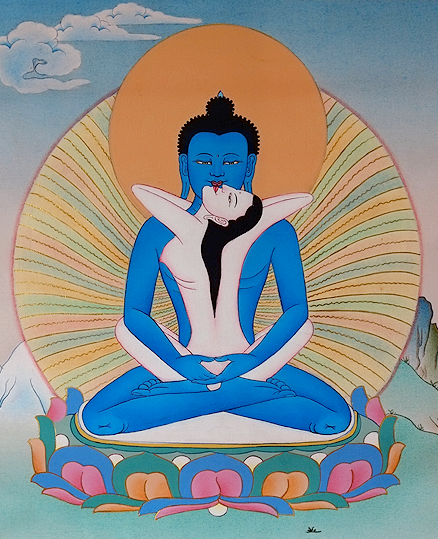
                     Samantabhadra

In cutting through confusion, we do not realize luminosity separate from someone else’s. In the shimmer of timeless awareness, there are no others. We see only one thing which is not even a thing at all. We do not see our nature, separate from Nature. We are not even beings experiencing Being. We become Being itself, not separate from Self–which has no attributes, is unconditional, cannot be adequately described in academic or any conversational language since language–at least English–resides in a dualistic fame.

Poetry comes close. As Longchenpa describes with inspiring poetic versatility (reflected in the immensely skillful translation of Richard Barron) in The Treasury of Dharmadhatu, Reality only knows one thing, beyond all description, beyond positive or negative, beyond all causation or attributes: the essence of all things is equal.

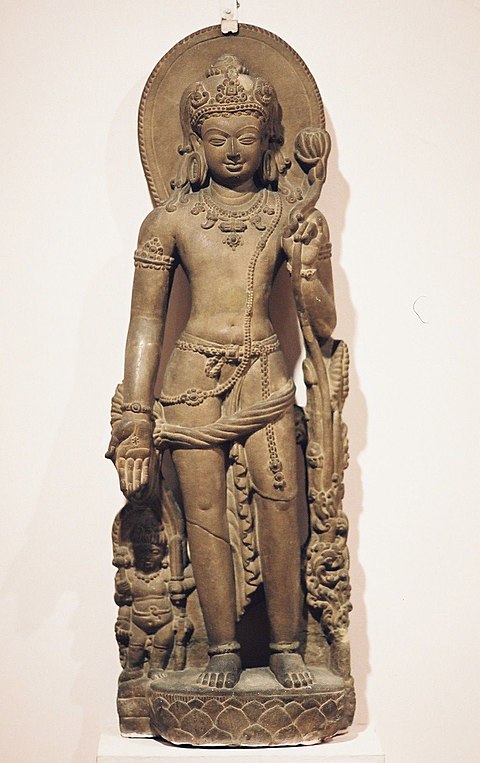
Samantabhadra is regarded as the primordial Buddha, the anthropomorphic form of all Buddhas. He is depicted metaphorically as the realization of Dzogchen, an expression of the most extreme impermanence possible–a state in which there are no discrete moments to be identified or grasped. The concept of now does not exist here. Any attempt to contemplate, arrest, understand, attach goals, to accomplish anything or to contrive causality instantly creates duality and thus inequality.

He is not regarded as the messenger of primordial purity, but the message itself. He is not a teacher. He is the teaching. He is the embodiment of non-action, of Being without source or cause. Goal-orientation is not only not required, but an impediment to the truth Samantabhadra displays. No liberation can be forthcoming until the drive for attainment is relinquished.

All things being equal, there is no good or evil, no right or wrong. This is the Great Perfection. In this domain, one might wonder if meditation is even required, or if it’s any use whatsoever. And indeed, is there really any  difference between conventional meditation and post-meditation? Whether one is meditating or not, if all practice and behavior exist in a context of insufficiency and there is nothing save an endless treadmill spanning numberless incarnations inching toward a virtually unattainable perfection, then one might well choose indifference…or amoral indulgence. Unfortunately, some of the best known and most influential teachers have succumbed to the temptations of copulation and inebriation.

Does the equality of unchanging ineffability implicate a value-free state? What about morality? What about karma? What about this world awash in conflict, deprivation, exploitation and suffering in all its forms? No. Dzogchen may be regarded as non-meditation, the removal of every impulse or vestige of ‘doing’–and especially to the extinction of the witness.

Extinction of the witness, the awareness constantly observing and evaluating our every thought and action, is the attainment attributed to the historical Buddha. It is intrinsic to the ultimate knowing. It is another aspect of extreme impermanence known as Presence. There can be no true Presence if an object of consciousness exists. Because the Great Perfection arises with an inseparable and enveloping compassion, the adept is suffused with action just as surely as the practitioner of conventional incremental spiritual practice.

Attempting to contrive this condition is a sure way to forego any possibility of its dawning. Certain things are sure: the bliss of Being is not a state of isolation. It is a state of union. Its limitless view is elevated by equally limitless compassion in which moral choices in the midst of perfection remain as natural as breathing. The doors and windows are all open. The roof is blown away. All beings, who in essence are none other than light, stand naked in their endlessly inventive, unceasing and often desperately comical attempts to adorn their existence with permanence.

Yes, we are all doing it. And we are all–save an infinitely small cadre of seekers– ultimately doomed to fail. Ironically, the one who crosses the bridge to that extreme impermanence is most fully in this world beyond all imagination, retaining and expressing the freedom–the imperative–to act on behalf of all beings in accord with a union of relative and absolute guidance. The distinction between the two no longer exists.

Fortunately, since this pinnacle of perfect equality is so rarely attained, let alone stabilized, the imperative for moral action remains present for the rest of us at every moment. All decisions and actions still exist within that perfect field of equality, even as every perception, decision and action remain expressions of our confused view. Here, the survival instinct, the human drive for sensory pleasures, all compulsion and resolution, aspiration and failure, awakening and falling back to sleep, every breath arising at the nexus of samsara and nirvana, resides on the cusp of an exquisite poignancy, humor and bewildering inevitability. Arriving at this clarity, experiencing the perfect equality of everything, yet never forgetting every act matters in this troubled world, is the moment when you can, as Longchenpa did 650 years ago, only tilt your head back and laugh at the sky.

Reconciliation I: Peace as Rebellion

The fourth of the Deep Adaptation 4Rs framework, along with Resilience, Restoration and Relinquishing, is Reconciliation.  We imagine its meaning to be about restoring and sustaining a state of peace, resolving past conflict and, at the very least, designing for the resolution of future conflict.

We do not imagine all conflict can be resolved. Far from it. In a collapsing world, there is very likely to be increased conflict. Reconciliation refers to a consciousness and a versatility with practices most likely to resolve small and large scale conflicts in ways that extend concentrically from an ethical and practical center.

In the simplest terms, achieving peace in an increasingly turbulent world requires resolute and focused personal practice. The internal condition might be more correctly called equanimity, a capacity to respond to changing circumstances without being reflexively triggered into anger, fear, jealousy, aversion, indifference or pain. But not being triggered is not quite enough. Response-ability means being moved to act.

In this alienating and isolating world, setting one’s vertical compass to generosity and gratitude may feel good, but if we’re not also orienting horizontally to confront the mythologies (scientific materialism, separation) and operational practices (exploitation and violence) of modernity,  which establishes hierarchies and treats them as biological laws, we are committing an act of blind privilege. It’s not entirely useless, just incomplete.

How do we arrive at equanimity? Borrowing principles from both modern and ancient psychology, we can develop the skills necessary to improve our access to equanimity and we can improve our stability in it. But as long as there is conflict in the world between nations, ethnic groups, tribes, families or individuals, we are not in a state of peace. We may find a personal non-dual view, an oasis within the collective dualism, like vacationing at our own personal monastery, but we cannot permanently turn our backs on the origins of conflict all around us.

Any conversation about ‘getting there,’ arriving at the desired internal state, has to do with identifying and removing obstacles to our direct access. This inevitably requires an exploration and discovery of the many ways we remain in a state of self-deception. We are called to identify every self-limiting belief, every flawed construct, every incongruent intention and every addictive behavior that stands between us and an authentic experience of equanimity. Not the false equanimity of indifference. Not the by-passing of real emotion, but an authentic capacity to be with. Along the way, we might also have to reconcile conflicting beliefs about our own identity, asking and clearly answering the question, “Who is experiencing this peace/equanimity, anyway?” and perhaps most importantly, “How do I find it again after I lose it?”

All of the foregoing constitutes what we might call a “path” to peace, a method or a checklist of issues to resolve before we can say we “are” peace. Take out the dustpan and get behind the furniture, straighten out those sheets on the bed. Take out the trash. Then we will have peace. When there is nothing in the world (out there) to shake us from our oasis of equanimity, then we will be immune to the temptations of conflict. Then we can be compassionate. Then we can be mindfully open to whatever arises in our world without reacting thoughtlessly.

But alas, no. There is no path “to” peace, just as there is no path “to” realizing our true nature. Yes, there are practices to develop our skills, perfecting our access to equanimity. We may imagine fully awakened mind as the fruit of steady practice and incremental refinement of specific skills. Yet, upon closer examination, there is no denying the “fruit” of all that practice can only bring us back to the seminal realization that what we call a peace/process is already our nature. There is no way to any such goal. We are already there.

If we accept this premise, that there is no path, no outcome and no fruit of any labors, then there is no far-off objective of our practice that is only realized after a lifetime of disciplined pursuit. The only way “to” the goal is through direct realization, here, in this moment.

What are the components of a direct access to peace that serves each of us right now?First, cut through the illusion of a separate Self. One needn’t become a scholar of the origins and historical, cultural, cosmological or spiritual propagation of this flawed idea so much as a relentless inquisitor into the direct effects of holding it. Believing in the separate Self requires the existence of the Other. Without the Other, the only conflict that can exist is within the One.

Thus, all manifestations of conflict are internal in nature and origin. Every moment we spend out of alignment with this truth, which cannot be modified, enhanced or diminished, we abandon our innate wholeness and contribute to further conflict within the Whole.

Second, yes, there are a plethora of psychological and spiritual metaphors, conceptual frames, processes and exercises that define peace and may enhance our skill in achieving more direct embodiment. I’m not anti-intellectual nor am I anti-psychology in the least. Yet every conceptualization, rendering of thought, planning, consideration or representation of the state of peace is in essence an effort to ‘get there.’ Ultimately, there is no ‘getting there.’ There is only there. There is no other way there except to be there.

Third, whether we are being there, getting there or lost somewhere in between, there is nothing to be done. There is no action, there are no steps to take, no conceptual progression to save us or guide us. Inaction is also not the way. If there is a way, it is through non-action. Or, as it may sometimes be put, the direct realization of a state of peace is neither being there nor getting there, but somewhere in between. That is the territory in which an immense creativity resides, where something powerful and transformational is liberated.

Finally, the only matter left to this brief consideration of the true embodiment of peace is that appropriate responses are required in a world far from being aligned with the notion of no-self, which preserves and operates upon the presumed reality of the Other and which believes the only way to address conflict, or any problem, for that matter, is through direct oppositional action.

In this context, peace is rebellion. Peace lives outside the consensus frame. Peace becomes a relentless, unswerving and unapologetic commitment to one’s inner truth. And we become its guardian. It’s not a solitary truth whatsoever, as realization becomes a dynamic imperative so purely and clearly requiring engagement that there is no denying it, rationalizing or obscuring it. Arriving at that clarity is an eyes wide open, fearless and undaunted continuous journey into and through the full depth of one’s own suffering–to the point at which a magnificent, clear, fierce and uncompromising universal compassion dawns. Here, the impulse for collective Reconciliation awakens.

Hope, Faith & Radical Presence

What are we called to do in this time of collapse? Work harder? Think faster? Compartmentalize and multitask better?

No. None of the above. In fact, we are called to do the opposite. According to Yoruba wisdom, we are called to slow down. We are called to settle into the present, to soften and loosen our grip on whoever we imagine we are, or were, wherein we assimilate the world as it is, changing so rapidly as it is, and watch our responses, our default habits and self-serving diversions happening in the microseconds between apprehension and response.

Among other things, we discover our hyper-dependency on time. We discover the difference between its relative and absolute nature. We also discover hope is a diversion from this softening.

Time is a conception arising within our limited view of reality. Normally, we are not capable of another view. When we interrupt that dependency, a different possibility opens and we are reintroduced to timeless matters: connection, curiosity, gratitude, courage, love and grief. We discover what we seek has never been gone. It is always at hand, everywhere we look.

What enters our space in liminal moments we share with another person—or even in a group? Resonance, a timeless quality, gently arrests us. What arises in the space  between vision and execution as a quiet presence is Inter-Being. This space is filled with knowledge, yet is neither yours nor mine. We become present in such knowledge–or it becomes present in us.

There is no such thing as a unit of time in any absolute sense. Since that is so, we could even define “presence” as something more like absence. The absolute nature of time is a vastly spacious awareness no longer held in the tight grip of someone who ‘hopes’; one so expansive that even “embodiment” implies a limitation, so permeable that emotional states and the ambient phenomena of group process no longer impede the flow of connection.

Temporarily at least, one is so completely ‘here’ that time stands still. At the same time, the ego has been rendered quiescent, if only for a moment. Since there is no future, there is nothing to hope for. One may even enter a non-conceptual state in which there is only feeling, a seamless realm of knowing. There is nothing to grasp here, nothing to cling to and no one to cling to it.

From the relative (dualistic) view in which subject and object exist, we imagine events follow an order, stretched along a continuum without beginning or end. In the timeless space, discrete events exist without order, arising in random fashion, crowding each other out, competing for ‘space’ and attention, arising and disappearing in a chaotic flow.

This competition appears as sense perception and feeling, which we evaluate and then choose according to our preferences and motivations. The awakened state, the timeless space we occupy when we downshift to an imperceptible crawl is not just another unconventional and unfamiliar form of time in which ‘events’ occur.

Awakened mind lives outside of time. It permeates the construction we call time yet is not time-bound. Then again, neither is it other than time. The true nature of emergence (consciousness and biology) is the opposite of our habitual hyperactivity. It is a tsunami of perpetual stillness, an infinite evenness subsuming everything, a continuous tidal wave of creative interdependent unfolding that has no beginning, no end, no boundaries, no center and no limits.

In this realm the very idea of a separate self is an inexplicable accident; in which we realize our movement and intention within a unique place in the web of life also holds all others, informs and is informed by all others. We are so completely and fully at home there is nothing left to ‘do.’

In the context of collapse, hope has no place in such presence. It simply cannot be. It is foreign, as it is entirely incompatible with the pervasive dynamic evenness of radical presence in a timeless state. Ultimately, hope relies on causal relationships in a universe without cause. It is a condition we put on our commitment to the present, as if we need a future reward as a prerequisite for undertaking the task at hand. If we hope long enough or hard enough for a particular outcome, perhaps something will happen. Perhaps not. But ultimately, in hope we seek our own continued well-being. In that sense, hope keeps us stuck in denial of our unfolding relationship with grief. It allows us to run away from our direct experience. Hope does nothing to interrupt Business As Usual.

As Stephen Jenkinson says, “Hope is what allows us to continue [what we’re doing]; instead of stopping, we are waiting to be stopped.” If that ever happens, it will be too late. Unfortunately, such thinking exists in a narrow linearity that conflates intention with faith. Being neither intention nor faith, hope lies between the possible and the impossible, between what we know is within and what we imagine is beyond our capacity.

Vaclav Havel once remarked, “Hope is not the conviction that something will turn out well, but the certainty that it’s worth doing regardless of how it comes out.” That certainty is faith, knowing we are doing the right thing now and being committed to what matters most, not regardless of some future outcome, but because we already know what the long-term outcome is likely to be. Hope becomes a defense against despair.

Of course we cannot control the future.  But faith is an absolute belief in our agency in the present. Hope lies at the opposite pole of fear and despair, a duality in which we oscillate from one extreme to the other. Without hope, there can be no despair. By creating and clinging to hope, we create space for fear.

Evaluating our decisions based on an obligation to future generations, even seven generations hence, as is customary among some indigenous communities, does not require a reliance on hope. We do what we know is right. A nebulous disempowering wish about the future dies a quiet death as we rise to our obligations and clarify our responsibilities in the moment.

Again, Stephen Jenkinson:

The question is not ‘Are we going to fail?’ The question is how. The question is What shall be the manner of our inability to care for what was entrusted to us? The question is What is our manner of failing?……

Grief requires us to know the times we are in. The great enemy of grief is hope. Hope is a four-letter word for people unwilling to know things for what they are. Our time requires us to be hope-free, to burn through the false choice of being hopeful or hopeless. These are two sides of the same con-job. Grief is required to proceed.

Reverse engineering the next hundred years to determine how we must act now puts hope in a different light. We may not be able to shift the course of the entire human  enterprise, but at least we have taken a long view and fully exercised our capacities in the service of Inter-Being.

We immerse our selves in our immediate experience, in the feeling level of our responses to our senses, without regard for their source. Such immersion attains without labeling experience, becoming neither attracted nor repulsed by any of it, without analyzing, meditating upon it or turning away.

In other words, without turning it into an object of interest or adding it to a collection of memories, neither categorizing, discarding,…..nor even believing it. In so doing, we are both immersed and freed simultaneously, watching from a vast view, yet also noticing, feeling and burning in the fires of the moment. Our principle acts must be to reduce suffering, which only becomes clear as we allow ourselves to suffer. Rumi said, “In suffering is a gift. In it is hidden mercy.” There is no place for hope in this equation.

All of this may appear to be highly idealistic because mainstream thought and the pursuit of happiness is a relatively closed orbit, exerting immense inertia on moments of awakening that come from a full descent onto our grief, lest that awakening threaten the grip of consensus (relative) reality. And yes, regardless of how the expression of presence may appear, since it must co-exist with material reality, it is nevertheless a condition worthy of cultivation.

No matter what arises, even if heaven and earth change places, there is a bare state of relaxed openness [available], without any underlying basis. Without any reference point–nebulous, ephemeral, and evanescent–this is the mode of a lunatic, free from the duality of hope and fear.

Chöying Dzod (pt. IX) Longchenpa

Let’s all become lunatics! Our resilient future depends on it.

Fearlessness

If we have no fear, there is no thinking. No conceptual mind. And vice versa. No thinking, no fear. —Tsoknyi Rinpoche.

Thinking and fear are inseparable. I mean the analytical, deliberative and conceptual nature of our waking process coupled with a vague anxiety about either the past or the future. Labeling this largely unconscious and pervasive condition a defense mechanism—the opposite of a direct somatic interaction with the world– opens a portal into a rich, yet largely hidden dimension.

By whatever means, we all benefit from noticing and softening the dominance of conceptual mind whenever possible. We sense the value of alternative ways of knowing and, if we’re fortunate, gain some facility with them. But such explorations can quickly become muddy and complex with counter-intentions and conceptual intrusion. Ultimately, when the intention is to get out of our minds, the prime directive is deceptively simple. There’s nothing whatsoever to do.

Relaxing analytical mind and entering the axis of heart-mind and direct somatic experience is a dive into the deep pool of emotions and primary motivations, often blocked by uncertainty and fear. Everyday thinking (for most) is about competency and approval (in an imaginary future), driven by fear of not having things we want and not having enough time to get them.

Foremost among these is a desire to accomplish something, and quickly. For many, the thinking process is all about being somebody, reaffirming an identity, the face we turn toward the world. Acting swiftly and with confidence is the strategy to adorn our identities with permanence, constantly overlooking the fact that, in reality, there is no one to be.

Looking at this bubble of fear and deflating it is profound. Fear, it turns out, is not a permanent condition. As soon as the natural defense mechanisms to hide it are recognized, it’s possible to dial it down, sometimes to near zero, for extended periods of time. True fearlessness, the absence of thinking, may come as rare and transient moments of profound somatic presence. It may be cultivated or arise spontaneously.

Thoughts of the past or future are a defense against full somatic presence is ego’s panic. Ego is fragile and always needs reinforcement and protection. None of my fears or the illusory protection they provide is ‘me.’ ‘I’ would always rather be somewhere else, watching the entire crazy, helpless, endlessly entertaining creative process of building these defenses, which under scrutiny dissolve like so many sand castles before the incoming tide.

Viewing the climate issue through the lens of a perpetual fearful state, our individual and collective responses orient around fear-based rational metabolizing of data and formulating rational responses. That doesn’t mean we are deliberately denying or condoning the denial of our deeper emotions. But it certainly can mean we are giving short shrift to them, as if focusing on doing the same thing over and over again will distract us from the discomfort of realizing we have not altered our course from its suicidal path.

Conventional activism is not reducing global emissions. What fears construct the bulwark and what feelings lie beneath our failure to alter this failing strategy? What if the way we think about global problems is how we perpetuate them?

An alternate approach is Deep Adaptation: taking a fearless look into the darkness, unpacking our fears and listening deeply for the gifts within. Experiencing the grip of fear, whether momentary, profound or incomplete, propagates as a gift and manifests as enlightened intent. True fearlessness lies at the nexus of empathy, enlightened action, equanimity (in the face of subtle and/or uncontrollable forces) and the softening of ego. It is where uncertainty meets trust, where structure meets chaos and doesn’t recoil, where empowerment, joy and compassion intersect. This is the path of Deep Adaptation.

These qualities naturally and spontaneously subvert the life-long conditioning of the fear-based, selfish (and self-denying), rational, zero-sum paradigm and maximally defended hyper-ego of modern culture, politics and economics. To be fearless is to operate outside the perversion of today’s inverted totalitarianism. To place oneself so far outside the norm is a revolutionary condition. In fact, fearlessness is lawless, at least in the sense of operating in the present moment, outside a set of unwritten laws governing acceptable human interaction. I am talking about the absence of fear, not bravado, not a jacked-up boundless courage in the face of fear.

To live outside the law you must be honest……..Dylan.

The dominant paradigm exploits fear to condition behavior, more so now than ever because the messaging has become so sophisticated and the drive to monetize our emotions so strong. That messaging tells us when we are afraid, we must look to ourselves as the source, not to the daily deluge of mass indoctrination. The individual is pathologized. These are the mechanisms of social control.

The origins and mechanisms of fear in our lives all serve a purpose. At the same time, we can reflect on our beliefs and reflexive responses to everyday events, appetites and needs to consciously explore alternative strategies. Extending this deeply resilient and adaptive practice to the collective context exponentially increases complexity.

As we determine effective pathways to justice, it’s increasingly clear that turning off discursive mind enhances our capacity for fearlessness. This is now the cutting edge of transformative group practice, in which the presence of fear can be named, exposed and collectively defused. Cutting through the defenses and obscurations involves unwinding the triggers and layers of fear we’ve accumulated since birth–or even before.

The clarity we can build and the resulting behavioral changes eventually become automatic. Such a process may be called by many names. I call it the Buddhist long game: the transformation of mind. Every such path of inquiry into fear is a journey into the heart of suffering. This is one thing we all share. Ultimately, all practice is directed toward one simple truth: the majority of emotional (not instinctual) fears driving us, tenacious though they may be, are illusory. We may have our story about them, yet they have no true objective source. Which is not to say fear can merely be dismissed; not at all.

Compassion is closely related to fearlessness. Situational compassion expresses empathy and responds to the suffering of others in a direct way. Absolute compassion is an encompassing awareness of the profound commonality of human experience, the suffering and bewilderment at the heart of being human and related confusion about the difference between what is real and what is actually true. Holding such a view while surrounded by an ocean of fear without being affected by it is nearly unimaginable. Yet fearlessness grows with compassion. And vice versa. They are inseparable. Absolute compassion is entirely incompatible with fear.

In stepping through the gateway of compassion, we step into fearlessness. True compassion cannot fully manifest without realizing all phenomena exist in a supremely expansive state of equal-ness. There is no distinction between enlightened fearlessness and compassionate intent or any other way of being. Many of our fears are variations of denial—self-imposed disempowerment. They are responses to familiar threats to which we have become habituated. They become comforting costumes layered upon core reality. Over time they shape a fixed identity, as if abiding fear becomes a reassuring view of our selves.

Nowhere is this dynamic more apparent than in relation to the existential threat of climate change. But fear is typically subject to causes and conditions and can be reviewed by cognitive mind. Discovering and breaking through every form of denial about our future is a central principle of Deep Adaptation.

We might assume fearlessness is a matter of will. But let’s not confuse conceptual knowledge for wisdom. Knowing more will never take us to the truth of fearless intent. Wisdom comes by inquiring ever more closely and deeply–with a bottomless compassion for oneself–into the sources and nature of our fears (and denial) and liberating the energy and clarity stored within. Exercising will is more like counter-phobia, throwing a cover over that clarity and burying it further from sight.

The distracting activity of mind and the accompanying dance of denial is often symbolized as an untamed mustang. It is attractive, seductive and wild. Fearlessness is the ability to recognize the beauty and spontaneity of that wildness without being seduced by it.

The fearless one sustains an unflinching gaze into her own suffering, compromise, limiting beliefs and behaviors. The fearless one acts with a compassionate intent that holds fear, hope and separation as having no substance, no traceable origin or destination, no firm ground at all.

The fearless one is willing to sustain the consequences of living beyond convention, even if it means putting one’s own safety at risk, not solely to place a spotlight on the entrenched nature of the dominant paradigm, but to engage with it in fresh and creative ways, transmitting a highly contagious view of the possible: a world in which there is no true enemy. The fearless one affirms there is enough for all, there is unbroken relationship with all; there is infinite choice and nothing to do but create.

In this condition we glimpse our true nature. It can shake our world, arousing awareness of our fears and the sway they hold over us. The fearless one even evokes our fear of fearlessness with a gentleness that melts our defenses, exposing our vulnerability and the artifice of our times.

The fearless one opens possibility for something new, a vast, spacious and timeless freedom we know in our hearts is possible, yet which, without the support of others, we are barely strong enough to sustain more than a few moments at a time for ourselves.

What might a culture of fearlessness or fearless collective action look like? There are surely many examples, some deliberate and some spontaneous. Can all political initiatives be about dismantling the mechanisms and structures of fear? Many of them already are. To explore these pathways, interrupting our pre-occupation with individual identity and survival, is to unfold into fearlessness, to enlarge our sphere of action, to embody compassion, to forge justice, to break through the familiar into a new and fresh territory of freedom–and invite others to do the same.