(excerpted from the Dark Mountain Manifesto)
The myth of progress is founded on the myth of nature. The first tells us that we are destined for greatness; the second tells us that greatness is cost-free. Each is intimately bound up with the other. Both tell us that we are apart from the world; that we began grunting in the primeval swamps, as a humble part of something called ‘nature’, which we have now triumphantly subdued. The very fact that we have a word for ‘nature’ is [5] evidence that we do not regard ourselves as part of it. Indeed, our separation from it is a myth integral to the triumph of our civilization. We are, we tell ourselves, the only species ever to have attacked nature and won. In this, our unique glory is contained.
Outside the citadels of self-congratulation, lone voices have cried out against this infantile version of the human story for centuries, but it is only in the last few decades that its inaccuracy has become laughably apparent. We are the first generations to grow up surrounded by evidence that our attempt to separate ourselves from ‘nature’ has been a grim failure, proof not of our genius but our hubris. The attempt to sever the hand from the body has endangered the ‘progress’ we hold so dear, and it has endangered much of ‘nature’ too. The resulting upheaval underlies the crisis we now face.
We imagined ourselves isolated from the source of our existence. The fallout from this imaginative error is all around us: a quarter of the world’s mammals are threatened with imminent extinction; an acre and a half of rainforest is felled every second; 75% of the world’s fish stocks are on the verge of collapse; humanity consumes 25% more of the world’s natural ‘products’ than the Earth can replace – a figure predicted to rise to 80% by mid-century. Even through the deadening lens of statistics, we can glimpse the violence to which our myths have driven us.
And over it all looms runaway climate change. Climate change, which threatens to render all human projects irrelevant; which presents us with detailed evidence of our lack of understanding of the world we inhabit while, at the same time, demonstrating that we are still entirely reliant upon it. Climate change, which highlights in painful color the head-on crash between civilization and ‘nature’; which makes plain, more effectively than any carefully constructed argument or optimistically defiant protest, how the machine’s need for permanent growth will require us to destroy ourselves in its name. Climate change, which brings home at last our ultimate powerlessness.
These are the facts, or some of them. Yet facts never tell the whole story. (‘Facts’, Conrad wrote, in Lord Jim, ‘as if facts could prove anything.’) The facts of environmental crisis we hear so much about often conceal as much as they expose. We hear daily about the impacts of our activities on ‘the environment’ (like ‘nature’, this is an expression which distances us from the reality of our situation). Daily we hear, too, of the many ‘solutions’ to these problems: solutions which usually involve the necessity of urgent political agreement and a judicious application of human technological genius. Things may be changing, runs the narrative, but there is nothing we cannot deal with here, folks. We perhaps need to move faster, more urgently. Certainly we need to accelerate the pace of research and development. We accept that we must become more ‘sustainable’. But everything will be fine. There will still be growth, there will still be progress: these things will continue, because they have to continue, so they cannot do anything but continue. There is nothing to see here. Everything will be fine.
*
We do not believe that everything will be fine. We are not even sure, based on current definitions of progress and improvement, that we want it to be. Of all humanity’s delusions of difference, of its separation from and superiority to the living world which surrounds it, one distinction holds up better than most: we may well be the first species capable of effectively eliminating life on Earth. This is a hypothesis we seem intent on putting to the test. We are already responsible for denuding the world of much of its richness, magnificence, beauty, colour and magic, and we show no sign of slowing down. For a very long time, we imagined that ‘nature’ was something that happened elsewhere. The damage we did to it might be regrettable, but needed to be weighed against the benefits here and now. And in the worst case scenario, there would always be some kind of Plan B. Perhaps we would make for the moon, where we could survive in lunar colonies under giant bubbles as we planned our expansion across the galaxy.
But there is no Plan B and the bubble, it turns out, is where we have been living all the while. The bubble is that delusion of isolation under which we have labored for so long. The bubble has cut us off from life on the only planet we have, or are ever likely to have. The bubble is civilization.
Consider the structures on which that bubble has been built. Its foundations are geological: coal, oil, gas – millions upon millions of years of ancient sunlight, dragged from the depths of the planet and burned with abandon. On this base, the structure stands. Move upwards, and you pass through a jumble of supporting horrors: battery chicken sheds; industrial abattoirs; burning forests; beam-trawled ocean floors; dynamited reefs; hollowed-out mountains; wasted soil. Finally, on top of all these unseen layers, you reach the well-tended surface where you and I stand: unaware, or uninterested, in what goes on beneath us; demanding that the authorities keep us in the manner to which we have been accustomed; occasionally feeling twinges of guilt that lead us to buy organic chickens or locally-produced lettuces; yet for the most part glutted, but not sated, on the fruits of the horrors on which our lifestyles depend.
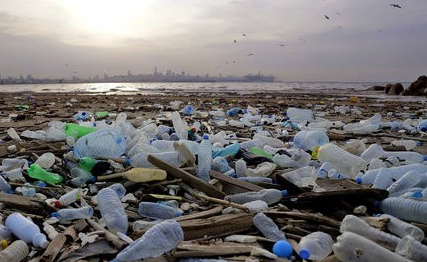
We are the first generations born into a new and unprecedented age – the age of ecocide. To name it thus is not to presume the outcome, but simply to describe a process which is underway. The ground, the sea, the air, the elemental backdrops to our existence – all these our economics has taken for granted, to be used as a bottomless tip, endlessly able to dilute and disperse the tailings of our extraction, production, consumption. The sheer scale of the sky or the weight of a swollen river makes it hard to imagine that creatures as flimsy as you and I could do that much damage. Philip Larkin gave voice to this attitude, and the creeping, worrying end of it.
Nearly forty years on from Larkin’s words, doubt is what all of us seem to feel, all of the time. Too much filth has been chucked in the sea and into the soil and into the atmosphere to make any other feeling sensible. The doubt, and the facts, have paved the way for a worldwide movement of environmental politics, which aimed, at least in its early, raw form, to challenge the myths of development and progress head-on. But time has not been kind to the greens. Today’s environmentalists are more likely to be found at corporate conferences hymning the virtues of ‘sustainability’ and ‘ethical consumption’ than doing anything as naive as questioning the intrinsic values of civilization. Capitalism has absorbed the greens, as it absorbs so many challenges to its ascendancy. A radical challenge to the human machine has been transformed into yet another opportunity for shopping.
‘Denial’ is a hot word, heavy with connotations. When it is used to brand the remaining rump of climate change skeptics, they object noisily to the association with those who would rewrite the history of the Holocaust. Yet the focus on this dwindling group may serve as a distraction from a far larger form of denial, in its psychoanalytic sense. Freud wrote of the inability of people to hear things which did not fit with the way they saw themselves and the world. We put ourselves through all kinds of inner contortions, rather than look plainly at those things which challenge our fundamental understanding of the world.
Today, humanity is up to its neck in denial about what it has built, what it has become – and what it is in for. Ecological and economic collapse unfold before us and, if we acknowledge them at all, we act as if this were a temporary problem, a technical glitch. Centuries of hubris block our ears like wax plugs; we cannot hear the message which reality is screaming at us. For all our doubts and discontents, we are still wired to an idea of history in which the future will be an upgraded version of the present. The assumption remains that things must continue in their current direction: the sense of crisis only smudges the meaning of that ‘must’. No longer a natural inevitability, it becomes an urgent necessity: we must find a way to go on having supermarkets and superhighways. We cannot contemplate the alternative.
And so we find ourselves, all of us together, poised trembling on the edge of a change so massive that we have no way of gauging it. None of us knows where to look, but all of us know not to look down. Secretly, we all think we are doomed: even the politicians think this; even the environmentalists. Some of us deal with it by going shopping. Some deal with it by hoping it is true. Some give up in despair. Some work frantically to try and fend off the coming storm.
Our question is: what would happen if we looked down? Would it be as bad as we imagine? What might we see? Could it even be good for us?
We believe it is time to look down.
 Spontaneous Presence