The Awakened Embodied Self

This is the imperative of evolving spirituality, realizing Sufism’s unity of fanaa and baqaa & of Buddhism’s Two Truths, to be here and everywhere at all times, to simultaneously be emptiness and embodiment.

Anyone inquiring into the meaning and process of spiritual awakening undoubtedly encounters conflicting ideas about consciousness. Where does “I” come from and where does “I” reside? Western psychology and religion are deeply concerned with defining and preserving the Self as a separate and fixed entity with (or in) an eternal soul, while eastern religions deny any absolute reality of a separate identity. What’s a seeker to do?

When sitting to meditate, one of the first instructions we receive is to become aware of the living process. In some traditions, we are guided to bring attention to the breath and gradually to the physical sensations that come and go from moment to moment. We can dwell on these sensations for extended periods, but an essential practice of meditation is to focus on one thing while developing the capacity to notice everything else that arises in the background. 

A second level of this process is to notice how—and how easily–our attention is distracted from the singular focus we started with. This noticing and the repeated return to the original point of attention is the development of presence. A third iteration of attention is to notice the different feelings that arise in the course of being distracted and returning to our original intention. Do we have judgments about ourselves for leaving? Do we have expectations about how we return and how long we ‘should’ be able to maintain the original state? Are we trying to achieve something?

A fourth iteration might be to ask who (or what) is the one meditating and who is the one presumably not meditating while being distracted. In asking these questions, one enters the territory of distinguishing between Self and Not-self, the psychological (ego) self and the (super-ego) witness. From here it’s a short linguistic shift in attention to a witness that is itself a non-entity. In fact, unwinding this thread of consciousness to its logical conclusion would require we investigate who is witnessing the witness, realizing that a further iteration of witness arises as soon as we establish an awareness of the immediate one. Tracing the witness all the way back to its origins is what, according to Robert Thurman, Buddha himself did on the way to his own awakening.

What is found when we go ever deeper into the layered constructs of cognitive awareness? Nothing? No self? In Buddhism, what is found at the root of the ever-elusive identification of the witness, is emptiness. Emptiness completely undermines any notion that there’s objective existence of anything. The appearance of everything is dependent on something else, a precedent. When investigating the existence of the precedent, one inevitably realizes there is no single independent source of anything.

We also create otherness internally in relation to “self” when we identify with unworthiness. We are also confused about who or what is the Self—is it a container of all the internal voices we may hear at any given moment? Is it a core truth, an identity around which all these voices orbit incessantly? If the former, then who is the witness, the part to whom critics address their assessment, their directives and imperatives?  If the latter, then what is their true role and value?

God is an infinite sphere whose center is everywhere and whose circumference is nowhere.  

 —The Book of the Twenty-four Philosophers (12thC)

Reducing the complexity of the human psyche to a bit of spiritual geometry casts some light on the concept of Self, defined by behavioral therapy, which, unlike an entity with no fixed center and no boundary, implies a more actively engaged and focused energy. Self has been described as the equivalent of ‘flow,’ a ‘sense of deep concentration without distracting thought, a lack of concern with reward; confidence, mastery and well-being.’ Sounds just like being embodied in the moment.

The term “self-leadership,” carries connotations of action, forethought and calculation. But wait. Wasn’t self just described as being completely in the moment, merging with phenomena without analytical preconception–or planning? What does the term “leadership” mean? Is the self still? Is it in motion? Is it an expansive boundary-less playful state of mindfulness? Or is it a kind of executive identifying and bringing various voices and intentions to heel, establishing and re-drawing its boundaries to expand its domain of influence, micro-surgically distinguishing itself from the masks of persistent sub-personalities?

What is the source of its energies? Is it a still point distinct from the surrounding disharmony? Or is it a primary organizing principle–a magnetic north, for a being negotiating its way through Being?  Is it even distinct from “I” at all? These questions are addressed by suggesting it is not a matter of determining whether self is an active center or an expansive, more passive presence. Like light, self is neither wave nor particle, but both, or either one, like the famous double-slit experiment of 1801, depending on who is looking and when, constantly transmuting from one to the other depending on the conditions of the moment. 

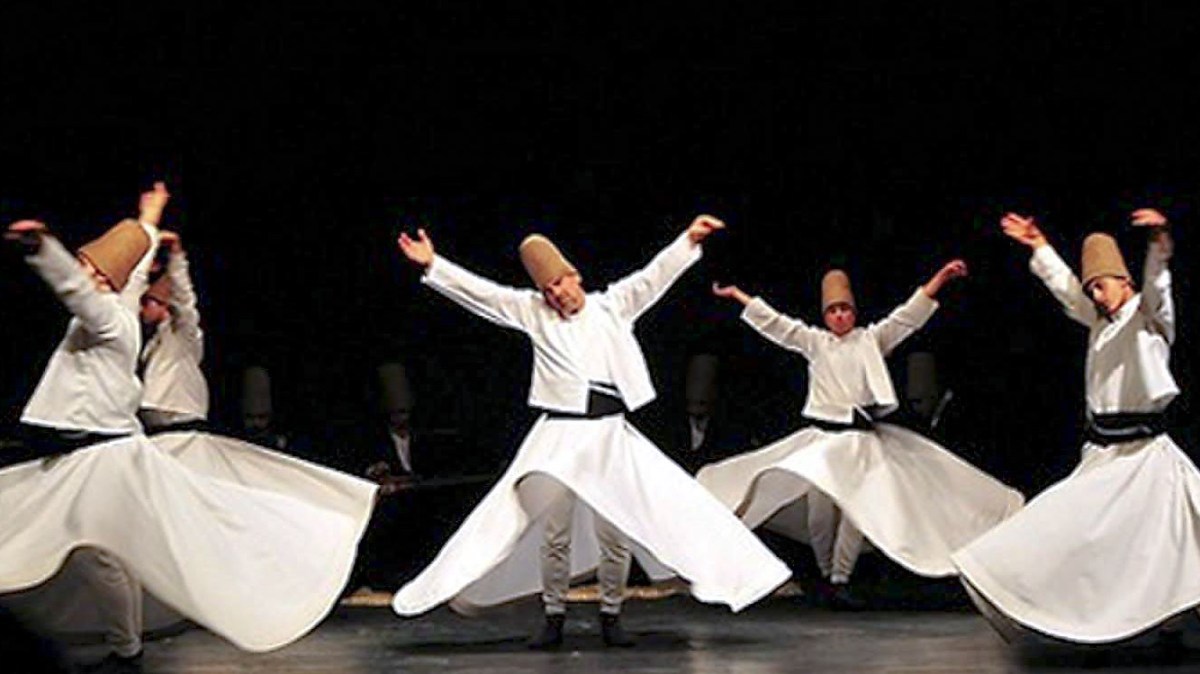
According to Coleman Barks, the Arabic words fanaa and baqaa are used by Sufis to describe the intersection of the human with the divine, a ‘constant and profound interplay full of paradox and movement, breathing in and out of every soul.’ These are seemingly opposing forces; or perhaps more accurately, the yin and yang of consciousness, the particle and wave of light; forces influencing our sense of connection to ourselves, to each other and all that is. 

Fanaa is the impulse to surrender, allowing oneself to become ‘annihilated, as if disintegrating into a vast magnificent sky, dying in order to become one with the infinite.’ Not unlike non-dual presence, the extinction of self, fanaa is the ultimate expansion, the dissolution of every boundary, every circumference. Mind-lessness. Paradoxically, this is also the highest form of concentration at the pinnacle of Buddhist ati-yoga, The Great Perfection itself. This is the ultimate devotion, realizing the truth of emptiness.

Baqaa, on the other hand, literally means permanency or embodiment. Perhaps the word discipline more precisely approaches its practical expression; the intention to be here, as opposed to being everywhere else but here. Not dissolving or shrinking from the mundane, but exploring its deepest nature, focusing one’s energies completely in the service of being exactly what we are. ‘Baqaa is the relative truth of appearance, the undeniable materiality of existence. Instead of melting into that whole sky, one aspires to nothing more than becoming one of the stars in it, experiencing the nature of one’s unique place in the sky’ or one’s place here on earth. 

True baqaa is also the fruit of a lifetime of devotion. This is where the attributes of self fully rise in dignity and durability. This is the self of Richard Schwartz’s familiar C-words of Internal Family Systems (confidence, creativity, calm, curiosity, compassion, clarity, confidence, courage) the self that becomes a mirror of clarity and purpose in every act, connected to and relating from its own ever evolving essence. Baqaa is the realization and containment of a refined skill. The pinnacle of progress on the incremental spiritual path.

The more discipline we exercise in discovering self and the more time we spend there, the closer we come to the invitations of fanaa, the ability to rest in our own essence, and increasingly to connect to the essence in others as well. And even beyond that, to the essence of all that is. Full realization.

We become, as Barks says, “the dreamer streaming into the loving nowhere of night.” This Self, the one that can live simultaneously in both fanaa and baqaa, is the self that is both particle and wave, both completely here and simultaneously nowhere, constantly transmuting appearance and emptiness into a continuously shifting torus of space. At the pinnacle of Tibetan ati-yoga practice, this is The Great Perfection, living beyond both samsara and nirvana, dissolving the Two Truths into One. This is not a Self that cannot be found, merely one which is not fixed, which cannot be pinned to either the relative or absolute. More by choice than by accident, one flows back and forth, as Barks puts it, between “visionary radiance” and the “level calm of ordinary sight.” 

These are the terms of awakening arising from the Sufi mystical tradition of Islam. This is the imperative of evolving spirituality, to realize the unity of Buddhism’s Two Truths, to be here and everywhere at all times, to simultaneously be emptiness and embodiment, to live in single-pointed awareness/aliveness within vast and timeless space, or at least available to transmute one’s capacities to the requirements of the moment, to seek both refuge in the specific and in the general, to slip the bondage, delusion and suffering of dualistic mind…and to live from a bottomless and source-less joy at any moment.
The Root of Happiness

Bodhicitta is a way of connecting to other lives, of saying we are nothing without that connection and that our connection to each other is deeper than we can ever truly know.

Bodhicitta is a way of connecting to other lives, of saying we are nothing without that connection and that our connection to each other is deeper than we can ever truly know.

Four years ago, we were suddenly dropped into an alien landscape, akin to the toxic atmosphere of an alien metropolis. All plans, intentions, contemplations, associations and actions were transposed into the era of Trump.  Was this a dream, or was I waking into a nightmare?  The landscape was familiar, but somehow different, no longer safe. Everything, values, lifestyle, morality and an ever-fragile peace, balanced on a knife-edge.

I went through the motions of normalcy, repeating familiar patterns of activity. Yet nothing was familiar anymore. Everything seemed to require a little more intention, a little more clarity to become real. Insofar as I could become absorbed, focusing on something compelling or becoming temporarily lost, I was happy. But upon emergence from that condition, drifting back to the larger awareness, I was reminded in the next breath of a less stable and more threatening world, not merely in a physical sense, but in a deep moral sense. As we know, that condition has gotten much worse beyond whatever I might have imagined four years ago. Grief remains just below the surface. Happiness–true equanimity–has become much more elusive. 

There are those who would surely have said then, “Welcome to reality, dude!” As if not much had really changed. After all, we’d been on this trajectory toward dissolution for a long time, they might say. And I would have agreed. But no, with the election of Trump, dissolution went geometric. Ever since, we have amplified the suffering of the many for the sake of the happiness of a few. The great irony of that electoral decision made by so many is the belief that they would be spared the consequences of the agenda they had just endorsed with their vote.

Which brings me to ponder happiness itself. We might well ask what that was or how those who regarded Trump as a threat multiplier of unknown proportion would know it when they saw it. In truth, however, when it comes to happiness, all of us fall into the same category. Those who voted for Trump would have been mostly unhappy for a long time (never mind how they might have defined happiness), though if I ever suspected they might have seen that Trump could not (nor was he inclined to) resurrect the American Dream for them in the way they most desired or believed was possible. Or, if he had made a serious attempt, it would have come at great cost to the cohesion of the nation (as it is now), not to mention our international stature, all of which happened anyway.

More precisely, I think about how I think about happiness–because the answer to that question has a lot to do with whether I am happy or not. The intention to be happy is innate to many decisions every day; but what does happiness now mean as the era of Trump has taken so many significant and profoundly disturbing turns? We’d better know what it is, because we’re gonna have to work harder for it.

Dharma regards everyday happiness as transient since it’s entirely based on a dualistic view. Happiness is defined as the absence of suffering, but for there to be happiness at all, there must be something we call suffering. Happiness may be a benefit we wish for others by our aspiration and our action.  We may wish everyday happiness for everyone, as if the satisfaction of having “enough” is sufficient, even if it’s temporary. Beyond that, we wish for a release from the cyclic behaviors that drive us to seek happiness in ways that are not satisfying…or may even damaging to ourselves or others.

The metaphysical perch from which we view happiness is bodhicitta, a comprehensive compassionate view. We want to enjoy the relative happiness that flows from realizing the Four Noble Truths: the universality of suffering and the fact that there is a (Eightfold) path through suffering. We extend that wish to those who are experiencing the suffering of pain and the suffering of change. We extend these wishes to those closest to us and can also extend it to everyone in general.

Beyond our immediate circle, there are those to whom we do not feel close. We may feel neutral or even indifferent, but we can extend a wish for happiness to them. There are still others with whom we have a negative history and residual negative emotion. It’s more complicated to erase negative emotions completely, to extend a genuine wish of happiness to such a person because negative feelings don’t just dissolve upon request.

To transform negative emotions into unequivocal, refreshing, clear and unlimited positive regard is not trivial. Not is it an act of mere will. It is a deliberative process, sometimes a sharp reality check requiring that we go beyond what we merely wish to be true to true forgiveness and compassion– for ourselves as well as for another. At the heart of those judgments about others, I am likely to find a judgment about myself, which may itself arise from a painful incident buried in the past. It is only in looking at the origins of those judgments, at the emotional anchors and core beliefs that hold them, that they can be seen for what they so often are: self-cherishing stories, baseless assumptions, limited beliefs. 

I’ve practiced this with romantic partners, family members, a former spouse, a former supervisor, co-workers and even former friends. Admitting the deep attachment we have to our judgments about others is often slow and careful (not to mention uncomfortable) work, especially if we believe we have been personally wronged. But working through the resentment or anger to an authentic clarity is possible.

We can form honest intentions about others that we disliked at one time. Yet some measure of animus might creep back. One might manage an authentic wish for a moment but find it difficult to remain in that clarity for an extended period. It’s unsettling to realize that if I was standing in front of someone I disliked, transmitting an honest wish for their happiness, they might get the idea that I liked them.  Kinda like the way the Dalai Lama refers to the Chinese: my friend, the enemy. Could I do that face to face with a Trump supporter, a racist neo-Nazi?  They might think we could be friends, which would present even more challenging circumstances. With certain people, I’m not so sure I could tolerate that. We simply resist letting go of the hardened ways we see certain people. This gets tricky, doesn’t it? But neither does it mean I have to agree with or condone the views of any random Trump supporter.

Shantideva famously said that there is no such thing as happiness in samsara. He was referring to a previous statement he made about happiness in which he declared that the only true happiness derives from completely renouncing self-cherishing. Any wish for happiness or action toward happiness based on self-cherishing (What about ME??) would be dishonest, illusory and ultimately futile. Everyday happiness is a product of causes and conditions, meaning it is bound by time and therefore impermanent. Shantideva is saying that any such happiness is not true happiness. From the absolute perspective, anything that arises from causes and conditions has no intrinsic reality. No matter how much we avoid suffering and no matter how successful we are, the entire charade is a product of the fundamental mistake of believing in the existence of our separate identity. Removing ourselves from that view, suddenly neither happiness nor suffering have ever existed.

Of course, this is an idea that runs directly counter to our sensory experience. But again, neither our perceptions nor emotions have ever had independent (permanent) existence. Yet, neither are they non-existent! We are left with a perfectly clear choice to continue cultivating the bodhicitta of compassion that doesn’t take sides–which is to say, no matter how we voted, we are all equal in our lifelong dance with suffering and change.

If letting go of judgments seems difficult, it’s likely because those judgments reinforce our sense of a separate identity There is no need to deny the reality of our feelings and emotions so long as we don’t get hung up believing that there is any true substance to them…or, for that matter, to the feeler. By continuously reinforcing separation, every “self,” becomes a unique pattern of inattention to the larger reality in which it lives.

We can hold the great paradox of the truth of appearances while still being mindful of their ultimate non-existence. True compassion, without making any distinctions about who deserves it or not, views all emotion, happiness and suffering as equal in nature, arising from a trance-like belief in the reality of opposites. We can still be happy…realizing that suffering will inevitably be a part of that relative happiness.

Taking this view into the practice of aspiration or active bodhicitta, we can project our compassionate intentions knowing that to fully overcome self-cherishing may be out of reach–at least in this lifetime. For now, we simply do the best we can.

A supremely spacious clarity is a prerequisite for accessing the source of happiness. From that source, happiness becomes a view as vast as space, an uninterrupted flow of sensation and feeling without attachment, an expanding, unimpeded, infinitely inclusive condition of holding all that is. Everything is included: all events (including the assemblage of events that is Donald Trump), all sensation and all emotion. No need to deny anything. On the contrary, everything can be used to energize our view in every moment. If that condition of possibility can be formed, arising unimpeded according to one’s capacity, then anything can arise in that space. 

Does such a condition exist outside of ego-consciousness? What is “happiness” not arising as an object of intention? Do we call it happiness at all? If happiness can exist as something other than an object of “my” intention, then who is the “I” that is forming the wish?

Contemplating the supreme spacious quality found at the root of happiness, I do not create or wish happiness for myself. I don’t wish for the happiness of a single separate identity, “me,” to become just another passing object of attention. I seek happiness with no object, which is to say a wish of happiness for all others. Resting in the root of that happiness itself, arising spontaneously without intention from a dynamic spacious nature, being “uncreated,” as it were, it becomes entirely natural to extend it to all others.

I project a wish that others will also connect to that root. Inherent to such a wish is the knowledge that we are all connected by and as the root of happiness. We are not simply connected separately to some ineffable source of happiness. Our connection to each other is that source. The nature of happiness is identical to the true nature of everything; we can’t separate the source of happiness from the source of compassion, from the source of loving kindness or joy. They are all inseparable from each other.

Our work is more than the formation of wishes. It is the active removal of all obstacles to a connection to the source of happiness. Believing we are ever separated from the root of happiness or, for that matter, from any of the Four Immeasurables is the obstacle to overcome. In the non-dual view, since there is no such thing as happiness (or suffering), connecting to the root of happiness, already pure, goes to the heart of the Mahayana view. True happiness and compassion arise in natural abundance from the same timeless and ineffable source: the realization of emptiness.

The nature of happiness becomes known as appearance imbued with the truth of emptiness in which the very idea of happiness itself has no true existence. In every time, even as Trumpism mutates into post-Presidential threats yet unknown, that is precisely why it holds unlimited potential.

One Full Breath

Maybe I could see it if I had eyes on the side of my head instead of looking straight, as if I’m a fish, perpetually suspicious about the possibility of water—as if I once knew of it but have forgotten. That is, if I, a fish, believed in existence.

Dawn is breaking. Lurking in my awareness for a long time–at least intermittently—is a perpetual presence lying just outside my field of vision. Try as I might, I cannot bring it wholly into view. Perhaps it’s an illusion, but regardless, it’s elusive, yet it also feels like something central to all understanding. Maybe I could see it if I had eyes on the side of my head instead of looking straight forward, as if I’m a fish, perpetually suspicious about the possibility of water—as if I once knew of it but have forgotten—still sensing its centrality to my existence. That is, if I, a fish, believed in existence.

My adventures in Buddhist philosophy and subsequent experiences, not merely the intellectual exercise nor any cognitive machinations, but by direct experience, have taken me all the way to the realization of water. Yet in the routine experience of relativity, I revert to a suspicion, which is accompanied by an annoying sense of inadequacy, that such clarity—enlightened clarity—is never as accessible as I might wish. This is surely a common phenomenon.

Today I noticed an essential truth housed in a familiar book passage. I recalled its past impact, this time it had no impact. It was as if my mind had closed and was no longer open to being impacted, or of having my current spell broken, not even for a moment, to permit what was once a possibility that my energy would change, that I could enter a spacious and unadorned frame of reference, that I could be lifted out of the all-too-familiar quagmire of routine discursive thought for even a moment.

It seemed that what were once anchors of a self-regulated, light-hearted, even somewhat innocent demeanor had been rendered inert, remote and inaccessible, almost completely foreign. And in their place is a frustrated, anxious, edgy, too easily angered, limited and defended, even fragile presence, helplessly attempting to regain some agency in a universe whose laws quickly undermine every presumption of agency. 

I might have called this the bardo of everyday life, this forgetting, but my temptation to also name it the bardo of death is because I suspect the sensations are nearly identical, of being lost, drifting in a sea of semi-cognition, dreams with no sensations, no handholds, no anchors, no primary orientation whatsoever, being no-body, as if I will forever drift, uncertain if I wish to or am even capable of either surrendering to the dream or waking from it. Except now, the dreamscape abides whichever way I go.

I wonder if I’m merely experiencing aging, slipping across some threshold into a permanently shrunken space where the inventory of available brain cells has diminished. I don’t seem to be able to transcend, to free myself from these limitations. Until this:

I settled and began gazing, a deliberate and progressive meditative process, eyes wide open, into the heart of Being, expanding, loosening the anchors of the physical body, a condition in which the boundaries between self and object, seer and seen, flicker and dissolve like a mirage, like a dying flame. For a moment, I am free of my story. I breathe and rise to my full stature. 

Gazing into the moment…as the moment gazes into you…the comforting stability of it, its fleeting nature and unlimited potential, the opportunity for wisdom to arrive, for benefit to arise for all beings, that is the nature, the whole (he)art of the gaze. It is not a condition of a single being gazing from or at or even with anythingGazing is (potentially) a non-dual state, the formless form of Being, the perpetual condition of Being seeing through its own eyes. Gazing is more than looking or sensing or feeling. It is more than hearing or touching or interacting in any finite way with any thingGazing is taking a full breath of now. It is all things now, being now, creating now, living and dying now, absent any desire or agenda whatsoever.

Outside of meditation itself, in post-meditation, the presence of gazing may also partake of the ferment of ideas in the teeming bazaar of this time, the fertile turbulence of the evolutionary marketplace at the crossroads of this moment. Aren’t we all desperately gazing into this moment to comprehend, to extract the meaning and succulence of these increasingly desperate times? Take one full breath of this! Rise to your full stature and realize the world is gazing back at you.

Being is gazing back at your being, with no expectations, no demands, no promises, no guarantees, with no past and no future to destroy or create. We are all making the world in this moment, gazing into the future, becoming messengers to the future, rising to fullness as vital nodes in the web of life, sensing the energetics of the whole, a promise we make to ourselves as we fully breathe into the present. 

This is what the future is asking of us now, to take a full breath of this moment. Each of us, in our personal conflicts, lifelong journeys, unresolved questions, resolutions, accomplishments large or small, is called to be a messenger, an ancestor, a gift to the future. Regardless of our karma, whatever our success or failings, we are guides, changing the course of history, bending the moral arc of the universe toward justice.  That’s all we have. That’s all we’ve ever had and all we will ever have. 

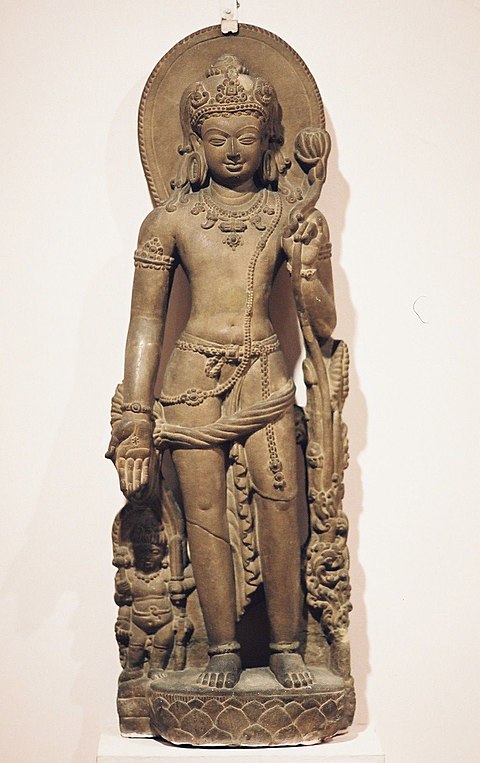
Accepting the fullness of one’s own karma may not be such an easy thing, because to do so you have to tell yourself the truth. But if ever there was a moment to breath fully into life, into this long-awaited transition, this re-opening of possibility, this moment to reflect and dedicate ourselves to the task ahead, this is it. Gaze into it; and may the Being of Samanthabadra, the consciousness of all Buddhas; of Manjushri, the wisdom of all Buddhas; of Chenrezig, the compassion of all Buddhas, the nature of Being itself, hiding in plain sight, be the guidance you wish for and deserve. Take a full breath and give everything to it.

Gratitude to Rudolph Bauer for sparking this content. See his article, “Gazing as Dzogchen.”

Love and Grief

Grief is a way of loving what has slipped from view. Love is a way of grieving what has not yet done so. They need each other in order to be themselves.     

 —Stephen Jenkinson

The appearance of COVID has changed everything. We’ve wandered from independence, personal protection and material support to broken food supply chains and communal support. Jobs disappeared while we were trying to integrate new rules and practices into thoroughly disrupted lives. Accurate information was and continues to be muddied by politics. There is a vast gulf between the promise of a vaccine (magical thinking?) and practical everyday precautions.

An unprecedented uprising for racial justice re-appeared nationally and globally. We continue to swim in deeply uncertain times in which political and social institutions are under attack, hopelessness courses like a deadly undercurrent with cynicism, opportunism and nihilism jumping on for the ride. The path that got us here is washed out and there’s no going back. Yet a powerful new solidarity has also appeared, providing compelling fuel for birthing a new national story. As Valarie Kaur likes to say, we are in transition: “Breath and push.”  Yet, out of shock and loss and even out of revolutionary optimism, what opportunities are we missing, and what is suddenly available?

Realizing we are not going back to a familiar normal, we await the arrival of the new. There is deep deprogramming underway as the unconscious gives up its secrets, bringing hidden motivations and desires to the surface in a tumultuous display of community-building and compassion, yet also extremism, fear, tribalism and aggression. This is a moment of extreme neural reprogramming. We can decide what we want and create it as we awaken to the pervasive messaging of white plutocratic dominion, the transfiguration of culture and a global push toward humane alternatives. This self-awareness is emerging as critical moments of choice to relinquish assumptions and to transform worldviews as we kneel and bow in this bardo of becoming. 

We’re not at all sure who we will become and many are determined to cloak the present in anything resembling the familiar. Yet some of the outlines of a different world are coming into view. How will we sustain ourselves spiritually, socially, materially and according to what values? Where or what is our refuge? Are we to resign to the political theater emanating from the centers of power? Are we to be ruled by fear and paranoia? Is there a pathway to confidence in a threatening world heading for collapse? Most of all, orienting to the grief of this time is a central challenge.

What of this grief—this persistent presence? It is not solely part of the apparition of ‘me.’ Whatever grief I feel is not strictly ‘mine’. It is a collective condition. It’s not a manifestation of the primacy or imagined indelibility of a solitary ‘me.’ It’s the elemental nature of being at this moment. I do not stand alone at the top of the pyramid of my life. I stand within. We are not the containers of our lives; we are the contained in the ongoing unstoppable process of living and dying that has always existed and never stopped.

Standing at the threshold of the Anthropocene, my outlook is not of fullness and promise. I am more aware of the losses, of being among those whose mistakes, hubris and arrogance, entitlement and recklessness have brought our progeny to the most dangerous moment of human history. The future is already lost.

The persistence of COVID is changing our outlook and personal practices; how we maintain a level of equanimity and easy connection with others. I am already rendered fragile by a personal health condition. Call it a pre-existing condition. Yet such fragility—and the shifting feeling that comes with it–is not weakness. It is the virtue of being affected, of still being able to feel at all. It is a form of strength in which mutability, resilience and adaptation form a capacity to bend without breaking. In the cracks of what decreases me lie what increases me.

Then there is the sense of a great unwinding—or, more accurately, unraveling–an exhaustion of neo-liberal economics and the accompanying desperation of its priesthood (and remarkably oblivious entitlement) who have brought us to the brink of extinction. How could anyone look upon this—even if it’s largely unconsciously—without noticing the suffering and dislocation nearly everywhere?

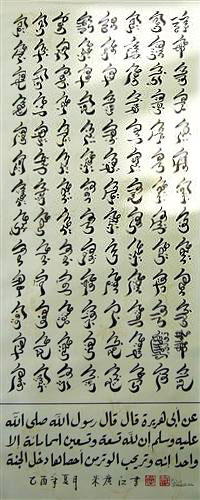
99 Names of God-Chinese.

Parallel to the ongoing nature of COVID, the progression and demands of the personal condition are also very uncertain. There are no clear signs of resolution, no hints as to my personal longevity nor any probability of recovery. Restoring and sustaining meaning is my primary focus. Generally, in this atmosphere of official denial, the severity of the infection being downplayed, the most sensible path to recovery is rejected. Clinging more desperately to the past and continuing to isolate from the world in its response, the centers of power in America are shutting their eyes to the inevitable. We sit on an edge of anxiety and resolve. There is so much more at stake now than ever before.

Even so, in the enveloping pall of personal loneliness and perpetual fragility, how can self-sustaining practices adapt to these circumstances? I rarely acknowledge my own fragility. I cover it and compensate. But it’s always there. Where shall I go for equanimity? Shifting away from what has worked in the past is not an answer. Turning to heart-based practice, noticing the appearance of grasping, despair and isolation, not retreating or succumbing, choosing a path of passion, recovering spontaneity and taking refuge in unity and dignity is the path of the present just as it has been in the past. Only now, our resolve must be even greater.

My personal awareness of loss and the general compassion I feel for others are parallel processes. What I have personally lost–a measure of freedom, a measure of abandon, the luxury of mindlessness, living with only an abstract comprehension of mortality and an incomplete and muddled notion of agency leave no residue of regret. They give way to a renewed and acute sense of the massive inertia of culture, the durability of systems of power, of being only one outlaw among a massive cadre who see the task ahead.

Having the curtain removed between the abstraction of death and the reality of its approach is not a loss. It has been more of a gain. I have gained focus and resolve. I am creating time even as an expansive future is diminished. A bottomless reservoir of gratitude has been tapped. An appreciation for the smallest gifts prevails. I have re-localized, attending to the minutiae of thought and interaction. This is not loss.

The full meaning of reciprocity with the natural world appears as we realize our subordinate place in the biosphere. The presence of extinction and the prospect of personal death luck among us. I am connected more closely to the experience everyone, if they’re lucky, will have sooner or later, the past and future omnipresent on the bumpy ride of now. Yet the recurring awareness of endings is also a source of energy; an enveloping presence of finality reviving appreciation for this world, the impulse to discover what more can be done, to grieve what has been lost, to love life as it is, beyond approval, beyond promises or expectations.

If there is a core of any sustained grief, it would be a sense of my own limitations.  It is the younger generations who’ve been robbed of their future, not me. My grief and love is for them and for the impossibly complex, incomparable beauty and perpetual emergence of life of which I am only a tiny nested part. Grief has not diminished me. I expand into it as a part of the perpetual astonishment of existence. What emerges is productive action. I am enveloped in life, reaching my arms around its every dimension. 

Solidarity, Somatics and Psychosis

The classic design of the vessels transporting the kidnapped, the brutalized and dispossessed, the colonized masses brought from Africa to the New World, endures to this day in the forms and structures of patriarchal capitalism: social stratification, marginalization, income inequality, racism, limited or blocked access to the means of acquiring wealth, property, equal justice or the general benefits of living your own dreams. White people may still enjoy the freshening breezes of the upper deck, but the metaphor still applies to nearly all of us today. It is only a matter of degree.

Yet even in the darkness, the impossibly close quarters and squalor of the lower decks, the light of freedom and joy never died. Dislocation does not extinguish the longing for home, burning to this day in the literature, art, music and poetry of the oppressed. It is in these ceremonial forms of breathing together that solidarity is affirmed. That yearning comes to life in the reverence for the journey, the longing to recover the sacred, to resolve the diaspora with the free and full habitation of a transformed body in a new land, even if that land only exists as an aspiration in the hearts of the wanderers. 

Four hundred years later, it is not only the ones who bore the lash who still cry out for home. Neoliberal economics, by commodification, relentless extraction and by the absence of any loyalty to genuine community and because it refuses to regard the earth as anything other than untapped economic potential, renders all of us landless on the new plantation just as it does in the foreign territories, occupied, re-colonized and subjugated by the weapons of finance and law. If those fail, force is applied.

These conditions, specifically the hierarchies of privilege, the tightening grip on the lash, the systemic racism and the use of money as a bludgeon, the predatory financial order and all the other inequities accompanying its regime, remind us that we can lose anything at any time. And indeed, since our relation to earth is much more than merely to a potential source of revenue, everything is being taken from us, incrementally, every day. Manifest destiny operates upon the collective body now just as it did in centuries past upon the territories of the indigenous.

Modernity is a rationalization of the wild. It is a leveling. Anyone noncompliant; anyone who dances, breaks the rules, bends time, looks beyond the borders, meets with other bodies, dwells outside the boundaries of sanctioned connection, imbibes the nectars of the sacred, seeks wisdom from forbidden sources, cries out for justice or draws outside the lines may be indulged with limited tolerance. Some will be infiltrated, criminalized, surveilled, tracked, deported, bludgeoned, jailed or killed. The rest, at least figuratively, become fugitives.

These and others like them, the restless, underserved, disenfranchised and denied, the ones living outside today’s inverted definitions of “freedom,” and “opportunity,” the ones discarded by the “free market” are the ones deserving of our solidarity. But they’re not the only ones being damaged by the paradigm of dominance and exclusion. However the systems of power continue the privatization and destruction of the commons is our disenfranchisement in real time. 

The Freudian definition of psychotherapy is that in exploring and expanding the psyche we reclaim territory. Our wounds back us into corners and make us small. Our addictions limit our capacity for outreach and connection. All the consciousness work we do is to reclaim territory, to halt the narrowing and to expand our view. Modernity rounds the edges and flattens consciousness, narrowing focus to channel and facilitate the pursuit of illusory solitary happiness. Bayo Akomolafe calls it gentrification. When we open psychic territory, we push past the limits of convention. We enter the wilds, tearing through the fences of what we know. We recover expansion and breath.

As David Abram reminds us, the original meaning of psyche was about breath, the wind or spirit of life. When we (re) occupy the wilds, we are learning to breath again, to fully inhale the spirit of life and the common territory of choice and possibility we all inhabit. Sitting and breathing is the most elementary practice of contemplative traditions. In doing so, we typically only think of ourselves, our solitary and separate bodies and the spirit, or psyche, of our existence. We inhale, filling the self, partaking of the esprit, the ruach, the motivating energy of being, momentarily narrowing our focus to this body, this consciousness, this moment, cyclically relinquishing the territory of awareness we just claimed, releasing into the non-dual self, into the unity of all consciousness, eliminating all boundaries and expanding to occupy all the territory we abandon in our pursuit of Self. We infuse ourselves with psyche

Psychosis names an abnormal state of the psyche, a condition of separation from the essence of being. We become lost to the potential of cyclical expansion and contraction of spirit embedded not only in the simple movement of air, interacting with the flow of breath essential to language. The expression of sound, the original musical intonation of nature, the stops and starts, the shapes of the throat, lips and tongue are rooted in the original sounds and symbols of our relational self. They were orienting, defined community, interspecies dynamics and expressed the ebb and flow of interdependencies upon which group survival depends. To become, over millennia, progressively separated from and to lose all sense of relationship between language and natural world, to permit indigenous languages and their ways of knowing the world to be lost is a mark of the deepening journey into mass psychosis

We lose our breath until we can’t breathe at all.

Breaking free of the mass psychosis is not simply a matter of breathing or language. It’s a much deeper process of conspiring to access and know our bodies in relation to earth in a different way. The energetics of reductionism, scientific materialism and neoclassical economics drive a widening gulf between humans and nature, from the full-bodied, erotic conversations between humans and the seasonal textures and interactive exchange of wisdom held in sacred sounds and labels of obscure and unique mind-states for which there may be no equivalent in any other language.

Recovering indigenous history is more than recovering stories. Embodiment includes discovering the architecture of authentic freedom, sharing the history of our bodies, exploring the interpenetration of culture and somatics, coming to our full stature, bringing the diaspora home to place and community, recovering belonging, power and perspective, connecting with ancestral voices bending time and preserving the libraries of wisdom contained in disappearing languages.

As Alnoor Lada declared in a recent issue of Kosmos Journal, solidarity is a direct erosion of the structures of oppression, the powers anchoring domination. Reclaiming the past informs the possibility of changing the present. Acting from a different set of values, breathing together, healing from the mass psychosis by breathing with our ancestors, redefining our identities, reconnecting to deities rendered remote and quiescent is a direct affront to the forces of economic dislocation that would erase the past and reframe history as the solitary pursuit of self-interest.

No Time To Lose

Reading Andrew Harvey’s 1994 book, The Way of Passion, about Rumi’s relationship with his teacher Shams i-Tabriz is a riveting and enlightening dive into the poetry Rumi produced from that time.

Reading Andrew Harvey’s 1994 book, The Way of Passion, about Rumi’s relationship with his teacher Shams i-Tabriz, is a riveting and enlightening dive into the poetry Rumi produced from that time. Why would I read this? Because devoted to my Buddhist niche as I may be, it’s dry in comparison to the ecstatic and explosively awakened passion of Sufism. Continue reading “No Time To Lose”