The Awakened Embodied Self

This is the imperative of evolving spirituality, realizing Sufism’s unity of fanaa and baqaa & of Buddhism’s Two Truths, to be here and everywhere at all times, to simultaneously be emptiness and embodiment.

Anyone inquiring into the meaning and process of spiritual awakening undoubtedly encounters conflicting ideas about consciousness. Where does “I” come from and where does “I” reside? Western psychology and religion are deeply concerned with defining and preserving the Self as a separate and fixed entity with (or in) an eternal soul, while eastern religions deny any absolute reality of a separate identity. What’s a seeker to do?

When sitting to meditate, one of the first instructions we receive is to become aware of the living process. In some traditions, we are guided to bring attention to the breath and gradually to the physical sensations that come and go from moment to moment. We can dwell on these sensations for extended periods, but an essential practice of meditation is to focus on one thing while developing the capacity to notice everything else that arises in the background. 

A second level of this process is to notice how—and how easily–our attention is distracted from the singular focus we started with. This noticing and the repeated return to the original point of attention is the development of presence. A third iteration of attention is to notice the different feelings that arise in the course of being distracted and returning to our original intention. Do we have judgments about ourselves for leaving? Do we have expectations about how we return and how long we ‘should’ be able to maintain the original state? Are we trying to achieve something?

A fourth iteration might be to ask who (or what) is the one meditating and who is the one presumably not meditating while being distracted. In asking these questions, one enters the territory of distinguishing between Self and Not-self, the psychological (ego) self and the (super-ego) witness. From here it’s a short linguistic shift in attention to a witness that is itself a non-entity. In fact, unwinding this thread of consciousness to its logical conclusion would require we investigate who is witnessing the witness, realizing that a further iteration of witness arises as soon as we establish an awareness of the immediate one. Tracing the witness all the way back to its origins is what, according to Robert Thurman, Buddha himself did on the way to his own awakening.

What is found when we go ever deeper into the layered constructs of cognitive awareness? Nothing? No self? In Buddhism, what is found at the root of the ever-elusive identification of the witness, is emptiness. Emptiness completely undermines any notion that there’s objective existence of anything. The appearance of everything is dependent on something else, a precedent. When investigating the existence of the precedent, one inevitably realizes there is no single independent source of anything.

We also create otherness internally in relation to “self” when we identify with unworthiness. We are also confused about who or what is the Self—is it a container of all the internal voices we may hear at any given moment? Is it a core truth, an identity around which all these voices orbit incessantly? If the former, then who is the witness, the part to whom critics address their assessment, their directives and imperatives?  If the latter, then what is their true role and value?

God is an infinite sphere whose center is everywhere and whose circumference is nowhere.  

 —The Book of the Twenty-four Philosophers (12thC)

Reducing the complexity of the human psyche to a bit of spiritual geometry casts some light on the concept of Self, defined by behavioral therapy, which, unlike an entity with no fixed center and no boundary, implies a more actively engaged and focused energy. Self has been described as the equivalent of ‘flow,’ a ‘sense of deep concentration without distracting thought, a lack of concern with reward; confidence, mastery and well-being.’ Sounds just like being embodied in the moment.

The term “self-leadership,” carries connotations of action, forethought and calculation. But wait. Wasn’t self just described as being completely in the moment, merging with phenomena without analytical preconception–or planning? What does the term “leadership” mean? Is the self still? Is it in motion? Is it an expansive boundary-less playful state of mindfulness? Or is it a kind of executive identifying and bringing various voices and intentions to heel, establishing and re-drawing its boundaries to expand its domain of influence, micro-surgically distinguishing itself from the masks of persistent sub-personalities?

What is the source of its energies? Is it a still point distinct from the surrounding disharmony? Or is it a primary organizing principle–a magnetic north, for a being negotiating its way through Being?  Is it even distinct from “I” at all? These questions are addressed by suggesting it is not a matter of determining whether self is an active center or an expansive, more passive presence. Like light, self is neither wave nor particle, but both, or either one, like the famous double-slit experiment of 1801, depending on who is looking and when, constantly transmuting from one to the other depending on the conditions of the moment. 

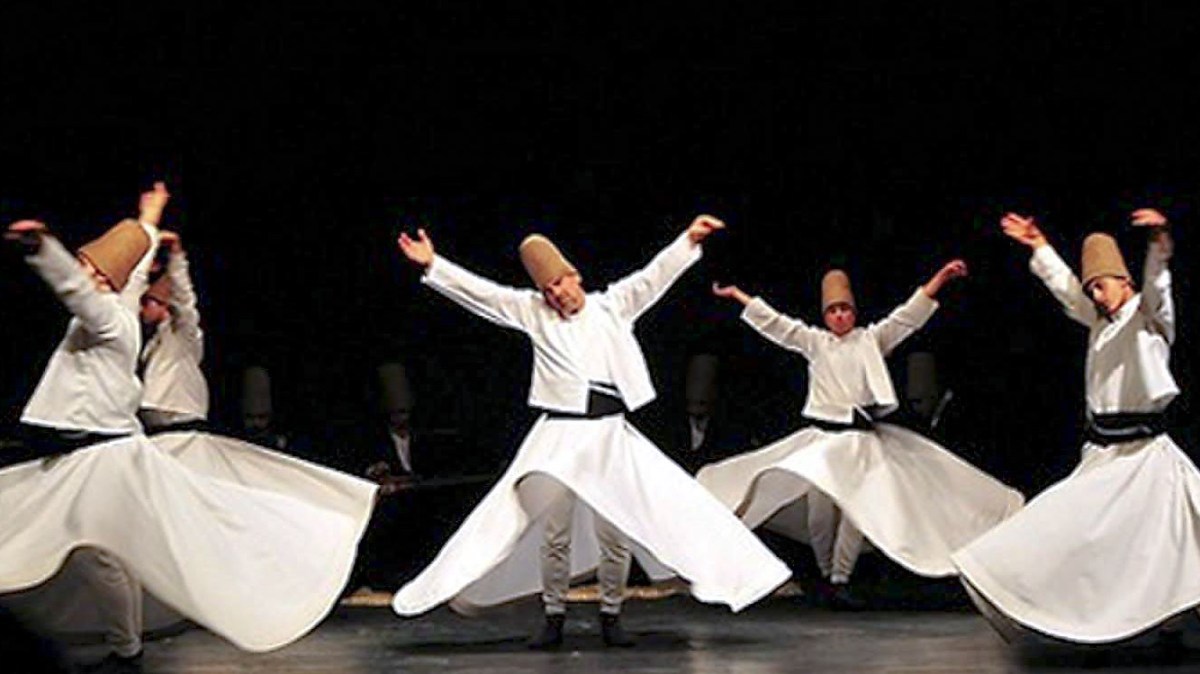
According to Coleman Barks, the Arabic words fanaa and baqaa are used by Sufis to describe the intersection of the human with the divine, a ‘constant and profound interplay full of paradox and movement, breathing in and out of every soul.’ These are seemingly opposing forces; or perhaps more accurately, the yin and yang of consciousness, the particle and wave of light; forces influencing our sense of connection to ourselves, to each other and all that is. 

Fanaa is the impulse to surrender, allowing oneself to become ‘annihilated, as if disintegrating into a vast magnificent sky, dying in order to become one with the infinite.’ Not unlike non-dual presence, the extinction of self, fanaa is the ultimate expansion, the dissolution of every boundary, every circumference. Mind-lessness. Paradoxically, this is also the highest form of concentration at the pinnacle of Buddhist ati-yoga, The Great Perfection itself. This is the ultimate devotion, realizing the truth of emptiness.

Baqaa, on the other hand, literally means permanency or embodiment. Perhaps the word discipline more precisely approaches its practical expression; the intention to be here, as opposed to being everywhere else but here. Not dissolving or shrinking from the mundane, but exploring its deepest nature, focusing one’s energies completely in the service of being exactly what we are. ‘Baqaa is the relative truth of appearance, the undeniable materiality of existence. Instead of melting into that whole sky, one aspires to nothing more than becoming one of the stars in it, experiencing the nature of one’s unique place in the sky’ or one’s place here on earth. 

True baqaa is also the fruit of a lifetime of devotion. This is where the attributes of self fully rise in dignity and durability. This is the self of Richard Schwartz’s familiar C-words of Internal Family Systems (confidence, creativity, calm, curiosity, compassion, clarity, confidence, courage) the self that becomes a mirror of clarity and purpose in every act, connected to and relating from its own ever evolving essence. Baqaa is the realization and containment of a refined skill. The pinnacle of progress on the incremental spiritual path.

The more discipline we exercise in discovering self and the more time we spend there, the closer we come to the invitations of fanaa, the ability to rest in our own essence, and increasingly to connect to the essence in others as well. And even beyond that, to the essence of all that is. Full realization.

We become, as Barks says, “the dreamer streaming into the loving nowhere of night.” This Self, the one that can live simultaneously in both fanaa and baqaa, is the self that is both particle and wave, both completely here and simultaneously nowhere, constantly transmuting appearance and emptiness into a continuously shifting torus of space. At the pinnacle of Tibetan ati-yoga practice, this is The Great Perfection, living beyond both samsara and nirvana, dissolving the Two Truths into One. This is not a Self that cannot be found, merely one which is not fixed, which cannot be pinned to either the relative or absolute. More by choice than by accident, one flows back and forth, as Barks puts it, between “visionary radiance” and the “level calm of ordinary sight.” 

These are the terms of awakening arising from the Sufi mystical tradition of Islam. This is the imperative of evolving spirituality, to realize the unity of Buddhism’s Two Truths, to be here and everywhere at all times, to simultaneously be emptiness and embodiment, to live in single-pointed awareness/aliveness within vast and timeless space, or at least available to transmute one’s capacities to the requirements of the moment, to seek both refuge in the specific and in the general, to slip the bondage, delusion and suffering of dualistic mind…and to live from a bottomless and source-less joy at any moment.
Laughing At The Sky

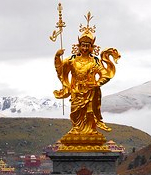
On the home page of this site is a photo of a painting. The subject is Longchenpa, the Buddhist sage of 14th century central Tibet. He was certainly not the first to discover “everything is perfect,” nor, by far, was he the last. The tradition he inhabited and to which he contributed in incomparable ways was founded upon the vision of non-dual reality characterized by emptiness, openness, inclusion and unity. In 1200 years there has been great elaboration, but no substantial revision of the essential knowledge base.

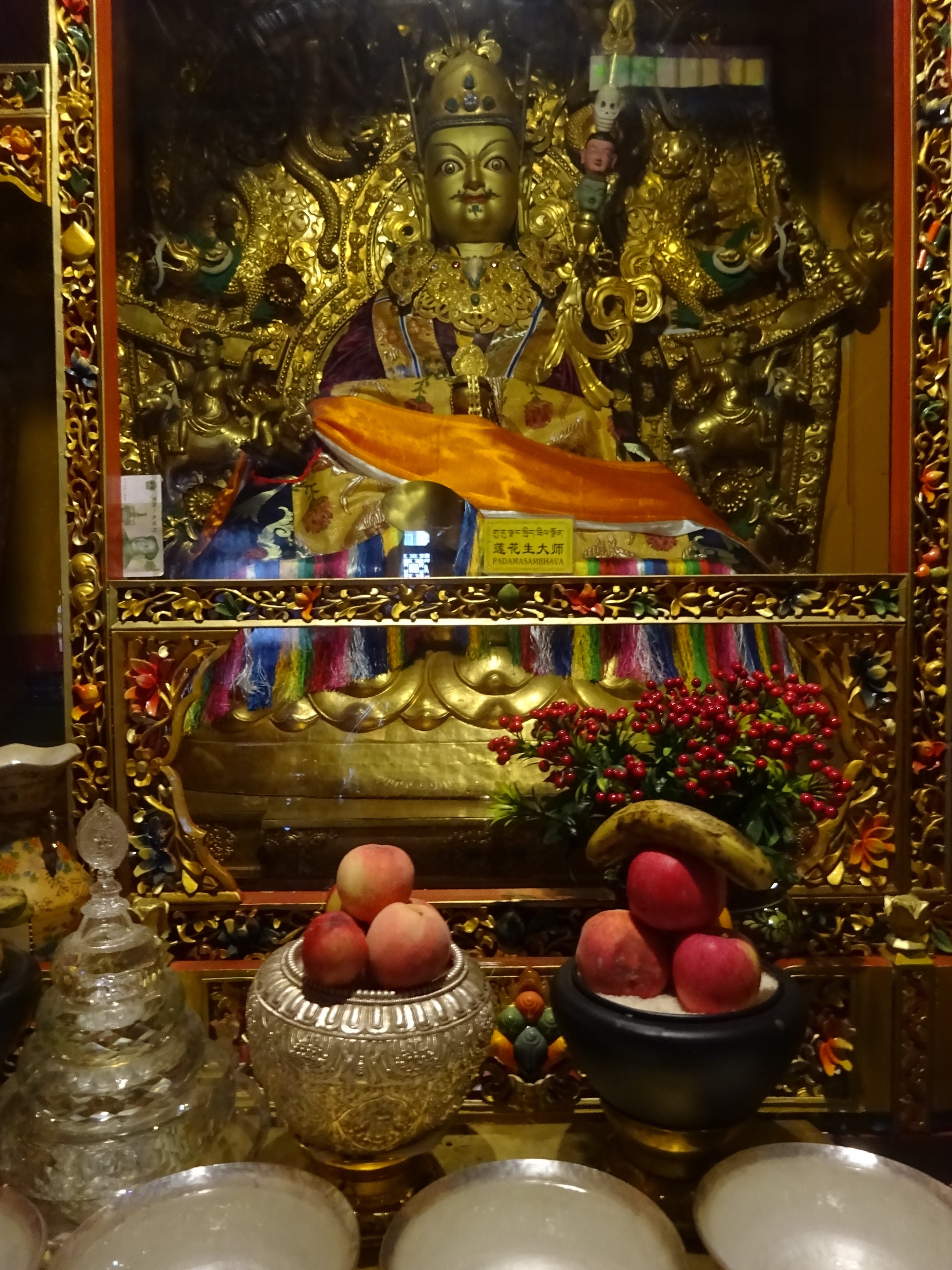
Its earliest proponents (Padmasambhava) filtered north in the 9th. C. from the Swat Valley at the border regions of Afghanistan and Pakistan, a key territory in the American war (now occupied by the Taliban), through the Hindu kush to western Tibet, surviving and/or integrating the influence of indigenous Bon practice already known as Dzogchen and spreading east from Mt. Kailash to China and Mongolia.

Tibetan Buddhism has a number of schools, each with a slightly different version of the essential teachings. The oldest school, Nyingma, structures a gradual path, a course of nine levels (yanas) of achievement in education, purification and transformation. The highest level, ati yoga, or maha ati, originally articulated by Longchenpa, represents a leap into the pinnacle teachings of Dzogchen. The lower yanas (concerned with sutras) are accepted by all the other schools. The highest yanas, tantric Dzogchen, remain the deepest heart of Nyingma practice.

In the case of all major religious traditions, a historical thread of mysticism with non-dualism at its core can be found. In the case of Christianity, it was the Gnostics. In Islam, it was/is the sufis. In Judaism, the kabbalists; in Buddhism, it is Dzogchen. In each case, these sects diverged from mainstream teaching, favoring direct transmission and cultivating direct apprehension of non-dual realization. Persecution, denial and marginalizing the mystics started early and to some degree has continued to this day.

The ‘path’ to realization in traditional theology was, and largely remains, under the direction and control of mainstream hierarchies defining the structure and extended nature of finely articulated relativist dogma in the form of spoon-fed courses of  study and ritual. Realization depends on deference, scholarship, patience and, most of all, an orientation to the future prospect of liberation.

Language, in subtle ways, corrupts our comprehension of the non-dual view. Tibetan Buddhism offers our ‘essence nature’ or ‘Buddha nature’  as a fundamental principle, that we are not here to become something we are not, but to uncover what we already are–or, to be more precise, what already is. We are not stained by original sin. Our essence is already pure, intrinsic, indestructible and it is only our confusion that stands in the way of realizing our true nature.

All well and good. However, in the Dzogchen view, which is actually no view at all, ours or mine do not exist. There is no one to recover from confusion. There never was confusion, nor was there ever clarity. A relative path does peel away confusion–up to a point. Dzogchen departs from this approach, hence is called the pathless path. Realizing all of this is the reason Longchenpa could ‘laugh at the sky’ in the first place.

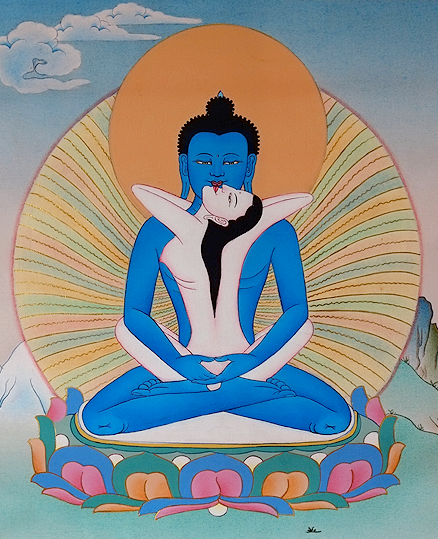
samantabhadra-thangka_1000x
                     Samantabhadra

In cutting through confusion, we do not realize luminosity separate from someone else’s. In the shimmer of timeless awareness, there are no others. We see only one thing which is not even a thing at all. We do not see our nature, separate from Nature. We are not even beings experiencing Being. We become Being itself, not separate from Self–which has no attributes, is unconditional, cannot be adequately described in academic or any conversational language since language–at least English–resides in a dualistic fame.

Poetry comes close. As Longchenpa describes with inspiring poetic versatility (reflected in the immensely skillful translation of Richard Barron) in The Treasury of Dharmadhatu, Reality only knows one thing, beyond all description, beyond positive or negative, beyond all causation or attributes: the essence of all things is equal.

Samantabhadra is regarded as the primordial Buddha, the anthropomorphic form of all Buddhas. He is depicted metaphorically as the realization of Dzogchen, an expression of the most extreme impermanence possible–a state in which there are no discrete moments to be identified or grasped. The concept of now does not exist here. Any attempt to contemplate, arrest, understand, attach goals, to accomplish anything or to contrive causality instantly creates duality and thus inequality.

He is not regarded as the messenger of primordial purity, but the message itself. He is not a teacher. He is the teaching. He is the embodiment of non-action, of Being without source or cause. Goal-orientation is not only not required, but an impediment to the truth Samantabhadra displays. No liberation can be forthcoming until the drive for attainment is relinquished.

All things being equal, there is no good or evil, no right or wrong. This is the Great Perfection. In this domain, one might wonder if meditation is even required, or if it’s any use whatsoever. And indeed, is there really any  difference between conventional meditation and post-meditation? Whether one is meditating or not, if all practice and behavior exist in a context of insufficiency and there is nothing save an endless treadmill spanning numberless incarnations inching toward a virtually unattainable perfection, then one might well choose indifference…or amoral indulgence. Unfortunately, some of the best known and most influential teachers have succumbed to the temptations of copulation and inebriation.

Does the equality of unchanging ineffability implicate a value-free state? What about morality? What about karma? What about this world awash in conflict, deprivation, exploitation and suffering in all its forms? No. Dzogchen may be regarded as non-meditation, the removal of every impulse or vestige of ‘doing’–and especially to the extinction of the witness.

Extinction of the witness, the awareness constantly observing and evaluating our every thought and action, is the attainment attributed to the historical Buddha. It is intrinsic to the ultimate knowing. It is another aspect of extreme impermanence known as Presence. There can be no true Presence if an object of consciousness exists. Because the Great Perfection arises with an inseparable and enveloping compassion, the adept is suffused with action just as surely as the practitioner of conventional incremental spiritual practice.

Attempting to contrive this condition is a sure way to forego any possibility of its dawning. Certain things are sure: the bliss of Being is not a state of isolation. It is a state of union. Its limitless view is elevated by equally limitless compassion in which moral choices in the midst of perfection remain as natural as breathing. The doors and windows are all open. The roof is blown away. All beings, who in essence are none other than light, stand naked in their endlessly inventive, unceasing and often desperately comical attempts to adorn their existence with permanence.

Yes, we are all doing it. And we are all–save an infinitely small cadre of seekers– ultimately doomed to fail. Ironically, the one who crosses the bridge to that extreme impermanence is most fully in this world beyond all imagination, retaining and expressing the freedom–the imperative–to act on behalf of all beings in accord with a union of relative and absolute guidance. The distinction between the two no longer exists.

Fortunately, since this pinnacle of perfect equality is so rarely attained, let alone stabilized, the imperative for moral action remains present for the rest of us at every moment. All decisions and actions still exist within that perfect field of equality, even as every perception, decision and action remain expressions of our confused view. Here, the survival instinct, the human drive for sensory pleasures, all compulsion and resolution, aspiration and failure, awakening and falling back to sleep, every breath arising at the nexus of samsara and nirvana, resides on the cusp of an exquisite poignancy, humor and bewildering inevitability. Arriving at this clarity, experiencing the perfect equality of everything, yet never forgetting every act matters in this troubled world, is the moment when you can, as Longchenpa did 650 years ago, only tilt your head back and laugh at the sky.

Dissolution

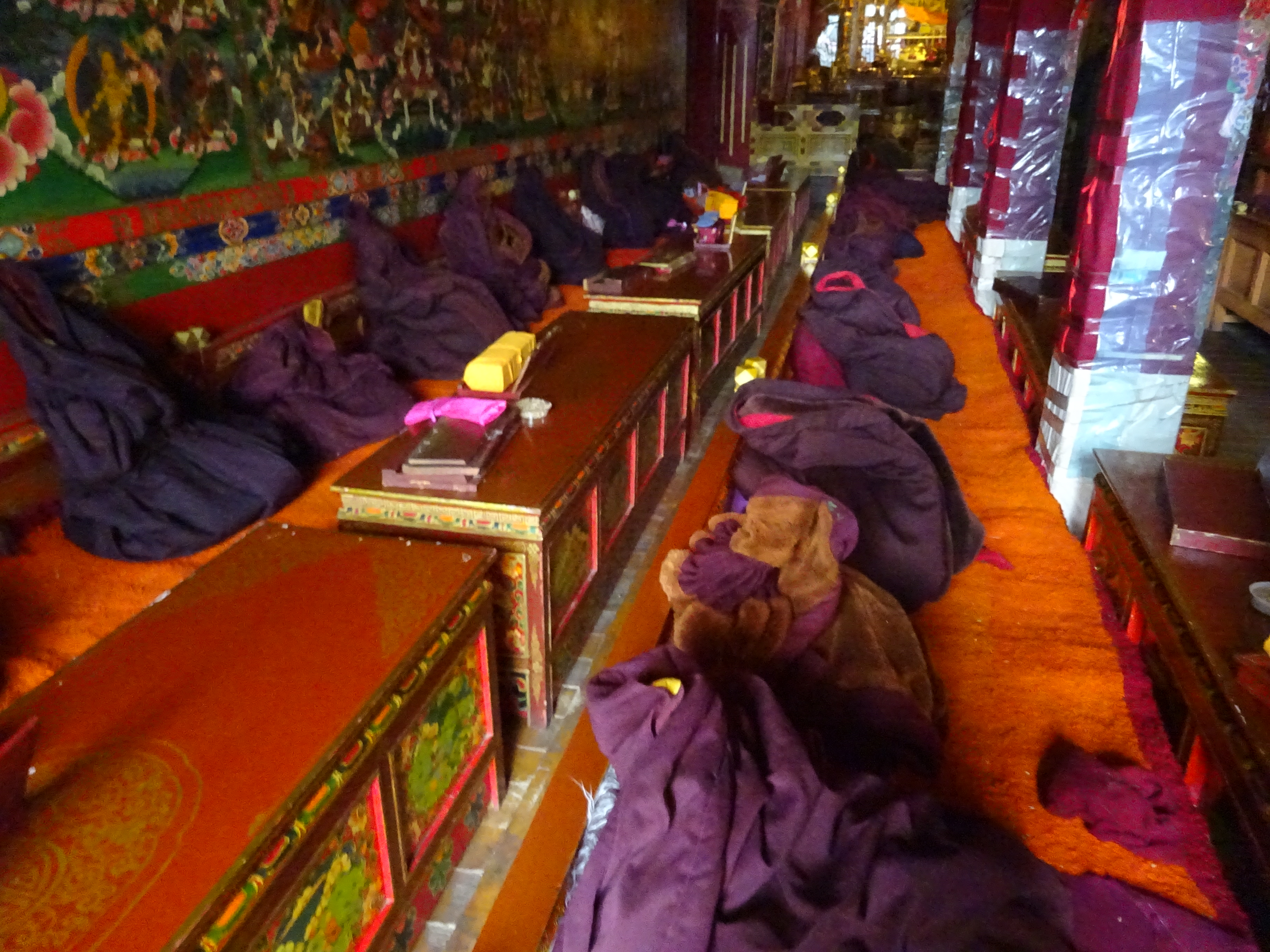
After touring the grounds of Shugsep nunnery, in July, 2017, I walked inside the darkened and silent main sanctuary. Everything was completely undisturbed; no one else was present. I noticed the colors, the familiar designs, the empty seats marked by the heavy woolen robes collapsed like ghosts on the benches, the teaching throne. Everything was in its place; there was only my breathing.

DSC07189

Then, in a slow wave, all the “things” in my view became one thing. All objects knit together into a single object. Everything became one teaching. Down to the smallest detail, even the fake flowers were a teaching. The decaying fresh fruit, the wooden bowls, the gold, the fading paint, it was all teaching; a single non-conceptual communication that had no words. It was entirely uniform, as if everything became tuned to a single harmonic to which I myself was becoming tuned. Everything was in its place; nothing was out of place. There was no other place for anything other than where—and what—it was. It was all an intricate code, like pieces of a puzzle suddenly, upon assembly, becoming a coherent image, conveying a single message.

All the activity outside the temple space was teaching. Everything beyond was also teaching, the weather, the mountains, the pilgrims on the way. Everything in every living moment is the same message. I was inside the space of all teachings, all schools, all teachers, all of the past and stretching into an undefined future, a vast dynamic universe of infinite nuance, the tiniest ripples part of a vast ocean, having no language, no structure, no predetermined activity.

I wasn’t expecting this.

I dissolved into all of it, again, in communion with the heart-mind of the victorious ones. “I” was a part of it, even as “I” no longer existed. The barrier between the perceiver and the perceived dissolved. There was no Other. Everything was image. Not many images; one seamless continuous image encompassing everything. Nothing I saw had any solidity, any material quality or substance whatsoever; it was none other than teachings, a uniform message available to all who would listen.

There were no words for or about anything; not the deities on the walls, the colors on the ceilings, nor the figures by the altar; neither the hands that crafted those figures, nor the statues of teachers nor the teachers themselves. Nor even the Buddha himself.

DSC07193

There were no words–or thoughts, or concepts–at all. There was only a simple, unitary and direct knowing, an all-knowing that needs no words, that could not find words if it tried; without a source, a wind blowing across centuries, populated by an infinite number of beings, uncountable know-ers who didn’t (and mostly still don’t) know that they know, permeating everything and every one, “my” thoughts, all thought, my body of light, the same light from the doorway, the sky beyond. There was no differentiation between words and thought and knowing.

There was no time. The truth, the seamless image of truth lives outside of time. It permeates the construction we call time and it is not time at all. Then again, neither is it other than time. I was not standing there at that moment, not in any discrete moment—or any moments. I was standing there my entire life, from beginning to end and without beginning or end, standing in every “event,” as if discrete events ever existed, and though “in” events, also not separate from any event.

The material nature of a temple, a sutra, a speech or treatise, the perceptual apparatus that produces them all, the sky, the mountains rising to that sky,…it is all the same, a dynamic display of color for which there is no name, only nuance beyond comprehension. It is generation itself, just as I had first seen at Mount Madonna Center in 2013, rising and disappearing in every instant.

There is no longer anything I can call not-teaching, anything that stands apart from the essence of truth, anything other than a bottomless knowing that cannot be spoken. The sacred may not always be apparent. But it does not lie at the edge of or beyond or within…anything. We may imagine that reality is just beyond our grasp, that a ‘crossing over’ is necessary. But from what, into what? It is already everything….without any edges, living beyond the illusion of being separate.

It is all mandala. It is all Buddha-field. It is all Buddha. Nothing is other than Buddha, not the suffering of the lost, the greed of the wealthy, the deceit, the derangement, manipulation or ruthlessness of the powerful, the striving of the seekers, the violence of the deluded, the nobility of the compassionate, nor even the amorality of the psychopath. Every look on every face is a changing color in the ever-shifting magic mural of the living dharma. It is all Buddha. It is all perfection. There is nothing out of place. Nothing “happens” at a wrong time.

No decision we face can ever be postponed or avoided. We are always coming home and we are always at home. There is no place that is not home. There is no place to go. There is no away. We are home. There is no remote cave of feeling, perhaps blocked up for decades, generations or even lifetimes that is not worth exploring. There are no chambers of the heart to be abandoned. There is no dead-end of relationship.

There is no limit to a commitment to truth or to the invitation always present. There is no wrongdoing that cannot be faced, no darkness that can remain unseen, no search for justice to be abandoned. There may be exhaustion, but there is no sleep that cannot be interrupted. Nothing exists outside the temple. The temple is everything. Everything is the temple. The Buddha field is everything. We cannot give everything–or anything–to it. It is already everything we are. We have nothing. Our absolute poverty is our true nature. We have everything we need, we already are everything we need in every moment.

We may still retain will. Or at least that is what we imagine. We both exercise it and surrender it to realize essence nature. Not “our” essence. Essence does not belong to anyone or anything. It has no source. Yet, it is not other than everything. We exercise will to pursue what we do not yet believe we already are. Will, entwined with self, is both freeing and also a form of bondage. The exercise of will releasing bondage is the great surrender, the great paradox, the Two Truths in operation, inextricable, inexplicable, perpetual and ineffable, without condition or attribute. The Great Mandala. The Great Perfection.