Transraciality

The decolonized body, the intrinsic expression of core relationship & connection, the energetic body of creative awareness, that metabolizes experience continuously without grasping or regret or shame, the expressive body of subjective integrity, is the transracial body.

Anyone taking a serious look at one’s own attitudes about race these days is bound to get into some uncomfortable territory. It’s often said that looking at privilege is not enough or maybe looking at history is not enough. But however we go, we will quickly discover that the story widens far beyond our initial impressions or personal experience. The previous post was a suggestion that a white body is much more than skin deep. Privilege and bias are carried deeply in our ontogenetics, our body imagery, development and movement, the fine tuning of our limbic systems, our internal radar where potential threats and opportunities are processed.

Whiteness isn’t likely to think it needs emancipation from privilege or supremacy any time soon. What we are seeing now is a full-throated backlash against the dismantling of systems of oppression which are essentially class-based. Racist tropes are being used to preserve them. So, on one hand, we can say whiteness is already ‘free’ in some respects while being simultaneously diverted from seeing the class structure of its own oppression. True emancipation must mean emancipation for all, but its connection with race is undeniable. Maybe liberation can be interpreted to indicate the collective beyond racial distinction. Inasmuch as there is a white body, a colonized body, a body conforming to ideology as much as biology, regardless of race/ethnicity, and if we are ready to acknowledge the full implications of it, then liberation is as good a word as any to refer to the deconstruction of systemic oppression, racial or otherwise.

The forces opposing the dismantling of oppression like to say the future of Western Civilization is in the balance, as if that defense overrides any other consideration. I tend to agree. And that’s precisely why we must persist in grinding away at the machinery of narratives, epistemologies and exclusionary tropes of modernity, separating the trash from the recyclable, as it were, the propaganda from the truth. We do that by examining the wide and deep effects of policies, ideologies, social practices. That examination process is what’s being called ‘woke.’ and of course it’s the agents of oppression that hold that term to ridicule.

What’s at stake in this conflict is who gets to decide the nature of truth. How do we avoid following the cycles of the past, ensuring our own collapse on an unprecedented, and possibly terminal, scale? I don’t intend to digress into the origins of Western civilization, but I am reminded that the philosophies, governance, social and mercantile structures of Western Civilization did arise at the edges of desert, spreading to Greece, Rome, northward and and westward from there.

Western (white) thought has brought us modernity, capitalism, systemic exploitation, racism on a global scale, religious oppression, the destruction of the natural world, climate change and is now doubling down on all of it. Among the many effects climate change brings us is the loss of arable land due to desertification as well as what are now also called deserts of the ocean, barren areas of increasing size no longer sustaining thriving ecologies. Dismantling racism is among the reallocation of resources we must accomplish, reclaiming the cognitive desert, before (western) civilization returns to its literal origin.

I previously suggested the cultured body, the colonized body is the objective view, entirely dependent on sustaining the separation of subject and object, perpetuating the Other as a means of cementing identity. Identity is a key feature of the ‘objectivity’ of the colonized body. And to the extent that we continue to think and act according to a reified ‘objective’ view, we sustain our separation from the world as a living, entirely integral, continuously emergent matrix of which we are a (small but powerful) part. As a sustaining principle of the objective view, identity has run its course. I might even say identity, particularly including but not at all limited to white identity, is now an obstacle to our continued survival.

The decolonized body, the intrinsic expression of core relationship/connection, the energetic body of creative awareness, the body that re-members, that metabolizes experience continuously, spontaneously, without grasping or regret or shame, the expressive body of subjective integrity, is the transracial body. This is not the multi-racial body, but something else. The transracial body is a matter of consciousness, not identity, and also not the property of any single race, ethnicity or ideology. The transracial body, a term offered by Bayo Akomolafe, is also not an activist. Transracial awareness, if it can be connected to Liz Koch’s core awareness, is not about doing. It’s also not even really about belonging in the sense it is normally meant.

Unless we are quite clear, the very word ‘belonging’ conjures a binary, defining boundaries, or easily slips into grasping at some distinction between us and them. We ask, to what do we belong? If we see the path as one of returning to subjectivity, then everything, the inanimate, the animate, events, people, thoughts, is us and we are all actors within us no matter what we do or who we are. In this sense, using the word belonging can become an intrinsically flawed linguistic trap. Cultivating the subjective view becomes the portal to the transracial view, collective liberation, belonging to the whole. 

Transracial awareness is not even really about being, not in any fixed sense. But it is about being-with, becoming-with. When we hear indigenous leaders speak, or anyone speaking from the ground of ancient wisdom, when the words resonate somewhere within us other than the thinking mind, when they strike us in the heart or at a level of deep and quiet intuition that still recognizes the truth, when it feels as though the words open up the very earth, it’s because they speak from the subjective view, from a deep and imperturbable (albeit troubled) love as well as an immense heartbreak. Such a person is not an activist in the conventional sense. The indigenous voice, the transracial voice is not the voice of activism as we generally know it. I wouldn’t even say the transracial voice, or the indigenous voice is post-activist in the sense that it is not occupied in opposition to something or someone Out There. 

The indigenous/transracial speaker is not a messenger. They are the message. The transracial voice, the voice of core awareness, is not a teacher or a communicator in any conventional sense. They are the teaching. But those of us who still see the world from the objective view, who still struggle with issues like helplessness, shame, guilt or solidarity, who seek ways to interrupt and dismantle the systemic inertia, those for whom the low-hanging fruit of self-comforting gestures feel discordant, stale and superficial, those of us who have not fully recovered from being captured, conditioned and colonized into objectivity, may regard our recovery as emergence into post-activism. 

The recovery of core awareness and emergence into transracial awareness is accessible to anyone. It is surely more difficult for some than for others to realize, but we don’t have to know our personal lineage or commune with an ancestral group to find it. There may well be right times for allyship or solidarity as we most often think of them. But from the recovery of intrinsic integrity arises an inherent solidarity in the form of recognition beyond color, beyond identity, a resonance with shared reality, shared trauma and shared power. It’s not a tribal thing. It’s a human thing. And your forebears may not have had it. But if they did, or however you discover your own version, the linkage is timeless, unbound by any territory, tribe or cosmology. It is always with us, albeit dormant, because it is our intrinsic nature. It is our birthright. It is what we are indebted to. It is the true seat of agency in this confused and corrupted world. 

What is Psoas?

Psoas is not only a material link between the dense body, instinctual motivations, the limbic system, the sensuous connection between the upper and lower body, but a process linking the animal and the spirit body.

Based on a personal history as a medical professional and somatic practitioner with background in martial and contemplative practices, these comments are long overdue. Liz Koch is bringing fresh clarity and innovation to this tradition as she breaks new ground in understanding integral structure and function: the body as process.

The story of every body is written in an ever-refreshing pixelated environment, an ocean of shifting light and motion, multitudes of biochemical gates constantly opening and closing. There is no permanent story. There is only a whirlwind of accumulation, adaptation and shedding around a seemingly constant and ever-mysterious core of sentience, practice, and belief, processing, light undergoing re-creation, temporarily held in a limbo of semi-existence, and constantly evolving.

Discovering and living in that core intelligence is to live on the ground, I daresay in the ground, to live in oneself in a deeper way than most of us know or imagine. It is also to redefine the meaning of self as well as relationship. There is also a superimposed cultured body, the body shaped not only by ontogeny, physical development and the family milieu, but also by the philosophies, commercial, social and political practices of modernity which objectify the body as we become removed from the fundamental nature of humanity as beings worlding the world.

Being conditioned to cultivate a subjective self while objectifying the body is to become lost, to remain in the world but not of the world. This is an ongoing ‘decontexualization’ separating us from the most intimate internal process, and thus also from the larger milieu, distorting a conscious interactive fluid sense of being and place. To be more precise, real embodiment, according to Koch, is to reconnect with the animal body, animal knowing, the subjective experience of being and becoming ourselves and the world, and of being created by the world. It is to shift from the world as object to the world as subject, which is to approach the dissolution of Other.

For Koch, psoas is a sense organ, though conventional western anatomy considers it a muscle. Its function is a material path to orienting our somato-emotional experience, awakening this subjectivity, which is a deeply enlightening and enlivening path. It is the perceptual vehicle not only of descent into core experience, but of the material connection between the energetics of grounding, our connection to the earth, response-ability to place and self and the felt sense of integrity. It also transmits the ascending character of spontaneous (rather than calculated) presence, the energetics of a whole being responding to gravity in a restorative way and moving from a living center, immersed in a continuous flow of feeling, creativity and intuitive connection to dynamic possibility. Except that arriving at this quality of integrity also undermines our habits of creating and perceiving Others. This is a profoundly awakening experience. 

Psoas (I hesitate to objectify it by calling it ‘the’ psoas) is not only a material link between the dense body, instinctual motivations, the limbic system, the sensuous connection between the upper and lower body, but a process linking the animal and the spirit body. Rationality remains an essential function meditating instinctual motivations, functioning to connect the limbic system and the animal brain with the fulfillment of spiritual aspirations, the activity of the cortex, bridging the experience of the world as it is and the motivations and formulations defining the pursuit of a fulfilling path.

In a dry anatomy lab, medical students learn the physical location and quality of psoas as a pair of structures and connective tissues along the back wall of the abdomen arising from and adjacent to the spine, stretching from the lower ribs, traversing the transitional curves of the spine, through the pelvis all the way into the hip. And in that inert context, it mechanical functions can be defined according to its geometry and power dynamics.

But in the living state, the muscular and connective tissue relations of psoas include intimate communication with the rhythmic rising and settling of the diaphragm, the stabilizing fascia of the lower spine, reaching around the abdominal wall to the crest of the pelvis, down through the pelvic organs and through the hammock of muscle stretching across the pelvic floor to finally embed itself as a subtle but powerful primary mobilizer of the hip. Normal psoas is related to the aliveness of the muscular hammock spanning coccyx to pubis, mediating generative relations to the earth and the sky, the gross and the subtle, the energetic, the electro-magnetic, the physical and the metaphysical, taking and giving away, becoming, arising and disappearing.

From an evolutionary view, homo erectus undergoes a lengthening of the psoas to permit a fully upright posture. The unfolding of these events is still fraught with limited or distorted function. Many bodies, formed as they are by culture, bodies of every ethnicity and race, remain in conflict with themselves regarding the interaction of psoas, the abdominal muscles and the powerful erectors of the spine. Distortions of the poses may have antecedents in the earliest experiences of life and trauma of every variety. It’s a delicate balance rendered there, easily descending into either torsion, rigidity or collapse. We’ve all seen it and most of us know it. But in the best of worlds, psoas mediates a responsive attention and motility in a body that doesn’t need to adopt complex compensatory and increasingly rigid patterns to marshal its reserves or experience its own capacities.  

What we know and see and feel in western culture is the image-making apparatus set to convince us of the dominance of more superficial musculature of the trunk: spinal erectors and the abdominal wall. We internalize the messaging of the patriarchy in the ways we present ourselves to others, in how we move and respond to the murmuring of emotion in our social relations, in how we exercise, fortify and protect ourselves against what we perceive as a competitive and even perpetually threatening world. The externalized conflict is expressed as superficiality, as progressive dissociation from lived experience, as the disconnection we have wrought upon ourselves in pursuit of the ideals and ideology of individuation, independence, competition, dominance, and our profoundly mistaken reliance on purely rational approaches to ‘problems.’ 

White privilege is a field of action permitting–even demanding– we get away with denying the wild, the erotic, the darkly and brightly creative, the subtle sensuality and continuous effervescence of the sacred. Re-sacralizing—or restoring a capacity to process experience more fully involves a literal re-centering of our attention to a different locus, a different viewpoint not so much about who we are but what we are. That locus is the energy center known by the Chinese as dantien, by the Japanese as hara, the Hindus as the swadisthana chakra. These words all refer to roughly the same thing: the source of power or intuition, the creative center of subjectivity, Koch’s ‘core awareness,’ a self-balancing, self-generating healing and restorative source, the descent into ancient wisdom, the alchemical cauldron that is the fluid, in its most primal function, keystone of human structure, the sacrum.

The systemic legacy of colonialism is white supremacy. We’ve witnessed the postures and behaviors of white supremacy in the most graphic forms and countless images of people of color being brutalized and killed. But that is a mere whisper of the deep and long history of dominance expressed in the movements, gestures, tonalities and finalities embedded in cultured white and black bodies. The non-verbal micro-rituals defining power, the learned gestures of deference and submission, the careful constraint of expression, the rigid hierarchies deciding who and when one may be permitted to assume one’s full stature, to fully inhabit one’s generative and creative integrity, to give voice to intrinsic intelligence beyond intellect. 

Historically marginalized people who assume their full stature (whether standing or kneeling) may be perceived as a threat to the prevailing power structures. The full access and activation of the muscles connecting the animal body to the soul, one’s relationship to the midline, the feet firmly planted, the unflinching gaze, the voice firm and direct–that quality of definitive physical presence without rigidity, aggression or retreat, unimpeachable moral certitude clearly speaking unassailable truth, that expression of intrinsic power communicates an integrity and expressive capacity that directly threatens the systemic barriers devoted to keeping those qualities of awareness and fearlessness from spilling out into the wilds beyond the limiting corrals of truth defined by whiteness. Those entirely conditioned in the epistemologies of whiteness cannot even comprehend such a thing. It’s immediately triggering to the hyper-defended identity of whiteness. 

Women are particularly subjected to those constraints as Susan Griffin articulates so well in her book of essays, The Eros of Everyday Life. We live under a tyranny of abstract thought at the expense of feminine life force. Women continue to be deemed inferior because they cannot be objective, because they typically live closer to the cycles of life and death than men, because they swim in a hormonal soup of creative eroticism, because they are subject to the turbulent and unpredictable, uncontainable currents of emotion or maybe they live somewhere beyond the fortress of rationality in which white patriarchy hunkers down. Historically, even the inclination of the pelvis was regarded as evidence enough of female inferiorityHow much further from an authentic comprehension of biology, sensuality and erotic vitality could that possibly be?

The body is and continues to be a key battleground in this era of late-stage capitalism and the deconstruction of the legacies of modernity, supremacy and domination. It’s a long and complex journey. And we may not have as much time as we think to recover the animal within. But the closer we look, the more we will find our true selves there.

What is a White Body?

Just as external ecologies have been transformed, disrupted, or wiped out altogether, our internal ecologies have been tamed, altered and subjugated to conform to ideology (and the dominant narrative) rather than biology.

Most of the conversation (if we could even call it that) about race in America centers on identity, the most superficial designation. Then we talk about whiteness and blackness, imagining characteristics of those identities, drawing ever finer distinctions between ethnicities, behaviors, modes of thought, rituals, treating them as if they’re intrinsic–ontogenetic. When we speak of yet another proposition– white bodies– the conversation hardly ever touches the truth. Whiteness is a construct, nothing quite as fixed as it seems. We’re talking about conditioned bodies, bodies manufactured by culture. 

Part of what white-skinned people have been conditioned to become–at least in America and most likely everywhere else– starting more than a handful of centuries ago, along with scientific materialism and the supremacy of epistemology over ontogenetics, relies on subjugating intrinsic wildness. Just as external ecologies have been transformed, disrupted, or wiped out altogether, our internal ecologies have been tamed, altered and subjugated to conform to ideology rather than biology. Manifesting whiteness in the world, the expression of whiteness, has become, with the rise of colonialism, capitalism and Puritanical Protestantism, the exercise of that supremacy over every form of wilderness, including land, people and especially the untamed within. Whiteness is trained since birth to be the face of modernity in that body, as a body. It’s almost entirely unconscious because we have so few (and rapidly disappearing) alternative models. 

By inference, there is also a corresponding Black body, not necessarily the intrinsic Black body or the indigenous body, but the black and white bodies undergoing perpetual remodeling by the culture, the culture whose structures and hierarchies of authority and validity seek a monoculture of conformity to the essential structure of the slave ship and the plantation.

White skinned bodies have been cultured by modernity to hold, move, express or deny themselves in particular ways, forging psycho-emotional armor, all of it entangling the prevailing definitions of authenticity, dominance and power relations, somatizing the source code, if you will, defining the internal relations, rationalizations and compartmentalization necessary to maintain the social structure. Likewise, black (and other ethnic) bodies are also cultured to aspire to that model of whiteness, entrained to a different source code (locking them outside the ramparts of white supremacy and privilege) to disconnect and so far as possible immunize themselves from the legacy of their own trauma (in the same ways white-skinned people are conditioned to immunize themselves from the trauma of racism and genocide), the experience of forced submission and every possible form of loss, passed down through many generations—to aspire to transcendence and at the same time to internalize the submission.

This is the systemic duplicity of whiteness that continues to be visited upon non-white people (with police as the enforcement arm), sustaining the presumption to define and hold an aspirational standard which is then, by a thousand cuts, rendered unattainable. In psychology this would be the classical definition of schizogenesis. The cultured body, regardless of color, conforms to different social expectations, behaviors, responses, modes of expression, movements, postures and even patterns of attention to make its way in the world. The character of that entire assemblage is conditioned in a multitude of subtle and not so subtle ways in schools, the workplace, by the institutions of governance, in the hallways, C-suites and interior spaces that define law, public character and acceptable social behavior. 

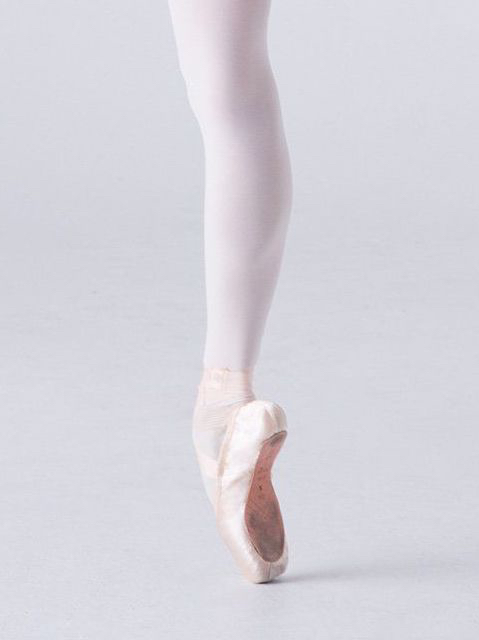
Liz Koch describes the cultured body (regardless of race) as the balletic pose, the military stance or, I might add, the hyper-tensive image of the tightly wound gym rat whose abdominals scream defensive aggression, as the body modeling power over. An image that springs to mind is all the CEOs of the oil majors standing side by side with their right hands raised as they take an oath before testifying to Congress (this week!), the disembodiment of the tucked-in gut, insulated by the protective paunch, the shallow breathing, the clenched jaw and the taut pelvic floor. We know they’re going to lie. They know they’re going to lie. And they fully expect to get away with it, just as they have for decades. There will not be an ounce of authenticity to it. That’s patriarchy. That’s whiteness. 

Along the way, those expectations and behaviors become conditioned in the flesh, even from childhood, as boys are taught to ‘be a man’ and girls are subtly steered away from authentic expression. These patterns become embedded in the character and communication within the physical structure itself. They are reflected in the windings and asymmetries of physiology and movement. The history is in the flesh, in neuro-muscular patterns, conditioned sensitivities and in the storms of neuro-transmitter release. The body tells the tale. The body speaks its mind. We are consciousness as structure. These patterns form the corral of embodied modernity, the colonized body expressing and perpetuating itself in qualitative patterns of attention, what we notice, the creeping (and creepy) narcissism of what we feel and what we do with all of it. 

There’s a great deal I agree with about Liz Koch’s understanding of whiteness in the body, but I think the historical context could be expanded, going back to the 15th-16th centuries or even earlier: the extreme greed cloaked in religiosity, Church-sanctioned genocide for the glory of God’s Kingdom, the integral nature of capitalism, racism and the Church. The denial of the flesh and mostly the denial of the feminine, the ascent of rationality, the glorification of abstract thought, intellect, and the separation from nature are all included. The roots of whiteness run deep, even into the conformities of the microbiome, what we regard as legitimate sources of knowledge, how we understand human development, what we define as sanity. They also run deeply into the flesh, into our bones, our diverted, co-opted and contorted values entrained and reified by the state, fueling the disparities and polarities of our time, now even threatening our very fertility.