Parallel Lives

Those other lives–are they from the past or future?–hover about me, weaving themselves into my consciousness intermittently, reminding me of the true dimensions and the nonlinear nature of reality. At times they help me realize the choices I’ve made in this life are made of the same stuff as the roads not taken.

From time to time, I could be idly musing, even concentrating on something, writing, listening to music, lying awake in bed or simply staring out my window and I am transported into another dimension, another life, a waking dream, a parallel life. I can indulge it, be distracted by it, be transported into wild fantasies, imagining a small but fateful alteration in a choice made long ago. I can spin it all into a shining and novel journey, the golden thread of an entirely different life leading to an entirely different now. A small course correction on a long journey, after all, can take you far from where you thought you were going.

We have the capacity to invent such possibilities, spin dramas and tell stories to ourselves that may appear to have no immediate benefit whatsoever. Then again, what about scenarios that feed back into this life in a beneficial way? How do they do that and what are the benefits? How many alternate lives have you imagined? What’s different about them from the one you’re living now? Who would you be if you had made one of those choices? Are there recurrent themes? That’s the appeal, isn’t it? Wondering about all the permutations of taking a different path from the one you find yourself on now? Maybe they come with more appealing outcomes. I mean, really, we all do contain multitudes, do we not?

I remember the cover from one of my all-time favorite albums, In a Wild Sanctuary, by Beaver and Krause, circa 1970. It’s a classic instrumental, and seminal for the genre. It included something I’d never heard anyone else do–and few have done since (except perhaps by simulation), other than Bernie Krause himself. He became a doctor of bioacoustics and spent his life recording sounds of the natural world, a forest, an ocean shore, wildlife, insect life, pond life, and turned it into music.

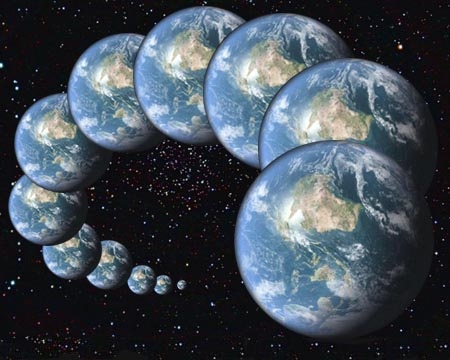
The original album cover was MC Escher’s print, Three Worlds. The point, I think, is that we don’t just live in one world. We are living in multiple worlds simultaneously, a timeless cloud of energies, perhaps even living multiple lives in parallel–or at least I am–and from time to time journeying into them, encountering myself in them and deriving a multiplicity of benefits from doing so.

Three Worlds, MC Escher.

Music is the vehicle of choice for me. Something about hearing an attenuated note dancing all the way to the edge of space, hearing a bass line erupting from beneath the ground, creativity utterly destroying predictability, screaming high notes ripping emotion from my chest, harmonies suggesting poignant intimacies even mimicking biology, lyrics awakening forgotten longings, buried images, synthesizing cultures and histories, awakening body memory, evoking lives un-lived, sending me far into the past or future. They become more compelling than anything else I could do.

As I catalog some of those lives, even trying to say what they are out loud or at least to myself, a theme emerges. I don’t fantasize about power. I am neither the occupant of the C-suite nor am I the attendant. I seek neither notoriety, adulation nor wealth. I am not a scientist or an academic. What I am is an artist…in almost all cases, a driven creative devoted to the art, whether it be music itself, poetics, monastic life, physical arts, ancient wisdom or the hieroglyphics of the future. An intrepid pilgrim journeying into the essential nature of things. Those other lives–are they from the past or future?–hover about me, weaving themselves into my consciousness intermittently, reminding me of the true dimensions and the nonlinear nature of reality. At times they help me realize the choices I’ve made in this life are made of the same stuff as the roads not taken. In this life, I become their channel. They interrupt me from time to time; they inspire me, overtake me.

Why is music relevant here? Because, as David Abram’s elucidated so well in The Spell of the Sensuous, the primal origins of language reside in the sounds of the natural world itself. The original words, the alphabet itself, might have been mimicry, imitating the sounds of the more than human world. I’m pretty sure it’s safe to say all music derives from the same thing. All instruments were once organic. So the evolution of language and music are rooted directly in the original sources of sound. And parenthetically, those sounds are disappearing . Most of what we hear now is anthropogenic sound, not unlike urban lights blotting out the stars. So music can take us down and in, way down into the thrumming, screeching, buzzing, breath-taking, expiring, creeping cackles and calls of the underworld, into the earth itself and the earth within.

Where was I going with all that? Oh yeah. I was going into the choices we make about which life we shall live. The rest of the chorus we bring along may be obscured, but my fantasies of alternate lives remain as repositories and reflections of whatever wisdom I may have gained and as consultants to this life, feeding that wisdom back to me. They are never fully silenced. Nothing we do can negate our imagination nor diminish the aspirations flowing between this material reality and any alternate scenario, nor the internal communication arising as a momentary pre-occupation with a more spacious possibility.

And anyway, all lives, if we are fortunate, lead to the same end, do they not? At least in the best of worlds they would. Every one of us would become the sum of that assemblage, deriving something of value from each, embodying a clear vision, unwavering passion and a pristine integrity of purpose. We would each have found our true voice and learned to act and speak as a channel for all the accumulated wisdom of multiple lives, past and future, accompanying and feeding us in pursuit of our unique version of being exactly what we are and nothing else. We would all enter tantric mind, the vast view of unlimited and unrestrained compassion and ever-flowing mercy, soaring and drifting like a condor, adapting, adjusting course with minimal effort on the shifting updrafts, surveying the landscape below, resting in the nature of mind, in the cracks between the lives we live and lives un-lived.

Our other possible lives are songs we are still composing, dances of memory recalling our primal nature. We can sing them to ourselves as we add chapters to this unfolding mystery, even as the great silence of our own doing descends upon this world. We can access our own dreams, ever pregnant and ever in labor, energies across time, across generations, a time-release of wisdom fueling this life, gently inching forward toward ultimate knowing.
Solidarity, Somatics and Psychosis

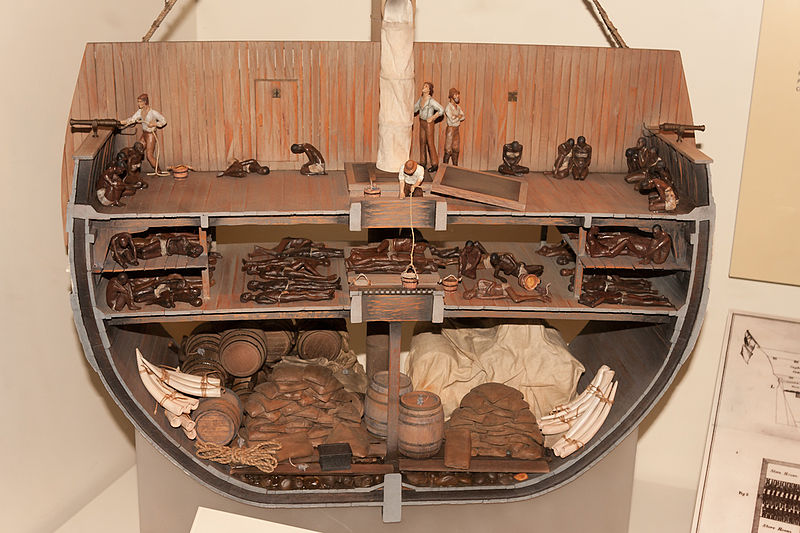
The classic design of the vessels transporting the kidnapped, the brutalized and dispossessed, the colonized masses brought from Africa to the New World, endures to this day in the forms and structures of patriarchal capitalism: social stratification, marginalization, income inequality, racism, limited or blocked access to the means of acquiring wealth, property, equal justice or the general benefits of living your own dreams. White people may still enjoy the freshening breezes of the upper deck, but the metaphor still applies to nearly all of us today. It is only a matter of degree.

Yet even in the darkness, the impossibly close quarters and squalor of the lower decks, the light of freedom and joy never died. Dislocation does not extinguish the longing for home, burning to this day in the literature, art, music and poetry of the oppressed. It is in these ceremonial forms of breathing together that solidarity is affirmed. That yearning comes to life in the reverence for the journey, the longing to recover the sacred, to resolve the diaspora with the free and full habitation of a transformed body in a new land, even if that land only exists as an aspiration in the hearts of the wanderers. 

Four hundred years later, it is not only the ones who bore the lash who still cry out for home. Neoliberal economics, by commodification, relentless extraction and by the absence of any loyalty to genuine community and because it refuses to regard the earth as anything other than untapped economic potential, renders all of us landless on the new plantation just as it does in the foreign territories, occupied, re-colonized and subjugated by the weapons of finance and law. If those fail, force is applied.

These conditions, specifically the hierarchies of privilege, the tightening grip on the lash, the systemic racism and the use of money as a bludgeon, the predatory financial order and all the other inequities accompanying its regime, remind us that we can lose anything at any time. And indeed, since our relation to earth is much more than merely to a potential source of revenue, everything is being taken from us, incrementally, every day. Manifest destiny operates upon the collective body now just as it did in centuries past upon the territories of the indigenous.

Modernity is a rationalization of the wild. It is a leveling. Anyone noncompliant; anyone who dances, breaks the rules, bends time, looks beyond the borders, meets with other bodies, dwells outside the boundaries of sanctioned connection, imbibes the nectars of the sacred, seeks wisdom from forbidden sources, cries out for justice or draws outside the lines may be indulged with limited tolerance. Some will be infiltrated, criminalized, surveilled, tracked, deported, bludgeoned, jailed or killed. The rest, at least figuratively, become fugitives.

These and others like them, the restless, underserved, disenfranchised and denied, the ones living outside today’s inverted definitions of “freedom,” and “opportunity,” the ones discarded by the “free market” are the ones deserving of our solidarity. But they’re not the only ones being damaged by the paradigm of dominance and exclusion. However the systems of power continue the privatization and destruction of the commons is our disenfranchisement in real time. 

The Freudian definition of psychotherapy is that in exploring and expanding the psyche we reclaim territory. Our wounds back us into corners and make us small. Our addictions limit our capacity for outreach and connection. All the consciousness work we do is to reclaim territory, to halt the narrowing and to expand our view. Modernity rounds the edges and flattens consciousness, narrowing focus to channel and facilitate the pursuit of illusory solitary happiness. Bayo Akomolafe calls it gentrification. When we open psychic territory, we push past the limits of convention. We enter the wilds, tearing through the fences of what we know. We recover expansion and breath.

As David Abram reminds us, the original meaning of psyche was about breath, the wind or spirit of life. When we (re) occupy the wilds, we are learning to breath again, to fully inhale the spirit of life and the common territory of choice and possibility we all inhabit. Sitting and breathing is the most elementary practice of contemplative traditions. In doing so, we typically only think of ourselves, our solitary and separate bodies and the spirit, or psyche, of our existence. We inhale, filling the self, partaking of the esprit, the ruach, the motivating energy of being, momentarily narrowing our focus to this body, this consciousness, this moment, cyclically relinquishing the territory of awareness we just claimed, releasing into the non-dual self, into the unity of all consciousness, eliminating all boundaries and expanding to occupy all the territory we abandon in our pursuit of Self. We infuse ourselves with psyche

Psychosis names an abnormal state of the psyche, a condition of separation from the essence of being. We become lost to the potential of cyclical expansion and contraction of spirit embedded not only in the simple movement of air, interacting with the flow of breath essential to language. The expression of sound, the original musical intonation of nature, the stops and starts, the shapes of the throat, lips and tongue are rooted in the original sounds and symbols of our relational self. They were orienting, defined community, interspecies dynamics and expressed the ebb and flow of interdependencies upon which group survival depends. To become, over millennia, progressively separated from and to lose all sense of relationship between language and natural world, to permit indigenous languages and their ways of knowing the world to be lost is a mark of the deepening journey into mass psychosis

We lose our breath until we can’t breathe at all.

Breaking free of the mass psychosis is not simply a matter of breathing or language. It’s a much deeper process of conspiring to access and know our bodies in relation to earth in a different way. The energetics of reductionism, scientific materialism and neoclassical economics drive a widening gulf between humans and nature, from the full-bodied, erotic conversations between humans and the seasonal textures and interactive exchange of wisdom held in sacred sounds and labels of obscure and unique mind-states for which there may be no equivalent in any other language.

Recovering indigenous history is more than recovering stories. Embodiment includes discovering the architecture of authentic freedom, sharing the history of our bodies, exploring the interpenetration of culture and somatics, coming to our full stature, bringing the diaspora home to place and community, recovering belonging, power and perspective, connecting with ancestral voices bending time and preserving the libraries of wisdom contained in disappearing languages.

As Alnoor Lada declared in a recent issue of Kosmos Journal, solidarity is a direct erosion of the structures of oppression, the powers anchoring domination. Reclaiming the past informs the possibility of changing the present. Acting from a different set of values, breathing together, healing from the mass psychosis by breathing with our ancestors, redefining our identities, reconnecting to deities rendered remote and quiescent is a direct affront to the forces of economic dislocation that would erase the past and reframe history as the solitary pursuit of self-interest.