
Reconciliation

Reconciliation carries an implication of justice, a balancing of accounts. In this case it’s an honest discovery of others’ suffering while realizing our own mortality, complicity and limitations.

Reconciliation carries an implication of justice, a balancing of accounts. In this case it’s an honest discovery of others’ suffering while realizing our own mortality, complicity and limitations. Reconciliation is a great humbling because intimacy with suffering is also a coming to terms with one’s own death. Most of the time we operate as if we cannot permit the intrusion of death into our view or conduct in life. Denying, misunderstanding or misrepresenting life or death to oneself at some point becomes another miscarriage of justice. This is happening at a cultural level and is an integral part of why we have gone so wrong on our environment.

I seek balance by looking at my assumptions and beliefs, whatever unconsciously corrals, misdirects and exhausts me of wildness, causes me to lose contact with the inexplicable essence of life, the spontaneity and unity of everything and especially my capacity for stillness. Narrow assumptions establish imbalance. They arise from a resistance to breakdown, an illusion of stability and a compulsion to preserve that illusion. In modern culture, instability is regarded as failure; yet ironically, that very stability is itself a distortion of reality. I have set limits on the degree, pace and character of change, all of which may interfere with or rob me of the benefit of failure, vision, connection or satisfaction. It is by failure that I discover balance. No imbalance, no homeostasis; only a brittle, narrow comprehension of complexity.

For more than 18 months I’ve been engaged in a close encounter with a physiological disorder, a rare condition, which coincidentally, like climate change, is 100% fatal if left untreated. It arises in the deepest realms of my physiology, where life itself is produced in its most elemental form. This non-malignant dysfunction is instability personified, inexplicable to the layman, buried in background assumptions about how life is supported. And though it can be understood and explained in modern medical terminology, it cannot be adequately addressed according to these limited terms. They are just concepts, equally applicable to your car or your computer. It has emerged as my personal monster. It cannot be smothered by knowledge, technicalities or reason. There is no certainty or way of turning it into a monument sitting on a shelf. It’s an outlier at the frontier of medicine. It’s marvelous in that respect, transformative, daunting, life threatening and mysterious. Reductionist framing can’t possibly tell the full story.

Likewise, the marvel of climate change can be explained in the same reductionist terms, which don’t—and can’t—plumb the depths of the behavioral dysfunctions, the flawed outlook, the mechanisms of denial at the heart of such a condition, except perhaps by applying the analogy of autoimmunity: we are attacking ourselves, making a seemingly inexorable series of self-destructive decisions. Or worse, life is threatening itself with extinction, promising to change, failing to change, repeating the cycle, carrying immense guilt and then sloughing it off by dissociating. These are the behaviors of an addict. Not all of humanity is addicted, but the addicted are leading the rest of us into the abyss.

The term ‘climate’ should be applied to the context of all life including the social, not solely to atmospheric/oceanic conditions or the many thousands of biological effects. The climate of earth is deteriorating, but this is so in every sense of the term, not merely the weather. If we traced the acceleration of the global warming effect, the loss of ice, the acidifying oceans, the pending collapse of the food chain, the Sixth Great Extinction, all are paralleled by the massive concentration of wealth at the top, the degradation of civil discourse, the corruption of democratic norms, the influence of money in politics, pollution on an unprecedented scale, feudalization of the economy and the degradation of all forms of capital. None of us can breathe. Indeed, deep in the center of the earth economy, the engine of true vitality is being silenced. If we addressed the social and economic context of earth adequately, emissions would likely fall greatly, whereas focusing on driving down emissions alone is clearly not working fast enough.

I’m not an addict, though I surely am complicit. I could (by some sideways logic) relate to COVID-19 as a random invader, an alien agent, a force to be reflexively resisted as if it has no intelligence. We can track its adaptive capacities, disassemble it and understand its transport and replication systems. It has no mind, yet it has intelligence. 

Beyond all that, I regard my personal disorder as an expression of consciousness. Which is to say it did not come from nowhere. I cannot extract myself from my environment or, as a Buddhist might say, extract myself from my karma, my spiritual continuum. There are known environmental (karmic?) factors linked to this disorder and perhaps unknown factors as well. I can’t be positive it’s unrelated to one of these. But regardless, it now functions as a self-generating disorder, an error in genetic logic. And since our entanglement with the environment is total, how can I ignore the possibility that not only was an environmental factor involved in my contract with this condition, but that I was complicit by contributing to the creation of that factor?

The dysfunction at the heart of this matter may be considered a corruption of purpose, an aberration, a crossing of elementary signals at an intra-cellular or genetic level. My immune system has turned against me, becoming a termite of my own construction, undermining the foundation of my life. Termites seek life or sustenance without consideration for any other life form or for the integrity of the host. They live as if there’s an endless supply of their prime resource. Does that sound a little too much like the human presence on this planet? 

There is no such thing as a termite regulating its appetites to ensure the sustainability of its host. Such an invader would be called a parasite. Given a choice, I would rather be a parasite than a termite. Unlike the virus, the guest in my body is not some alien presence. And my encounter with it is not accidental. It is Being delivering a message to this being. I did not ‘catch’ it at the grocery store. Although, considering the massive overuse of fertilizers, food additives, preservatives, considering nearly everything in most grocery stores is either genetically modified or sprayed by carcinogens, is full of either simple sugar or modified protein, maybe the grocery store has finally caught up with me. 

If I were to fully regard this disturbance as an emanation of self rather than as Other, I could regard it as a disturbance in my energy body, a gradual and unconscious—or worse–a careless failure to attend to my personal integrity. Current scientific knowledge may explain some of the mechanisms, but it cannot explain how it came to be and the prevailing treatments are not guaranteed to reverse it. 

I have undergone the standard protocols. But again, this doesn’t come close to addressing its true nature. It is buried and then covered over, like ripping out offending weeds in a garden, but not quite extracting the roots, followed by planting new seeds and expecting proper germination. And later, if and when the condition again crawls out of its confinement, we have other measures at the ready to suppress it again. I submitted to a second round of the treatment protocol because blood markers clearly indicated a regression. I gamed out the consequences of failure, the probabilities for dancing again toward the edge of viability, a subtraction from previous estimates of my life expectancy, the extent of interventions necessary to sustain life and the possibility of my body rejecting those interventions, all the way to the ultimate conditions of my demise.

As I delve deeply into the energetic realm, the interactive and potential counter-intentions reflected in successive or persistent manifestations, I am mindful of the different realms of knowledge expressed as its tenacity and my responses to it, continuing to be a drag on my wellbeing. I am reminded of the declarations I made at the time of my original diagnosis, the doorways of consciousness it opened, the fresh awareness, even agency relative to the quiet and not-so-quiet suffering around me every day, the purity of intention necessary to meet this disorder, to re-focus and get on with my life: the continuous inquiry required to unearth what Being is attempting to deliver to me or elicit from me.

I even sensed one of those imperatives was, at least partially, a consuming attention to personal happiness altering processes at the heart of this condition, deep in my bones. Indeed, an imperfect affair of the heart. I’m not fully clear whether the inner messaging is in opposition to this condition or the result of a direct encounter with it. Am I fighting it or becoming friends with myself? Am I reflexively opposing it or becoming more acquainted with its nature? Is this merely the only way I can digest the discord all around me in the world? Have I unwittingly invited this? Most likely, all of the above are true to a degree, as merely approaching the object of inquiry, whether as self or as Other, inevitably changes our view of it. In other words, there’s no such thing as objectivity.

Some of this reflective process is itself a symptom of the human disease, our belief in intellectual primacy, human centrality, the inviolability of science, an infatuation with our reflective capacities, all exercises assuming there isobjectivity. In the ancient world and now as we reactivate and interpret that wisdom, it is said that every culture, to accompany the thinkers and doers, must have its mentors and guides, the ones we call dreamers and mystics, the keepers of gnosis, retainers of the collective raison d’etre, the guardians of tribal history. I envision myself as a product of both, perhaps a flawed hybrid, perhaps entirely presumptuous. But nonetheless, pressing on to my own version of reconciliation.
Rage & Resignation

I’ve been in a rage since before the financial collapse of 2008. Well, actually, a good deal longer than that. Perhaps since Bush v Gore. OK, let’s say I was tuned into the truth about Bill Clinton before it became patently obvious: a neoliberal excuse-maker, prevaricator, manipulator, triangulator, blah, blah, blah. There was a reason he was called “slick Willie.” I’m not even mentioning Vietnam, Nixon, Kissinger, and the thieves and sociopaths of the GOP operating ever since the early 80s, 9/11, the Patriot Act, the Iraq War. 

Plenty of reasons to be in a rage. But never mind. If I just picked 2008 as a base, it was the bailout and Obama’s (or should I say Eric Holder’s) failure to stand up for the rule of law by never prosecuting or even stepping on the toes of the financial elites. Not one. That was when “too big to fail,” was unveiled. An amazing piece of PR. Now we’re pondering whether humanity is too big to fail. Spoiler alert: nope.

Over the past 10 years, this rage alternately morphed into despair, denial, resignation and dropout about the climate issue as we’ve witnessed one failure after another, one milquetoast policy after another and terminal prevarication. I even had some words for Obama (2012) about his pursuit of America’s endless foreign wars:

your words fall
like an avalanche of dry bones
once resounding against the sky
now empty echoing in our foundations
once the sinuous awakening curvatures 
of smothered and gasping values
now falling into an abyss 
of conflict and easy temptation
stunted flowers becoming bitter fruit 
they fall away from your stunned mouth
knitting together only shame and excuses
for all the death they foretell

I couldn’t have said so at the time, but about 2014, I reached the end of my rope when I went to congress to lobby for a carbon tax. If that’s not enough to pull the rug out from under any remaining spark of inspiration one might have, nothing is. It is and always was Kabuki, steeped in an august veneer of propriety, sanctimonious deliberation, the worship of barnacle-encrusted tradition, self-serving appropriation of mythology and rhetorical sleight of tongue. Dishonesty, thy name is Congress.

For a good while now we’ve been able to name the entire criminal gang, the ones most responsible for our predicament. We know what they knew and when they knew it. We know their tactics. We know who sold out humanity for profit, who has lied, deliberately and expertly clouded the issue and mounted massive misinformation campaigns. We know their henchmen and how they obstructed popular sentiment, cherry-picked and distorted climate data, attacked experts, threw faux experts into our path, sentenced billions of earth’s most vulnerable beings to deluge, displacement, deprivation and death. All expendable. The greatest crimes against humanity, bar none. The Holocaust times 10,000. Species-suicide promulgated by sociopaths. Not one of them has been seen or is ever likely to be seen in the familiar orange jumpsuit. 

But then, parallel to the rage, coexisting in strange symbiotic temperance, is my denial, my rage about having to be angry about any of this in the first place and my cynical desire to run in the opposite direction and live a life of careless oblivion—which at times gets the better of me. Resignation. And why shouldn’t it? I’m entitled to do that simply based on the fact that I’ve already lived most of my life, a simple life as it is now. I’m not wealthy enough to afford a real high emission lifestyle. Well, except air travel. There’s that. At the same time, living that smaller footprint life, I remain complicit. 

Even though my personal mitigating measures are so miniscule as to not even register on a lifetime scorecard, I fall back into my cultural upbringing commanding me to repair the world (tikkun olam), even though not making any mitigating gestures makes about as much negative difference as any positive difference I could measure by making such gestures. Perhaps these are the terms of a new post-activism. But post-activism cannot make promises. It can only expand to define the problem. And even that is a risky proposition. The dilemma lingers—believing we can individually make a difference, which allows us to feel good–without really making any real difference whatsoever?

Which brings me closer to the present moment. Having realized some years ago we are heading toward, or have already passed, critical tipping points guaranteeing the worst climate impacts and having exhausted my taste for barking up the same old trees and being painfully aware, despite all the promise of zero-emission technology (which was not catching up to fossil fuels fast enough until the appearance of COVID), of the nature and power of the fossil fuel lobby and the sociopaths of Wall Street driving the economic machine inexorably killing us, I stumbled upon Deep Adaptation, which doesn’t quibble about our remaining chances to throw any serious wrenches into the gears of Business As Usual or place false hope in persuasion by rational argument. 

Instead, Deep Adaptation names the Anthropocene as already an era of failure, a colossal crashing to earth. It could also be named the era of The Planet Striking Back. Unfortunately, our dithering miscalculations now threaten human viability. On some world which remains foreign to me, it may suffice to burrow deeper into Buddhist practice to discover non-confrontational or non-aggressive ways to address these issues, and they may well exist, but most of the time I lean more toward channeling rage into creative pursuits–and this is not a time to drop out. Fortunately, a significant cadre separating itself from the homo sapiens death cult realizes the only sensible response to climate impacts we’ve been failing to forestall for 40 years is by utterly re-shaping the ethos of human presence. 

Not that Deep Adaptation is a pioneering idea in this respect. There are collapse-aware people all over the world, still massively outnumbered by the oblivious, but nevertheless creating new institutions, small and large-scale adaptive and resilient communities everywhere and propagating new thought. Technology provides the means to accelerate these ideas as never before. Unfortunately, it also provides the same benefit to counter-narratives. But while those local actions and personal transformative ideologies are taking hold, the mass resistance and uprising necessary to slow down the carbon emission juggernaut had never fully made itself known until the twin conditions of the pandemic and mass resistance to systemic racism became the means to realize in a new way how one condition is all conditions and that justice for some cannot be separated from justice for all. 

Rather than an invading alien, Covid-19 has proved to be the monster under the bed, a goblin from our past and a message from the future, humanity’s zombie rejected Other. We are impossibly entangled with the biological world, having corrupted ecological codes to such a degree the system is coming back upon us. Covid has put us on pause, mirroring our failure, hubris, ignorance, arrogance and the inequality on which they all depend. And how do we respond? Reflexively, automatically, identically to the medical approach, pitting humans against all invasive organisms, the easy way, the only way we know: War! Demanding a reinforcement of human centrality and control.

‘All we know’ is a perfect example of how our responses to problems perpetuate the problem: War against the virus (social distancing and other measures) followed by a popular uprising against the measures taken to defeat the virus. To view the virus in this way is bring us even closer to the next pandemic…or at least a perpetuation of this one. We have no idea how to do with-nessing, stepping all the way back from our imagined control and being with, quietly enough, even if only for a moment, to realize we are the source of our deepening agonies and that the conventional model of responding is only making things worse. These are moments when resignation overtakes me.

Radical Impermanence

The tragic and glorious reality brought to us by the pandemic has been a daily encounter with impermanence, the poignant fragility of sentience and our exquisitely balanced interdependence with the natural world. The other dimension breaking into mass consciousness has been the fragility of conventional ‘modern’ life, from health care to food to energy and transportation. The stability of the economic system is deeply shaken, spurring an increasingly desperate autocratic ideology to prop it all up. Not only is life itself impermanent, but the way we live is also part of the illusion. As painful as it all may be, this is a healing moment.

The underlying violence of the financial system is starkly displayed. The matrix of global supply chains bringing us food, clothing, technology, information, energy, health and transportation is a house of cards, reminding us the way we understand the world requires overhaul. As if impending climate collapse isn’t sufficiently grave, COVID-19 has presented a similar diagnosis in an even more personal and immediate form: failure to act risks death. What could be more clear?

Over the past months, we’ve emerged from a dream and come crashing back to earth. ‘Progress’ has rarely mirrored our own frailty so clearly. No amount of Othering can disguise the fact that we are not other than the world itself. We are not exceptional. Life is an ongoing dynamic confluence of subjectivities between the human and the non-human. We live and die by its turning. Climate change has at least taught us that. We may have agency, but are not and have never been in control.

From our isolated redoubts, we witness the ongoing trauma of Business As Usual. The virus did not magically appear from nowhere; whatever its origin, it is Business as Usual. Yet it is also a liberating force, tearing the blinders from our eyes. Everything about our existence, individually and collectively, is about constructing temples of permanence. To paraphrase Bayo Akomolafe, by imposing the past upon the present, reassuring ourselves of what we already know, despite ever-increasing cost, we create Progress.

Strangely, in this light, progress is a conservative ideology and nearly all of us are caught in it. But conflating survival with permanence is deeply confused. By this definition, racism and sexism are progress; injustice is progress; inequality is progress; climate change, pollution, national boundaries and even war all sanctify permanence. All bow before the altar of progress. Our cities are monuments to atomized ritual devotion to money; our logistical frameworks & financial systems are all ordered and maintained on the presumption of permanence. The fossils fueling Progress come at increasing cost and decreasing benefit. The apparatus guaranteeing permanence requires increasing complexity… bringing increasing vulnerability. This what we are calling ‘normal.’

The increasingly deterministic ‘rules’ of modernity are etched deeply in our consciousness: who belongs, what roles are assigned, defining our relationship to the world. The exploitation, violence, expropriation, befouling of natural resources and the disenfranchisement at their heart are simply denied. The virus has undone those rules, cracking through the veneer of separation while revealing the true nature and depth of ongoing social and political dysfunction. The foundations of modern culture are shaken. Normal persists at a high spiritual cost, extracting meaning while channeling exclusionary ideologies, presuming superiority and mastery, even rationalizing mass death. Everything depends on our somnolent compliance.

We find ourselves squarely in the paradox of compassionate and generous impulses while remaining in anxiety about safety and scarcity. As the sword of impermanence comes slashing downward, slicing through our illusions, we see clearly the necessity and potency of standing for a planetary dialogue on the once cool, now overheated trauma from which we are awakening. In the face of mass de-compensation, we see the possibility of a new consensus arising.

Progress believes we can think our way out of this, as if we are here because of something we did. But, no. We are here because of what we are. The very fact that we think about problems is part of the problem. Our predicament is that we don’t know how to do otherwise. Thinking we are separate is how we got here. Do we now think we can think ourselves out of separation? Even ‘understanding’ is objectifying. There’s a time and place for all of that, but it hardly occurs to us that we can’t think outside the box. We are the box.

Engaging with impermanence, living it, is as close to thinking outside the box as we can get; seeing life as it truly is. A new freedom is immanent; in uncertainty and instability there is an enlivening of creativity, curiosity, spontaneity and new relations. In a field of continuously refreshing engagement, we aren’t compelled to impose the past upon the present; we are less inclined to sink into the quicksand of permanence. Imagining we can return to ‘normal’ is a profoundly false, desperate and ultimately doomed proposition—as if we should look away from what’s being exposed and reconstitute a façade without the substance required to ensure viability. Instead, everything is up for renegotiation now.

The lives we’ve lost become the fuel of our engagement. What the deceased have given us is immeasurable. They have cleared space for us to mourn, to explore fully our own discomfort, our deep unrest, the knowledge of work undone and the opportunity to see that work and to perform the tasks necessary to heal this world, our selves.

Borrowing from Vanessa Andreotti and Dani d’Emilia, we can reactivate our vital compass and return to genuine earth-centered experience; we can restore our capacity to feel ourselves as the metabolism of the earth while accepting vulnerability and discomfort as the desperation of our fragile egos. We can serve as guides, comforting each other as we navigate the agonies of throwing off our addictions and restoring our exiled capacities. Our strength comes from resting in the eye of the storm. Our grief becomes the fertilizer of creative imagination, inspiring and moving us to what is next.

With commitment and compassion, our actions will naturally arise and be naturally accomplished–though not without risk. We may imagine refuge in conceptual deliberation and meticulous formation of intent, but let us cultivate intimacy and seek guidance from non-conceptual sources, arising from the matrix of unmediated experience and universal relationship. May such actions awaken us from the prevailing architecture of causation.

The increasing velocity of change, radical impermanence, frees us from dependency on the archetypes of the dying paradigm. The coronavirus is a portal for healing. Let us move through it with enlightened action, spontaneously and freely arising according to generous and creative impulses. The more forcefully and deliberately we apply ourselves to preparing for the apocalypse, the more we release the weight of hope upon our labors, the more likely we are to delay that apocalypse. In denying hope lies the possibility of a future: the end of deifying progress, the false hope of returning to a world that is ending. Healing potential lies in expressing who we are without calculation, wholly and inclusively, entering a deeper field of impermanence, ever-renewing connection, expression, presence and engagement, with humor, humility and reverence.

The Pornography of Everyday Life

In 1964, Supreme Court Justice Potter Stewart famously noted that pornography is “hard to define, but I know it when I see it.” Therein, Stewart uttered and characterized for the rest of us, in perpetuity, the intuitive and pragmatic nature of perceiving and assessing the amorality and distorted values inherent in extreme and damaging relationships.

On the other hand, the implication of his statement is that authentic relationships represent the antithesis of the abuse that Stewart and what most of the rest of us “know” when we see it.

Today, there is much to see all around us as behaviors, attitudes, actions and inactions share the core of these common characteristics which, when examined in depth and taken together as they function in the larger social system, sure look and feel like pornography.

We understand the typical depictions of pornography as the degradation and humiliation of another, turning them into objects, images that conform to a distorted (even psychopathic) view of reality; the denial of and dissociation from another’s humanity and especially from one’s own entirely natural, creative and erotic impulses.

Pornography is the predatory exploitation of vulnerability, an indifference to suffering and/or deliberate infliction of emotional and physical violence. These are the features of the genre. In the current world, the intensity of the dialectic demanding resolution increases almost daily.

We also recognize that damage to the victim directly reflects the depravity and the denial of the perpetrator’s own humanity. Most important, we commonly understand the objects of all these twisted expressions are women. The female is the one who is almost universally degraded, exploited and turned into an object. She is the one onto whom the pornographer projects his pain, his own humiliation and denial. She is the one who is torn apart, chained, turned into a resource and a receptacle, reduced to a purely functional part. She is silenced. Her identity or nature is not of interest. She is reduced to an actress playing the part of a living person.

It’s commonly noted, whether true or not, that rape is not so much about sex as it is about power. It’s an extreme denial of another’s reality, personal safety, needs and very existence. The pornography industry has always included in its routine product the depiction of domination, humiliation and simulations of rape. In its most extreme forms, these include imprisonment, torture and even murder.

The killing of nature is also a metaphor pervading modern American culture; the killing of the natural world, our intrinsic nature; the transformation of the natural within each of us to conform to cultural imagery establishing the patriarchal authority structure, prescribes thought, behavior, preferences and which proscribes the instinctual, the relational, the authority of our individual and unique lived experience–and the erotic.

The killing of the natural world takes place daily in myriad ways and venues, all of which take their toll on the tender hearted, the naturally vulnerable aspects of our nature. Instead, we are subjected to an onslaught of messaging to hate dependence (poverty, disability) and the interdependence it implies. The deliberate cruelty on exhibit every day during the Trump presidency and particularly now in the midst of the pandemic is a further denial of interdependency and vulnerability.

Look around you. Are we not seeing the spilling of rhetorical abuse upon us every day? Are we not witnessing Trump gaslighting, defending, extolling the aggressive and predatory economy, the turning of public goods into private gain, selectively rewarding his friends with vital resources while exploiting vulnerability for political gain? Are we not seeing a vaudeville review of sadistic amorality, defensive self-orientation and denial of responsibility coming daily from the Pornographer-in-Chief in the White House briefing room?

While the most immediate effects will fall upon unnamed and yet uncounted numbers of deaths as a result of his self-serving view, the most pervasive and destructive form of this violence is to our primary (and primal) love affair with the natural world. In the current case, the reflexively embraced metaphor of war is adopted to reinforce allegiance to an authoritarian ideal by framing our relationship with the virus as a manifestation of the natural world. This is 9/11 redux. This is the extremity of the Anthropocene. No further consideration is required, or even necessary.

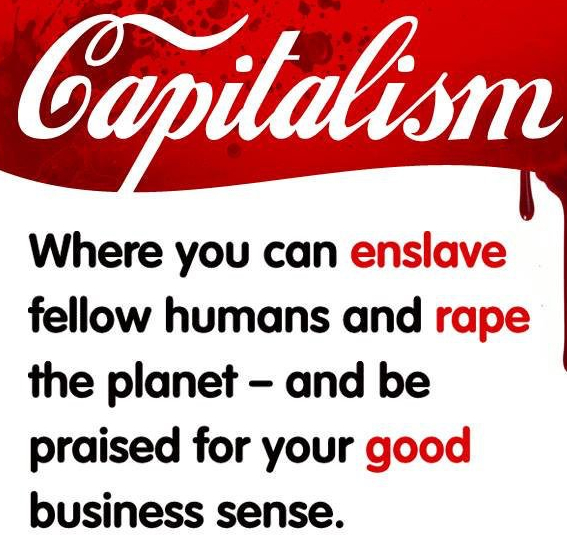
The objectification of nature, the ideology of dominance and control, the increasingly coercive practices adopted by those whose routine intent is invasion, colonization, extraction and profit is ultimately dehumanizing to us all. Surely you’ve noticed–or perhaps even experienced–how the Trump mafia is facilitating PPE and medical equipment manufacturers to treat their customers as resources, slipping the ‘market economy’ shiv between our ribs during a state of  emergency. This is pure exploitation of vulnerability. No wonder we so often see these acts described as rape. And if someone dies as a result, too bad for them.

The relentless expansion of such exploitive practices with minimal or no regard for the violence that occurs in their wake is of a piece with the pornographic denial of the Other. Neither love, passion nor compassion ever enters into this equation. There is nothing remotely relational, erotic, sacred or even very creative about the single-minded trading of human capital to sustain a lifestyle that systematically murders the goddess of nature within and without. We have been warned many times already. Yet even now, our panic and narrow war-like response to this virus is of a piece with continuing practices now threatening our existence.

The monetization of relationships in a world of constant and highly sophisticated media messaging manipulates, guides and entrains our appetites and emotional responses, interrupting and incrementally substituting for authentic instinctual guidance. We are increasingly remote from the knowledge of our own bodies. Meaning is strip-mined from our lives, divorcing us from the plain and simple meaning lying within the material experience of being alive. It is no wonder that so many see evidence of a pandemic spiritual crisis. The eruption of compassionate humanity we see all around us now serves as a stark contrast to the prevailing condition.

The response to COVID-19 by the pornographic White House is also of a piece with the wishful thinking of certain media propaganda outlets, who for decades now reflexively substitute facsimile for authenticity. That will take its toll. Perhaps this virus will, when it’s finished killing a few (100,000?) of us, also wake us up to the magnitude of our hubris about nature and remind us of our subservience. But even if such a message gains footing in the culture at large, it will be ignored or resisted by the pornographic GOP cult of cruelty and death.

The crisis of authenticity is most evident in the young, who for their entire lives have been subjected to simplistic and demeaning stereotypes about they way things are. Seeking false refuge in the material and the rational, certain of our superiority and goodness, kneeling to the commands of narcissism while denying the shadow parts of our selves, we day by day are losing control over our own lives: these are the dimensions of a dissociative process also capturing the young.

They are maturing into a world that deprives them of security, optimism and spirit. In a world of increasing economic coercion, especially now, the chickens of debt slavery, the transformation of America into a low-wage nation, the unraveling of the health (s)care system, the social safety net, the constant assault on the compact of community, the privatization of the commons are all coming home to roost. The message is all too clear: you are only matter; your being, your spirit does not matter; you are a resource to be exploited like a forest or a petroleum deposit. If you resist, you can be cast aside; there will be someone else to take your place, for less. Only ownership matters. That, and inherited wealth.

The arbiters of this imagery, those who craft and trade in and sculpt it in its various forms and manifestations are white men. The denial of nature, the assault on the feminine, the domination and exploitation of the earth is planned and executed by white men. In doing so, they not only deny their own nature, the risk their own future.

When we contemplate a mass killing (another form of pornography), we are grateful the  killer is not us, that we have not been subjected to a seemingly random violent act. The killer was the one disturbed. What could have gone wrong with him, we ask? Even if we have no intent to fully analyze him, the raw facts of the case are often evidence enough that he was caught in a matrix of obsession, denial, hatred, pain and rejection.

The murderer kills a rejecting parent, their own desperation, their own intense pain. They murder impotence, the loss of control they never had. They murder innocence, their own nature, their own lost inner child. They lash out at everything “out there” because they cannot live in a landscape of uncontrollable emotion, dependency and fear. We’ve known for a long time he is a symptom. What of the treatment?

We live every day now with the pornography of extreme wealth, the narcissistic entitlement of the economic elite and their secretive machinations. We live with the pornography of massive tax avoidance combined with the infection of the political process by money, the backlash of patriarchy in the form of ever more aggressive forms of misogyny. And, day by day, as if its various forms are separate from each other, the appetite for (and escape into) online pornography reaches new heights. Surely we know all of this when we see it every day.