The Easy and the Impossible

But honestly, tell me you can look into the eyes of stranger or even someone you know intimately without having this experience. Maybe not all the time, but with rising frequency. What do you see? A desperate search for signposts or guidance or truth or any modicum of trust?

My ex-wife used to say sex was either easy or impossible. There was no in-between. That was quite a declaration coming from a sex-therapist who helped people work through buried assumptions and emotional obstacles to healthy sexual relationships. I’m thinking the same principle applies to writing. It’s either real or it wanders off into strange and strained territory to become something else, like a mannequin, needing more and more layers of make-up to appear real, when actually, contrivance can never replace the spark of life. Even so, breaking through contrivance to live in reality requires more than a wish.

So it is with living nowadays as well, apparently. As the unraveling around us continues, the despair deepening and the warnings arising from diverse quarters, I spend another restless night processing the turbulence of the day in dreams, sensations, and images. I awaken without words to frame new (or ongoing) feelings, rising with aches and pains, old and new. I, like everyone else I suppose, continue to ride the rising tide of challenge and increasingly complex and fraught sense-making going on everywhere. In fact, it seems we’re all being continuously triggered and probably don’t even realize how vulnerable we’ve become.

I can’t look at anything anymore, food or energy prices, the tsunami of waste, the latest manifestations of systemic racism, nihilistic political agendas, vacuous declarations of so-called experts on cable TV, the creeping security state, looming mass evictions, the arrogance of empire giving oxygen to old tropes, the economic puppet show, the building wave of global (and domestic) refugees, the deepening divide over vaccination and especially the accelerating frequency of extreme weather events without looking at everything. Earth has a fever—we are all under its sway —and our behavior is approaching delirium.

I am unable to keep the blinders on or act unaffected. More and more comes packed into less and less, such that even the smallest encounters, like a simple hello, are loaded with import. If I applied the original adage to my current circumstance, I’d have to say with civic dialogue descending into chaos and governance hanging by a thread, with most everything we take for granted in upheaval, that life is approaching impossible. And it’s impossible to look away. If there is an answer, it’s to meet our vulnerabilities with unflagging courage, not retreat into a cocoon of falsehoods, to permit ourselves to be exposed, just as any sex therapist would suggest, remembering that hastily following impulses is a dangerous path and that love is stronger than fear.

But honestly, tell me you can look into the eyes of stranger or even someone you know intimately without having this experience. Maybe not all the time, but with rising frequency. What do you see? A desperate search for signposts or guidance or truth or any modicum of trust? Knowing we’re all undergoing a something in common, everywhere from your bedroom to your community to every place beyond, we are thirsting for the sparks of life breaking through the mirrors, the robotic or performative nonsense, and we are drawn to them instantly.

Amidst all the talk and the growing awareness of our predicament, I wonder if what I am feeling (and seeing) is the true nature of collapse. I can’t imagine how you are metabolizing this ongoing trauma overtaking us, but it’s become a pandemic in its own right. Not only are our primal rhythms under assault, but water cycles, growing seasons, the jet stream, soil viability, ocean currents, all are wavering and fueling increasing damage and desperate grasping for stability. All the boundaries that define us, most of which are enactments of coloniality, are blurring in a storm of converging data from biology, neuroscience, psychology, and spirituality, not to mention political ecology.

We are trying to birth ourselves into an as-yet-undefined world beyond right and wrong—or at least we’d better be– because nearly everything previously defined by the sham religion of modernity as right and wrong is part of the prison in which we are all held. Right and wrong are being brutalized, stripped of meaning, contorted, ignored, rendered inert by capitalism and the nation-state, shuttled off to a state-run home for advanced cases of moral equivocation. No wonder the maps are blurring and there’s extreme behavior all around us.

Are we seeking something new or are we reclaiming something as old as earth itself? Are we diverging of converging–or both? As a white person living in a (formerly?) white dominated world built on the bones and ashes of non-white cultures, where do I look for guidance? The world I grew up in, when the polarities seemed clear, when it was easy to say which side I was on, is dissolving. How we think, how easily we are triggered, the default psychic frameworks we relied upon are under reconstruction. Justice and injustice. Racism and so-called equality. Authoritarianism and so-called democracy. Sexism and so-called gender equity. Even war and peace wear rhetorical masks mocking their convergence. We can’t not notice that virtually every principle we once thought clear, activism, the definitions of problems and especially solutions all exist within the framework of modernity now under challenge. That template, with its innate violence, exclusion and systems of control, arbitrarily drawn international borders, sacred systems of law, language, commerce, faith, ritual violence and spirituality is just not working anymore.

Where are the signs of life coming from? Who knows better than anyone about the malignant appeal and tenacious grip of modernity? Who stands in starkest contrast to whiteness as the standard of humanity? Who embodies the visceral legacy of enslavement, throwing white privilege into high relief, and gives voice to the necessity of becoming a fugitive from the hegemonies of western culture? What happens to our bodies as conflict rises, as we perceive deeper layers of conditioning, peering past the constrictions of cultural and linguistic structures to a multi-colored coat of a new way? Even if I declare a tenuous independence, that my body is not for sale, to be occupied or even subtly directed, that my body cannot be taken or its treasures plumbed as just another profit center, I don’t yet fully know what that means. I only know that going deeper into the sensations of change with a willingness to notice and feel everything is required.

Very little is easy anymore, not even hello, but we have yet to arrive at a new functional baseline. But one thing is crystal clear: the impossibility of modernity, which has taken 500 years to realize, externalizes more and more and offers only faux benefits increasingly removed from lived experience. Quo bene, as they say. Who still benefits from that ongoing construction? Only a vanishingly small minority.
The Eye of the Storm

The state of gnosis is defined as an arrival of total awareness, a direct and often sudden experience of reality, wholeness, some spiritual truth beyond typical conceptual understanding. Gnosis is an intense and total immersion in the unity of divine nature. Few could say they’ve ever had such an experience nor anything close to such complete knowing, a burst of non-dual presence, whether lasting one hour, one minute or even one second. 

What if we’re all having that experience right now? What if this mystifying unveiling, the cataracts of modernity being stripped from our eyes, the complex system of global culture stopped in its tracks, the open wounds of racism, white supremacy, inequality and of highly discriminatory structures of social control exposed before us, not to mention the exhaustion of the idea of human supremacy over the natural world, reductive medicine, the agonies of earth, the collapse of the legacy energy system and even the specter of extinction appearing on the horizon are together generating a mass experience of wholeness? 

What if we’re all standing on the threshold of our own personal breakthrough moment, wrestling with the sensations, feelings and barely comprehensible observations, realizing the full nature and impact of interdependence beyond any theories, contrived models or imagination? What if we’re taking our first steps into a deeply uncertain future already knowing far more than we realize? 

Gnosis transports us into the heart of emergence, interdependence and universal relationship. All phenomena, including thoughts, feelings and sensations are all one and all now. We are standing against a tsunami of perpetual stillness, a continuous tidal wave of creative interdependent unfolding that has no beginning, no end, no center and no limits. Boundaries dissolve. There is no distinction between the inner and the outer universe. Ego is lost, subsumed in radical entanglement with everything. Is that not the experience of this moment? Despite our struggles to make sense, our separate identities become gauzy and indefinite. Even more importantly, much as we might wish to cling to hope as a lifeline to the future, what confidence can we muster in the face of such a muddled vision?

Spaciousness, however, abounds. Time slows down, awareness of all ‘events’ is acutely and vividly focused. We might well imagine such experiences are extremely rare. And they are. They can be unsettling. But this moment is unprecedented. Beyond the safe confines of our carefully constructed identities, unexplored capacities are emancipated. The familiar is upended. We are instantly seduced to tease, to assimilate, interpret and to act. 

Gnosis is commonly a religious or mystical experience. It’s a spontaneous encounter with truth beyond comprehension. In modern culture, it’s not acknowledged nor is gnosis well understood or even regarded as a worthy pursuit except in mystical circles, as though the rituals of inquiry, the visionary pathways have been lost in antiquity. But that’s just the way we like it, isn’t it? We don’t have to think for ourselves. In fact, instead of piercing our accumulated filters of bias, bewilderment and fear, plenty of people seek refuge in nationalism and religious dogma, believing them to be bedrock values. But we are far beyond these now. We are wandering in primal terrain where such accessible anchors can only take us deeper into delusion. We are being challenged to rewrite the source code for human presence on the planet. 

We are arrested, with no sign of easy or proximal solutions as we share this sensation of falling together. Loss and instability reign, the personal and collective parameters of normal are eroding without any replacement reality in sight. Even though corporate and political forces seek to take control in this vacuum, we have not yet stepped into the new. The point of gnosis, however, is to realize we already know. We must become our own sense makers. We cannot wait for someone else to decide for us. 

In the midst of this transition, instead of confusion, fear and reactivity, we are on a mass unwitting collective and individual journeyThere are few authentic leaders here, only pretenders. Our antipathy toward any kind of limit is on full display: a pandemic freely driven by its own intrinsic directives, climate change, economic disparity, the sophisticated wealth extraction of late-stage capitalism, a persistent and dispiriting assault on truth, the rise of theocratic fascism and environmental destruction are all stripping us to our raw essenceWe can see the macro. Now it’s time to attend to the micro. It is our responsibility to seek guidance from within, to track the subtle and nuanced flows of feeling with focus and rigor and to respond in real time to the truth of our relationships and to the destructive nature of so many granular decisions of everyday life. 

Who are we to become? We may have only a vague notion of how to process what is emerging, let alone what is beyond this moment. We do sense there’s no way to dissociate or avoid what is happening all around us and within us. All we truly know is the intensity. We have no choice but to be here and totally in it. Instead of resisting, going through familiar motions and attempting to reconstruct systemic collapse, suppose we were to let go and stand in the eye of the storm, watching all resistance dissolve as we sink deeper into the shifting currents of change?

Gnosis is an entirely different take on agency. The rules don’t conform to conventional physics. We are becoming the world as the world is becoming us—which has always been true, but only now becoming more visible. Complete interpenetration with no static outcomes is the new rule; we are enmeshed in an unpredictable eternally transformative process of inter and intra-active engagement with no logic to contemplate, no rules to apply; nowhere to go for advice. 

Gnosis sees all events from a vastly greater perspective. Linear causation is not recognized as a prime directive except from the narrow view of a very limited array of events. From the perspective of gnosis, making significant decisions on such analysis is foolish and self-destructive. To sit still with all the feeling, confusion and not knowing of this unfolding drama is the current challenge. Now everything matters; the smallest stimuli, the smallest adjustments, how we make sense of our world, all matter more than ever. This will determine who we become.

We’re waking up from a narcissistic, self-destructive dream. Waking into gnosis cuts through the illusions, the complexity, the inertia, the havoc and tenacity of modern culture. We’re in the wilderness now. We’re being given a chance, perhaps a last chance, to find our way. 

Walking on Lava I

The end of the human race will be that it will eventually die of civilization.

                                                                                    — Ralph Waldo Emerson

(excerpted from Dark Mountain Manifesto)

Those who witness extreme social collapse at first hand seldom describe any deep revelation about the truths of human existence. What they do mention, if asked, is their surprise at how easy it is to die.

The pattern of ordinary life, in which so much stays the same from one day to the next, disguises the fragility of its fabric. How many of our activities are made possible by the impression of stability that pattern gives? So long as it repeats, or varies steadily enough, we are able to plan for tomorrow as if all the things we rely on and don’t think about too carefully will still be there. When the pattern is broken, by civil war or natural disaster or the smaller-scale tragedies that tear at its fabric, many of those activities become impossible or meaningless, while simply meeting needs we once took for granted may occupy much of our lives.

What war correspondents and relief workers report is not only the fragility of the fabric, but the speed with which it can unravel. As we write this, no one can say with certainty where the unravelling of the financial and commercial fabric of our economies will end. Meanwhile, beyond the cities, unchecked industrial exploitation frays the material basis of life in many parts of the world, and pulls at the ecological systems which sustain it.

Precarious as this moment may be, however, an awareness of the fragility of what we call civilization is nothing new.

‘Few men realize,’ wrote Joseph Conrad in 1896, ‘that their life, the very essence of their character, their capabilities and their audacities, are only the expression of their belief in the safety of their surroundings.’ Conrad’s writings exposed the civilization exported by European imperialists to be little more than a comforting illusion, not only in the dark, unconquerable heart of Africa, but in the whited sepulchres of their capital cities. The inhabitants of that civilization believed ‘blindly in the irresistible force of its institutions and its morals, in the power of its police and of its opinion,’ but their confidence could be maintained only by the seeming solidity of the crowd of like-minded believers surrounding them. Outside the walls, the wild remained as close to the surface as blood under skin, though the city-dweller was no longer equipped to face it directly.

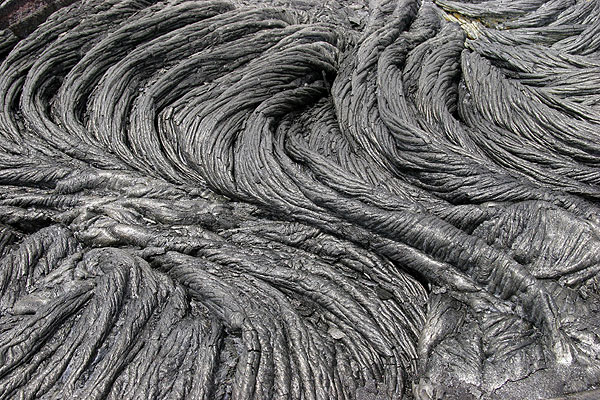
Bertrand Russell caught this vein in Conrad’s worldview, suggesting that the novelist ‘thought of civilized and morally tolerable human life as a dangerous walk on a thin crust of barely cooled lava which at any moment might break and let the unwary sink into fiery depths.’ What both Russell and Conrad were getting at was a simple fact which any historian could confirm: human civilization is an intensely fragile construction. It is built on little more than belief: belief in the rightness of its values; belief in the strength of its system of law and order; belief in its currency; above all, perhaps, belief in its future.

Once that belief begins to crumble, the collapse of a civilization may become unstoppable. That civilizations fall, sooner or later, is as much a law of history as gravity is a law of physics. What remains after the fall is a wild mixture of cultural debris, confused and angry people whose certainties have betrayed them, and those forces which were always there, deeper than the foundations of the city walls: the desire to survive and the desire for meaning.