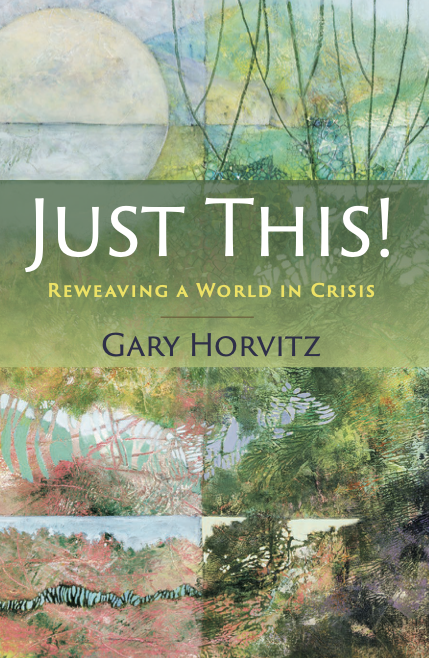
The world is in spiritual crisis, a destabilizing social, political and ecological storm. These are the self-inflicted wounds of separability, rationalism, materialism and individualism, the ontology of ‘shoot first’ instead of surrendering. Beyond ideology, supremacy and the self-made fortress of an objectified world lies a new vision. Just This! explores the micro-and the macro experience of non-duality as the weave of a different world. Non-duality is the seamless, relational attunement of the whole. It transcends binaries, hierarchies, and the hallucinations of modernity. Non-duality is the nature of nature, our nature. Its openness is vast, inclusive and suffused with compassion. A responsive and responsible culture of life is the only sustainable path to livable future. Just This! looks through the eyes of non-dual ‘tough love’ to address law, sovereignty, migration, property, finance and development in the Anthropocene. An ecozoic era will grow out of dualistic capture to rituals of recovery, to breathing with planetary rhythms, and a transformation of global institutions. A thousand generations await. Let us be ancestors worthy of their regard.
Tag: Buddhism
Nonduality & Meeting the Meta-Crisis IV
The Crisis of Being
March’s Parts level is the most elementary. But the examination of raw data cannot by itself get us where we need to go. If we make inferences from data, ecological simulations, stripping out social, economic, or political conditions, what we get from NASA, the USGS, the UNFCCC, is a systems level report on climate and planetary overshoot. If we look to social science, economics, population studies, politics, public health, or the American Psychological Association, we get reports implicating a much wider field of crisis. If we back out even further to an evolutionary view, we get much closer to a contemplation of the unquantifiable, something much deeper than objective measures can reveal. Buried in the human psyche, nonduality merges the philosophical, cognitive, subjective, inter-subjective and spiritual dimensions of a micro and macro-crisis of Being.
That crisis of Being is the dualistic view itself. It has accompanied humanity throughout history, most recently accelerated by the Enlightenment. At its heart is what Terry Patten calls the Cornucopian Myth of endless material abundance. Each of us is integral to its creation and propagation, most especially to the modern supposition that we are rational actors separate from the world, that ‘problems,’ disturbances, imbalances, are identified and can be solved in a techno-bureaucratic way. The fact that many now identify duality as a mother principle is a long-overdue signal of its demise. Indy Johar speaks of duality as self-terminating; it contains the seeds of its own demise. To fully engage with nonduality, not to mention science, helps us see the depth of our entanglement with each other and the world and how deeply we are embedded in dualism. It is our default first principle, the primary delusion. We are automatically dominated by it.
Dualism is reaching exhaustion. There seems no end to the negative externalities, the violence it has wrought and continues to wreak. We want to believe the ethic of Enlightenment, rationalism, Cartesian dualism, can be uprooted, or at least that we must override it before we destroy ourselves. Despite all the benefits we now take for granted, we begin to realize that the world has never conformed to such an imposition and is now demonstrating in ever larger and immediate ways this flaw in our framework of reality. Continued exclusive reliance on duality as a first principle does not serve the biosphere. Persistently seeking solutions based on the premises of the past are only accelerating our descent toward collapse. To remain actors shackled to this Prime Directive took on the character of insanity long ago.
Since the world reflects to us that it is beyond our control, we must dispatch a critique that regards the world as manageable. Since political commitments derive directly from epistemic conditions, we need a radical reformation of our critical framework, not a renewed resolve to address single issues in tired piecemeal fashion. That is the sense in which duality is the crisis, because it induces us to misinterpret the nature of phenomena, which then gives birth to secondary delusions. We may find guidance in this unattributed observation, “If you don’t have a critique of capitalist modernity, you are contextually irrelevant. If all you have is a critique, you are spiritually impoverished.” In other words, a grasp of the nondual view is a platform for action required to unwind from duality in authentic, spontaneous, creative, and inclusive ways.
The Great Unraveling, as the Post Carbon Institute calls it, in its cultural, philosophical, metaphysical, economic, political, and social dimensions, is entirely the consequence of the dualistic view. A swamp of delusions is inexorably swallowing us up in an apotheosis of profound conflict. The familiar signposts that help us address it are disappearing. We must consider ourselves lost. I am often reminded of an observation made by Tom Atlee, an environmental, peace and social activist:
Everything is getting better and better and worse and worse, faster, and faster.
Yes, there have been a multitude of benefits flowing from the dualist view. And there may be disagreement about what is getting better and what is getting worse. But ‘faster and faster’ does not go on forever. Duality has brought with it rationalism and innovation but has also brought privatization and the growing weight of externalities. Add to this the more recent relentless, destructive, and increasingly intrusive commodification of even basic human needs (seed, land, and water), pandemic anomie, the surveillance state, the loss of anonymity, all of which decontextualize us from the sacred, from history, further separating us from nature and our nature. These aspects of the current social order are not accidents. Their roots may be subject to debate, but they are clearly sustained and amplified by an increasingly sophisticated daily avalanche of sympathetic stimulation, algorithms inducing repetitive dopaminergic behaviors along with deliberate deployment of the strongest human emotion, fear, triggering instinctive acts of self-preservation. All of it fosters continued separation. The current order propagates mass neuro-biological arousal and a deepening impairment of our decision-making apparatus, all reinforced by increasingly coercive forms of monetary extraction.
There is only one perpetrator of evil on the planet: human unconsciousness. That realization is true forgiveness. With forgiveness, your victim identity dissolves, and your true power emerges – the power of Presence. Instead of blaming the darkness, you bring in the light.
— Eckhart Tolle, A New Earth
Continuing regression into tribalism and fundamentalism of all kinds, religious, nativist, economic, ethnic, social, and ideological, threaten to unravel built-in constraints on the current social order. Bigotry, whether ethnic, racial, nationalist, or religious, is fundamentalism. All of it is conceptual. It may be explained by science, but none of it is supported by science. The nature of the conflict has become an aggressive, ‘my fundamentalism is stronger than your science.’ The world is either parsed into sharpening binaries to define allegiances in the global culture war as truth itself is systematically assaulted. All conceptual frames are inherently divisive. To express the nondual view is to step entirely out of every category of choice even while acknowledging the underlying motivations.
Since we continue to treat the natural world as a soulless resource, we believe we are entitled to continue cannibalizing it. We live and die at the altar of Growth. We are assaulted by the mantra of a positive future even as we see it being torn from our grasp. There is pervasive disenchantment with the world and a deepening regression into purely subjective pursuits of well-being. This is March’s Parts process, the most reactive character of culture to the illness afoot, becoming a profoundly malignant mass psychosis.
The compounded effect is the atomization of culture. We are turned into isolated units of production and consumption, while Process, the trust, unrestricted learning, community, collective resilience, social cohesion, and faith in our collective capacity is ignored, undermined, or even suppressed. Backlash is also afoot, wherein elites unleash the secret police (with and without badges) tasked with locking in the social order, primitive as it is, locking out dissent, radical new ideas, and the possibility of a more equitable balance of resources. According to Yanis Varoufakis, the former finance minister of Greece, a new techno-feudalism is imposed, further stripping meaning from life. If we do not see the psychosis, we are complicit with it. Even when we do see it, it’s virtually impossible to extricate ourselves from it.
We are trapped in a context of meaninglessness, defined by consumerism. But the underpinning of that ethic is that we’re destroying every fabric of life, every aspect of the biosphere. We are infected by a toxic positivity—as well as our entitlement to reap the benefits; the belief that all problems can be solved by human rationality, human exceptionalism, the reduction of reality to statistics. This is the source of the need for ‘hope.’ —Alnoor Lhada
Not that we must redefine hope away from its modern origins. In Lhada’s definition, hope becomes a product of disillusionment and a tool of disempowerment. It’s a derivative delusion distracting us from–or even rejecting–the present, a reversion to an imaginary future based on helplessness and a muddled comprehension of the present. I don’t mean to be simplistic. Hope is quite complex. It could be called fatalism, a conceptual escape, a failure to source our action in embodied experience. There’s an element of denial in hope resulting from an inadequate diagnosis, clinging to an idealized future, a rationalization for what we do not understand.
The nondual view is immediate. Its fullness leaves nothing out. It arises independently of time; we are unconcerned with the past or the future. We are concerned with the timeless. From that view, there is no room for hope. For that matter, there is also no room for fear because both hope and fear draw us away from the immediacy of meaning. Without meaning, we are adrift, “prisoners of context in the absence of meaning,” as Lhada puts it. Nonduality—choosing presence in the presence of hope and fear—becomes the only reliable source of meaning.
The collapse of faith in institutions is real, a result of deliberate intent. Extreme income inequality is the result of deliberate manipulation of tax codes, law, and money. The rising consequences of climate disruption are a result of deliberate poisoning of civic dialogue. War, hunger, and nativism all reflect intentional imposition of systems of dominance, exclusion, and neglect. If we witness the destruction of any common standards for truth-based dialogue, it is the result of intentional manipulation of information systems for the sake of profit over people. On and on. Even the definition of legitimate knowledge is a battleground. This is the world regressing into the most materialistic cognitive frame of reality, not quite, as March would have us believe, edging into the liminal space between the Parts and Process level of engagement with life.
Poverty is the result of manipulation of money systems. By money-power, we mean the constellation of people, organizations, rules, and resources that control the form, issuance, distribution, and demands of monetary systems. We have been manipulated and coerced by that money-power to objectify, commodify, dominate, compete with, externalize, use up, trash, discard and feel numb about life on Earth, including each other’s lives.
Humankind is honed to a wheel of unending labor. We are captivated by the image of an arduous path of redemption and salvation. We are captured by an impossible utopian ideal: ultimate deliverance into a life of abundance, prosperity, and leisure. Indigenous cosmologies may be exceptions because they are not slaves to growth, but the basic story of modernity is a dogma of separation, aspiration, ascension, and ultimate release from the suffering of the world. Growth, which does not account for impacts on life-support systems, is pursued with the magical thinking of religious fervor. Virtually every aspect of modern culture is predicated on this principle. Economic and social philosophies bend at the knee of perpetual growth and align with a top-down spiritual ethic of continuous improvement.
Progress is the taproot of duality, the primary fuel of the meta-crisis based on the centrality of the individual, an aspiration to become something we are not yet, to nurture and enhance personal well-being at the expense of the collective. The growth principle of perpetual expansion, improvement, and innovation is aligned with and reinforced by religious dogma. In that world, we never fully arrive. We strive to get there, to fully inhabit our exceptionalism. Standing still, the end of aspiration, the end of growth, equals death…or even hell. In Buddhist cosmology, never having enough ishell. The spiritual ideal remains perpetually beyond our grasp. For many, it may only be realized upon death. On the other hand, realization is depicted in Buddhist science as a shedding more than an accumulation, an unwinding, a return to innocence, a relaxation into union with the world, becoming who we are from the inside out. What’s more, in the upper reaches of spiritual accomplishment, instantaneous realization is immediately accessible. There is no attainment. It is here, now.
It is impossible to achieve authentic sustainability with our prevailing economic, political, and cultural operating system if we continue to see the planet as dead matter upon which we impose our organizational talents. In late-stage capitalism, this assumption has become an unsubtle (and de-stabilizing) self-destructive form of control: inverted totalitarianism. The demise of the world is thus prophetic, self-fulfilling. Under the current corporate-state regime, the corruption and termination of planetary life-support systems is pre-ordained.
The nature of reality, the nature of mind, is the opposite of the growth imperative. The whole does not grow, does not seek to grow, nor does it shrink. It is a state of dynamic balance, the transmutation of energy shifting resources back and forth.The emergent nature of our entanglement with the world and each other is not denied. Instead, we are embedded.To embody nature is to be driven to act on behalf of the steady state, the equitable, balanced management of resources to serve and sustain the health of the whole. That steady state is a razors edge between attainment and attachment, a subtle coexistence. Which way we fall in any given moment will determine whether our approach sustains the culture of death or affirms life. That balance is intrinsic to nonduality and liberates us from ongoing insidious colonization by an ideology that extracts and organizes dead matter. We are once again granted meaningful experience.With this guidance, we can elaborate a multitude of ways to manifest this condition.
One Full Breath
Maybe I could see it if I had eyes on the side of my head instead of looking straight, as if I’m a fish, perpetually suspicious about the possibility of water—as if I once knew of it but have forgotten. That is, if I, a fish, believed in existence.
Dawn is breaking. Lurking in my awareness for a long time–at least intermittently—is a perpetual presence lying just outside my field of vision. Try as I might, I cannot bring it wholly into view. Perhaps it’s an illusion, but regardless, it’s elusive, yet it also feels like something central to all understanding. Maybe I could see it if I had eyes on the side of my head instead of looking straight forward, as if I’m a fish, perpetually suspicious about the possibility of water—as if I once knew of it but have forgotten—still sensing its centrality to my existence. That is, if I, a fish, believed in existence.
My adventures in Buddhist philosophy and subsequent experiences, not merely the intellectual exercise nor any cognitive machinations, but by direct experience, have taken me all the way to the realization of water. Yet in the routine experience of relativity, I revert to a suspicion, which is accompanied by an annoying sense of inadequacy, that such clarity—enlightened clarity—is never as accessible as I might wish. This is surely a common phenomenon.
Today I noticed an essential truth housed in a familiar book passage. I recalled its past impact, this time it had no impact. It was as if my mind had closed and was no longer open to being impacted, or of having my current spell broken, not even for a moment, to permit what was once a possibility that my energy would change, that I could enter a spacious and unadorned frame of reference, that I could be lifted out of the all-too-familiar quagmire of routine discursive thought for even a moment.
It seemed that what were once anchors of a self-regulated, light-hearted, even somewhat innocent demeanor had been rendered inert, remote and inaccessible, almost completely foreign. And in their place is a frustrated, anxious, edgy, too easily angered, limited and defended, even fragile presence, helplessly attempting to regain some agency in a universe whose laws quickly undermine every presumption of agency.
I might have called this the bardo of everyday life, this forgetting, but my temptation to also name it the bardo of death is because I suspect the sensations are nearly identical, of being lost, drifting in a sea of semi-cognition, dreams with no sensations, no handholds, no anchors, no primary orientation whatsoever, being no-body, as if I will forever drift, uncertain if I wish to or am even capable of either surrendering to the dream or waking from it. Except now, the dreamscape abides whichever way I go.
I wonder if I’m merely experiencing aging, slipping across some threshold into a permanently shrunken space where the inventory of available brain cells has diminished. I don’t seem to be able to transcend, to free myself from these limitations. Until this:
I settled and began gazing, a deliberate and progressive meditative process, eyes wide open, into the heart of Being, expanding, loosening the anchors of the physical body, a condition in which the boundaries between self and object, seer and seen, flicker and dissolve like a mirage, like a dying flame. For a moment, I am free of my story. I breathe and rise to my full stature.
Gazing into the moment…as the moment gazes into you…the comforting stability of it, its fleeting nature and unlimited potential, the opportunity for wisdom to arrive, for benefit to arise for all beings, that is the nature, the whole (he)art of the gaze. It is not a condition of a single being gazing from or at or even with anything. Gazing is (potentially) a non-dual state, the formless form of Being, the perpetual condition of Being seeing through its own eyes. Gazing is more than looking or sensing or feeling. It is more than hearing or touching or interacting in any finite way with any thing. Gazing is taking a full breath of now. It is all things now, being now, creating now, living and dying now, absent any desire or agenda whatsoever.
Outside of meditation itself, in post-meditation, the presence of gazing may also partake of the ferment of ideas in the teeming bazaar of this time, the fertile turbulence of the evolutionary marketplace at the crossroads of this moment. Aren’t we all desperately gazing into this moment to comprehend, to extract the meaning and succulence of these increasingly desperate times? Take one full breath of this! Rise to your full stature and realize the world is gazing back at you.
Being is gazing back at your being, with no expectations, no demands, no promises, no guarantees, with no past and no future to destroy or create. We are all making the world in this moment, gazing into the future, becoming messengers to the future, rising to fullness as vital nodes in the web of life, sensing the energetics of the whole, a promise we make to ourselves as we fully breathe into the present.
This is what the future is asking of us now, to take a full breath of this moment. Each of us, in our personal conflicts, lifelong journeys, unresolved questions, resolutions, accomplishments large or small, is called to be a messenger, an ancestor, a gift to the future. Regardless of our karma, whatever our success or failings, we are guides, changing the course of history, bending the moral arc of the universe toward justice. That’s all we have. That’s all we’ve ever had and all we will ever have.
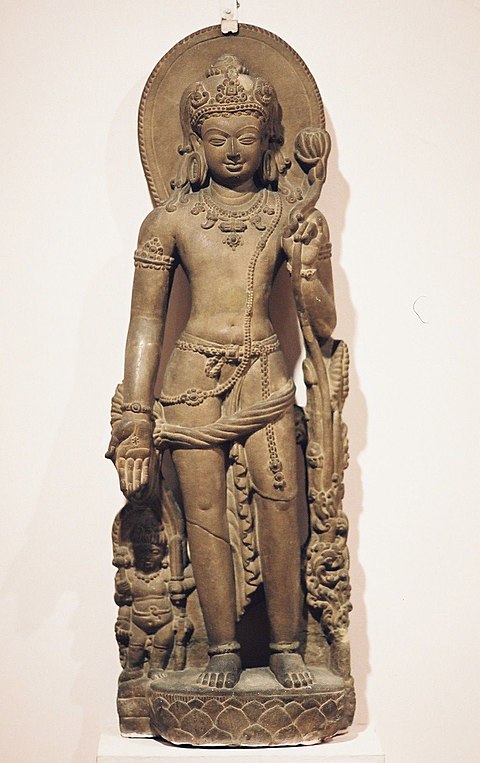
Accepting the fullness of one’s own karma may not be such an easy thing, because to do so you have to tell yourself the truth. But if ever there was a moment to breath fully into life, into this long-awaited transition, this re-opening of possibility, this moment to reflect and dedicate ourselves to the task ahead, this is it. Gaze into it; and may the Being of Samanthabadra, the consciousness of all Buddhas; of Manjushri, the wisdom of all Buddhas; of Chenrezig, the compassion of all Buddhas, the nature of Being itself, hiding in plain sight, be the guidance you wish for and deserve. Take a full breath and give everything to it.
Gratitude to Rudolph Bauer for sparking this content. See his article, “Gazing as Dzogchen.”
Dissolution
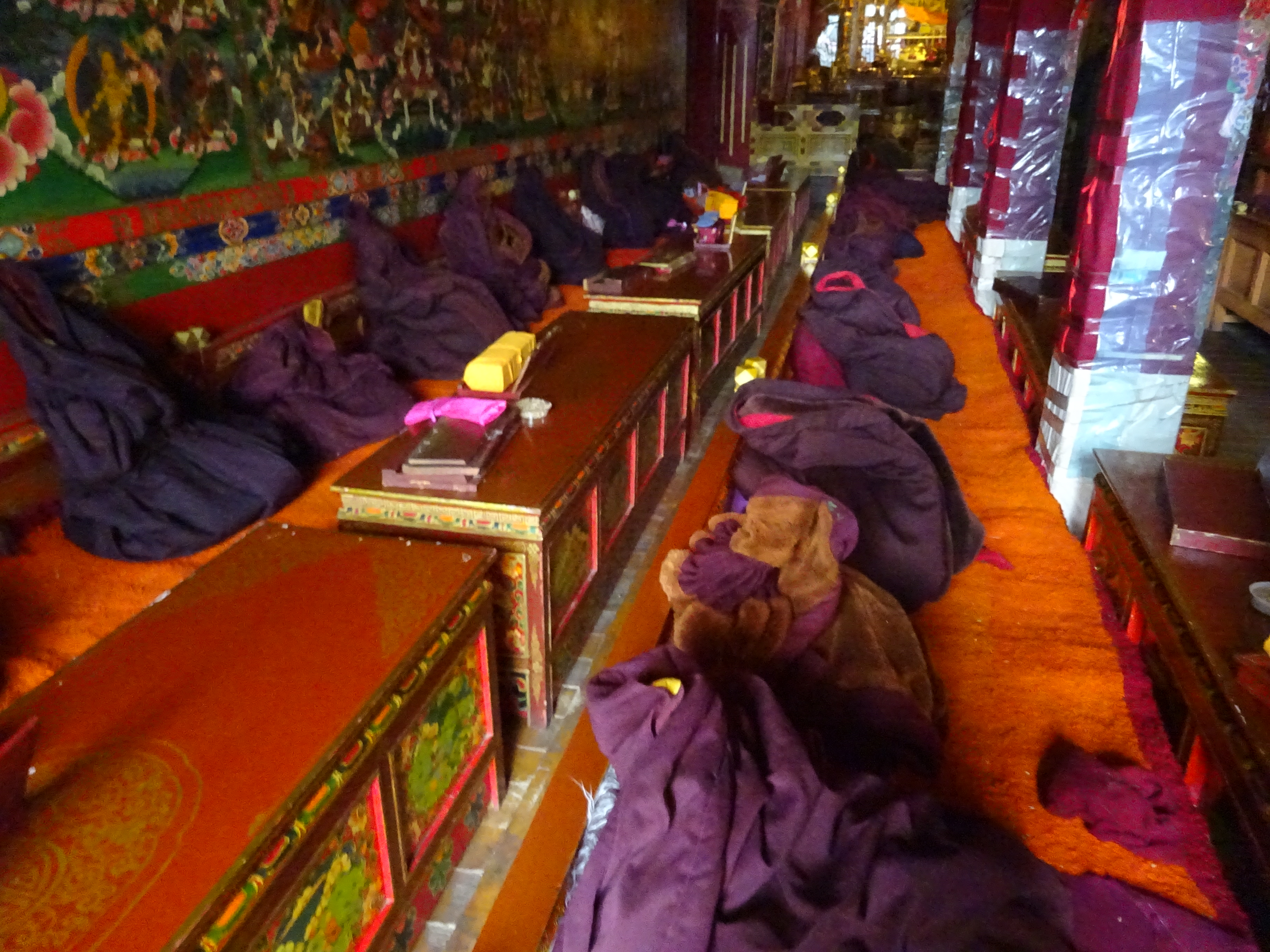
After touring the grounds of Shugsep nunnery, in July, 2017, I walked inside the darkened and silent main sanctuary. Everything was completely undisturbed; no one else was present. I noticed the colors, the familiar designs, the empty seats marked by the heavy woolen robes collapsed like ghosts on the benches, the teaching throne. Everything was in its place; there was only my breathing.

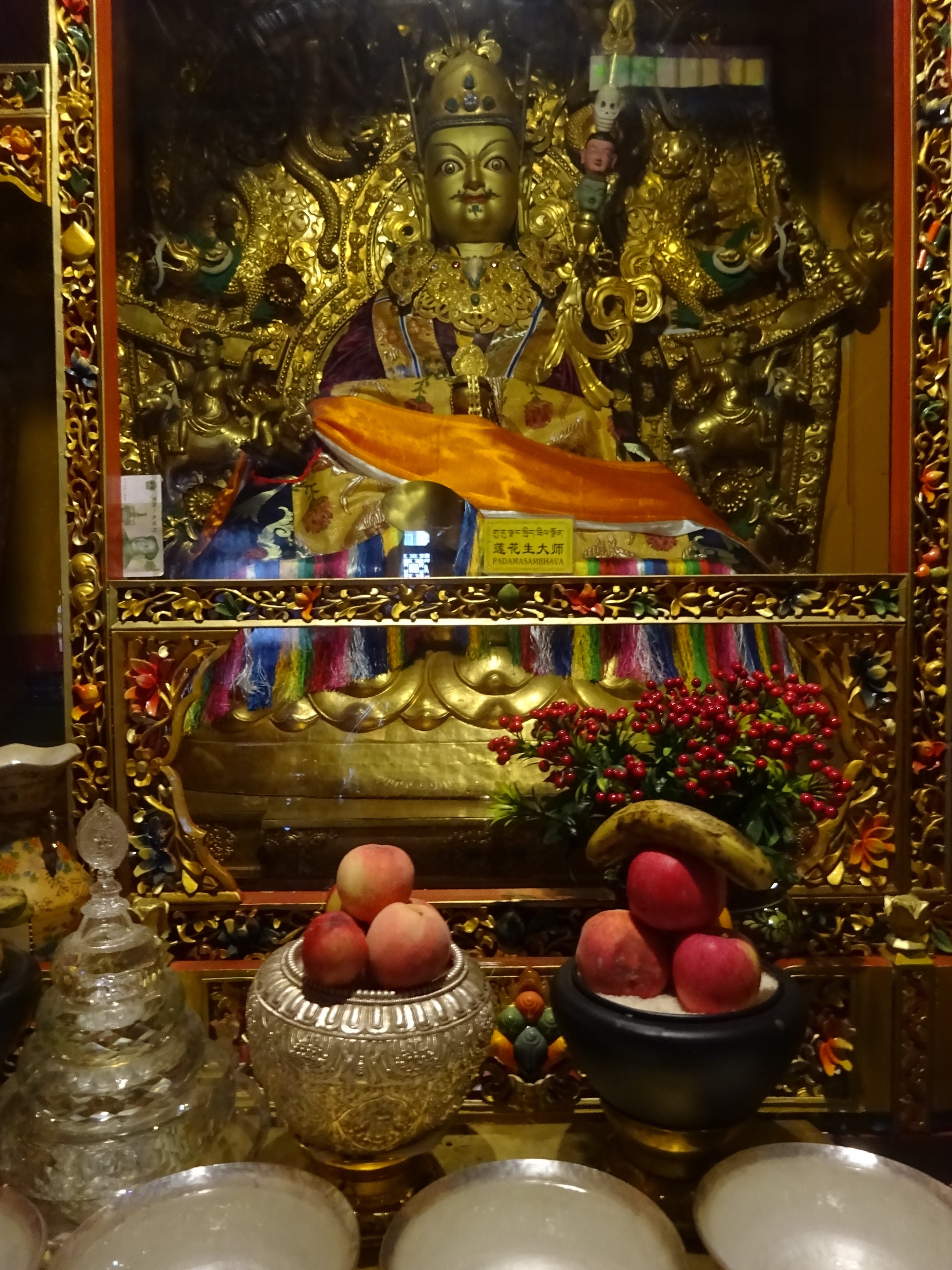
Then, in a slow wave, all the “things” in my view became one thing. All objects knit together into a single object. Everything became one teaching. Down to the smallest detail, even the fake flowers were a teaching. The decaying fresh fruit, the wooden bowls, the gold, the fading paint, it was all teaching; a single non-conceptual communication that had no words. It was entirely uniform, as if everything became tuned to a single harmonic to which I myself was becoming tuned. Everything was in its place; nothing was out of place. There was no other place for anything other than where—and what—it was. It was all an intricate code, like pieces of a puzzle suddenly, upon assembly, becoming a coherent image, conveying a single message.
All the activity outside the temple space was teaching. Everything beyond was also teaching, the weather, the mountains, the pilgrims on the way. Everything in every living moment is the same message. I was inside the space of all teachings, all schools, all teachers, all of the past and stretching into an undefined future, a vast dynamic universe of infinite nuance, the tiniest ripples part of a vast ocean, having no language, no structure, no predetermined activity.
I wasn’t expecting this.
I dissolved into all of it, again, in communion with the heart-mind of the victorious ones. “I” was a part of it, even as “I” no longer existed. The barrier between the perceiver and the perceived dissolved. There was no Other. Everything was image. Not many images; one seamless continuous image encompassing everything. Nothing I saw had any solidity, any material quality or substance whatsoever; it was none other than teachings, a uniform message available to all who would listen.
There were no words for or about anything; not the deities on the walls, the colors on the ceilings, nor the figures by the altar; neither the hands that crafted those figures, nor the statues of teachers nor the teachers themselves. Nor even the Buddha himself.

There were no words–or thoughts, or concepts–at all. There was only a simple, unitary and direct knowing, an all-knowing that needs no words, that could not find words if it tried; without a source, a wind blowing across centuries, populated by an infinite number of beings, uncountable know-ers who didn’t (and mostly still don’t) know that they know, permeating everything and every one, “my” thoughts, all thought, my body of light, the same light from the doorway, the sky beyond. There was no differentiation between words and thought and knowing.
There was no time. The truth, the seamless image of truth lives outside of time. It permeates the construction we call time and it is not time at all. Then again, neither is it other than time. I was not standing there at that moment, not in any discrete moment—or any moments. I was standing there my entire life, from beginning to end and without beginning or end, standing in every “event,” as if discrete events ever existed, and though “in” events, also not separate from any event.
The material nature of a temple, a sutra, a speech or treatise, the perceptual apparatus that produces them all, the sky, the mountains rising to that sky,…it is all the same, a dynamic display of color for which there is no name, only nuance beyond comprehension. It is generation itself, just as I had first seen at Mount Madonna Center in 2013, rising and disappearing in every instant.
There is no longer anything I can call not-teaching, anything that stands apart from the essence of truth, anything other than a bottomless knowing that cannot be spoken. The sacred may not always be apparent. But it does not lie at the edge of or beyond or within…anything. We may imagine that reality is just beyond our grasp, that a ‘crossing over’ is necessary. But from what, into what? It is already everything….without any edges, living beyond the illusion of being separate.
It is all mandala. It is all Buddha-field. It is all Buddha. Nothing is other than Buddha, not the suffering of the lost, the greed of the wealthy, the deceit, the derangement, manipulation or ruthlessness of the powerful, the striving of the seekers, the violence of the deluded, the nobility of the compassionate, nor even the amorality of the psychopath. Every look on every face is a changing color in the ever-shifting magic mural of the living dharma. It is all Buddha. It is all perfection. There is nothing out of place. Nothing “happens” at a wrong time.
No decision we face can ever be postponed or avoided. We are always coming home and we are always at home. There is no place that is not home. There is no place to go. There is no away. We are home. There is no remote cave of feeling, perhaps blocked up for decades, generations or even lifetimes that is not worth exploring. There are no chambers of the heart to be abandoned. There is no dead-end of relationship.
There is no limit to a commitment to truth or to the invitation always present. There is no wrongdoing that cannot be faced, no darkness that can remain unseen, no search for justice to be abandoned. There may be exhaustion, but there is no sleep that cannot be interrupted. Nothing exists outside the temple. The temple is everything. Everything is the temple. The Buddha field is everything. We cannot give everything–or anything–to it. It is already everything we are. We have nothing. Our absolute poverty is our true nature. We have everything we need, we already are everything we need in every moment.
We may still retain will. Or at least that is what we imagine. We both exercise it and surrender it to realize essence nature. Not “our” essence. Essence does not belong to anyone or anything. It has no source. Yet, it is not other than everything. We exercise will to pursue what we do not yet believe we already are. Will, entwined with self, is both freeing and also a form of bondage. The exercise of will releasing bondage is the great surrender, the great paradox, the Two Truths in operation, inextricable, inexplicable, perpetual and ineffable, without condition or attribute. The Great Mandala. The Great Perfection.
Weathering Each Other

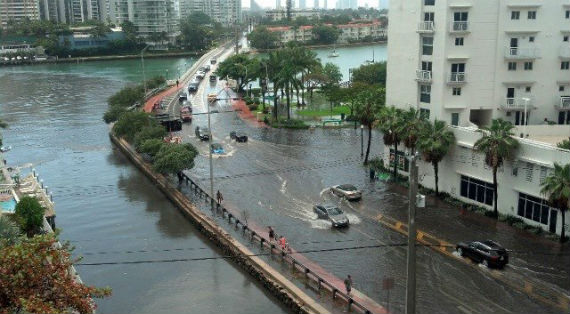
The signs are more frequent and stronger now. Climate change is accelerating. To many, the sensation of being personally effected is inching forward and becoming more immediate. Those who might have imagined themselves immune or safe are seeing the floods, feeling the lapping of rising water, the storms, the heat and the fire.
To many more beyond the view of western media, climate change is already as real as the droughts, floods or rising seas already a part of their daily existence. The pace of change is accelerating. But while the distance is narrowing between an intellectual grasp of the issue and a direct intrusion of a destabilized climate into our lives, climate disruption remains an abstraction for many. Even so, it’s becoming obvious that to remain distant from the issue of climate change is to remain utterly dis-embodied.
Our bodies, being of the natural world, are materializing just as the planet is materializing. The weather is not happening “out there.” We have always been weathering each other. Only now is it becoming clear what that means. Being fully entangled with the natural world; the inner processes of our bodies are not separate from the outer conditions in which we grow and change.
But we’re not talking solely about bodies here. Consciousness is evolving and is equally entangled with the evolution of the planet. The boundary we imagine between inside and outside, between appearance and reality has never truly existed. It is a figment of our imagination. We can say the same about climate and the natural world. Weather and climate are not phenomena in which we live at all–where climate is some natural backdrop to our separate human dramas–but are rather of us, in us and through us.
We are subject to climate change in our bodies and psyches. We are expanding our view of the perplexing complexity of our connections, becoming aware of the trans-corporeal matrix, the body that sees through its own skin, to and through other bodies, the migration patterns of fellow creatures, the crystallization of water on rock walls, the curling toes of climbing animals, the rhizomal conversations of wild plants, the stories archived in the weathered rings of trees. We are literally one with the biological. All is being processed and recorded, the entire experience of emergence, in the transient, elliptical and toroid story we create and which is creating us.
How is that so? What seems to separate us as biological creatures, our physical boundary, is far less solid and more mutable than we normally imagine. Likewise, the psychic boundary, the consciousness differentiating us is far more real. We are “viscous porosities,” neither solid nor liquid, no more than temporary aggregations of a host of life forms, structural elements (collagen), an energy interface (ATP), a replicative blueprint (DNA) and intra-communication networks, participating with the environment in the creation and exchange of sugars, temperature, moisture, evolution and extinction, even light transformed by chlorophyll.
In fact, all communication is intra-communication. There is no objective separation between any elements of the biosphere. All communication occurs within that realm. There are no side conversations. Everything is part of the whole. At the same time, we are individual contractions of climate, “intra-acting” precariously with the planetary system, each according to our geography and culture, a fractal of the macro-dynamics of planetary change, biology and the micro-relationships in which we live every day.
As trans-corporeal beings, we are making the weather and the weather, created by our human partners, is making us. The idea of ‘externalized’ costs of climate change is a construction of the capitalist economic model. It has no reality otherwise. Those ‘costs’ do not appear merely as respiratory diseases, auto-immune disorders, disease vectors, lost species or degraded atmosphere, but also as cellular deposits, tissue invasions and incipient mutations.
Weather has always been a fundamental factor of our relations, crossing all imagined boundaries between bodies and species. In industrialized societies as in much of the emerging world, we are mostly insulated from weather in our shingled, weather-resistant, secure, durable and isolated domiciles. We want to keep the weather out! Being able to retreat into our vented and layered temperature-controlled shelters provides an illusion of control.
We are distanced, psychically and emotionally, from the realities of those who live much closer to and experience more directly the subtle and constant nuances of weather such that disruptions of the larger cycles of climate are more apparent. In fact, those very temperature control mechanisms that protect us from weather contribute to the very weather we are attempting to protect ourselves from.
To remain distant from climate change is to remain distant from our own bodies and from the community of bodies and non-human species. Yet, the notion of being a weather-maker, creating enhanced cyclones, drought and flooding as well as the internal consequences for others by our daily actions throws the ethics of personal responsibility into sharp relief.
I don’t know about you, but I notice simultaneous hyper and hypo-affective responses of my own, at times feeling urgency and at other times wanting to distance myself from awareness of the impact of my decisions–like air travel, especially–that are surely making others’ weather. At times I feel acutely responsible for all life and am thus aware of the minute decisions I make throughout any given day. At others I will deny any possible personal impact because I want no part of that burden.
Whether we want to know or care makes no difference. The ways we each create weather have, at micro and macro levels, an effect on everyone else’s weather. How do we negotiate or respond to the weathering we are receiving from others? Do we just insulate the attic? Turn up the AC? When the Philippines calls out Western nations for balking at compensation for cyclone damage, when the Third world demands compensation for the weather they are receiving or when the Marshall Islands are slowly subsumed into the Pacific, Western nations treat the equation more as a legalistic abstraction than a contemplation of direct (though delayed) responsibility for their losses–or even the loss of our own coastal real estate.

Likewise, the continuing objectification of nature permits us to release toxic chemicals in the belief that they will either be sufficiently diluted or that significant time will pass before any meaningful contact with humans will occur. Neither of these views accounts for a trans-corporeal planet. This is analogous to the way we view the linkage between environmental pollution and cancer rates. It is all couched in hyper-legalistic terms of denial that resist the quantification of linear causality or the assignment of financial culpability. The political modeling we get–influenced by energy interests, of course–is that we can continue to create your weather while forgetting that it is also our own bodies that are changed by it. The ethic of individual responsibility is overrun by entitlement.
When Hurricane Sandy hits, a drilling platform explodes in the Gulf of Mexico or parts of Bangladesh are submerged, it’s happening somewhere else to someone else. But when your house is consumed by a wildfire in California, all entitlement dissolves. It is no longer someone else’s problem. And you might become acutely aware of how your weather has been created by the collective action of your neighbors.
The line between “acts of God” and acts of men is increasingly blurred. In fact, the larger dynamic of climate change will continue to undermine and, if not substantially thwarted, will eventually render obsolete assumed or constructed political, economic and social boundaries we take for granted: such as nation-states and money. Increasing conflict will be inevitable to the extent it is believed national boundaries, national character, cultural norms, tribal roots and even language are sacred and must be preserved.
When we ask “was that (climate catastrophe) caused by climate change,” we are weighing responsibility. On our trans-corporeal planet, how do we deal with knowing that as we retreat into our self-contained shelters and isolated thoughts, we are creating distant conditions that are driving others out of their own such shelters?
We are not doing well with this.
How do we accept eating pesticides, depositing pharmaceuticals into each other’s water supplies, causing extinction among creatures that cannot adapt as fast as conditions are demanding? It’s all well and good to attribute agency to nature and to imagine the ways we are impinged. But the capacity of nature to act is constrained by time. Nature does not act as quickly as humans act.
Thus, the times are urgent. Let us slow down.
Trans-corporeality is a denial of denial-ism. Denial-ism denies human agency, non-human agency, and the collectivism at the heart of legislative remedies. Propagating the idea of human intra-action is slow. Yet it should not obstruct focused efforts to influence policy, which is to design instruments that materialize collective responsibility, broaden and hasten abatement of the uncounted damage, anticipating and adapting to the dissolution of so many boundaries along the way. Short of a universal adoption of trans-corporeality, such would be the best means of materializing an accounting that has so far been so elusive.
A generative collective response to the weather dilemma does not depend on a single social or political approach. We need multiple measures, even if they arise from within the paradigm that still objectifies nature. As our common dilemma upsets more of what we know and reveals more of what we don’t know, living and acting in both old and new paradigms simultaneously will still be an effective human way of ‘being there while getting there.’ Ultimately, what we will require is much more than policy to get ‘there.’ We will need a healing view reflecting the true nature of our entanglement with each other and the world.