
Repose (as in…final)

It seems perfectly logical to say we will all be confronted with a series of moments tightening the grip of death in which we will have to decide what we believe and what our conscious role shall be in attending and adapting to a process that is both in and out of our hands, that is entirely real and entirely illusory.

If one were willing to confront the full impact of all the signs pointing to the future of life on this planet, a confrontation with the prospect of mass death is unavoidable. That prospect is inextricably entwined with the manner in which we hold the prospect of death right now–not in some nebulous future. A culture and economic model of infinite growth, illusions of permanence and control must include a denial of death, distorting the entire idea of what life is and what constitutes living. On the far side of these ramblings about mass death is the scenario of our own personal death.

Such a process might be marked by an inexorable advance into an increasingly evident material dying process, a relentless progression of conditions—or failed interventions into an increasingly complex collection of conditions—that might not rob us of cognitive faculties, but which would nevertheless be an increasingly evident reduction in the physical capacity to sustain life. Meanwhile, mind will observe from a greater distance. I might slowly leave my body as its control, to whatever degree I once had it, is wrestled from my grasp, leaving only Mind—if I’m lucky.

This progression will then likely be complicated by the presence of multiple conditions, each presenting complications for treating the others. The options narrow, for example, to a carefully tailored regime of drugs or perhaps outlandishly risky surgeries. The sense of gradual entrapment by inexorably limiting conditions rises, and the prematurity of it all begins to gain weight. But is it premature? We might reflexively consider every death to be premature, including our own, of course, but what does that really mean? The question is if these conditions ultimately describe the process of my own death, will my own death be premature?

Yes, there may be moments of fear along an uneven path of tests and treatments, appointments, the carefully modulated conversations. I listen as my body drops into a minor key, openly gazing inward and outward at whoever delivers the news and feeling that news reverberating—reconciling all the other factors impinging on life along the way. All of this depends on whether some other conditions come galloping along to raise my level of risk even further, limiting my capacities, adding variety and velocity to the drama, chasing a runaway herd of questions requiring answers with further complications. 

One’s sense of time contracts. That is the inescapable message. I become the primary character in a movie depicting this inexorable process. I am driving a car downhill on a winding mountain road, on one side is a vast and unobstructed cloud-free view, with the mountain rising sharply on the other. In the gathering darkness, suddenly there is something amiss with the vehicle. It’s becoming difficult to control, swerving momentarily toward the precipice until I regain control in the nick of time. Then, further down the mountain, the brakes unexpectedly disappear; and then further on, the windshield is suddenly covered with dust. Now, the lights don’t come on. I am blind and helpless. Either I am engulfed in terror–or something else happens.

What is that exactly? What happens next? I cannot stop. I cannot depart the vehicle. What else is there? I let go. I no longer attempt to control anything. I am no longer driving. I don’t even see the road anymore. What is taking me down? Where is the bottom? Does it even matter?

It is in that moment when the most important decisions are made. I transition from realizing my time is shortening to a practice of collapsing into the timeless present–simply allowing this body to dissolve into the soil of countless other bodies nourishing and sustaining all else as we careen down the mountain together. One makes a conscious transition from abstract knowing one is going to die to comprehending being on a direct course of dying now. Prematurity no longer exists. I am on a course less and less under my control. Its conclusions are not up to me. We are capable of understanding we will die at any time. But that very understanding is itself an objectification–as if something will happen in the future, but perhaps not to me. And anyway, we don’t want to think about it. In the meantime, we will exercise whatever agency we can muster to forestall the inevitable. 

It seems perfectly logical to say we will all be confronted with a series of moments tightening the grip of death in which we will have to decide what we believe and what our conscious role shall be in attending and adapting to a process that is both in and out of our hands, that is entirely real and entirely illusory. As we are living and dying in every moment, we are both separate from and in union with everything and everyone. Each one of these moments will be an increasingly intimate encounter, but at some point one will surely enter a dying process–one by which, if we are fortunate, we will recall that union.

The dying process may be described in detail by the medical professions, but for most of us, I suspect the process begins well before the rapid decline of cognitive function. As such, it is really an awakening process. We will discover whether animal survival mechanisms will leap over all the fences of containment and rationalization by higher brain functions and run wild, derailing us from refuge practices we’ve spent decades refining to restore and sustain equanimity, let alone what one could call resting in the vast and empty nature of mind. Or, perhaps we will comprehend the true nature of our relationship with existence in ways we never imagined possible.

Fear and anxiety may be expected, but not guaranteed, just as pain can be guaranteed, while suffering remains optional. I am steeped in a finely cultivated and detailed view of reality, life, suffering and death, developing confidence in the capacity to meet whatever arises. I’ve received the gift of gnosis, looking directly into the heart of existence, a view of emptiness, openness, inclusion and unity. The question becoming more present is whether I will continue to rely on these practices when they count the most, whether I’m going to plant my flag in that mountain of belief no matter what comes.

On the other hand, a significant part of these practices and preparations both implicit and explicit in the range and flow of Buddhist teachings; indeed, the orientation of all organized religious belief is to the existence of a soul or not, to an afterlife or not, interpreting death and preparing the believer for what is beyond life. Whether some part of us endures beyond this life, whether it’s eternal life inseparable from the divine, eternal damnation, rebirth or none of the above, true believers prepare (or hope) for whatever they long to encounter. What is sold as insurance guaranteeing the desired outcome is an unshakeable belief in what happens after death.

We stake our lives and our deaths on those beliefs. In whatever way we approach dying, particularly when we’re aware of what’s happening, no matter how much we might deny it, we cling to a belief in what happens next and mentally prepare for something like everlasting glory, perpetual luminosity or perhaps one of several intermediate states preceding rebirth into an endless repeating cycle. Such beliefs suggest there is consciousness beyond life and that steps can be taken here in the bardo of everyday life that will have a bearing on the condition of one’s rebirth. 

It’s amazing to imagine navigating bardo states in the first place. Am I going to stake whatever remaining time I have on the details of how I might respond to a nebulous and fleeting dream state? Or will I focus on the dream state of this minute? Even considering sustained moments of absolute clarity about the true nature of mind, do I imagine those are a ticket to the bardo of becoming preceding rebirth? What if I decided to be satisfied with the effort I’ve already expended? What if every moment of this life is a rehearsal for and an investment in what happens after this life? What if that is precisely and only what this life is?

That could easily sound very Christian, but it’s also an unavoidable interpretation of Tibetan Buddhist bardo teachings. A preoccupation with whatever happens after death can become what Stephen Jenkinson calls an addiction to competence, getting it right. It’s really just another way of clinging to life, to the identity we’ve spent our entire lives crafting and convincing ourselves truly exists. It’s an artifact of hope, which in the final stages of life becomes another way of not being present for what is. Chögyam Trungpa would surely call that spiritual materialism. 

Realizing I may come to a state of terminal disease or to an increasingly fragile condition sooner than I might have expected, I have to wonder if reifying such imaginings, diverting my attention to teasing apart nuanced states of post-death possibilities, imagining the exercise of intention even after the final breath has been taken, learning to recognize the signs described by centuries of teachers, exploring the likelihood of a continuation of consciousness after that final breath is the best use of my time. Staking my present life on what happens after death and exercising rituals of preparation is a preoccupation with the future, not an engagement with the unfolding present. I have to ask, holding back the guffaws, what I would think if I discovered I’d been misled?

This is a process of exploring and enacting personal justice, reconciling myself, balancing the scales, as it were, between what I wish to invest in the future when there is such abundance right here in the present. Whatever I have been taught, whatever I have sampled or believed in, the time I’ve spent assimilating it, exploring all the views and prescriptions about preparing for one’s own death have been an indescribable blessing. But there is really only one choice in this moment: to be present for whatever is here and not to worry about what comes later. This is always the Dzogchen teaching anyway. The Great Perfection is the recognition that we already exist as the seamless nature of reality. There is no creating that reality. It is already created…and in perpetual creation. There is no waiting for it, no hope of attaining it. It is always already here. We can’t ignore it or get more of it or find it or lose it.

And yet, I make no claim to any truth. I make no claim on the future. I plant no flag of belief. I anticipate nothing. I reject nothing. I renounce nothing. I simply put it all away and remain as open as possible. There is no other place or way to be. This was the primary prescription all along. There is no bridge to suchness.  Whatever rituals we repeat, whatever antidotes to samsaric mentality we adopt, we are already there.

I am already enough now. I have always been enough. Whatever comes, I will be enough. All the self-examination, evaluation, climbing some stairway to heaven or belief in anything beyond this life falls away. If there is anything that does more to make peace with all circumstances we encounter, it is simply to be with what is, to walk and talk the knowing that we are already there. It is to be giving thanks in every moment for what we are given, to live within an aura of gratitude for every breath, every encounter, every emotion, every difficulty, every teaching, every suffering and every moment of celebration. Whether this is the only life we will ever have or whether it’s just one of an uncounted number of flashes in an endless unfolding of numberless kalpas, nothing can take its place.  To live in this way is to balance the scales for whatever remaining life we are given.
Remembering & Relationship

Being in an increasingly delicate and uncertain state for the past year for multiple reasons, it’s time to reassemble the elements of one’s known and unknown universe, the pieces scattered over a troubled and troubling landscape, to rediscover–or recover–one’s place in relationship to the ones close at hand and the ones far from view.

Being in an increasingly delicate and uncertain state for the past year for multiple reasons, it’s time to reassemble the elements of one’s known and unknown universe, the pieces scattered over a troubled and troubling landscape, to rediscover–or recover–one’s place in relationship to the ones close at hand and the ones far from view. To a degree, we are each disassembling the flawed model of life on earth like a toy we have outgrown, this suddenly foreign image of a pyramid with humans at the top. Others are insisting it’s the only toy in the sandbox and we must continue to regard it as worthy of our attention as if it represents normal.

There is, frankly, no hope of re-visioning and becoming the post-sandbox human without acknowledging the mycelial model of relationship with all the more-than-human planetary life. A select few of us have dabbled beyond the confines of our sacred comfort for a long time, surely, but now COVID has redefined normal and obliterated the boundaries of the sandbox entirely. Conception has given way to material reality coming home in the most personal ways. Enacting a different view of living involving a great deal more listening and far less speaking, creating a much larger circle of care is the only defense against being thrown out of The Garden entirely.

Moreover, essential to changing the Story will be to dissolve the boundaries between subject and object, remembering reality is all subject. We are in porous connection with all that is. The notion that we are all distinct and separate souls on individual journeys is a dangerous corruption of the true journey. We are not here to be found in some homogenized mystical way. We are here to find and lose ourselves.

If you have been fortunate as I have to be offered imperturbable unconditional love at the most intimate level, consistent, unaltered humility and steadfast adherence to truth and consistent values, then you may count these blessings daily. While I crack open my own heart, awakening and encountering new veils, there is no going to sleep anymore. Allowing the armor to crack is like cleansing the windshield. 

This is really the only thing worth doing now. I am drawing inward and simultaneously expanding outward, interpreting the arc of these events. I am being drawn to remember, to mourn and welcome the dying of the old world, to forgive the ways I have been corrupted, not believed in myself or tried to be someone I am not. There’s a great deal of striving and programming to address there.

The practice of remembering isn’t possible every moment of every day, or even daily, but it’s worthy of regular attention. It is a ritual of unwrapping the baggage of a day, a month, a decade, affirming somatic truth, the migration of spirit, giving just regard to the vulnerabilities and messiness at the heart of existence. It can be a return to the unobstructed primal territory of the heart, beyond individuality, beyond the stories we tell, beyond all the supposedly impermeable ideological, emotional or even biological boundaries. 

The implication of remembering is that we can put ourselves back together, revise our agendas and strategies, re-evaluate what’s important. That will be different from one to another. But for me, remembering is to return to the physical, to emotion, to the currents of feeling, the sensations of relationship, to the one I left behind in the perpetual reaching for more—more information, more creativity, more awareness, more perspective, more knowledge and the urgency of purposeful action.

Planting one’s feet back on the earth in this way, one also remembers one’s place. This is the most difficult and unlikely remembering. I have been too much a nomad recently to fully relate to a place. And even now I’m not truly of this geographical place despite the family history. It was mostly others’ history, not my own. I’ve learned to take the trappings of place with me, that all places and people are essentially the same. 

Except that now, having been here a year and a half, I already have a different perspective. This is a place I left behind long ago. It did not then suit the yearnings of a youthful soul seeking a much larger view. I did find other places and felt as much, if not more, kinship with California than I did here in the east, but there is a calming and satisfying softening happening here. The pace and the density have a subtle effect. Or maybe it’s only my lifestyle. Yet it’s also here and in the letting go that the widest view of all takes shape.

Reconciliation

Reconciliation carries an implication of justice, a balancing of accounts. In this case it’s an honest discovery of others’ suffering while realizing our own mortality, complicity and limitations.

Reconciliation carries an implication of justice, a balancing of accounts. In this case it’s an honest discovery of others’ suffering while realizing our own mortality, complicity and limitations. Reconciliation is a great humbling because intimacy with suffering is also a coming to terms with one’s own death. Most of the time we operate as if we cannot permit the intrusion of death into our view or conduct in life. Denying, misunderstanding or misrepresenting life or death to oneself at some point becomes another miscarriage of justice. This is happening at a cultural level and is an integral part of why we have gone so wrong on our environment.

I seek balance by looking at my assumptions and beliefs, whatever unconsciously corrals, misdirects and exhausts me of wildness, causes me to lose contact with the inexplicable essence of life, the spontaneity and unity of everything and especially my capacity for stillness. Narrow assumptions establish imbalance. They arise from a resistance to breakdown, an illusion of stability and a compulsion to preserve that illusion. In modern culture, instability is regarded as failure; yet ironically, that very stability is itself a distortion of reality. I have set limits on the degree, pace and character of change, all of which may interfere with or rob me of the benefit of failure, vision, connection or satisfaction. It is by failure that I discover balance. No imbalance, no homeostasis; only a brittle, narrow comprehension of complexity.

For more than 18 months I’ve been engaged in a close encounter with a physiological disorder, a rare condition, which coincidentally, like climate change, is 100% fatal if left untreated. It arises in the deepest realms of my physiology, where life itself is produced in its most elemental form. This non-malignant dysfunction is instability personified, inexplicable to the layman, buried in background assumptions about how life is supported. And though it can be understood and explained in modern medical terminology, it cannot be adequately addressed according to these limited terms. They are just concepts, equally applicable to your car or your computer. It has emerged as my personal monster. It cannot be smothered by knowledge, technicalities or reason. There is no certainty or way of turning it into a monument sitting on a shelf. It’s an outlier at the frontier of medicine. It’s marvelous in that respect, transformative, daunting, life threatening and mysterious. Reductionist framing can’t possibly tell the full story.

Likewise, the marvel of climate change can be explained in the same reductionist terms, which don’t—and can’t—plumb the depths of the behavioral dysfunctions, the flawed outlook, the mechanisms of denial at the heart of such a condition, except perhaps by applying the analogy of autoimmunity: we are attacking ourselves, making a seemingly inexorable series of self-destructive decisions. Or worse, life is threatening itself with extinction, promising to change, failing to change, repeating the cycle, carrying immense guilt and then sloughing it off by dissociating. These are the behaviors of an addict. Not all of humanity is addicted, but the addicted are leading the rest of us into the abyss.

The term ‘climate’ should be applied to the context of all life including the social, not solely to atmospheric/oceanic conditions or the many thousands of biological effects. The climate of earth is deteriorating, but this is so in every sense of the term, not merely the weather. If we traced the acceleration of the global warming effect, the loss of ice, the acidifying oceans, the pending collapse of the food chain, the Sixth Great Extinction, all are paralleled by the massive concentration of wealth at the top, the degradation of civil discourse, the corruption of democratic norms, the influence of money in politics, pollution on an unprecedented scale, feudalization of the economy and the degradation of all forms of capital. None of us can breathe. Indeed, deep in the center of the earth economy, the engine of true vitality is being silenced. If we addressed the social and economic context of earth adequately, emissions would likely fall greatly, whereas focusing on driving down emissions alone is clearly not working fast enough.

I’m not an addict, though I surely am complicit. I could (by some sideways logic) relate to COVID-19 as a random invader, an alien agent, a force to be reflexively resisted as if it has no intelligence. We can track its adaptive capacities, disassemble it and understand its transport and replication systems. It has no mind, yet it has intelligence. 

Beyond all that, I regard my personal disorder as an expression of consciousness. Which is to say it did not come from nowhere. I cannot extract myself from my environment or, as a Buddhist might say, extract myself from my karma, my spiritual continuum. There are known environmental (karmic?) factors linked to this disorder and perhaps unknown factors as well. I can’t be positive it’s unrelated to one of these. But regardless, it now functions as a self-generating disorder, an error in genetic logic. And since our entanglement with the environment is total, how can I ignore the possibility that not only was an environmental factor involved in my contract with this condition, but that I was complicit by contributing to the creation of that factor?

The dysfunction at the heart of this matter may be considered a corruption of purpose, an aberration, a crossing of elementary signals at an intra-cellular or genetic level. My immune system has turned against me, becoming a termite of my own construction, undermining the foundation of my life. Termites seek life or sustenance without consideration for any other life form or for the integrity of the host. They live as if there’s an endless supply of their prime resource. Does that sound a little too much like the human presence on this planet? 

There is no such thing as a termite regulating its appetites to ensure the sustainability of its host. Such an invader would be called a parasite. Given a choice, I would rather be a parasite than a termite. Unlike the virus, the guest in my body is not some alien presence. And my encounter with it is not accidental. It is Being delivering a message to this being. I did not ‘catch’ it at the grocery store. Although, considering the massive overuse of fertilizers, food additives, preservatives, considering nearly everything in most grocery stores is either genetically modified or sprayed by carcinogens, is full of either simple sugar or modified protein, maybe the grocery store has finally caught up with me. 

If I were to fully regard this disturbance as an emanation of self rather than as Other, I could regard it as a disturbance in my energy body, a gradual and unconscious—or worse–a careless failure to attend to my personal integrity. Current scientific knowledge may explain some of the mechanisms, but it cannot explain how it came to be and the prevailing treatments are not guaranteed to reverse it. 

I have undergone the standard protocols. But again, this doesn’t come close to addressing its true nature. It is buried and then covered over, like ripping out offending weeds in a garden, but not quite extracting the roots, followed by planting new seeds and expecting proper germination. And later, if and when the condition again crawls out of its confinement, we have other measures at the ready to suppress it again. I submitted to a second round of the treatment protocol because blood markers clearly indicated a regression. I gamed out the consequences of failure, the probabilities for dancing again toward the edge of viability, a subtraction from previous estimates of my life expectancy, the extent of interventions necessary to sustain life and the possibility of my body rejecting those interventions, all the way to the ultimate conditions of my demise.

As I delve deeply into the energetic realm, the interactive and potential counter-intentions reflected in successive or persistent manifestations, I am mindful of the different realms of knowledge expressed as its tenacity and my responses to it, continuing to be a drag on my wellbeing. I am reminded of the declarations I made at the time of my original diagnosis, the doorways of consciousness it opened, the fresh awareness, even agency relative to the quiet and not-so-quiet suffering around me every day, the purity of intention necessary to meet this disorder, to re-focus and get on with my life: the continuous inquiry required to unearth what Being is attempting to deliver to me or elicit from me.

I even sensed one of those imperatives was, at least partially, a consuming attention to personal happiness altering processes at the heart of this condition, deep in my bones. Indeed, an imperfect affair of the heart. I’m not fully clear whether the inner messaging is in opposition to this condition or the result of a direct encounter with it. Am I fighting it or becoming friends with myself? Am I reflexively opposing it or becoming more acquainted with its nature? Is this merely the only way I can digest the discord all around me in the world? Have I unwittingly invited this? Most likely, all of the above are true to a degree, as merely approaching the object of inquiry, whether as self or as Other, inevitably changes our view of it. In other words, there’s no such thing as objectivity.

Some of this reflective process is itself a symptom of the human disease, our belief in intellectual primacy, human centrality, the inviolability of science, an infatuation with our reflective capacities, all exercises assuming there isobjectivity. In the ancient world and now as we reactivate and interpret that wisdom, it is said that every culture, to accompany the thinkers and doers, must have its mentors and guides, the ones we call dreamers and mystics, the keepers of gnosis, retainers of the collective raison d’etre, the guardians of tribal history. I envision myself as a product of both, perhaps a flawed hybrid, perhaps entirely presumptuous. But nonetheless, pressing on to my own version of reconciliation.

Reciprocity

True reciprocity, or what we could call emergence, is an omni-variant, non-linear dynamic beyond our feeble attempts to determine chronology, origins, directions or destinations.

Reciprocity is a word we could use for the rhizomatic nature of life, or perhaps paradoxically, the social mechanics of earth. We are undeniably entangled in perpetual subliminal conversations and exchange with each other and the natural world. Reciprocity expresses our interdependence, whether conscious or not. The limits of that reciprocal relationship likely extend beyond any rational definition we might rely on. We can see ourselves in a new light, not as a single central species mastering life, but as just one species (the youngest species) sharing a vast web of life. We are learning this the hard way. 

Reciprocity, or what might well be called emergence, is an omni-variant, non-linear dynamic beyond our feeble attempts to determine chronology, origins or destinations. Much as we might wish to, or to be tied to the habit of gazing into a rainforest noticing only the layered canopy, the explosion of color, the cacophony of voices or the humidity, we cannot see the whole unless we also notice what is underfoot, buried in the rotting vegetation, the decomposing bodies, the leaf molds, the micro-organisms, the mycelium, the death amidst all that life. In fact, the death is giving rise to life. Without these, there is no rainforest, no reciprocity. Some relationships are visible, some invisible. Everything we are and all we do is part of that entanglement. 

In a culture that teaches and so efficiently reinforces separation for so long, we as individuals are reduced to atomized centers of resources to be mined and harvested. We have reached a point at which even our autonomy of thought and action are under threat. It is critical to disengage from the machine of Progress to discover and enact a new way of living closer to the reality of our place in the web of life. We are being called upon by unparalleled change to engage all our faculties, our vision and intuition, the ears and eyes, the sensations we have forgotten to notice and the capacities we use to listen for foreign and fugitive guidance to recover or discover for the first time the basis of our relations with each other and the more-then-human world.

We have to search our histories, poking around in the ashes, into the sources of imagery, before memory, before place, before blood, before nations, to the tribal, to the bones of our original values, to the individual cells of community where life is incubated and regenerated, where our relationships were not things to cultivate, where we watched each other grow and participated in the lives and transitions of everyone we knew. Somewhere in our past, even if only in our genetic memory, we have all known deprivation, displacement and domination. All is embedded in the epigenetics of the human story. More recently we have come to know the soulless commodification of fellow human beings. We have moved beyond some or all of these to be where we are and to carry that knowing with us. That is the common legacy of our time. 

The lifestyle I enjoy was built on the contributions of a billion partners, both human and non-human. For 200 years, capitalism has depended on the establishment of unequal relationships, hierarchies of privilege among all those partners. The unraveling we see around us is the legacy of that inequality, including the racism perpetuating them. We have all become complicit along the way, with colonialism and slavery, with those hierarchies of privilege, with entitlement and subjugation. We are the benefactors of exploitation and violence and we live in a nation built upon that violence and which continues to thrive on the suffering of others every day. 

The bill is coming due. I have a deep grief, emptiness and sickening feeling as I ponder all of this. But feeling guilty is also a perversion, an inversion of victimhood. It can be immobilizing, but it’s time to put it away and name and claim a different way. 

Revelation & Recovery

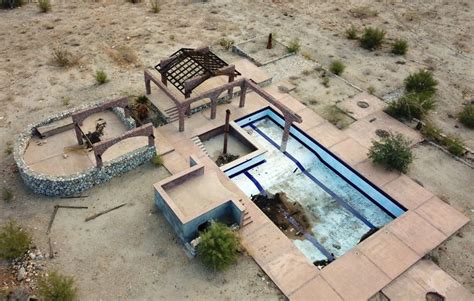
The appeal of post-activism–a walk into the desert beyond the last swimming pool, is an escape from human centrality, an intention to tend the wounds we have inflicted on our world, on ourselves, by presuming humans alone are the drivers of social change.

Deep Adaptation was a welcome revelation. I was suddenly relieved of pushing the rock uphill. I was diverted to more productive activity: facing unmediated and unfiltered reality and acting accordingly. These urgent times require that we slow down. I could put my full attention on the inner work of resilience and restoration, taking a slower and deeper journey into its meaning, simplifying and carefully extending myself to live a version of small-scale sustainability. Under current circumstances, as I’ve said, this seemed to be imperative.

Deep Adaptation has been criticized as a regression into despair, doom and disengagement. But I’ve never seen it as refuge of defeatism, more like a dispassionate assessment of reality. Parallel to this shift in attention, is the appeal of post-activism— a walk into the desert beyond the last swimming pool. It’s a cognitive jailbreak from a belief in objective reality. It’s an escape from human centrality, an intention to tend the wounds we have inflicted on our world, on ourselves, by presuming humans alone are the drivers of social change. It’s a turn toward recovering and redefining community away from the parameters of Progress. Conventional activism is an attempt to escape the prison (a diffractive prism?) of prevailing conditions. How is it that despite all our efforts, we largely remain in that prison, redefining ourselves over and over according to terms we can barely grasp. We are like fish trying to find water, immersed in it so deeply, so completely that we can only speculate about its nature. Post-activism is somewhere beyond all of that.

At the same time, as my health drives my attention inward, my sense of conventional (inner or outer) agency ebbs. To a degree, my definition of agency still resides in the conventional realm. If I tried to unravel this mystery, I could easily turn to despair and fatalism. As my world shrinks, I recall the vast spaciousness of mind, allow the boundaries of ego to expand and loosen, reconsidering influences steering life far beyond any imagined boundaries I might normally contemplate. I puzzle over whether and how the entire course of life has prepared me for its closing chapters. Or whether, more likely, there is no such thing as preparation, only incrementally deepening encounters with the reality of our material limitations. Clearly, there are still revelations to be had. That, revelation, if I could name a clear intention governing all of it, is what it shall be for me.

Upon arriving in Durham in October 2019, I was pressed to make my housing choices quickly, taking my health into consideration. I chose easy, low maintenance, self-contained and accessible. Any possibility of participating in building much resilience into my community or immediate surroundings was marginalized. Taking a wider view, making a commitment to a slower, smaller lifestyle requires opening to revelation from sources not previously considered. I have found these in familiar sources as well as in new voices now propagating via online communities connecting in ways we might not have explored if Covid had not come along. 

We are entering territory never previously occupied by humans—of multiple catastrophic events (Covid, climate change and Trump) arresting, rupturing and reversing the entire course of human progress, stopping us in our tracks—like a massive volcano erupting and darkening the global sky, like Nuclear Winter. This is the precipice of Peak Humanity. In some ways we’re already on the downside, heading south. The possibility of arresting the inertia of the Industrial Growth Machine is a small sliver of light barely escaping the massive black hole of Business-As-Usual.

There’s further revelation—and recovery—in realizing the depth and nature of our entanglements with the natural world and each other. We are arrested by boundaries suddenly becoming much softer than we normally realize. They are mutable and transient, more like filters, permeable and highly specific, both protective and yet facilitating communication. Less foreboding. COVID is a messenger of our porosity, a call to examine our intimate relations with the micro-biome, with ecologies interrupted, sundered and thrown into chaos. 

In this respect, COVID is also more of a revelation than any previous fugitive organism leaping across the boundaries of its normal habitat because of its deadly nature and global impact. It’s bringing us crashing back to earth from our drunken binge of extraction, acquisition and destruction. Investors and futurists may call it a Black Swan, but it’s more than that. It’s the latest event piercing the myth of separation. A more significant event propagating greater collapse-awareness could not have been engineered by any deliberate effort. We are now glimpsing a version of the future and being clearly shown what measures will be necessary to respond to similar events in addition to whatever the climate has in store for us.

To enter any recovery, all of these revelations must be digested. Also revealed are our capacities of trust, compassion, courage and a new purpose.  It’s time to recover, dust off and refurbish these exiled capacities to embody our reliance on each other, to remember we do not exist outside of relationship. Nothing is itself, by itself. As Zach Bush mentioned in a recent interview, COVID has awakened and spurred us to move from an adrenaline society to an oxytocin society, restoring the inner landscape, awakening to reciprocity. This is what we are finding in the streets, online, in wider collaborative initiatives. Every awakening is a recovery, stimulating a desire for more.

Rage & Resignation

I’ve been in a rage since before the financial collapse of 2008. Well, actually, a good deal longer than that. Perhaps since Bush v Gore. OK, let’s say I was tuned into the truth about Bill Clinton before it became patently obvious: a neoliberal excuse-maker, prevaricator, manipulator, triangulator, blah, blah, blah. There was a reason he was called “slick Willie.” I’m not even mentioning Vietnam, Nixon, Kissinger, and the thieves and sociopaths of the GOP operating ever since the early 80s, 9/11, the Patriot Act, the Iraq War. 

Plenty of reasons to be in a rage. But never mind. If I just picked 2008 as a base, it was the bailout and Obama’s (or should I say Eric Holder’s) failure to stand up for the rule of law by never prosecuting or even stepping on the toes of the financial elites. Not one. That was when “too big to fail,” was unveiled. An amazing piece of PR. Now we’re pondering whether humanity is too big to fail. Spoiler alert: nope.

Over the past 10 years, this rage alternately morphed into despair, denial, resignation and dropout about the climate issue as we’ve witnessed one failure after another, one milquetoast policy after another and terminal prevarication. I even had some words for Obama (2012) about his pursuit of America’s endless foreign wars:

your words fall
like an avalanche of dry bones
once resounding against the sky
now empty echoing in our foundations
once the sinuous awakening curvatures 
of smothered and gasping values
now falling into an abyss 
of conflict and easy temptation
stunted flowers becoming bitter fruit 
they fall away from your stunned mouth
knitting together only shame and excuses
for all the death they foretell

I couldn’t have said so at the time, but about 2014, I reached the end of my rope when I went to congress to lobby for a carbon tax. If that’s not enough to pull the rug out from under any remaining spark of inspiration one might have, nothing is. It is and always was Kabuki, steeped in an august veneer of propriety, sanctimonious deliberation, the worship of barnacle-encrusted tradition, self-serving appropriation of mythology and rhetorical sleight of tongue. Dishonesty, thy name is Congress.

For a good while now we’ve been able to name the entire criminal gang, the ones most responsible for our predicament. We know what they knew and when they knew it. We know their tactics. We know who sold out humanity for profit, who has lied, deliberately and expertly clouded the issue and mounted massive misinformation campaigns. We know their henchmen and how they obstructed popular sentiment, cherry-picked and distorted climate data, attacked experts, threw faux experts into our path, sentenced billions of earth’s most vulnerable beings to deluge, displacement, deprivation and death. All expendable. The greatest crimes against humanity, bar none. The Holocaust times 10,000. Species-suicide promulgated by sociopaths. Not one of them has been seen or is ever likely to be seen in the familiar orange jumpsuit. 

But then, parallel to the rage, coexisting in strange symbiotic temperance, is my denial, my rage about having to be angry about any of this in the first place and my cynical desire to run in the opposite direction and live a life of careless oblivion—which at times gets the better of me. Resignation. And why shouldn’t it? I’m entitled to do that simply based on the fact that I’ve already lived most of my life, a simple life as it is now. I’m not wealthy enough to afford a real high emission lifestyle. Well, except air travel. There’s that. At the same time, living that smaller footprint life, I remain complicit. 

Even though my personal mitigating measures are so miniscule as to not even register on a lifetime scorecard, I fall back into my cultural upbringing commanding me to repair the world (tikkun olam), even though not making any mitigating gestures makes about as much negative difference as any positive difference I could measure by making such gestures. Perhaps these are the terms of a new post-activism. But post-activism cannot make promises. It can only expand to define the problem. And even that is a risky proposition. The dilemma lingers—believing we can individually make a difference, which allows us to feel good–without really making any real difference whatsoever?

Which brings me closer to the present moment. Having realized some years ago we are heading toward, or have already passed, critical tipping points guaranteeing the worst climate impacts and having exhausted my taste for barking up the same old trees and being painfully aware, despite all the promise of zero-emission technology (which was not catching up to fossil fuels fast enough until the appearance of COVID), of the nature and power of the fossil fuel lobby and the sociopaths of Wall Street driving the economic machine inexorably killing us, I stumbled upon Deep Adaptation, which doesn’t quibble about our remaining chances to throw any serious wrenches into the gears of Business As Usual or place false hope in persuasion by rational argument. 

Instead, Deep Adaptation names the Anthropocene as already an era of failure, a colossal crashing to earth. It could also be named the era of The Planet Striking Back. Unfortunately, our dithering miscalculations now threaten human viability. On some world which remains foreign to me, it may suffice to burrow deeper into Buddhist practice to discover non-confrontational or non-aggressive ways to address these issues, and they may well exist, but most of the time I lean more toward channeling rage into creative pursuits–and this is not a time to drop out. Fortunately, a significant cadre separating itself from the homo sapiens death cult realizes the only sensible response to climate impacts we’ve been failing to forestall for 40 years is by utterly re-shaping the ethos of human presence. 

Not that Deep Adaptation is a pioneering idea in this respect. There are collapse-aware people all over the world, still massively outnumbered by the oblivious, but nevertheless creating new institutions, small and large-scale adaptive and resilient communities everywhere and propagating new thought. Technology provides the means to accelerate these ideas as never before. Unfortunately, it also provides the same benefit to counter-narratives. But while those local actions and personal transformative ideologies are taking hold, the mass resistance and uprising necessary to slow down the carbon emission juggernaut had never fully made itself known until the twin conditions of the pandemic and mass resistance to systemic racism became the means to realize in a new way how one condition is all conditions and that justice for some cannot be separated from justice for all. 

Rather than an invading alien, Covid-19 has proved to be the monster under the bed, a goblin from our past and a message from the future, humanity’s zombie rejected Other. We are impossibly entangled with the biological world, having corrupted ecological codes to such a degree the system is coming back upon us. Covid has put us on pause, mirroring our failure, hubris, ignorance, arrogance and the inequality on which they all depend. And how do we respond? Reflexively, automatically, identically to the medical approach, pitting humans against all invasive organisms, the easy way, the only way we know: War! Demanding a reinforcement of human centrality and control.

‘All we know’ is a perfect example of how our responses to problems perpetuate the problem: War against the virus (social distancing and other measures) followed by a popular uprising against the measures taken to defeat the virus. To view the virus in this way is bring us even closer to the next pandemic…or at least a perpetuation of this one. We have no idea how to do with-nessing, stepping all the way back from our imagined control and being with, quietly enough, even if only for a moment, to realize we are the source of our deepening agonies and that the conventional model of responding is only making things worse. These are moments when resignation overtakes me.

Personal Justice

I could be pushing myself into ‘activism,’ reaching out to interact in a larger process or to articulate a view of what is important, communicating with others and formulating strategies, a timeline of objectives. But all of that is falling away.

My focus has turned away from external engagements and activities to a more internal process directed to the remainder of life. Entering into a new intimacy with approaching mortality has been partly imposed by COVID which took precedence over collapse, catastrophe and all things future. But the underlying condition remains. As such, I have an uncertain future—or at least, I don’t know which future I may hang my hat on. I have a past, but I’m accelerating away from it and I certainly can’t live in it. I have this moment and I’m not entertaining life much beyond this moment. As Lama Keith Dowman said in an online meditation session, “Time has nothing to offer us” except as a reason to continue grasping for the trappings of achievement. The only refuge is the timeless present.

Here the framework of Deep Adaptation facilitates the more immediate issues of my personal situation. I didn’t have to do that a year ago when I was entering the field of Deep Adaptation because I thought I was recovering. Now, I hang in a limbo whose next move is shrouded in mystery; the illness is becoming more complex and limiting my activity. I’m not cowering in fear, but I’m noticing what I’ll call my constellation of avoidance behaviors. I am noticing all of them almost immediately and deciding to let them dissolve into a background of expanding patience.

I could be pushing myself into ‘activism,’ associating with others who hold a longer timeline and objectives for the collective, reaching out to interact in a larger process or to articulate a view of what is important, communicating with others and formulating strategies, a timeline of objectives. But all of that is falling away. Instead, I’m reaching inward in a different form of activism, retreating into a space between collapse and recovery. 

Every outward extension of interest, all associations and intellectual activity, every step backward into a rational or linear frame of mind feels not only like an overextension of my limited resources, but a misdirection, an exhaustion of formerly predominant and unquestioned ideologies of modernity and the typical responses to the collapse happening all around us. I am reverting to holding myself in my own lap as I would a newborn and feeling slightly helpless in that way as if I have to be exceedingly careful about everything I do—not too fast, not too hard, not focusing on a distant future. Just staying here, listening intently, taking refuge in the expanse, resting slightly beyond discursive mind in a space not defined by any boundary whatsoever. The bardo of ever moment. Therein lies its appeal.

I do not regard or accept any of this as denial. What I’m doing now is an imperative. No other choice seems possible, or for that matter, healthy. My intention is to live at the marrow level and follow its dictates. Unfortunately, at least at the biological level, not much is happening there. For all practical purposes, it’s dead space. At the same time, the framework of Deep Adaptation and particularly the list of the associated R-words (Restoration, Relinquishing, Resilience, Reconciliation) combined with a few I’ve added (Revelation, Rage, Recovery), do offer a way into this territory to explore how I can Reconcile myself to the many issues and questions arising at this crossroads. 

Justice stands blindfolded, implying a balance. It’s a slippery deal, begging the question, “Whose justice?” It’s uncertain, but the elusive definitions of justice don’t stop us from pursuing its appeal. How I (or any of us) navigate and comprehend the imperatives of the moment, happiness, fulfillment, relationship, intimacy, community, death and especially the accumulation or discard of beliefs are all in the balance now. How I interpret and meet (or not) the imperatives of the world around me, reconciling them with the world within, defining the lodge pole supporting my abode while attending to what is emerging, making decisions among the many competing realities demanding bandwidth is the topic here.

Embodiment: The New Economy

Embodiment is being fully connected, fundamentally related to each other and to the natural world. We come home to the sacred dimension of life, to our Greater Self, to a dynamic equilibrium of inner mechanical, cognitive and sensory forces interacting with memory and feeling. We name such experience ‘Wholeness.’

The experience of physicality is the full habitation of our sensory and emotional space. There is no thought, or at least no need for thought, no need for interpretation. In its full depth, embodiment is a  sense of reality as physical nature itself, distinct from a larger container of mind or heart.

Does the mind shape the body or the reverse? Does the mind exist independently of the body? Sixty years ago, Maurice Merleau-Ponty (The Phenomenology of Perception) decided, in direct contradiction to Cartesian dualism, that we perceive and conceptualize everything somatically: processing, referencing, interpreting and responding to a continuous flow of physical sensation and perception. With this in mind, it’s easy to say consciousness itself arises in the body directly from intrinsic biochemical activity. The term infers the subjective experience arising in the body, the experience of the body…and the body of experience, are unitary, non-dual, in which all experience is subjective. There is no Other.

Embodiment also has meaning because it refers to our intrinsic familiarity with something. Knowing something “without words” implies comprehension of our experience at a feeling and image level. We ‘know’ at a sensory level where movement and memory overlap, before interpretation or any belief can occur. Prior to any specific mental awareness or conscious brain function, ‘knowing’ is differentiated from any intellectual or cognitive awareness. Our subjectivity is incarnate. We ‘know’ that we can ‘know. ’This is also a key principle of non-duality.

In the fully embodied state, the distinctions between mind and emotion become blurred. We enter the domain of the feeling mind,  a realization of presence. The immediacy of the present moment opens space for dispassionate observation, also known as mindfulness. If such awareness arises from within, then becoming embodied means we are more conscious of our consciousness, more aware of Awareness. We realize ourselves in a place, in a nearly timeless moment, apart from the past or the future. We are not distracted by habitually reformulating the past to satisfy an old need or to avoid an old memory. Nor are we attempting to manipulate the present to perpetuate a limiting belief about the future. We are simply here in the economy of the moment, where we may fully realize the abundance of meaningful relations.

Embodiment is the experience of being fully connected. We are fundamentally related to each other and to the natural world. In the broadest sense we come home to the sacred dimension of life, to our Greater Self, to a dynamic equilibrium of inner mechanical, cognitive and sensory forces interacting with memory and feeling. We name such experience ‘Wholeness.’

Can this experience be cultivated? Yes, of course. It has been the subject of countless practices for millennia. We experience the fullness of embodiment in peak moments of sustained physical exertion. We experience complete immersion into a felt sense of wholeness in lovemaking, deep contemplation or in moments of deeply loving and spiritual connections with others. We experience embodiment in dance and in structured movement such as yoga, Tai Chi, Chi Gung and many other practices.

Meditation is an embodiment practice because in its most elementary form we deliberately attend to the biology of the moment, the movement of breath, the settling into a comforting physical ease while quieting the mind. More advanced practice intends to bring the discursive mind into higher relief, bringing our inner process into consciousness. Awakening from this semi-conscious dream state, the random dance of continuous and habitual mental activity is to bring us closer to being fully present and more fully embodied.

This is a revolutionary act because we live in a time in which our attention is a commodity to be exploited, colonized and harvested for profit. This is the business model of the global tech giants.  The logical conclusion of this continuous assault on our capacity for focused presence is the clinical description of ADD. Attention deficit is pandemic. Losing the capacity to swim in the sublime inner worlds of feeling and imagination generates distorted, disconnected and addictive behaviors.

Taking the time to go into silence is a process of reclaiming the inner space where we reflect on and connect to the sacred domain of the inner commons, where our resources may be buried, but not tarnished. It is only by regenerating a capacity for calm uncluttered presence of mind that we can even begin to access our relationship to the vitality of life.

Fortunately, our attention is not something to be permanently extracted from us like a vein of raw material. It is a renewable resource. We have the capacity to access and explore and regenerate the inner commons and connect to the depth of existence, which is the birthright of being human, where all we know becomes a springboard to all we can imagine. We must renew it on a regular basis or we will lose capacity for imagination and creativity.

Instead of mindlessly operating on automatic pilot, we become mindful, developing and deepening the capacity for observation without reflexive engagement or reactivity. We meet ourselves as we are, with all the wounds and pain and flawed operating systems perpetuating our suffering, our grasping and adorning our identities and all the other accessory behaviors of a life we imagine will bring us happiness.

More importantly, nurturing the capacity to release ourselves from intellect, we immerse ourselves in the feeling space of our physical presence and venture into the heart of a Greater Self, an integral version of somatic experience, economics, politics and spirituality. We deliberately become available for manifesting an exchange of value that has nothing to do with money and everything to do with wealth. In finding our selves in the fullness of subjectivity, we find our personal economy, our true nature and the source of all natural capital. We enter the journey of exploring communion and learning how to manage our place, our home, our community, our planet.

Occupying our fullness and developing relational skills in every interactive dimension of life is to enter a transformative process of becoming a living embodied system consciously connected to the larger whole of Life and therefore directly influencing political and economic relations of the whole from a deeply grounded dimension. Reforming a system that is only becoming increasingly corrupt is not the answer, of course. What we are looking for is becoming a ‘living’ economy, nested in a layered living system. That includes the use of art, satire, humor, all the weirdness, perversity and raw authenticity, whatever it turns out to be.

These principles require structural change of our current economy toward equitable allocation of resources, benefitting the greatest number of people without sacrificing the ecosystem, democracy or personal fulfillment. Whether one is indicting the phantom wealth of the Wall Street casino or aligning with a sacred economy, all agree the current macro structure and operational rules of our political economy guarantee radical wealth inequity, environmental degradation, spiritual malaise and bizarre insulated tribal enclaves of increasingly aberrant behavior, divorced from any semblance of ethics or morality. The plainly antihuman nature of the old and dying economy as well as its bad actors and apologists is a by-product of warped individualism and the hyper-competitive pursuit of narrow self-interest essential to the perpetual growth imperative.

What is required of the individual who ushers in a different paradigm? The nested systems of the biological world mimicking the same operational principles at all levels are useful as a metaphor of a transformational process occurring intra- and inter-personally to vitalize the change we seek. In other words, aside from wishing to see large-scale changes in the way we relate to money and wealth, we might well ask what are the transformative changes bringing us closer to embodying the new economy within ourselves?

Coming fully into our form of life as human, dropping the vestiges of human superiority, reinterpreting our place in the natural world, we enter a realm of knowledge long abandoned by scientific materialism. We redefine the meaning of wealth. It no longer has anything to do with the exploitive, inequitable, artificial and profoundly distorted derivative world of energetic exchange we call money. It has everything to do with an entirely different metric of value: our communion with others and all life.

What is the currency of an embodied living economy? The answer should be obvious. The currency is relationship. It is authenticity itself. The currency at the heart of an emerging medium of transformational human exchange has to be rooted in our true nature and capacities. That can only occur through an unrelenting and uncompromising process of unwrapping and interactive discovery. Such an inquiry into both our unique essence and our interdependence incrementally strips away the false currencies that have grown up around us.

We thought the old economy was about money—having it, getting more and keeping it. We are learning that it was really about our relationship to money, not the money itself. And lately, let’s say particularly in the last 60-70 years, that relationship has become a perverted expression of both the best and the worst of the complicated ways we use it to express ourselves.

The enduring currency, the only reality we have to exchange with each other is ourselves. Money may be a symbol of who we are, but as is so often said: it is the map, not the territory. We can reinvent ourselves according to a different set of criteria: the authenticity of our purpose and the manner in which we serve our selves and others. In redefining the true currency of human exchange, we also redefine wealth, generosity, income and human value.

Is there something about all of this that can be measured? In what sense can we say that one person “has” more, or is embodying a new economy more than another? Not directly. The true currency of this economy is not a material thing. Its transactions cannot be registered in goods or services. Its growth cannot be directly measured against that of last year or last decade. What can be measured are the artifacts of its existence.

Those artifacts may not be obvious. But to those within a circle of authenticity and generosity, within a transformed economy embodying a new definition of wholeness, its parameters are obvious.

Notes On This Body

The story of this body is written in an ever-refreshing pixilated environment, an ocean of shifting light, multitudes of biochemical gates constantly opening and closing. There is no permanent story.

There are a thousand doors to presence. We may ask penetrating questions, risky and ambiguous, provocative, even dangerous. Or we may simply inquire into the workings of the mind and the emotional body evoking the most sublime or painful material.

One of these ways has been to journey into the body itself, to perform a deliberate inventory of physical reality, into what we take for granted most of the time. There are many different internal landscapes: the feeling world of instantaneous response, the intellect assessing and planning, the influence of history, habit, biological imperatives, learned behaviors, the open gates of ease, others long closed, all changing in every moment. The inner imagery is a constant kaleidoscope of light and sensation, color and function, pleasure and pain, conflict and resolution, excitement and calm, space and fullness. And always seeking comfort.

We distinguish ourselves from others by both instinct and conditioning. My personal habit of attention will go to the establishment of safe boundaries. My default focus is on feeling and sense perception. Setting myself at an appropriate distance is completely automatic. I barely think about it; but when I do, I am usually horrified by how absent I can be at times and at the superficiality of habitual distancing—marking space. The more closely I investigate, the less sure I am of a true boundary between what is and is not my body. In practical terms, I will immediately attempt to differentiate what is and is not me.

Science does inform this view, but only in a limited way. But taking the science seriously renders the entire question of what is and is not me into a radically different light. The more influence given to scientific reality versus popular assumptions, the more accustomed we can become to a different view that feels more accurate.

This body is a ‘thing’–what we are and also what we are not, both foreign and intimately familiar. Divergent energies operate in every moment as polarities holding the world together by separating everything from everything. The story of this body is written in an ever-refreshing pixelated environment, an ocean of shifting light, multitudes of biochemical gates constantly opening and closing. There is no permanent story. There is only a whirlwind of accumulation and shedding around a seemingly constant and ever-mysterious core of sentience, practice and belief, light undergoing re-creation, temporarily held in a limbo of semi-existence.

The relations of inner space are as parts, a multitude of languages decoded and interpreted by a central governing force and reinterpreted for assimilation by the various “nations” that we are. I am a united nation of diversity, the instability of an old knee injury, the quietly desiccating column of intervertebral discs; declining sight not seeing the fine print clearly, random and accumulating restrictions of motion, and an ever-advancing weakness and loss of stamina.

I live in an inner space somewhere between the roof of my mouth, the center of my cranium, relaxing in the bony four-poster bed of the pineal gland. I am also a nuisance of the winged sacrum, my diaphragm a parachute, rhythmically lifting and settling. I rest in the muscular hammock spanning coccyx to pubis, mediating generative relations to the earth and the sky, the gross and the subtle, the energetic, the electro-magnetic, the phenomenal and the metaphysical, taking and giving away, becoming and dissolving, arising and disappearing.

I am consciousness as structure, this structure, in one moment creating a towering edifice of ‘self’ and in the nextcollapsing in abject surrender. I am the spontaneous execution of learned motor tasks, symphonies of coordination, millions of motor neurons singing in distinct and unique patterns as if nothing else exists. I continue to swim through this world, forever modulating timing, length, effort, relaxation, rotation, drift and unrestrained falling.

All these domains operate at once, the microbes in my gut, the transformation of water and food into consciousness, of breath into presence, of gravity into movement, conflict into work, of rest into gnosis. The outside is turned inside, the inside turned into a dynamic exchange with everything, the formless giving back in form. Sometimes a shout within, contorted by the implied fullness of a thwarted explosion, touches the pink-orange sky at dusk to salve some old wound. At times a seeming stillness on the outside hides the teeming beneath, nourished by and dying into all that surrounds me.

When I gaze into the dying light of this Balinese sky, the vitality of an ongoing massive emergence lurks just beneath awareness. Birds, geckos, bats on automatic pilot make impossible course adjustments in a constant search for dinner, not unlike the random maintenance-level neural activity of discursive thought. The silence beneath houses a quiet beyond all quiet, a vast uninterrupted place of no time, no beginning and no end. To suggest this body is no more than a spontaneous construction beyond conception, ineffable, measured against the felt sense of my reality, is an impenetrable paradox, whose unwinding forever occupies great minds.

I undergo the common physical changes associated with aging. Holding a self-image as a model of attainment is a form of vanity, but it’s not entirely driven by cultural standards as it is also by standards of personal comfort. Thus, I resist the physical changes of aging, though not compulsively. I am accustomed to a level of vitality regularly rejuvenated by active and passive practices. Am I attached to that self-image? Well, yes. Sometimes a bit too much. Yet that too is softening with time.

This is also “my” body, after all: the complexity of unique signal interpretation, response, inhibition, reasoning, resolution, intention and action. The body is indeed illusory, a vehicle of the greatest sense pleasures and the greatest pain, heaven or hell, sooner or later. But like the durian fruit so plentiful in some parts of the world, at once hell and paradise, the skin and the flesh are inseparable, sometimes indistinguishable, different sides of the same face. There are days when I must overcome the repulsive odor, the teeth of this demon life, before I can experience the incomparable succulence of its inner sweetness.

This is also my body, the one having no substantial boundary. Separation from the elements is indeed illusion. Connection arrives as a heron dive-bombing for frogs in the rice paddy, as the setting sun filters through the Maya trees or as grandmothers pass by, bravely riding side saddle on the back of a motorbike.

I have spent most of my life creating and cementing boundaries with the world and other people, differentiating the individual identity and the trajectory of a chosen life. Having been released from most of the common imperatives, realizing entropy and mortality, I am spending the remainder loosening my grip, allowing those boundaries to dissolve. As intimate as that day at the Mount Madonna Center, overlooking Corralitos, California, if I’m lucky, when I die there will be nothing left besides devotion, generosity and compassion, a celebration of impermanence. Every act is potentially a step toward realizing our true condition, a rehearsal for that moment.  Authentic compassion requires unflinching presence.

Beyond this, I listen to the unending internal conversations between disparate territories. They speak to each other quietly at all times of the day and night in language I may not always comprehend, requiring adjustment, refreshing attention to position, alignment and breath, continuously attending to the structure and energetics of presence. They drift across my awareness like distant strains of devotional music, hammered strings and practiced voices wafting across the paddy outside my window each morning at sunrise. They are a waking and an awakening ritual, the heartbeat of community, invoking spirit in the language of both gods and demons. Beneath all the conventions, the programming and the colonization of modernity, this flesh is vast.  That is the reality of every moment. Insofar as I may live in this awareness, I am more vitally engaged with the truth of what this body really is: a vehicle of both time-bound and timeless relationship.

Transcending Madness at the End of the American Dream

There can be no real distinction between the geological phenomenon we’re promulgating and the broad socio-political drama unfolding daily. We have become the monster under our own bed.

I am compelled to mention the Anthropocene in the very first sentence of this little essay. It may not generate the most inspiring response, but it does crystallize the zeitgeist. This so-called era of peak hubris, of humans becoming a geological force, could perhaps be more accurately understood as earth giving birth to its own destroyer. There can be no real distinction between the geological phenomenon we’re promulgating and the broad socio-political drama unfolding daily. We have become the monster under our own bed. 

In a certain sector of Buddhist philosophy, there are six realms (or dominant states) of being. The most extreme is a destructive and insular consciousness called hell beings. Even more than the animal realm or the hungry ghosts, their actions are crude, tribal, instinctual and entitled, in extreme cases arising from a profound emotional poverty and driven by an unrelenting anger and perpetual thirst for validation and satisfaction. No effort—or capacity—exists to navigate a world full of threatening uncertainties and unknowns. 

Hell beings are most likely to be reactive and aggressive, most likely to resort to lies and violence if they cannot get their way. They will be offended and belligerent in the presence of symbols reminding them of what they most despise: generosity, patience, tolerance, mutual dependency and respect, any act of consideration for others except their own tribe. In the current case, they comfort themselves with a self-serving mix of spiritual materialism, ego, righteousness and religious dogma.

What we witnessed in Washington, DC on January 6 were hell beings driven not only by the drumbeat of the President’s lies, but also, let’s be honest, by a decades-long counterinsurgency against the New Deal, the middle class, organized labor, the flattening of the income curve and a tax system that rewarded labor instead of wealth. The counterinsurgency started with Reagan and has since driven a gradual starvation of government services, wage-stagnation, a massive upward transfer of wealth, the cynical global ‘race to the bottom,’ hollowing out the domestic industrial base, attacks on voting rights, regressive taxation, undermining the social safety net, attacks on labor unions, pensions and other benefits, the gig economy, attacks on public education and much more. Basically, the shredding of the American Dream: the neoliberal ‘austerity’ economy.

Before you assume I’m just finger-pointing and complaining about them from my lofty perch of meditative equipoise, let me say that those of us on this side of the issue ought to take a serious look in the mirror before we settle back into our cozy intellectual caves, because every realm of being in the Mahayana is equally delusional, just not all in the same way. It will take all of us to craft a viable future out of this fragile moment. No complacency allowed. No one can claim immunity to this cannibalistic virus. 

Those of us to the left of hell beings embody the sin of pride and a presumed higher (dismissive) calling. We are driven by our own sophisticated brand of confusion, a hunger for achievement and peak experience. Most of us have the good fortune of education, material security, employment and the prospect of a personally satisfying future, even within the general unraveling underway. But we are also blinded by our own narrow views, our own brand of madness: we may have escaped the forces eroding the living standard of the many, but we are directly culpable for taking advantage of it. We enjoy comforts derived from ecological devastation and economic oppression. Most of us are self-satisfied and just as prone to self-righteousness as the Christian soldiers marching off to war. 

So, let’s be clear. Despite the blanket of opportunistic lies exploiting and driving hell beings, those of us in the ‘reality-based’ community are driven by our own particular forms of short-sighted delusion which include blindness to our common condition with the hell beings. 

The counterinsurgency, recruiting from legions of disillusioned and dispossessed, is now inching toward its fascist apotheosis. While exploiting and unleashing America’s deep current of virulent racism, the oldest play in the fascist playbook, a post-truth politics has cleaved the nation. The most ardent followers live in a universe more of wishful thinking than fact. For them, values are whatever Trump/Mercer/Sinclair/Newsmax/Fox says they are. Permanent war is coming home. And for the plutocrats, race war is immensely preferable to class war.

For decades, we’ve been moving ever deeper into a polarized wasteland of conflicting values…or no values at all.  Covid-19 has been highlighting some of these issues, but in the US, the primary battleground pits federal aimlessness, incompetence and outright cruelty, driven by an ethical monoculture worshipping personal sovereignty without responsibility, willing to sacrifice the benefit of the many for the one, against an emerging ethical permaculture in which our relations derive from diverse ecologies, co-exist in nourishing mutuality, individual and social permeability and a deconstruction of divisive binaries. 

We are testing the proposition that authentic human development must include a commitment beyond the personal. And vice versa, government is the reciprocation of a collective commitment to unlocking and benefiting the potential of the one. By this measure, social, spiritual and economic development in America is stunted, even regressing. Inter-being and inter-beauty are our most worthy objectives. But for now, waking up from our own version of a destructive and self-defeating virus, we find ourselves locked in combat with those whose sole objective is to protect and enhance enclaves of personal and group sovereignty at the expense of the many…and the one. 

We’ve been flirting quite seriously for the past four years with the manufacture of consent for a domestic war. If we don’t confront and upset that narrative, redefine subjective and objective responsibility (restoring the rule of law) and demonstrate how personal and collective sovereignty can enhance each other, and quickly, not by rhetoric but by creative policy and organic initiatives at every scale, we most certainly will fall into a new and predictable barbarism.